You’ve probably heard that electric cars are cheaper to maintain, but what does that actually look like in dollars and cents for a Tesla Model 3? If you’re budgeting for ownership, or eyeing a used Model 3 on Recharged, you want a realistic picture of Tesla Model 3 maintenance cost over the first five to ten years.
Quick takeaway
How much does Tesla Model 3 maintenance cost?
Tesla Model 3 maintenance at a glance
Those headline numbers are averages. Your actual spend depends heavily on how much you drive, how hard you are on tires, your climate (salted winter roads, for example), and whether you use Tesla Service or an independent EV shop for basic items like tires and wiper blades.
Maintenance vs. repairs
Why Model 3 maintenance is so different from gas cars
What your Model 3 doesn’t need
- No oil changes or oil filters, ever.
- No spark plugs, timing belts, or exhaust system.
- No multi-speed transmission with fluid changes.
- Regenerative braking dramatically reduces brake pad wear.
Most of the messy, high-frequency service items that keep gas cars visiting the shop simply don’t exist on a Model 3.
What you do need to maintain
- Tires – EV torque and weight can wear them faster.
- Cabin air filters – Keep the HVAC system breathing clean.
- Brake fluid checks – Typically every 4 years.
- Wiper blades & washer fluid – Same as any car.
- Alignment & suspension wear – Especially on rough roads.
Think of it as maintaining a very sophisticated computer on wheels: fewer fluids, more software, and a lot of value in catching small issues early.
Service “as needed,” not on a strict calendar
Tesla Model 3 service intervals and typical prices
Tesla publishes a simple list of recommended maintenance items for the Model 3. Here’s what that looks like in practice for a U.S. owner, along with ballpark pricing you might see at a Tesla Service Center or quality independent EV shop. Actual prices vary by region, but these ranges are realistic planning numbers as of early 2026.
Common Tesla Model 3 maintenance items
Approximate U.S. pricing for routine Model 3 maintenance, excluding taxes and shop fees.
| Service item | Recommended interval | Typical cost range (USD) | Notes |
|---|---|---|---|
| Tire rotation | Every 6,250 miles or when tread differs by 2/32 in | $60–$120 | Often cheaper at tire shops; some bundle with tire purchase. |
| New tires (set of 4) | 25,000–40,000 miles depending on driving | $800–$1,400 | High‑performance trims and 20" wheels sit at the upper end. |
| Wheel alignment | As needed; check annually or with new tires | $150–$250 | Helps tires wear evenly and keeps range predictable. |
| Cabin air filter replacement | Every 2 years | $120–$200 | DIY is possible with patience; Tesla Service is more convenient. |
| Wiper blade replacement | About once a year | $40–$80 | Price varies by brand; easy DIY item. |
| Brake fluid health check | Every 4 years | $100–$200 | Fluid is only replaced if a test shows contamination. |
| Clean & lubricate brake calipers | Every 12 months/12,500 miles in salted‑road regions | $150–$300 | Important if you live where roads are salted in winter. |
| A/C desiccant bag (older cars) | Every 6 years on many pre‑2021 builds | $300–$500 | Helps keep the A/C system dry and reliable over time. |
Use this as a budgeting guide, not a quote, always confirm current pricing in your Tesla app or with your shop.
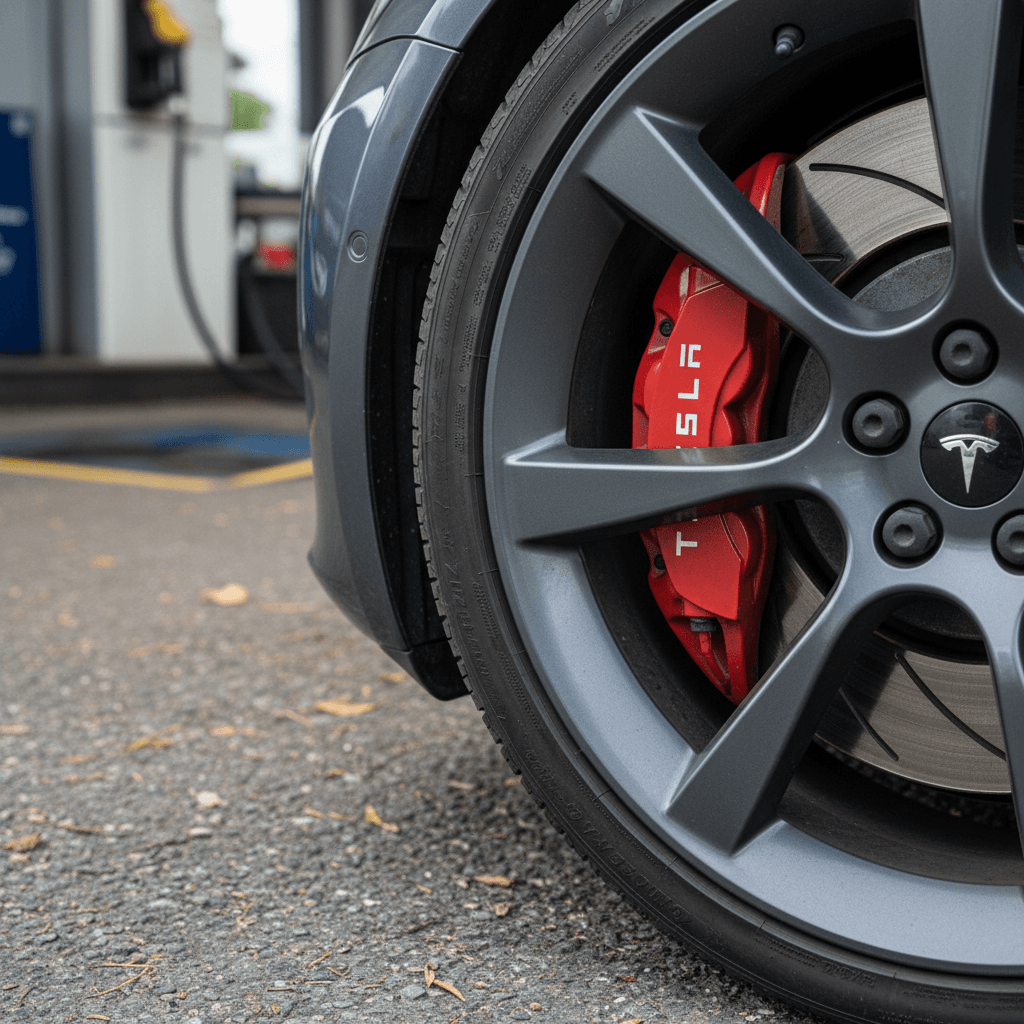
Cold‑climate owners, pay attention to brakes
Big-ticket Model 3 maintenance items to plan for
Routine maintenance is the easy part. The questions that keep shoppers up at night are about the big stuff: the battery, the drive unit, and what happens once the factory warranty runs out. The reality is more boring, and better, than many people expect.
Major components: risk vs. reality
Where it makes sense to worry (and where it doesn’t).
High‑voltage battery
For most Model 3 trims, the battery is covered by an 8‑year / 100,000–120,000+ mile warranty, often with a minimum capacity guarantee.
Full pack failures are rare. More common are gradual range losses that owners adapt to, much like engine wear in a gas car.
Drive unit (motor)
The electric motor and associated electronics are also covered alongside the battery. These systems have far fewer moving parts than an engine and transmission.
True catastrophic failures are uncommon; when they do happen under warranty, Tesla typically replaces the affected components.
HVAC & electronics
The most likely "big" expenses on an older Model 3 are things like the HVAC system, suspension components, or in rare cases, onboard chargers.
Think in the $800–$2,000 range for a significant out‑of‑warranty repair at current labor rates, similar to a modern luxury gas car.
Battery replacement fears
Tesla Model 3 maintenance costs by year
Let’s turn the individual line items into something you can plug into a budget. Below is a simplified, real‑world style estimate for a new Model 3 driven about 12,000–15,000 miles per year in the U.S., mixing Tesla Service with independent shops where it makes sense.
Estimated annual Model 3 maintenance budget (years 1–8)
Illustrative budgeting guide for a typical owner starting with a new Model 3.
| Ownership year | What typically happens | Estimated maintenance spend |
|---|---|---|
| Year 1 | Tire rotation, maybe wipers | $150–$300 |
| Year 2 | Tire rotation, cabin air filter, wipers | $250–$450 |
| Year 3 | Tire rotation, possibly first set of tires, wipers | $600–$1,100 (more if tires) |
| Year 4 | Tire rotation, brake fluid check, alignment, wipers | $300–$600 |
| Year 5 | Second set of tires for higher‑mileage drivers, cabin air filter | $700–$1,200 |
| Year 6 | Tire rotation, possible A/C desiccant on older cars, wipers | $300–$800 |
| Year 7 | Tires again for high‑milers, alignment, brakes inspection | $700–$1,300 |
| Year 8 | Tire rotation, brake fluid check, cabin air filter | $300–$600 |
Assumes normal driving, no major collisions, and no out‑of‑warranty failures beyond wear items.
How to sanity‑check these numbers
Maintenance costs on a used Tesla Model 3
If you’re shopping for a used Model 3, maintenance planning gets more interesting. The car may be deep into its warranty period, close to a tire or brake job, or overdue for basic items like cabin filters and wipers. The upside: you’re also skipping the steepest years of depreciation, and your ongoing maintenance costs can still be modest if you buy carefully.
Used Model 3 buyers: maintenance checks before you sign
1. Ask for recent service history
Look for records of tire replacements, cabin air filter changes, and any warranty work. Gaps don’t always mean trouble, but they’re a reason to inspect more carefully.
2. Inspect tire wear and age
Uneven wear suggests alignment or suspension issues. Tires more than 6 years old may need replacement even if tread looks decent.
3. Test the brakes
During a test drive, toggle regen strength and do a few firm stops. Listen for grinding or pulsing that could indicate rusted rotors or sticky calipers.
4. Check HVAC performance
Make sure the car heats and cools quickly and quietly. Weak A/C, odd smells, or fogging windows may hint at deferred HVAC maintenance.
5. Review remaining battery/drive unit warranty
Confirm in the car’s “Service” menu or with Tesla what coverage remains by time and mileage. This dramatically affects your risk on big‑ticket items.
6. Get an independent EV health check
A specialist can look at underbody corrosion, suspension, and high‑voltage components. Recharged’s <strong>Score Report</strong> includes verified battery health and a detailed condition review on every vehicle we sell.
How Recharged helps with used Model 3 costs
Ready to find your next EV?
Browse VehiclesHow Model 3 maintenance compares to gas cars
So where does all this land compared with a conventional sedan? Third‑party cost‑to‑own analyses for recent Model 3s typically show five‑year maintenance totals in the low‑$2,000 range at 15,000 miles per year. Comparable luxury or near‑luxury gas sedans often land closer to $4,000–$5,000 in the same period once you include oil changes, transmission service, belts, exhaust work, and more complex brake jobs.
Where the Model 3 saves you money
- Fewer fluids – No oil changes, no transmission fluid service.
- Longer brake life – Regenerative braking handles most slowing.
- Simpler drivetrain – No multi‑gear transmission or complex emissions equipment.
- Time saved – Fewer trips to a shop mean fewer hours lost in waiting rooms.
Where costs are similar, or higher
- Tires – Performance tires and 18–20" wheels cost similar money to premium gas sedans.
- Insurance – Can be higher than average, depending on your market and driving record.
- Out‑of‑warranty electronics – When something fails, it’s often a sophisticated module, not a $30 sensor.
Even with these caveats, many owners find that lower maintenance and fueling costs offset higher insurance and depreciation over time.
Ways to keep your Model 3 maintenance costs low
You don’t have much control over labor rates in your city, but you have a lot of influence over how hard your Model 3 works. A few habits and choices can keep maintenance spending pleasantly boring year after year.
Practical tips to trim Model 3 maintenance spending
Drive smoother, and mind your tires
Hard launches and aggressive cornering feel great, but they chew through rubber. Smooth acceleration and keeping your tires properly inflated can add thousands of miles to a set.
Rotate tires on schedule
Stick close to the 6,000–6,250‑mile rotation interval. It’s inexpensive and often the difference between replacing four tires at once and chasing uneven wear forever.
Use alignment checks strategically
Hit a big pothole or curb? Notice the steering wheel off‑center? That’s the time to schedule an alignment, not years later when a tire is bald on one edge.
Learn a few DIY basics
If you’re comfortable, things like wiper blades and cabin air filters are very doable at home with online tutorials. If not, bundle them into a single shop visit to save on labor minimums.
Schedule service through the Tesla app
For recall work or Tesla‑specific issues, the app makes it easy to book a Service Center visit or Mobile Service when available. Combining items in one appointment saves time and sometimes money.
Choose the right wheel and tire setup
If you’re still shopping, know that larger wheels and sticky performance tires may look fantastic but generally cost more and wear faster than smaller, efficiency‑focused setups.
Don’t skip the “boring” stuff
Tesla Model 3 maintenance cost: FAQ
Frequently asked questions about Model 3 maintenance
Is a Tesla Model 3 expensive to maintain? Final thoughts
Look past the headlines and the Tesla Model 3 turns out to be refreshingly straightforward to own. There’s no calendar of tune‑ups, no stack of fluid changes, and no exhaust system to rust away in the winter. Instead, your maintenance dollars largely go into tires, alignment, and a short list of simple service items every few years.
For shoppers who are used to budgeting thousands of dollars for service on a German sport sedan or a turbocharged compact, the Model 3’s maintenance cost curve can feel almost suspiciously flat. That’s especially true in the used market, where purchase prices have come down and the math on total cost of ownership looks better every year.
If you’re considering a used Tesla Model 3, buying from a specialist matters. At Recharged, every vehicle comes with a Recharged Score Report that spells out battery health, tire and brake condition, and any upcoming maintenance we’ve identified. Combine that transparency with realistic expectations, plan around $250–$500 a year for routine work, and you’ll have a clear, confident picture of what this EV will really cost to live with.