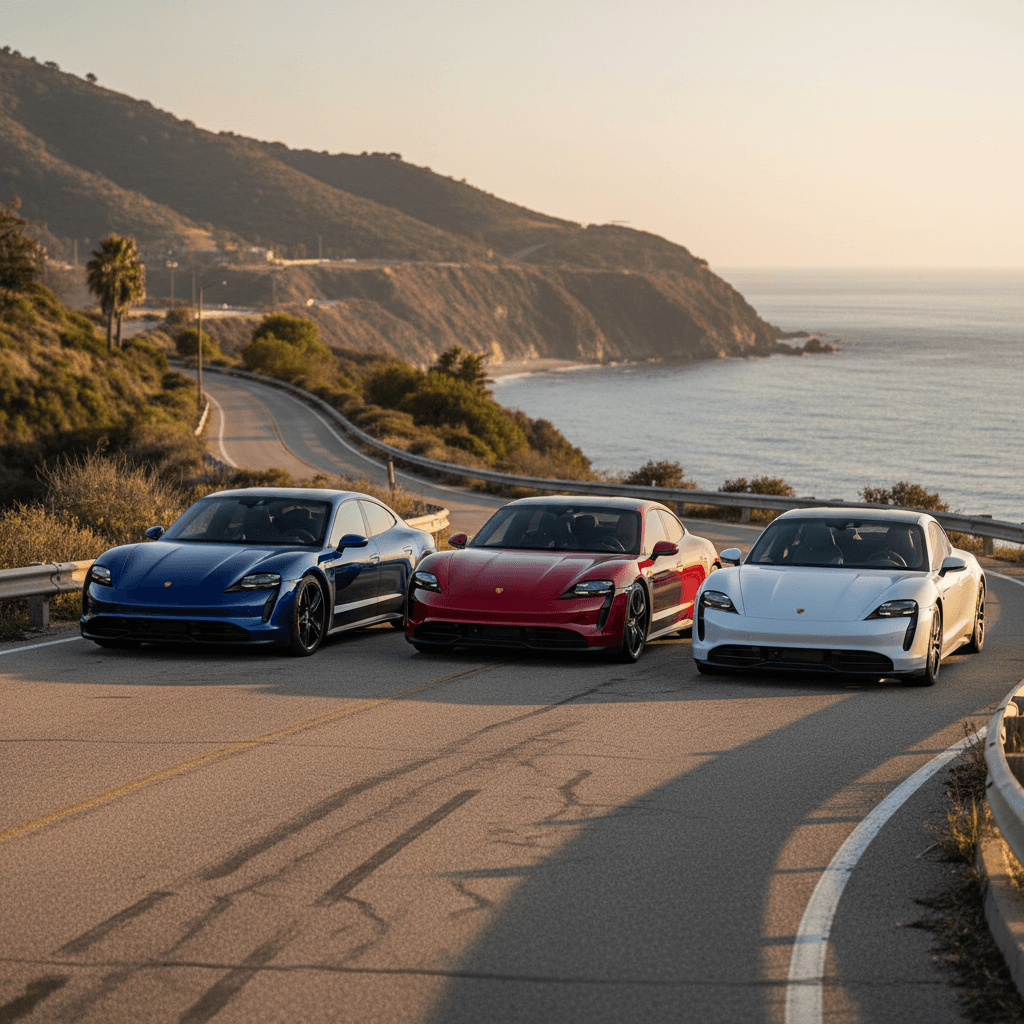
If you’re comparing the Porsche Taycan 4S vs GTS vs Turbo vs Turbo S, you’re already shopping at the sharp end of the EV market. The good news: there’s no bad choice. The tougher news: these trims overlap in power, price, and equipment enough that it’s easy to overpay for performance or features you’ll rarely use. This guide breaks down how the main Taycan trims really differ in day-to-day use, long-term ownership, and as used EV buys.
2025+ Taycan update
Porsche Taycan 4S vs GTS vs Turbo vs Turbo S: trim lineup overview
Porsche positions the Taycan lineup in clear steps: - Taycan 4S: “Everyday” performance with all-wheel drive and strong value. - Taycan GTS: Sharper, more emotional driver’s car, still usable every day. - Taycan Turbo: Serious super-sedan pace and luxury. - Taycan Turbo S: Range-topping flagship with launch-control fireworks. On paper, each jump adds power and performance. In practice, the gaps in character, comfort, and cost of ownership are just as important, especially once these cars hit the used market.
Headline performance: how fast is each Taycan trim?
Quick specs: Taycan 4S vs GTS vs Turbo vs Turbo S
Core spec comparison: Taycan 4S vs GTS vs Turbo vs Turbo S
Approximate figures based on recent-model Taycans. Exact numbers vary slightly by model year, battery, and body style (sedan vs Cross/Sport Turismo).
| Trim | Power (hp, launch control) | 0–60 mph (approx.) | Drivetrain | Typical role |
|---|---|---|---|---|
| Taycan 4S | ≈ 522 hp (Performance Battery Plus) | ≈ 3.8 s | AWD | Balanced performance + value |
| Taycan GTS | ≈ 590 hp | ≈ 3.5 s | AWD | Enthusiast driver’s car |
| Taycan Turbo | ≈ 670 hp | ≈ 3.0 s | AWD | Luxury super sedan |
| Taycan Turbo S | ≈ 750 hp | ≈ 2.6 s | AWD | Flagship, maximum acceleration |
Use this table to see how each trim steps up in power, acceleration, and equipment focus.
Model-year fine print
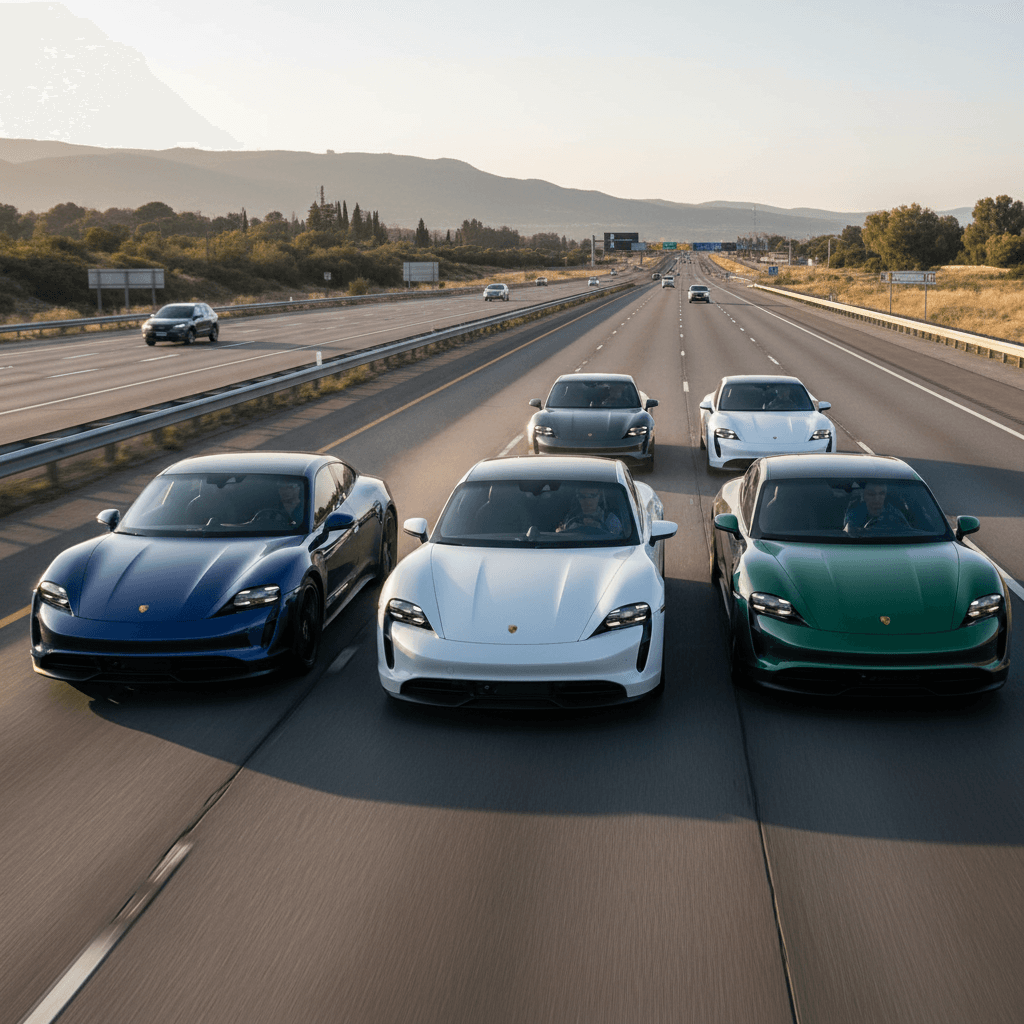
Taycan 4S: the balanced everyday performance pick
If you’re trying to rationalize a Taycan at all, the 4S is the easiest trim to defend. It pairs dual-motor all-wheel drive with the larger Performance Battery Plus in many configurations, delivering roughly 522 hp with launch control and real-world 0–60 mph times in the high-3‑second range. That’s already quicker than most gas-powered sports sedans and more than enough for daily use or highway merging with room to spare.
Taycan 4S: pros and cons
Why many shoppers (and a lot of used buyers) stop right here.
Where the Taycan 4S shines
- Best performance-per-dollar in the lineup, especially on the used market.
- Comfort-first tuning with optional adaptive air suspension that soaks up rough pavement.
- Plenty of power for spirited back-road driving without constant restraint.
- Often easier to insure and easier on consumables (tires, brakes) than Turbo trims.
Where the Taycan 4S falls short
- Doesn’t have the sharper sound, suspension tuning, or curb appeal of the GTS.
- Launch-control drama and badge cachet can’t match Turbo/Turbo S.
- Earlier years can have shorter real-world range than newer 2025+ cars if you drive aggressively.
Used-market sweet spot
Taycan GTS: the driver’s-choice sweet spot
Porsche created the Taycan GTS as the enthusiast’s middle ground: more focused than a 4S, less over-the-top than a Turbo. With roughly 590 hp and 0–60 mph times around 3.5 seconds, it’s hardly slower than the upper trims in day-to-day driving. What sets it apart is tuning and feel, not just numbers.
What makes the Taycan GTS special
- Sharper chassis tuning with sportier damper and steering calibration.
- Standard or widely available performance options like Porsche Active Suspension Management (PASM) and sportier wheel/tire packages.
- Distinctive GTS styling cues (dark trim, Alcantara-style interior, sport seats) that many buyers want anyway.
- More emotional drive without requiring Turbo-level money.
Who should choose the GTS?
- You prioritize back-road fun and steering feel over straight-line bragging rights.
- You’d order sport seats and a more aggressive suspension on any Porsche.
- You like the GTS look and are willing to pay a premium for it, new or used.
- You want a car that feels special even at moderate speeds, not just during full-throttle launches.
Many enthusiasts stop at GTS
Taycan Turbo: super-sedan performance without going all-in
The Taycan Turbo badge may irritate purists, there’s no turbocharger on an EV, but the performance is very real. With roughly 670 hp on tap and 0–60 mph times around 3.0 seconds, this is where the Taycan truly joins the ranks of traditional super sedans like the BMW M5 and Mercedes-AMG E 63 in both pace and presence.
Taycan Turbo: when it makes sense
Think of it as the executive express version of the Taycan.
Luxury & image
The Turbo typically includes more luxury equipment (comfort features, audio, interior materials) either standard or as popular options. If you’re cross-shopping high-spec gas super sedans, this is the natural step.
Effortless speed
On-ramps and passing maneuvers are nearly instantaneous. You rarely need full throttle, which can make the car feel calmer and more relaxed for everyday driving.
Trade-offs
Higher purchase price, higher insurance and tire costs, and performance you may rarely use. For most buyers, the 4S or GTS already feels outrageously quick.
Taycan Turbo S: range-topping flagship and track weapon
The Taycan Turbo S sits at the top of the core range and exists largely for buyers who simply want the ultimate Taycan. With around 750 hp and official 0–60 mph claims as low as 2.6 seconds with launch control, it’s in genuine supercar territory, yet still a four-door with a usable trunk.
- Most aggressive acceleration and strongest launch-control shove of any standard Taycan trim.
- Generally fitted with larger brakes, stickier tires, and more performance hardware from the factory.
- Commanding presence on the street and the strongest Porsche badge value when new.
- Overkill for commuting, and more expensive to run when you factor in wheel, tire, and brake wear.
Turbo S vs your roads
Range, efficiency, and charging: differences that actually matter
For 2025, Porsche significantly improved range and efficiency across the Taycan lineup with updated battery tech and software. In independent testing, the refreshed Taycan 4S sedan has shown highway ranges around the 330‑mile mark when driven reasonably, with the rear-wheel-drive model stretching even farther. Earlier cars (2020–2023) typically deliver noticeably less real-world range, especially at higher speeds or in cold weather.
How 4S, GTS, Turbo, and Turbo S compare on range and charging
The platform is shared, but how you drive and what you buy still matter.
Range & efficiency
- Within a given model year and battery size, range differences between trims are modest. Wheel size, tire choice, and your right foot matter more.
- Higher-performance trims (GTS, Turbo, Turbo S) can see more range loss if you frequently use their extra power.
- 2025+ cars get larger usable battery capacity and better efficiency; a used 4S from 2025 may out-range an older Turbo in real-world use.
Charging performance
- All trims sit on the same 800‑volt architecture and share class-leading DC fast-charging capability when conditions are right.
- On a capable DC fast charger, newer Taycans can go from low state of charge to ~80–90% in under 30 minutes in ideal conditions.
- Your experience will depend heavily on charger quality, preconditioning, and temperature, regardless of trim.
Plan your Taycan charging life
Ownership costs and used-market realities
All Taycans are complex, high-performance EVs. As you move from 4S to GTS to Turbo and Turbo S, every cost line tends to climb: purchase price, insurance, tires, brakes, even alignment work if you track or drive aggressively. On the used market, depreciation can be your friend, or your enemy, depending on how you approach it.
Key ownership and used-market considerations
1. Depreciation hits top trims hardest
New Turbo and Turbo S models often lose the most absolute dollars in their first few years, which can make them tempting used buys. Just remember that maintenance and consumables still cost Turbo‑money.
2. Options can matter more than trim
On the used market, a 4S or GTS with must-have options (Performance Battery Plus, air suspension, premium audio, driver-assist packages) can be a better buy than a lightly optioned Turbo.
3. Tires, wheels, and brakes add up
Large-diameter wheels and high-performance tires on GTS/Turbo/Turbo S trims wear faster and cost more to replace. Factor that into your annual budget, especially if you drive hard or live in a region with potholes and rough roads.
4. Insurance and repair complexity
Higher trims bring higher replacement values and sometimes pricier collision repairs. Get real quotes on insurance and check EV‑savvy body shop options near you if you’re eyeing a Turbo or Turbo S.
5. Battery health on used cars
Battery life is more about age, mileage, and charging history than trim. A well-cared-for 4S can be a safer long-term bet than a neglected Turbo S. Independent battery health data is crucial when you’re buying used.
Why battery health data matters
Which Taycan trim is right for you?
Choose your Taycan: 4S vs GTS vs Turbo vs Turbo S
Daily driver & commuter
You want a quiet, comfortable, lightning-quick EV that makes every commute easier, not more stressful.
You care about range and real-world running costs more than lap times.
You’d rather put money into options (seats, sound system, driver assists) than bragging-rights power.
<strong>Best fit:</strong> Taycan 4S, ideally with the larger Performance Battery Plus and adaptive air suspension.
Driving enthusiast
You live for back-road drives and want steering feel and chassis tuning more than raw numbers.
You appreciate sport seats, Alcantara-style interiors, and a more aggressive stance.
You might track the car occasionally, but you still need daily usability.
<strong>Best fit:</strong> Taycan GTS. It’s the driver’s car of the lineup without Turbo S overkill.
Luxury & status seeker
You’re cross-shopping high-end gas super sedans and want a Porsche badge and EV technology.
Comfort features and interior materials matter as much as performance stats.
You’ll use the performance, but you also want an effortless highway cruiser.
<strong>Best fit:</strong> Taycan Turbo, especially well-optioned examples with comfort and tech packages.
Maximum-performance buyer
You want the quickest Taycan you can reasonably live with, and you’re willing to pay for it.
You’re comfortable with higher insurance and consumable costs.
You may track the car or simply want the top badge in the lineup.
<strong>Best fit:</strong> Taycan Turbo S (or Turbo GT if you step outside this four-trim comparison), as long as you truly value the extra performance.
Ask this before moving up a trim
Buying a used Taycan? How Recharged simplifies the process
If you’re shopping any Taycan trim used, 4S, GTS, Turbo, or Turbo S, the stakes are higher than with a typical gas sedan. You’re weighing performance, complex electronics, battery health, and fast-charging behavior, often with incomplete service history. That’s exactly the gap Recharged is built to close.
What you get with a used Taycan from Recharged
Clarity on battery health, fair pricing, and white-glove EV support.
Recharged Score battery health report
Every Taycan on Recharged comes with a Recharged Score Report that includes verified battery health diagnostics, so you can compare a used 4S against a used Turbo S with hard data, not guesses.
Fair pricing & financing
Recharged benchmarks pricing against the EV market so you’re not overpaying for a badge or trim. You can also finance online, trade in your current vehicle, or get an instant offer.
EV-specialist guidance
From explaining Taycan options and charging to helping you choose between trims, Recharged’s EV specialists walk you through the decision, fully digital or at the Experience Center in Richmond, VA.
Recharged also offers nationwide delivery, trade‑in support, and a digital-first buying experience, so you can confidently choose the Taycan trim that fits your life, without needing to become a full-time EV researcher first.