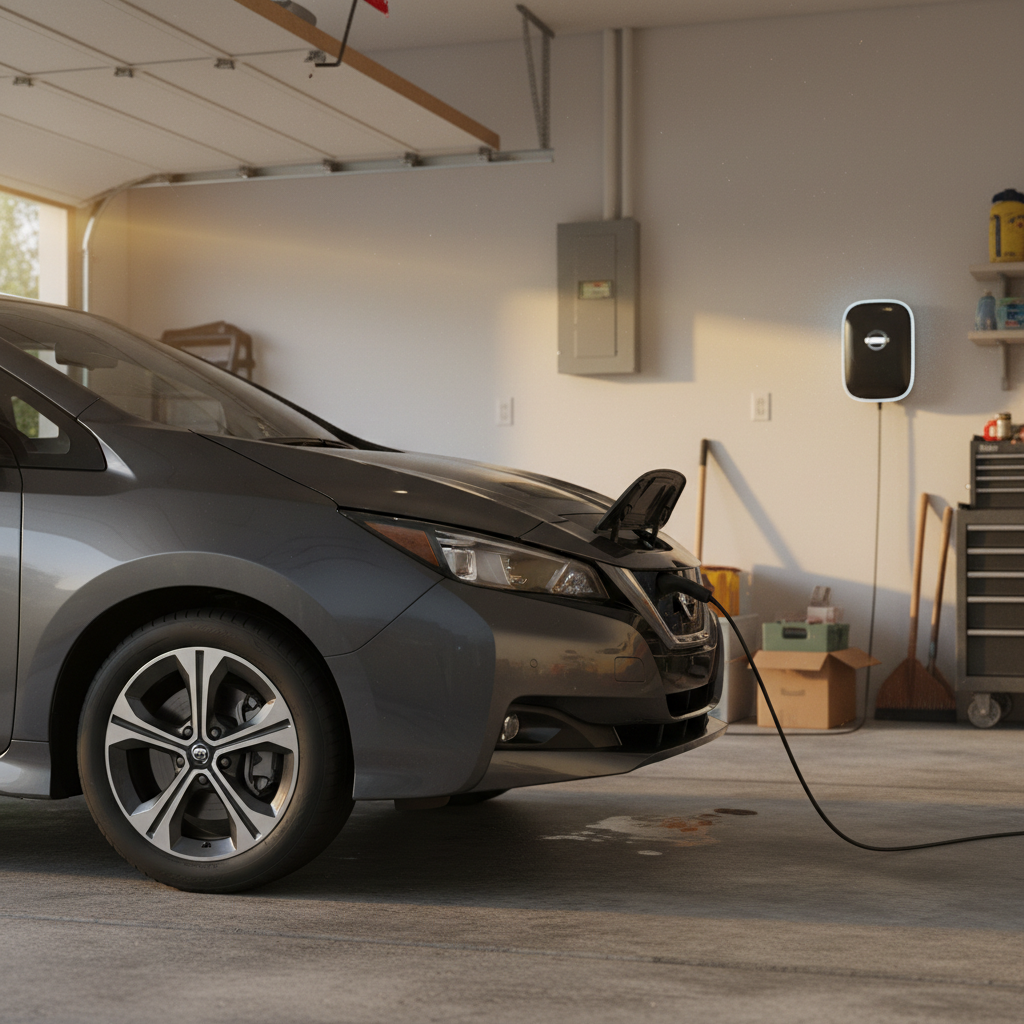
If you’re thinking about an electric car, especially a used one, it’s natural to ask, what happens to old EV batteries? Do they end up as toxic junk, or can we actually reuse and recycle them at scale? The short answer: modern EV batteries last longer than most people think, and when they’re finally done in a vehicle, they usually still have value as energy storage or as raw materials for new batteries.
Key takeaway
Why people worry about old EV batteries
A lot of skepticism around EVs boils down to one fear: we’re just trading tailpipe emissions for battery waste. You might picture mountains of dead lithium-ion packs piling up behind dealerships and scrap yards. There’s a kernel of truth here, poorly managed batteries can create fire and pollution risks, but it leaves out the economics. EV batteries are packed with high-value materials (lithium, nickel, cobalt, copper, aluminum). That makes them too valuable to simply throw away, which is why automakers, recyclers, and policymakers are racing to build a circular battery economy.
- EV adoption is climbing fast, so end-of-life volumes will surge in the 2030s and 2040s.
- Today, only a small fraction of total packs have actually reached end of life, but recycling capacity and policy are ramping ahead of that wave.
- Recycling and reuse are increasingly baked into EV business models, not an afterthought.
Reality check
How long EV batteries actually last
Before we talk about what happens to old EV batteries, it helps to define “old.” For most automakers, an EV battery is considered at the end of its first life in a vehicle when its usable capacity drops to roughly 70–80% of the original. That’s usually the point when drivers notice shorter range and may decide to replace or retire the vehicle.
EV battery lifespan at a glance
In the U.S., most EVs sold in the last decade are still on the road, with degradation often in the low single digits per year in normal climates. Heat, frequent DC fast charging, and hard driving can accelerate wear, while milder climates and mostly Level 2 home charging tend to preserve capacity.
Good news for used EV shoppers
Step-by-step: what happens to an old EV battery
When an EV battery is no longer a good fit for daily driving, it typically passes through several stages, not all packs follow the exact same path, but this is the general flow:
- Vehicle reaches end of useful life – The car is totaled, heavily damaged, or simply too worn to justify repair. Salvage auctions and dismantlers step in.
- Pack is removed and evaluated – Technicians and battery specialists measure capacity, internal resistance, and safety condition to decide if modules are reusable, repurposable, or only good for recycling.
- Usable modules get a second life – Battery modules or cells that still hold enough capacity may be reconfigured into stationary energy storage systems for homes, businesses, or grid support.
- Non‑reusable material goes to recyclers – Damaged or heavily degraded packs are sent to specialized recycling facilities that recover metals like lithium, nickel, cobalt, and copper.
- Recovered materials re‑enter the supply chain – The goal is a closed loop: old EVs become feedstock for new cathode and anode materials in future batteries.
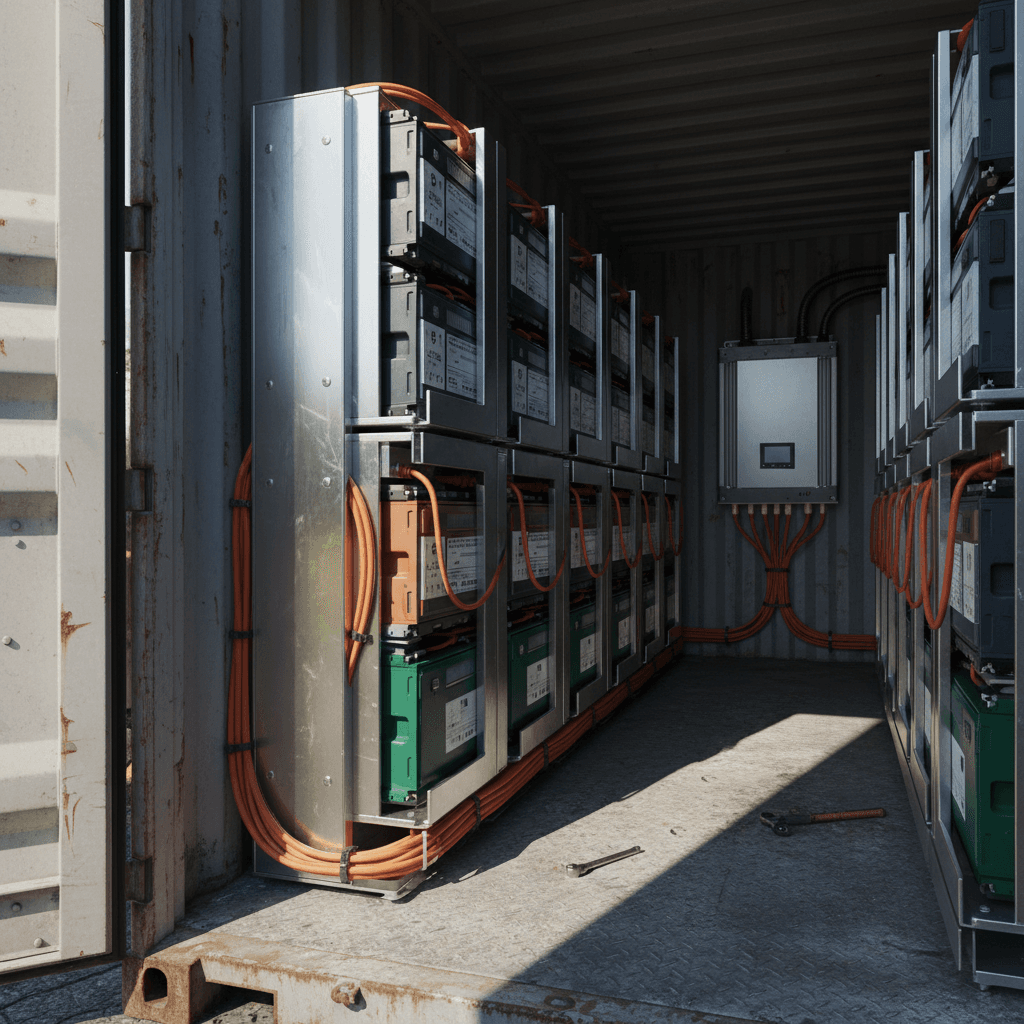
Second-life uses: how “old” EV batteries keep working
Here’s the crucial point: when an EV battery is “done” in a car, it’s usually not done as a battery. A pack retired from a vehicle at 70–80% state of health can still deliver years of useful service in stationary roles where size and weight matter less than in a car.
Common second-life uses for old EV batteries
From powering homes to supporting the grid
Home & commercial storage
Used EV modules can be packaged into battery cabinets to:
- Store excess rooftop solar
- Shave peak demand charges
- Provide backup power during outages
Solar & microgrids
Second-life packs are being deployed alongside solar farms and microgrids to:
- Smooth out renewable output
- Stabilize rural or islanded grids
- Improve reliability in remote areas
EV charging support
Developers can use retired packs as on-site storage to:
- Buffer high‑power DC fast chargers
- Reduce strain on local transformers
- Lower demand charges from utilities
Why second life matters
Benefits of second-life batteries
- Cost savings: Second-life packs are usually cheaper than brand‑new battery systems for stationary storage.
- Lower carbon footprint: Reusing an existing pack avoids the emissions tied to manufacturing a new one.
- Grid resilience: Large second-life installations can help utilities manage peaks and integrate more wind and solar.
Key challenges and risks
- Health variation: Packs come from different vehicles and duty cycles, making state‑of‑health assessment tricky.
- Safety management: Older cells may have hidden damage, so robust testing and battery management systems are critical.
- Regulation and standards: Testing protocols and liability rules for second‑life packs are still evolving.
How EV battery recycling works today
Eventually, every pack reaches a point where reuse and second life no longer make sense. That’s where recycling comes in. The industry has moved quickly from pilot projects to large commercial plants, particularly in North America, Europe, and Asia.
Major EV battery recycling methods
Different processes recover different materials with different energy and safety profiles.
| Method | How it works | Pros | Cons |
|---|---|---|---|
| Pyrometallurgy | Batteries are smelted at high temperatures to recover metals from a molten slag. | Simple feedstock prep, proven at scale. | Energy‑intensive, can lose some lithium and aluminum, requires strong emissions controls. |
| Hydrometallurgy | Materials are shredded, then metals are leached out with chemical solutions and precipitated as salts. | High recovery rates for lithium, nickel, cobalt; lower temperatures. | Complex chemistry, wastewater treatment and chemical handling are critical. |
| Direct recycling | Cells are dismantled and cathode/anode materials are recovered and reconditioned without fully breaking them down. | Potentially lower energy use and preserves more value in active materials. | Technically challenging; still emerging and not yet widely commercialized. |
Recycling technology is evolving fast, but most commercial operations today rely on variations of these three approaches.
Recycling companies are already processing not just end‑of‑life packs, but also manufacturing scrap from cell plants. That scrap stream helps recyclers scale up ahead of the wave of retired vehicle packs expected in the 2030s and 2040s.
Circular battery materials
Policy and regulation shaping battery recycling
Governments have realized that what happens to old EV batteries isn’t just an environmental question, it’s a strategic one tied to supply chains and industrial policy.
- European Union: New battery regulations phase in minimum recycling efficiencies and require recycled content in new batteries by the end of the decade, alongside extended producer responsibility rules.
- United States: The Bipartisan Infrastructure Law and Inflation Reduction Act direct billions into domestic cell manufacturing and recycling, with tax credits favoring vehicles that use materials sourced, refined, or recycled in North America.
- Asia-Pacific: China, South Korea, and others are tightening take‑back and recycling requirements, while building out large‑scale recycling hubs near major battery factories.
What this means in practice
Environmental impact: are old EV batteries a waste problem?
The honest answer is nuanced. If we simply dumped packs in landfills, EV batteries would absolutely be a problem. But that’s not the direction the market is heading. Because the metals are valuable and policy is tightening, the trend is toward higher collection and recycling rates over time.
EV batteries vs. the alternatives
Why end-of-life management matters, but isn’t the whole story
Compared to gas vehicles
Even when you factor in mining and manufacturing, EVs tend to have significantly lower lifetime emissions than comparable gasoline cars once they’ve driven tens of thousands of miles, especially on cleaner grids.
Compared to other electronics
Unlike many consumer gadgets, EV batteries are large, traceable assets. That makes organized take‑back and recycling far more practical and economically attractive.
The real risk: informal handling
For individual owners, the safest path is straightforward: work through legitimate dealers, service centers, or recycling programs when a pack needs replacement. That ensures the battery is either repurposed or recycled, not abandoned.
What this means if you’re buying a used EV
If you’re shopping the used market, the fate of old EV batteries isn’t just an abstract sustainability question, it’s a practical one. It affects range, reliability, resale value, and peace of mind.
Used EV buyer checklist: battery edition
1. Focus on battery health, not just age
A 7‑year‑old EV that was gently driven and mostly charged at home can have a healthier pack than a 4‑year‑old fast‑charged highway commuter. Look for real battery health data, not just odometer readings.
2. Understand expected degradation
Seeing 5–15% capacity loss on a several‑year‑old EV is normal. What you want to avoid is a pack that’s lost a large chunk of range quickly or shows signs of imbalance between modules.
3. Ask how the car was charged
Frequent DC fast charging to 100% or parking at high state of charge in very hot climates can accelerate wear. A history of mostly Level 2 home charging is a good sign.
4. Check remaining battery warranty
Many EVs carry 8‑year/100,000‑mile (or more) battery warranties. A used EV that’s still under factory battery coverage can reduce your risk.
5. Look for independent battery diagnostics
Whenever possible, rely on third‑party or dealer‑grade tests that read pack health, not just the dashboard range estimate.
6. Plan for the full lifecycle
If you expect to keep the car until it’s truly worn out, know that there will likely be more mature reuse and recycling options by the time your pack is done. You won’t be stuck with hazardous waste in your driveway.
How Recharged fits in
How Recharged evaluates battery health on used EVs
Because battery condition is central to both value and sustainability, Recharged bakes it into how each used EV is sourced, inspected, and priced.
Data-driven health assessment
- Pack-level diagnostics: We use specialized tools and OEM data where available to estimate remaining capacity and flag abnormal cell behavior.
- Usage pattern review: When possible, we factor in mileage, climate, and charging behavior to interpret the health numbers in context.
- Transparent reporting: The findings roll into the Recharged Score, which you see before you buy, along with how that score influenced pricing.
Lifecycle-minded resale
- Fair market pricing: Vehicles with healthier‑than‑average packs are priced accordingly, and vice versa, so you’re not overpaying for hidden degradation.
- End-of-life path: When a vehicle or pack truly is at the end of its road life, Recharged works with partners that route batteries into appropriate reuse or recycling channels.
- Nationwide support: From our digital retail platform to the Experience Center in Richmond, VA, EV specialists can walk you through battery health questions in plain language.
FAQ: what happens to old EV batteries
Frequently asked questions about old EV batteries
Bottom line: old EV batteries are an asset, not toxic trash
When you dig into the details, what happens to old EV batteries is less a horror story and more a story of evolving infrastructure. Packs last longer than early skeptics predicted, often move into a second life as stationary storage, and then get mined again by recyclers for the metals inside. The system isn’t perfect yet, collection rates, standards, and capacity still need to grow, but the momentum is clear.
For you as a driver, the practical takeaway is straightforward: choose an EV with a healthy pack today, treat the battery well, and make sure the vehicle passes through credible hands when you’re done with it. Platforms like Recharged are working to make that lifecycle transparent, from the Recharged Score Report that tells you how your next used EV’s battery is doing, to responsible end‑of‑life pathways when it finally reaches retirement. Old EV batteries aren’t the end of the story; they’re the beginning of a circular one.