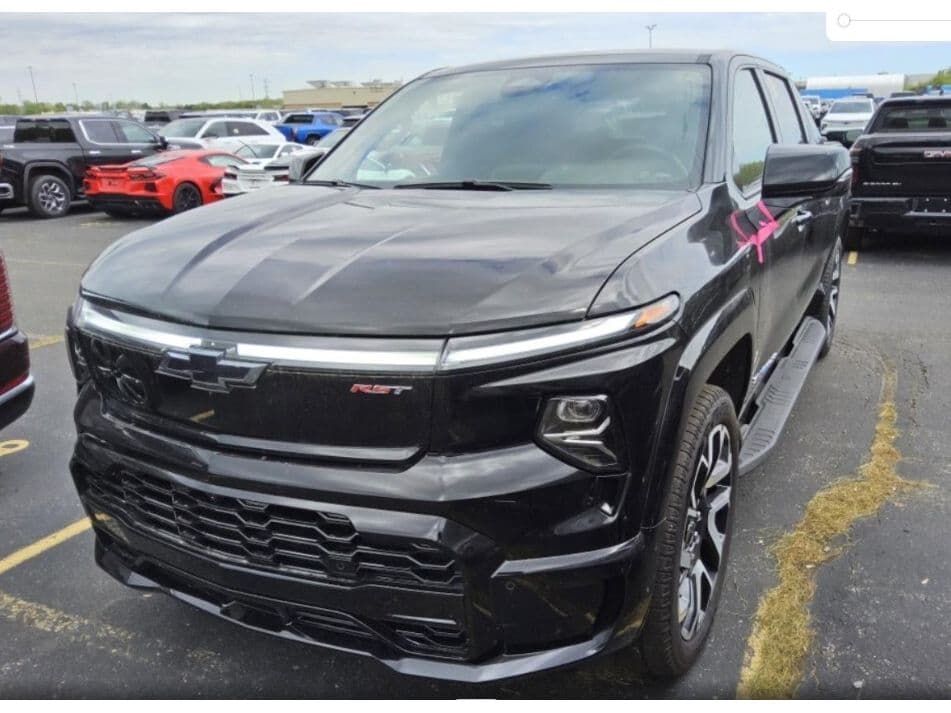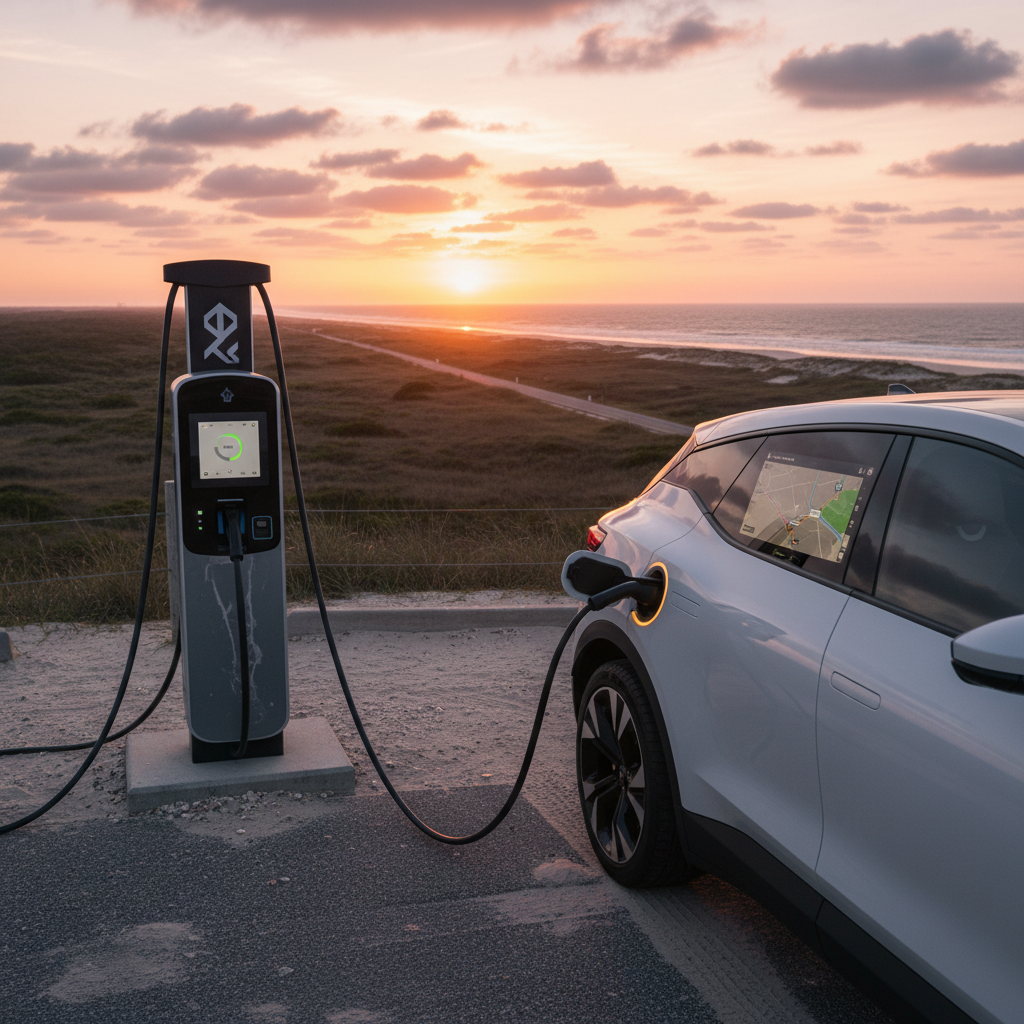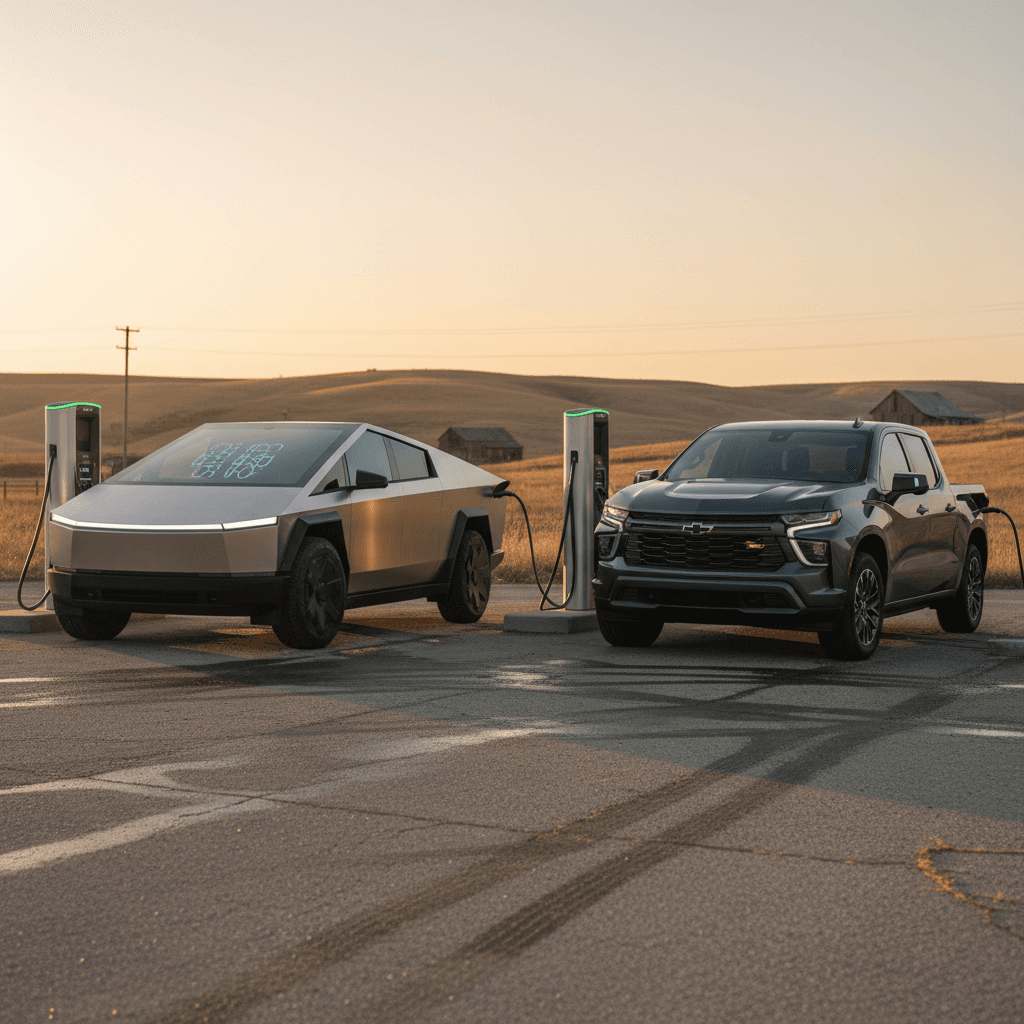
If you’re cross‑shopping the Tesla Cybertruck vs Chevrolet Silverado EV, you’re not just picking a truck, you’re choosing between two very different visions of what an electric pickup should be. One leans hard into sci‑fi design and software, the other into traditional truck DNA and GM’s Ultium platform. The right choice depends less on Twitter debates and more on how you actually plan to use your truck.
Big Picture
Tesla Cybertruck vs Chevrolet Silverado EV: Who They’re For
Tesla Cybertruck: Tech-First, Design-Forward
- Audience: Early adopters, tech‑savvy buyers, suburban owners who want an EV that stands out.
- Strengths: Access to Tesla Superchargers, advanced software, stainless steel exoskeleton, excellent onboard power (Powershare).
- Weak spots: Limited bed length with tonneau, unusual ergonomics, and still‑evolving real‑world data on long‑term durability.
Chevrolet Silverado EV: Truck-First, EV-Second
- Audience: Contractors, fleet buyers, and traditional truck owners who need capability but want to go electric.
- Strengths: Massive Ultium battery options, strong towing and payload on WT and Trail Boss, more conventional full‑size truck feel.
- Weak spots: Heavier trims with Max Range packs, fewer public DC fast chargers that can match its peak speeds, and less software polish than Tesla.
Start With Your Use Case
Key Specs: Cybertruck vs Silverado EV at a Glance
Headline Specs Comparison (as of early 2026)
These are representative configurations that most shoppers cross‑shop. Exact numbers vary by trim, wheel/tire choice, and options.
| Spec | Cybertruck AWD (Premium) | Cybertruck Cyberbeast | Silverado EV WT Max Range (8WT) | Silverado EV RST Max Range |
|---|---|---|---|---|
| Estimated EPA Range | ~320 miles | ~320 miles (higher consumption) | Up to ~492 miles (GM-est.) | ~450–460 miles (GM-est.) |
| Battery Platform | Tesla structural pack (NACS) | Tesla structural pack (NACS) | GM Ultium large pack | GM Ultium large pack |
| Max DC Fast Charge | Up to 325 kW on V3/V4 Superchargers | Up to 325 kW | Peak ~350 kW capable on some Ultium chargers | Similar Ultium peak rates |
| Max Towing | 11,000 lbs | ~11,000 lbs (varies by config) | Up to 12,500 lbs (Trail Boss/WT) | Up to 10,000–12,500 lbs (trim‑dependent) |
| Max Payload | Around 2,500 lbs (varies by config) | Lower than AWD due to weight | Generally 1,500–2,000+ lbs (by spec) | Often 1,400–1,700 lbs (Max Range battery adds weight) |
| Drive | Dual‑motor AWD | Tri‑motor AWD | Dual‑motor e4WD | Dual‑motor e4WD |
| Bed Length | About 6 ft with mid‑gate down | Same | 5 ft bed, with Multi‑Flex Midgate for longer loads | Same |
| Onboard Power | Up to ~11.5 kW (Powershare) | Same | Multiple 120V/240V outlets (varies by trim) | Similar Ultium PowerBase |
| Connector | NACS (North American Charging Standard) | NACS | CCS1 (moving toward NACS with adapters) | CCS1 / future NACS support planned |
Always verify final EPA ratings and tow/payload stickers on the exact truck you’re buying, especially on the used market.
Range and Towing Highlights
Range and Battery: Daily Driving and Long Trips
Range is where the Tesla Cybertruck vs Chevrolet Silverado EV comparison looks lopsided on paper, but much closer in the real world. GM’s Ultium platform gives Silverado EV enormous battery options and headline figures approaching 500 miles, while Cybertruck keeps things simpler with roughly 320‑mile estimates on its mainstream configurations.
How Range Plays Out in Real Life
Paper specs vs how you’ll actually drive
Cybertruck: Enough for Most Days
- ~320 miles of estimated range on the AWD and Cyberbeast trims.
- Excellent efficiency for a full‑size truck, especially at moderate speeds.
- Supercharger network helps mask shorter range on long trips because stops are easy and fast.
Silverado EV: Big-Battery Champion
- Max Range WT (8WT) targeted around ~492 miles of GM‑estimated range.
- Extended Range packs in the 400‑mile ballpark on some trims.
- Heavier battery means efficiency drops more sharply at high speeds and when towing.
Specs vs Reality
If you mostly commute 40–80 miles a day and plug in at home, both trucks are overkill in a good way. Where Silverado EV’s huge battery shines is long, rural days, say 250+ miles between meaningful DC fast chargers, especially in cold climates. Cybertruck leans on the density and reliability of Superchargers instead of brute‑force battery size.
Quick Range Fit Checklist
1. Daily Miles Under 150?
Either truck will feel effortless if most of your days fall well under 150 miles. Focus more on price, comfort, and charging access than max range numbers.
2. Regular 250–300 Mile Rural Days?
Silverado EV’s larger battery options, especially Max Range WT or Trail Boss, make more sense if chargers are sparse and you can’t afford long stops.
3. Live Near Dense Supercharger Coverage?
Cybertruck becomes very compelling if you can lean on Tesla’s V3/V4 Superchargers for weekend road trips and don’t routinely tow heavy far from infrastructure.
4. Cold Climate and No Garage?
Both trucks will see winter range loss. Factor in preconditioning ability, heated features, and whether you can leave the truck plugged in overnight.
Towing and Payload: Real-World Capability
On paper, Silverado EV can tow more than Cybertruck in its best trims. In practice, the more important story is how far you can tow, and how comfortable the truck feels doing it.
Tesla Cybertruck Towing Profile
- Max towing: Around 11,000 lbs depending on configuration.
- Best use case: Boats, utility trailers, small campers in the 3,000–7,000 lb range.
- Pros: Good stability control, low center of gravity, and clear in‑cab towing data.
- Cons: Range drops fast above ~7,000 lbs, especially at highway speeds and in headwinds.
Chevrolet Silverado EV Towing Profile
- Max towing: GM has targeted up to 12,500 lbs on Trail Boss and some WT specs.
- Best use case: Work trailers, contractors towing equipment, and heavier campers.
- Pros: Long wheelbase, Ultium torque delivery, and traditional truck ergonomics under load.
- Cons: Huge Max Range pack adds weight, which eats into payload and amplifies energy use while towing.
Towing Reality Check
Representative Towing and Payload Numbers
Always check the actual yellow payload and white tow stickers on the specific truck you’re buying, especially on used models, where options can move ratings significantly.
| Metric | Cybertruck AWD | Cybertruck Cyberbeast | Silverado EV WT Max Range | Silverado EV Trail Boss / RST |
|---|---|---|---|---|
| Max Tow Rating | Up to ~11,000 lbs | Similar ballpark | Up to ~12,500 lbs | Up to ~12,500 lbs (trim‑dependent) |
| Typical Comfortable Tow | 5,000–8,000 lbs | 5,000–8,000 lbs | 6,000–9,000 lbs | 6,000–9,000 lbs |
| Payload Range | Roughly 2,000–2,500 lbs | Lower than AWD | Often 1,700–2,000+ lbs | Often 1,400–1,800 lbs |
Payload often drops when you add the biggest battery, large wheels, or heavy options. Many buyers care more about payload than the top‑line tow number.
Charging and Road-Trip Ability
Charging may be the single biggest practical difference between Tesla Cybertruck and Chevrolet Silverado EV if you road‑trip often. Both can charge very quickly on paper, 325 kW on some Cybertruck Supercharger sessions and up to roughly 350 kW DC capability on Ultium, yet the networks behind those numbers feel very different today.
Charging Experience Compared
It’s not just about peak kW, access and reliability matter more.
Cybertruck: Supercharger Advantage
- Ships with NACS and full Supercharger access from day one.
- V3 and V4 Superchargers can add roughly 135 miles in 15 minutes under good conditions.
- Stations are usually well‑lit, well‑placed, and easy to find in the Tesla app.
- Adapters open up CCS networks if needed, but many owners barely touch them.
Silverado EV: CCS Today, NACS Tomorrow
- Uses CCS1 today; GM is moving toward NACS support using adapters and future ports.
- Can see impressive peak numbers on the right 350 kW chargers, but power and uptime are less predictable station‑to‑station.
- For now, plan around major networks like Electrify America, EVgo, and high‑power regional players.
Plan Before You Tow
Work Truck vs Lifestyle Truck: How They Actually Get Used
Chevy has leaned heavily into fleet and work buyers with the Silverado EV WT lineup, while Tesla has positioned Cybertruck more as a halo product and lifestyle truck, even if plenty of owners will absolutely put it to work.
Bed, Storage, and Utility
Hauling plywood is one thing; living with the truck every day is another.
Beds and Midgates
- Both trucks offer short beds by traditional standards.
- Silverado EV’s Multi‑Flex Midgate lets you haul long boards inside the cabin with the rear seats folded.
- Cybertruck relies on its enclosed vault and mid‑gate‑style opening for longer cargo.
Storage and Frunk
- Cybertruck has clever under‑bed storage and secure in‑vault space.
- Silverado EV offers under‑bed storage and a sizable frunk up front, especially useful for tools and dirty gear.
Power Tools and Job Sites
- Cybertruck’s Powershare system can export up to ~11.5 kW to tools or even your home in an outage.
- Silverado EV PowerBase outlets vary by trim but cover typical 120V/240V job‑site power needs.
Fleet and Contractor Angle
Tech, Comfort, and Driving Experience
Behind the wheel, Cybertruck and Silverado EV feel more similar than their sheet metal suggests: quiet, brutally quick compared with gas trucks, and heavy. The differences show up in ergonomics, software maturity, and how much weirdness you’re willing to live with.
Cybertruck Cabin and Tech
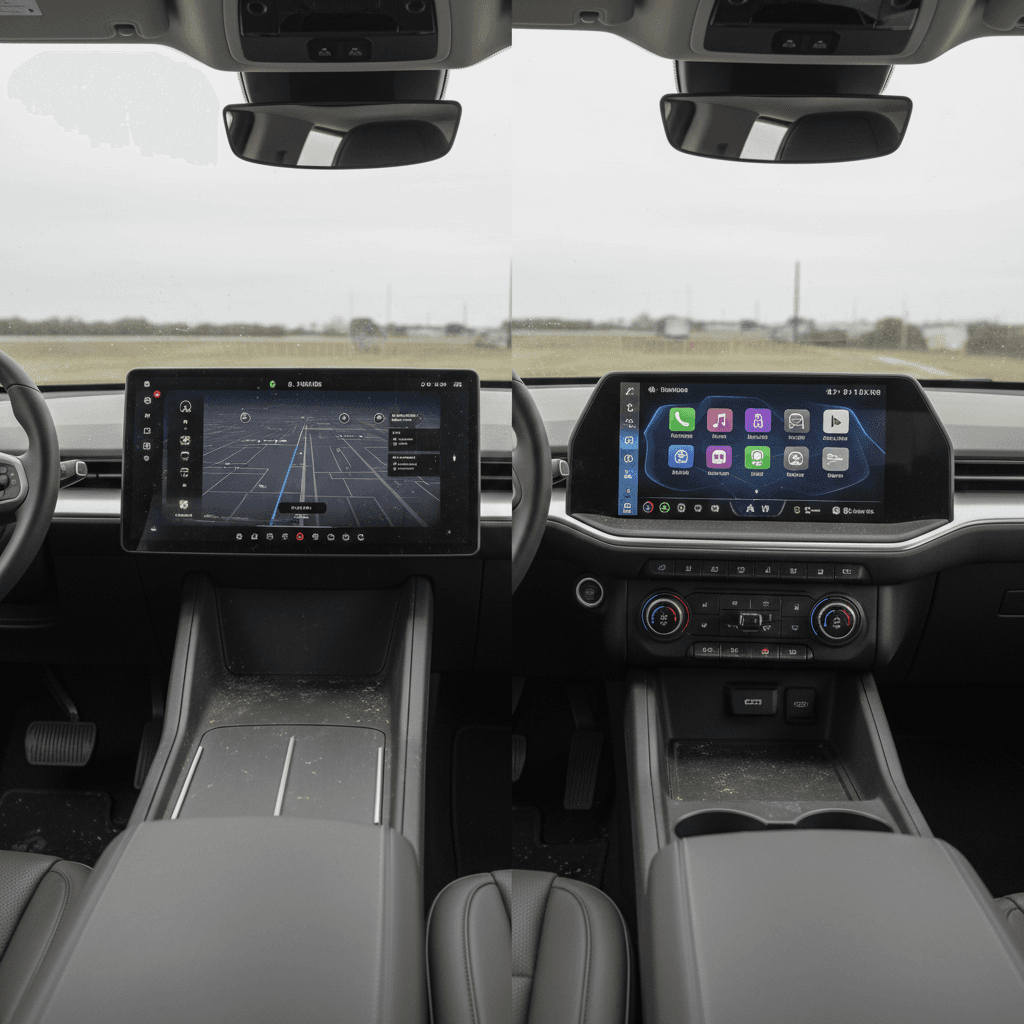
- Minimalist interior dominated by a large center touchscreen and smaller rear display.
- Tesla’s mature software stack: frequent OTA updates, polished navigation with charging integration, and slick phone‑as‑key experience.
- Controversial controls (yoke‑style wheel on some builds, turn‑signal buttons) and steep learning curve for some drivers.
- Ride quality is generally composed, with adaptive air suspension doing heavy lifting.
Silverado EV Cabin and Tech
- Looks and feels like a modern Chevy truck: proper stalks, physical controls where you expect them, and familiar seating position.
- Google‑built‑in infotainment, big center screen, and modern driver‑assist features.
- Software has improved but still lags Tesla in polish and update cadence.
- Air suspension and four‑wheel steering (on some trims) make this huge truck surprisingly maneuverable.
Driving Feel Summary
Ownership Costs, Reliability Signals, and Resale
Upfront prices on both trucks are high, and incentives shift often. Where ownership really starts to diverge is in charging costs, potential repair complexity, and how each truck is likely to age in the used market.
Key Ownership Considerations
What matters after the honeymoon period.
Energy and Maintenance
- Both trucks slash fuel costs vs gas or diesel when charged at home.
- Cybertruck owners who rely heavily on Tesla Superchargers may pay more per kWh than home rates, but gain time convenience.
- Both trucks benefit from minimal traditional maintenance (no oil changes), but tires and brakes on 7,000+ lb trucks are not cheap.
Repairs and Body Work
- Cybertruck’s stainless exoskeleton and unique glass make collision repair and body work a growing‑but‑niche specialty.
- Silverado EV uses more conventional truck construction, which body shops are adapting to faster.
Resale and Used Market
- Cybertruck’s scarcity and hype have buoyed early resale values, but long‑term pricing will follow more normal EV depreciation curves.
- Silverado EV WTs and Trail Bosses that prove themselves in fleets should develop strong demand among second‑owners who tow or haul.
Battery Health Matters Most Used
Which Electric Truck Should You Buy? Scenario-Based Picks
There’s no single winner in the Tesla Cybertruck vs Chevrolet Silverado EV debate. Instead, there are better and worse fits for specific lives. Here’s how the decision usually breaks down in the real world.
Best-Fit Scenarios
Match your life to the right truck, not the other way around.
Mostly Suburban Driving, Occasional Road Trips
Pick: Cybertruck AWD
- You charge at home most nights and do a mix of commuting, Costco runs, and weekend getaways.
- Supercharger access makes long trips easy without obsessing over third‑party DC fast chargers.
- Range is ample for daily life, and you value Tesla’s software and app ecosystem.
Rural Contractor or Ranch Use
Pick: Silverado EV WT or Trail Boss (Extended/Max Range)
- You haul tools, materials, or equipment, sometimes far from big interstates.
- Extra battery capacity gives you more buffer on days where you’re 200–300 miles from home.
- Traditional ergonomics, bed access, and GM’s commercial support matter more than cutting‑edge software.
Frequent Camping and Medium Towing
Pick: Toss‑up, lean Cybertruck if chargers are good, Silverado EV if distances are long.
- For 3,000–7,000 lb campers on routes rich with Superchargers, Cybertruck’s network is a huge plus.
- If your trips are long, remote, and fast‑charger coverage is thin, a Max Range Silverado EV buys you more margin.
Value Shopper on the Used Market
Pick: The truck with the healthiest battery and cleanest history.
- Depreciation will make both Cybertruck and Silverado EV much more attainable as used inventory grows.
- Battery health, charging history, and accident records will matter more than whether the badge says Tesla or Chevy.
Shopping Used Cybertruck or Silverado EV with Recharged
If you’re considering a used Tesla Cybertruck or Chevrolet Silverado EV, you’re very early to the party, which is exactly where deals and landmines live side by side. These are complex, high‑voltage, heavy trucks. A basic visual once‑over isn’t enough.
Used Electric Truck Buying Checklist
1. Verify Real Battery Health
Look beyond the dashboard guess. A <strong>battery health diagnostic</strong>, like the Recharged Score that comes with every vehicle on Recharged, quantifies remaining capacity and expected range so you’re not buying a 300‑mile truck that only goes 210.
2. Ask How It Was Charged
Frequent DC fast charging, especially to 100%, can accelerate degradation. Ask for charging patterns, not just mileage. A low‑mile truck that lived on DC fast chargers might be worse off than a higher‑mile truck that mostly charged at Level 2.
3. Check Tow and Payload History
If a Silverado EV or Cybertruck spent its life at max tow weight, expect more wear on tires, brakes, suspension, and possibly faster range loss. Service records and owner interviews help here.
4. Inspect for Collision and Corrosion
Cybertruck’s stainless panels and Silverado EV’s Ultium battery structure require EV‑savvy body shops. Confirm quality repairs and check for any warnings related to high‑voltage components.
5. Confirm Charging Compatibility
Make sure you’re clear on what cables and adapters come with the truck, which fast‑charging networks it can use today, and how that lines up with where you live and travel.
6. Factor in Financing and Trade‑In
Because these are expensive trucks, smart financing matters. <strong>Recharged</strong> offers EV‑friendly financing, trade‑in options, and even consignment if you’re selling an existing vehicle as you step into an electric pickup.
How Recharged Helps
Ready to find your next EV?
Browse VehiclesFAQ: Tesla Cybertruck vs Chevrolet Silverado EV
Frequently Asked Questions
At the end of the day, the Tesla Cybertruck vs Chevrolet Silverado EV decision isn’t about winning an internet argument, it’s about how you’ll live with a 7,000‑plus‑pound electric truck for the next five to ten years. Cybertruck makes the most sense if you value software, Superchargers, and a striking design that still turns heads. Silverado EV is the safer bet if you’re steeped in truck culture, haul for a living, or want the security blanket of a massive Ultium battery pack. Whichever way you lean, approaching the purchase with a clear use case, a realistic view of range and towing, and verified battery health, especially on the used market, will matter more than any single spec line.