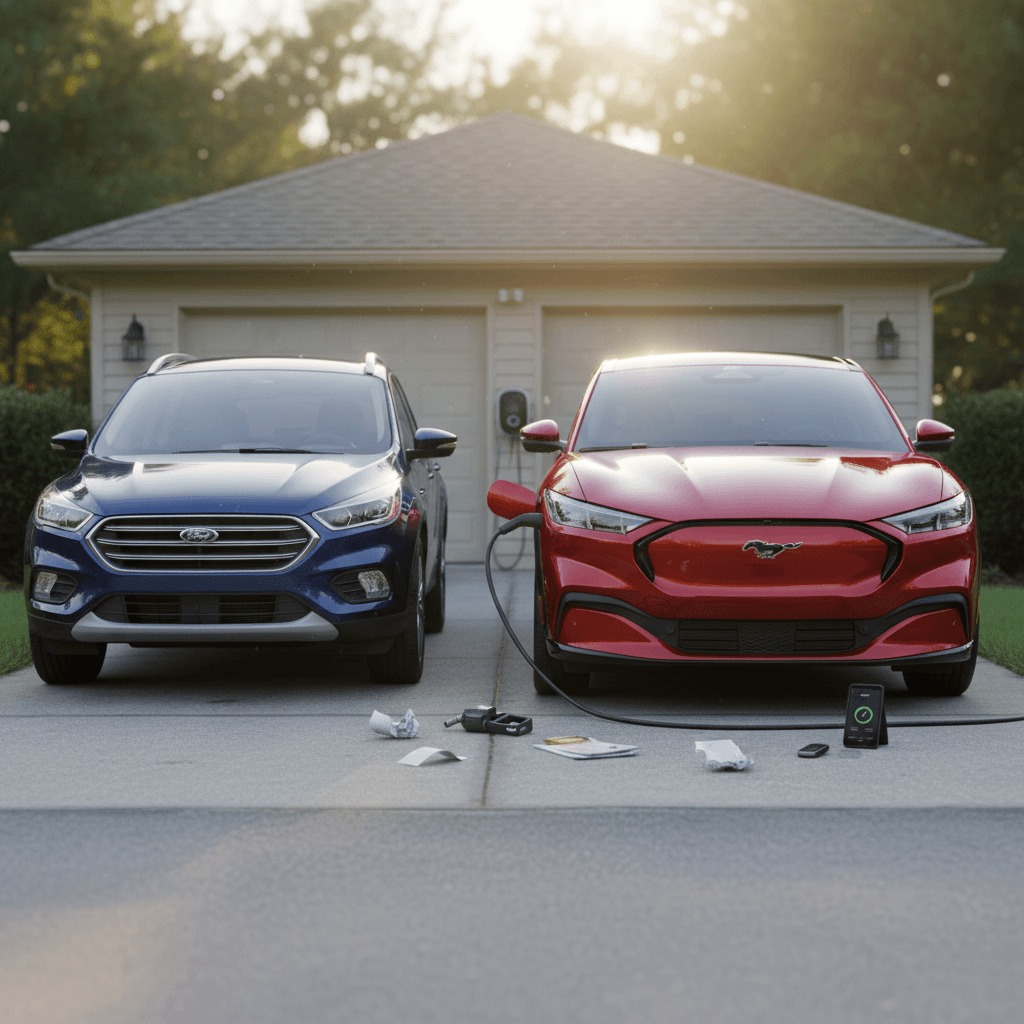
If you’re driving a Ford Escape and eyeing a Ford Mustang Mach-E, you’re probably wondering less about horsepower and more about dollars. Will switching from a Ford Escape to a Ford Mustang Mach-E actually deliver real cost savings once you factor in fuel, maintenance, insurance, and incentives, or is it just a fun idea with a bigger payment?
The short story
Why Ford Escape Owners Are Eyeing the Mustang Mach-E
The Ford Escape has long been Ford’s sensible compact SUV: practical, familiar, and relatively efficient for a gas vehicle. The Mustang Mach-E, by contrast, is Ford’s electric statement piece, still an SUV, but sleeker, quicker, and powered entirely by electrons. For many Escape owners, the Mach-E hits three big pressure points at once: rising fuel prices, concern about long-term maintenance costs, and a growing desire to drive something that feels modern and future-proof.
Ford Escape vs. Mustang Mach-E at a Glance
How the two SUVs compare for a typical owner
Vehicle type
Ford Escape: Compact gas SUV (available as hybrid)
Mustang Mach-E: All-electric compact SUV
Efficiency
Escape (gas): ~26–30 mpg combined
Mach-E: ~3–3.5 miles per kWh (equivalent to ~90–110 MPGe)
Operating costs
Escape: Higher fuel + more routine service
Mach-E: Much lower fuel; fewer moving parts to service
Quick Answer: How Much Can You Save?
Typical Annual Savings Moving from Escape to Mach-E*
These are estimates, not promises
Fuel Costs: Gas vs. Electric for Escape vs Mach-E
Fuel is where the Mustang Mach-E quietly chews through your old gas budget. Let’s use a practical, conservative scenario: 12,000 miles per year, typical for U.S. drivers.
Estimated Annual Fuel/Energy Cost
Example numbers for a typical driver at 12,000 miles/year
| Vehicle | Efficiency assumption | Energy needed/year | Annual fuel/energy cost |
|---|---|---|---|
| Ford Escape (gas) | 28 mpg combined | ~429 gallons | ~$1,500 |
| Ford Escape Hybrid | 40 mpg combined | ~300 gallons | ~$1,050 |
| Mustang Mach-E (RWD) | 3.0 mi/kWh | ~4,000 kWh | ~$600 |
| Mustang Mach-E (AWD) | 2.7 mi/kWh | ~4,445 kWh | ~$670 |
Assumes gas at $3.50/gal, electricity at $0.15/kWh, mostly home charging.
Quick way to sanity-check your savings
Even if your Escape is the more efficient hybrid version, the Mach-E still usually wins on energy costs, especially if you can take advantage of off-peak electric rates or have cheap residential power.
Maintenance and Repairs: Where EVs Quietly Win
The Escape is a conventional gas SUV. It has an engine, transmission, exhaust system, and all the regular supporting cast of fluids and filters. The Mustang Mach-E removes most of that complexity. You still have suspension, brakes, tires, and cabin filters, but the high-maintenance hardware simply isn’t there.
Typical Escape maintenance items
- Regular oil and filter changes
- Transmission fluid service
- Exhaust system components over time
- Engine air filter, spark plugs, belts
- More frequent brake service if mostly city driving
Typical Mach-E maintenance items
- Tire rotations and replacements
- Cabin air filter changes
- Brake fluid service (less frequent pad wear thanks to regen)
- Occasional software updates, usually over the air
- No engine oil, no exhaust, no traditional transmission
Realistic maintenance savings
Big-ticket EV repairs are understandably a concern. That’s where buying a used Mustang Mach-E with a verified battery health report and remaining warranty, like the vehicles listed on Recharged, can dramatically reduce your risk.
Insurance, Taxes, and Fees When You Switch
Insurance is one area where the Mach-E doesn’t always come out ahead. As a newer, more expensive electric SUV packed with tech, it can cost more to insure than an older Escape, though this varies heavily by driver profile and region.
What Usually Happens to Insurance and Fees
Not always cheaper, but rarely a deal-breaker
Insurance
Escape → Mach-E: Premiums may rise, stay flat, or occasionally drop depending on safety features and your record.
Smart move: get Mach-E quotes before you switch.
Registration fees
Some states add EV registration surcharges to make up for lost gas-tax revenue.
Example: an extra $100–$200 per year.
Net effect
Slightly higher insurance + possible EV fee often gets more than offset by fuel and maintenance savings.
Check your state’s EV fees
Purchase Price: New vs. Used Escape and Mach-E
On sticker price alone, a new Mustang Mach-E typically costs more than a new Ford Escape, especially if you compare base Escape trims with mid-range Mach-E models. The story changes when you widen the lens to lightly used Mach-E inventory, especially those 1–3 years old.
Why used EV pricing matters
If you’re financing, remember to compare total monthly cost, not just the payment: loan + fuel + maintenance + insurance. A slightly higher payment on a Mach-E can still mean lower total monthly out-of-pocket once you strip out gas station visits and shop visits.
Federal and State Incentives That Tilt the Math
Incentives are the wild card that can turn a close call into a clear win for the Mach-E. As of 2026, the U.S. landscape includes a mix of federal tax credits, point-of-sale discounts, and state/utility rebates that can apply to new and sometimes used EVs.
- Federal clean vehicle incentives: Depending on current rules, certain new and used EVs may qualify for a federal benefit, sometimes applied directly at the dealer or marketplace.
- State EV rebates: Many states offer cash rebates or tax credits for EV purchases or leases, and some include used vehicles.
- Utility incentives: Local electric utilities often provide bill credits, off-peak rate plans, or rebates for installing Level 2 home charging.
Don’t leave free money on the table
Charging at Home vs. Public: What It Really Costs
Your charging mix, how much you charge at home vs. on public fast chargers, has a huge impact on your real-world savings compared with the Escape.
Home charging (where most savings live)
- Electricity is usually cheapest at home, especially on off-peak plans.
- For many U.S. households, this means roughly $0.10–$0.20 per kWh.
- Translated: often $0.03–$0.06 per mile in a Mach-E.
Once you have a Level 2 charger or a 240V outlet, topping up is as simple as plugging in overnight.
Public fast charging (convenient, pricier)
- DC fast charging can cost 2–3× more per kWh than home power.
- Great for road trips and emergencies, but too expensive for daily use if you want maximum savings.
- Many Mach-E drivers still come out ahead even with some fast charging, but a home base is key.
If you can’t charge at home, run the math twice
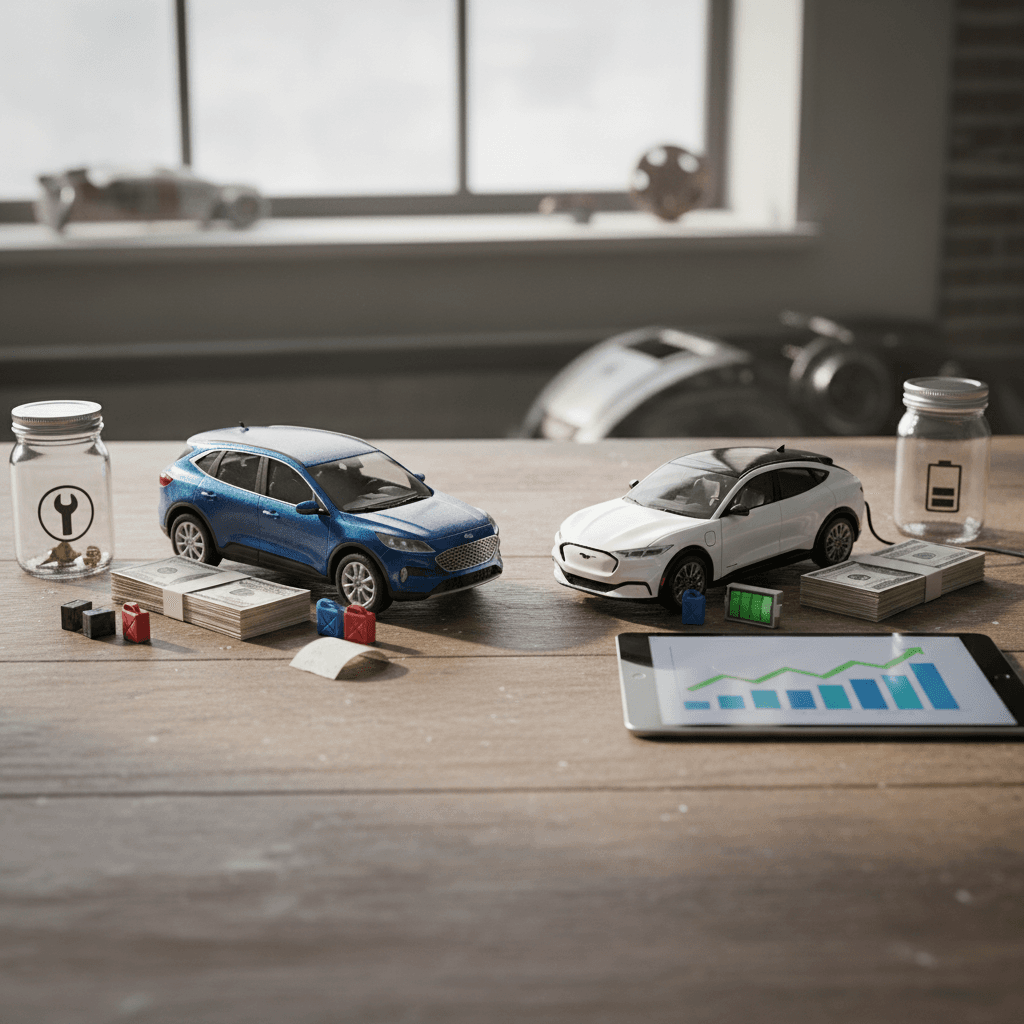
5-Year Cost Comparison: Ford Escape vs Mustang Mach-E
Let’s put the major pieces together. Below is a simplified 5-year view using the same 12,000 miles/year assumption and conservative averages. Think of this as a framework you can adjust for your situation.
Illustrative 5-Year Cost of Ownership
High-level comparison; exclude purchase price and financing to focus on running costs.
| Category (5 yrs) | Ford Escape (gas) | Ford Escape Hybrid | Mustang Mach-E (mostly home charging) |
|---|---|---|---|
| Fuel / electricity | ~$7,500 | ~$5,250 | ~$3,000–$3,350 |
| Routine maintenance | ~$2,500 | ~$2,300 | ~$500–$1,000 |
| EV registration / fees | N/A or minimal | N/A or minimal | Add ~$500–$1,000 total in some states |
| Estimated total (running costs) | ~$10,000 | ~$7,550 | ~$4,500–$5,350 |
Assumes stable prices; your numbers will vary by location and driving habits.
Takeaway from the 5-year view
Why a Used Mustang Mach-E (with a Battery Report) Often Wins
If you’re moving from an older Escape, it’s natural to look at a used Mustang Mach-E rather than a brand-new one. That’s where the numbers, and peace of mind, can really start to favor the EV.
Advantages of Buying a Used Mach-E Through a Specialist Marketplace
How to get the upside of EV savings without guessing on battery health
Verified battery health
Every EV on Recharged comes with a Recharged Score Report, including a battery health check so you know how much usable range you’re getting, not just a number on the window sticker.
Fair pricing transparency
Used EV markets move fast. Recharged benchmarks each vehicle against the wider market so you can see fair market pricing and avoid overpaying for a trendy model.
Guided EV support
If you’re coming from gas, having EV-specialist support, from range questions to home charging, is worth its weight in gold. That’s built into the Recharged experience.
Delivery and trade-in can simplify the switch
Step-by-Step Checklist for Switching from Escape to Mach-E
Your Escape → Mach-E Transition Plan
1. Map your real-world driving
Look at the last few months of mileage: typical daily range, longest regular trip, and how often you road-trip. Most Escape owners discover a Mach-E’s range more than covers their real life, an important first confidence boost.
2. Audit your fuel and maintenance spend
Pull a bank or credit-card statement and tally what you actually spent on gas and service for the Escape over the last 12 months. That’s your baseline to compare against Mach-E estimates.
3. Check home charging options
Confirm whether you have access to a garage or driveway outlet, or can install a 240V circuit for Level 2 charging. If you rent, talk to your landlord about options, or look closely at workplace charging.
4. Get insurance quotes for a Mach-E
Ask your current insurer, plus at least one competitor, for quotes on the specific Mach-E trims you’re considering. Plug the real monthly number into your budget, not a guess.
5. Explore used Mach-E listings
Compare used Mustang Mach-E inventory on EV-focused sites like Recharged. Look for <strong>battery health reports</strong>, clear pricing, and remaining factory warranty. This is often where the value sweet spot lives.
6. Run a full monthly-cost comparison
Add up: new loan or lease payment + insurance + estimated electricity + a small maintenance reserve. Compare that to your Escape’s payment (or opportunity cost), plus fuel and upkeep. This is the true ‘can I afford it?’ picture.
FAQ: Switching from Ford Escape to Ford Mustang Mach-E
Frequently Asked Questions
Is Switching from an Escape to a Mach-E Worth It?
When you strip out the emotion and look at the ledger, switching from a Ford Escape to a Ford Mustang Mach-E often makes solid financial sense, especially over a 5-year horizon. Fuel and maintenance are where the EV quietly wins, and a smartly priced used Mach-E can narrow or even erase the upfront price gap while giving you a newer, more advanced SUV.
The key is to run your numbers: how much you drive, what you pay at the pump, what you’d pay for electricity, and how easily you can charge at home. If the math checks out, the Mach-E doesn’t just feel like the future; it can feel like a raise every time you drive past a gas station.
If you’re ready to explore that switch, Recharged can help you compare used Mustang Mach-E options, see verified battery health reports, line up financing, and even trade in your Escape without leaving home. That way, the only surprise you get from your new EV is how quickly it starts paying you back mile after mile.