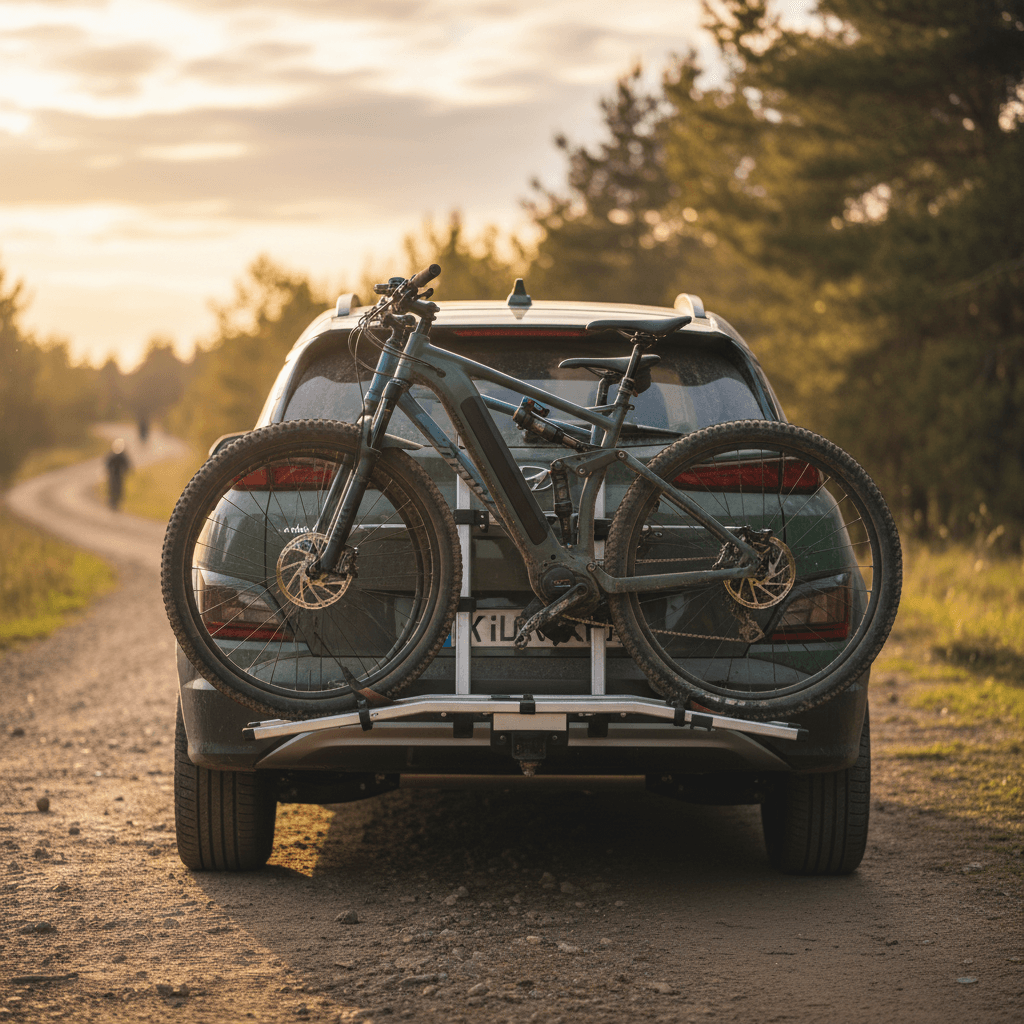
If you own a Hyundai Kona Electric and also ride bikes, you’ve probably discovered the one big downside of this tidy little crossover: there’s nowhere obvious to hang a couple of bicycles. The good news is that there are solid Hyundai Kona Electric bike rack options, hitch, roof, and trunk, if you understand the car’s weight limits and a few EV‑specific quirks.
Key takeaway
Hyundai Kona Electric bike rack basics
Before you start clicking "add to cart" on random racks, you need to understand two things about the Kona EV: payload and roof/hitch limits. These determine how many bikes you can carry and where they should go.
Core weight limits that matter for bike racks
Always confirm numbers in your specific owner’s manual, but these ballparks will get you oriented.
Payload
Typical Kona Electric payload is in the ~900–1,000 lb range depending on trim and market. That has to cover you, passengers, cargo, and rack + bikes.
Roof load
Hyundai spec sheets list a max roof load around 100 kg (220 lb) for many Kona Electric trims with rails. Crossbars and bike racks count against this.
Hitch load
Aftermarket hitches for the Kona Electric are usually limited to bike racks / cargo only, with tongue weight typically around 200 lb. Treat that as an upper ceiling, not a target.
Check your specific car
Can you put a hitch on a Hyundai Kona Electric?
Yes, many Kona Electric owners in North America and Europe install aftermarket trailer hitches, but they’re almost always used for bike racks and cargo trays only, not for towing a trailer. Hyundai has historically been cautious about publishing towing ratings for the EV, and in some markets the official line is effectively “no towing.”
Why a hitch rack works well on the Kona EV
- Least impact on range compared with roof racks, especially at highway speeds.
- Easiest loading height, especially for e‑bikes or heavy mountain bikes.
- No contact with paint or hatch edges, unlike many strap‑on trunk racks.
- Plays nicely with the Kona’s short roofline and hatch shape.
What to watch out for
- Hyundai may state “for bike racks / cargo only, no towing.” Respect that if you care about warranty conversations.
- Most hitches are 1¼" Class I or II; some heavy e‑bike racks want a 2" Class III.
- Professional installation is recommended, the exhaust‑less rear of the Kona EV is tight and full of plastic undertrays.
Where owners find hitches
Best hitch-mounted bike rack options for Kona Electric
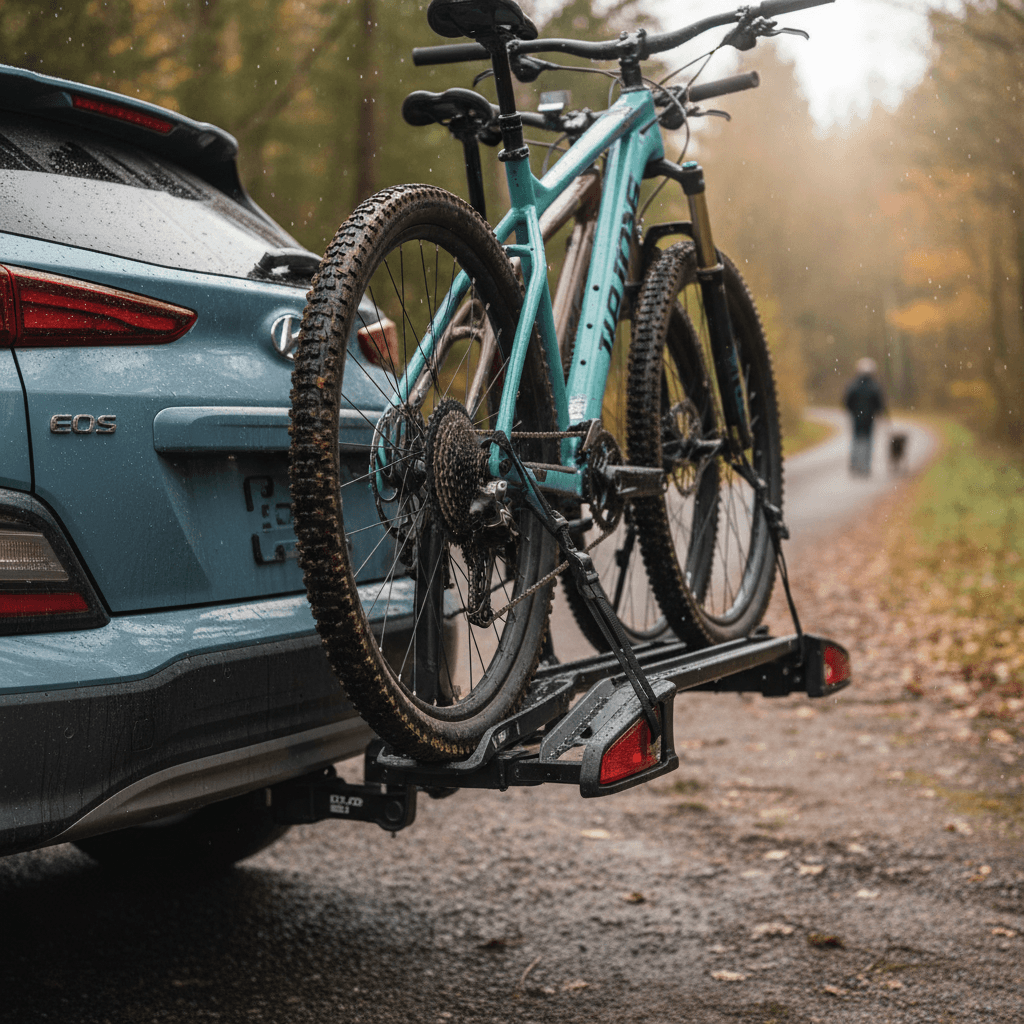
If you can add a hitch, a platform‑style hitch rack is the sweet spot for a Hyundai Kona Electric. It keeps weight low, loading is simple, and you won’t be threading bikes over the roof like a CrossFit workout.
Common hitch rack styles for the Kona Electric
Use this as a guide to features and trade‑offs. Always double‑check the rack’s tongue weight and hitch size against your specific hitch.
| Rack type | Best for | Hitch size | Typical bike weight limit | Pros | Cons |
|---|---|---|---|---|---|
| 2‑bike platform (standard) | Most Kona EV owners with analog bikes | 1¼" or 2" | 40–60 lb per bike | Easy loading, stable, often tilts for hatch access | Heavier and more expensive than hanging racks |
| 2‑bike heavy‑duty / e‑bike rack | E‑bikes or long‑travel MTBs | 2" preferred | 60–80+ lb per bike | Built for weight, often with ramps, wide trays | May require a 2" receiver; heavier tongue weight |
| Hanging (mast‑style) rack | Light road/gravel bikes on a budget | 1¼" or 2" | Usually 35–40 lb per bike | Cheaper, lighter, simple design | Can sway, frame contact, not ideal for step‑through or e‑bikes |
| Swing‑away platform rack | Frequent cargo‑area access with bikes loaded | 2" | 50–60 lb per bike | Full access to hatch when swung away | Most expensive, adds leverage and weight to hitch |
Platform racks with a tilt‑away feature are usually the best match for the Kona EV’s hatch and compact size.
Mind the total tongue weight
Roof rack and roof-mounted bike carriers
If you don’t want a hitch, or can’t get a clean fit for your model year, your next option is a roof rack plus bike trays. The latest Kona Electric generations offer factory roof rails on many trims, and the aftermarket has scrambled to catch up with crossbars that clamp to the flush rails.
Roof system: what you need for bikes
Think in layers, rails, crossbars, then bike carriers.
Factory rails
Many Kona Electric trims come with flush or low‑profile rails. These are your attachment points. If your car has a bare roof, you’ll need door‑clamp style crossbars specifically approved for your model.
Crossbars
Brands now sell vehicle‑specific crossbars for the 2024–2025 Kona and Kona Electric with flush rails. Look for load ratings around 165–220 lb and confirm compatibility with your exact year and rail style.
Bike carriers
On top of the bars you’ll mount upright fork‑ or frame‑mount bike trays. Most support bikes up to 35–40 lb each; check carefully if you plan to hoist an e‑bike overhead (spoiler: it’s not fun).
Respect the roof load limit
When a roof setup makes sense
- You already have a hitch dedicated to a cargo tray.
- You’re carrying light road, gravel, or XC bikes (≤ 30–35 lb each).
- You care more about keeping the rear hatch clear than absolute efficiency.
- You occasionally need bikes + rear cargo box at the same time.
Drawbacks on the Kona Electric
- Larger range hit at highway speeds due to aero drag.
- Shorter drivers may struggle to load bikes onto the roof.
- Becomes easy to forget about garage and drive‑thru clearance.
- Bike trays for e‑bikes are rare and awkward to use.
Trunk and hatch-mounted bike racks on the Kona Electric
Classic strap‑on trunk racks are the default for a lot of compact hatchbacks, and you’ll see them marketed for the gasoline Kona. On the Kona Electric, though, they’re a compromise: the hatch sheetmetal and rear spoiler weren’t designed for constant point loads and strap tension.
- Fitment can be tricky because of the rear spoiler and tailgate shape.
- Weight tends to concentrate on a small area of the bumper or hatch edge.
- Straps can chafe paint or deform soft plastic trims over time.
- Rear‑mounted radar or camera systems may be partially blocked.
When a trunk rack is still worth considering
Carrying heavy e-bikes on a Kona Electric
E‑bikes are where the math gets serious. Many popular commuter and cargo e‑bikes weigh 55–75 lb before you even add accessories. Two of those plus a stout rack can push a Kona Electric’s hitch tongue rating or roof limit uncomfortably hard.
E‑bike weight math on a small EV
E‑bike best practices for the Kona Electric
Remove batteries and accessories
Take the battery, panniers, and baskets off the e‑bike before loading it. That can easily cut 8–12 lb per bike and helps keep tongue load and roof load down.
Choose a rack with e‑bike in the spec sheet
Don’t improvise. Pick a rack that <strong>explicitly rates each tray for your bike weight</strong> and is rated for use on a 1¼" (or 2") hitch with compact crossovers.
Use a 2" receiver when possible
If your installer can fit a 2" EcoHitch‑style receiver safely, it opens up a wider range of purpose‑built e‑bike racks with better stability and weight margins.
Load heaviest bike closest to the car
Put the heaviest bike on the tray nearest the bumper to reduce leverage on the hitch and frame attachments.
Re‑check bolts and straps regularly
The extra mass of e‑bikes can work hardware loose over time. Make it a habit to inspect rack bolts, hitch pins, and wheel straps every few trips.
Range impact, charging access, and daily usability
Bike racks change how your Kona Electric slips through the air, and how it fits at charging stations. That doesn’t mean you shouldn’t bolt one on, but you should know what you’re signing up for.
Range and efficiency
- Hitch racks sit in the car’s slipstream and generally cost you less range than roof racks, especially at 65–75 mph highway speeds.
- Roof racks with bikes can add a surprising amount of drag. Plan for a noticeable hit on long road trips and stop a bit more often to charge.
- For day‑to‑day local riding, the range impact is usually a non‑issue, you’ll charge at home and never notice.
Charging station maneuvering
- At some public DC fast chargers, a rear rack may force you to park slightly offset so the cable reaches the Kona’s charge port.
- A tilting or swing‑away rack is extremely helpful if you need frequent access to the cargo area on road trips.
- In tight parking garages, a tall roof‑mount setup can clash with low beams; always know your loaded height.
Road trip strategy
Installation, safety, and warranty tips
Electric vehicles add one more layer to the normal “don’t lose your bikes on the freeway” conversation: you’re also working around a high‑voltage battery pack and a body that carries a lot of its structure in the floor. You want clean installs and conservative loads.
Safety and warranty checklist for Kona Electric bike racks
Confirm official limits in your manual
Before you buy anything, read the sections on <strong>roof load, towing, and payload</strong> in your Kona Electric’s owner’s manual. If it says “no towing,” treat a hitch as bike‑rack‑only and keep weights modest.
Use reputable installers for hitches
A good installer will know where to trim plastic, how to torque bolts, and how to avoid sensitive wiring or HV components. Ask if they’ve done a Kona Electric specifically, not just the gasoline Kona.
Choose racks with conservative ratings
If you calculate you need 150 lb of capacity, buy a solution comfortably rated above that. Don’t run any component right at its advertised maximum on a bouncy interstate.
Protect paint and wiring
For trunk racks, add clear film where straps touch paint and avoid routing hooks near sharp hatch edges or wiring grommets. For roof setups, use torque wrenches and follow bar spacing specs.
Do a shake test before every drive
With bikes loaded, grab the rack and <strong>shake it hard</strong>. The whole car should move, not just the rack. If anything clunks or shifts, fix it before you drive away.
Used Kona EV buyers: racks are a plus, not a minus
Ready to find your next EV?
Browse VehiclesStep-by-step: choosing the right bike rack for your Kona EV
Pick the right setup for how you ride
Mostly light road / gravel bikes
Confirm factory rails or ability to add crossbars if you prefer a clean rear hatch.
If you can install a hitch, a light 2‑bike platform rack is still the most convenient choice.
If you go roof‑mount, limit yourself to 2–3 bikes and stay well under the roof load limit.
Use frame‑friendly trays and add a lock core system for security.
One or two heavy e-bikes
Prioritize a professionally installed hitch; ask for a 2" receiver if safely possible.
Choose an e‑bike‑rated 2‑bike platform rack with trays rated above your bike weights.
Remove batteries and accessories before loading to cut mass and reduce leverage.
Skip roof‑mount entirely for e‑bikes unless you absolutely must, loading is awkward and risky.
Family trips with 3–4 bikes
Use a hitch rack for 2 bikes and consider a roof setup for 1–2 additional light bikes.
Keep careful track of total payload: people + cargo + rack + bikes.
If kids’ bikes are small and light, they’re good candidates for roof trays.
Practice loading at home before a big road trip so you’re not debugging in a hotel parking lot.
Apartment / no-hitch situations
Look for a trunk rack specifically listed as compatible with your Kona generation.
Limit yourself to 1–2 light bikes and protect contact points with paint film and foam sleeves.
Store the rack indoors to extend strap life and keep the car looking clean.
If you’re upgrading cars soon, consider a used EV with a hitch already installed from a seller like Recharged.
FAQ: Hyundai Kona Electric bike rack options
Frequently asked questions about Kona Electric bike racks
The Kona Electric punches well above its weight as a commuter and road‑trip partner, and the right bike rack turns it into a genuinely capable adventure rig. Whether you opt for a hitch rack, a roof system, or a carefully chosen trunk rack, the keys are simple: respect the weight limits, buy purpose‑built hardware, and insist on a clean install. If you’re still shopping for a Kona EV, or thinking about upgrading the one you have, Recharged can help you find a used example with the right accessories, verified battery health, and transparent history so that your next ride, on two wheels or four, starts from a solid base.