If you live in South Carolina and you’re trying to decode the mysterious phrase “South Carolina electric car rebate 2026”, you’ve run into a problem: the programs people used to talk about have changed, and some of the juiciest federal incentives have already sunset. But that doesn’t mean there’s no money on the table. It just means you have to be a bit more strategic, especially if you’re shopping the used EV market.
Quick snapshot: SC EV incentives in 2026
South Carolina electric car rebate 2026: where things stand
Let’s start with the blunt truth: if you’re Googling for a giant, simple “South Carolina electric car rebate 2026” that knocks thousands off the price of a new or used EV, that program doesn’t exist today. There’s no California‑style, state‑run check coming in the mail just because you bought a battery-powered car.
What South Carolina does have in 2026 is a patchwork: utility rebates for home charging equipment, new federal home energy rebates rolling out under the Inflation Reduction Act, and a still‑available federal EV charger tax credit through June 30, 2026. The big federal tax credits that once subsidized buying new and used EVs? Those effectively ended for purchases after September 30, 2025. So your playbook this year is different: focus on buying smart, especially used, and stacking the remaining charger and home‑energy incentives.
South Carolina EV & incentive landscape heading into 2026
Mind the dates
Does South Carolina have its own electric car rebate in 2026?
Unlike some states, South Carolina does not run a statewide consumer rebate or income tax credit specifically for buying an EV in 2026. There’s no line on your South Carolina income tax return that says, “Congrats on your new EV, here’s $2,500.”
Historically, South Carolina has leaned more on the private sector, especially utilities, to encourage EV adoption and grid‑friendly charging. That means instead of a big, flashy state program, you’re more likely to find incentives on your electric bill or via a utility portal than on a Department of Revenue webpage.
What South Carolina does offer in 2026
- Utility rebates for Level 2 home chargers in certain territories (especially Duke Energy).
- Participation in new federal Home Energy Rebate programs rolling out under the Inflation Reduction Act.
- Access to the federal EV charger tax credit through June 30, 2026.
What South Carolina doesn’t offer in 2026
- No broad state purchase rebate for new or used EVs.
- No state income tax credit tied directly to EV purchase price.
- No special state‑level break on vehicle registration fees for EVs.
So why do you see “SC EV rebate” pages online?
Utility EV and home charger rebates in South Carolina
If there’s a genuine “rebate” you can still grab as a South Carolina EV driver in 2026, odds are it comes from your electric utility, not the state legislature. The details change by provider and sometimes by year, but the basic pattern is the same: utilities subsidize Level 2 home charging and may offer off‑peak rate plans or bill credits if you let them shape when your car charges.
Key types of SC utility programs to look for in 2026
Exact amounts and eligibility vary by provider, always confirm on your utility’s site before you install anything.
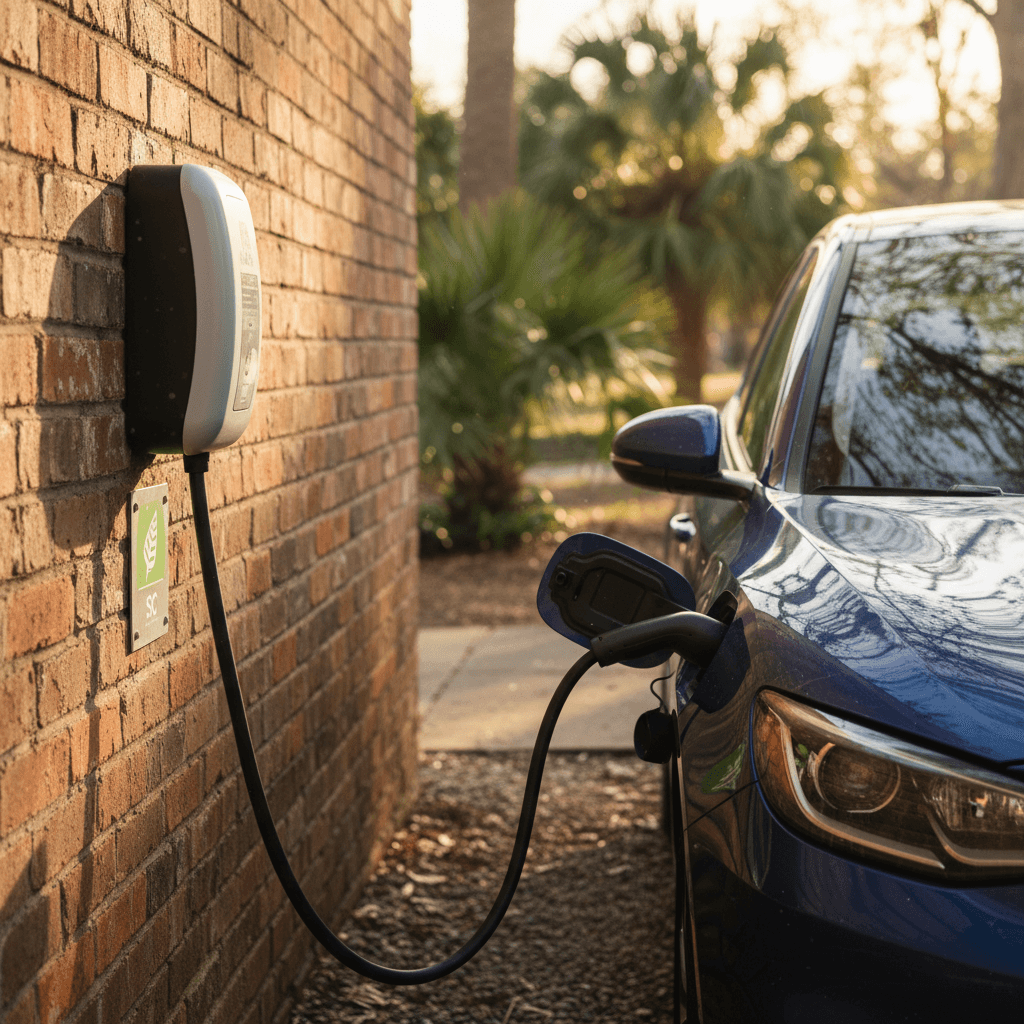
Level 2 home charger rebates
Historically, programs like Duke Energy’s residential charger rebate in its South Carolina territory have offered around $1,000 toward installing a Level 2 charger at home, often with caps on the number of participants.
Some programs are pilots or have limited slots, so don’t assume they’re open forever.
Off‑peak EV rate plans
Many utilities now offer time‑of‑use rates for EV owners. Charge overnight and you pay a lower rate per kWh; charge at 5 p.m. on a hot August day and you pay more.
Combine this with a used EV’s efficiency and you can dramatically undercut your old gas bills.
Managed charging & bill credits
Some utilities will pay you a small monthly bill credit if you let them automatically schedule or briefly pause your home charging during peak demand events.
You still wake up to a full battery; the grid breathes easier; everyone wins.
How to find your exact utility offers
Home energy and IRA rebates that can help EV owners
South Carolina is also rolling out Home Energy Rebates funded by the federal Inflation Reduction Act. These programs are primarily designed to cut your home’s energy use, think heat pumps, better insulation, panel upgrades, and efficient appliances, but some of those upgrades dovetail nicely with EV ownership.
IRA‑funded home programs South Carolina residents should know about
Exact eligibility rules, income caps, and rebate amounts depend on final state program design and federal guidance. Think of this as a road map, not a binding contract.
| Program focus | How it helps an EV owner | Typical benefit type |
|---|---|---|
| Electrical panel & wiring upgrades | Lets you add a 240V circuit for a Level 2 charger without overloading your old panel. | Upfront rebate on eligible upgrade costs. |
| Whole‑home efficiency (insulation, windows) | Lower overall energy use at home, freeing up budget, and sometimes capacity, for EV charging. | Rebates tied to % energy savings. |
| Heat pump HVAC & water heaters | High‑efficiency equipment reduces your total kWh footprint, making EV charging less of a shock on the bill. | Point‑of‑sale discounts or post‑install rebates. |
| Low‑income targeted support | Higher rebate amounts or deeper discounts for qualifying households, sometimes covering most of a project. | Enhanced rebates and technical assistance. |
Check South Carolina’s official energy office site for the most current Home Energy Rebate details before you sign any contracts.
Why EV drivers should care about “home energy” rebates
What happened to the federal EV tax credit by 2026?
Here’s the plot twist a lot of shoppers miss: the big federal EV purchase credits that dominated headlines in 2023 and 2024, up to $7,500 for new EVs and up to $4,000 for used ones, were effectively terminated for vehicles purchased after September 30, 2025, under federal legislation passed in 2025. If you didn’t buy before that cutoff, you can’t claim those credits on a 2026 purchase.
You’ll still see older articles acting as if those credits are alive and well. They’re not, at least not for cars you buy in 2026. For South Carolina shoppers, that makes the remaining pieces, utility rebates, charger credits, home energy rebates, and smart used‑car pricing, more important than ever.
Watch for outdated dealer promises
The federal EV charger tax credit (still alive… for now)
The one big federal incentive that does still help South Carolina EV owners in 2026 is the Alternative Fuel Refueling Property tax credit, the EV charger credit. Thanks to the Inflation Reduction Act and later changes, this credit now runs through June 30, 2026, not 2032 as originally planned.
Key facts about the 2026 federal EV charger tax credit
1. It covers 30% of your costs
For home installations, the credit equals <strong>30% of the total cost</strong> of the charger hardware plus professional installation, capped at <strong>$1,000</strong> per tax return.
2. It applies to Level 2 home chargers
Wall‑mounted or pedestal Level 2 chargers installed at your residence can qualify, as long as they meet basic IRS requirements and are placed in service before June 30, 2026.
3. You claim it on your taxes
This is an <strong>income tax credit</strong>, not a point‑of‑sale rebate. You’ll file the appropriate IRS form with your 2026 return for chargers installed before the deadline.
4. It can stack with utility rebates
In many cases you can combine a <strong>utility rebate</strong> with the federal tax credit, as long as you correctly account for any reimbursed costs when calculating your credit amount.
5. Businesses get a richer version
If you’re a business or property owner installing commercial chargers, there’s a separate, potentially larger credit, subject to labor and location rules, that can support workplace or public charging.
Pro move: time your charger install
How to stack savings on a used EV in South Carolina
Without a big shiny purchase rebate to lean on, your best play in 2026 is to buy a used EV intelligently and then ruthlessly go after charging and home‑energy savings. In many cases, you can beat the total cost of a new EV with now‑expired credits by pairing a healthy used EV with smart infrastructure spending.
Four levers South Carolina drivers can still pull in 2026
You may not get a giant check, but you can absolutely tilt the math in your favor.
1. Buy used, not new
Used EVs have already taken their big depreciation hit. Pair that with lower fuel and maintenance costs, and you can land in a very friendly total‑cost‑of‑ownership zone.
2. Verify battery health
Battery condition is everything on a used EV. A detailed health report, like the Recharged Score that comes with every car on Recharged, helps you avoid hidden degradation.
3. Max out charger incentives
Stack a utility rebate with the federal charger credit to slash the cost of a Level 2 install. Spreading that over years of cheap home charging is where the real money is.
4. Switch to off‑peak EV rates
Enroll in an EV or time‑of‑use rate if your utility offers one, and schedule charging overnight. It’s the quiet, unsexy way to save hundreds per year.
Where Recharged fits in
Realistic 2026 savings scenarios for SC drivers
To make this less abstract, let’s walk through a couple of realistic 2026 scenarios for a South Carolina driver moving into a used EV and installing home charging. These aren’t promises; they’re ballpark illustrations of how the numbers can shake out when you actually stack the incentives that remain.
Sample 2026 savings paths for a South Carolina EV owner
Rounded numbers for illustration. Real bids, rebates, and power rates will vary by utility, city, and installer.
| Scenario | Upfront car cost | Charger & install | Rebates/credits in play | Biggest long‑term win |
|---|---|---|---|---|
| Used compact EV + basic Level 2 | $18,000 for a 3–5‑year‑old hatchback | $1,200 charger + $800 install | $1,000 utility rebate + ~$600 federal charger credit (30% of net cost) | Fuel savings vs. a 25‑mpg gas car at today’s prices. |
| Used crossover EV + panel upgrade | $24,000 for a family crossover | $1,500 charger + $2,500 wiring/panel | $1,000 utility rebate + up to $1,000 federal charger credit + possible IRA‑funded panel rebate | Turning a necessary panel upgrade into a subsidized EV‑ready upgrade. |
| No home charger, public fast‑charging focus | $17,000 for a city‑range EV | $0 at home (Level 1 only) | Maybe small utility off‑peak bill credit if enrolled | Still cheaper fuel and maintenance than an older gas sedan, especially for short commutes. |
Always confirm current utility offers and consult a tax professional before counting on specific credits.
Run the full five‑year math
Common pitfalls when chasing EV rebates
- Relying on old articles that still assume federal EV purchase credits exist in 2026.
- Starting charger work before verifying you’re enrolled in your utility’s rebate program or pilot, if required.
- Not keeping detailed receipts and documentation for your EV charger project and any panel or wiring upgrades.
- Letting a contractor “value engineer” your wiring to the bare minimum, leaving no room for a future second EV or higher‑power charger.
- Assuming every tax credit is refundable, many only help if you have enough tax liability.
Double‑check before you dig
FAQ: South Carolina electric car rebate 2026
Frequently asked questions about South Carolina EV rebates in 2026
Bottom line for South Carolina EV shoppers in 2026
In 2026, shopping for an EV in South Carolina is less about hunting for a single, headline‑grabbing state rebate and more about stacking smaller advantages: a fair‑priced used EV with a healthy battery, a subsidized Level 2 home charger, smarter electric rates, and IRA‑backed home upgrades that quietly future‑proof your panel.
If you’re willing to think like a long‑term owner rather than a one‑time rebate collector, the numbers can still work beautifully, especially in a state with relatively low electricity prices and growing utility support for off‑peak EV charging. Start by clarifying your driving needs, then choose a used EV whose battery and range are a good fit, and finally design a home‑charging setup that takes maximum advantage of the incentives that remain.
And if you’d rather not decode all of this alone, a platform like Recharged can help you compare used EVs with transparent battery‑health data, explore financing and trade‑in options, and map out a charging plan that makes sense for your household, so your first electric car feels like a smart financial move, not a leap of faith.