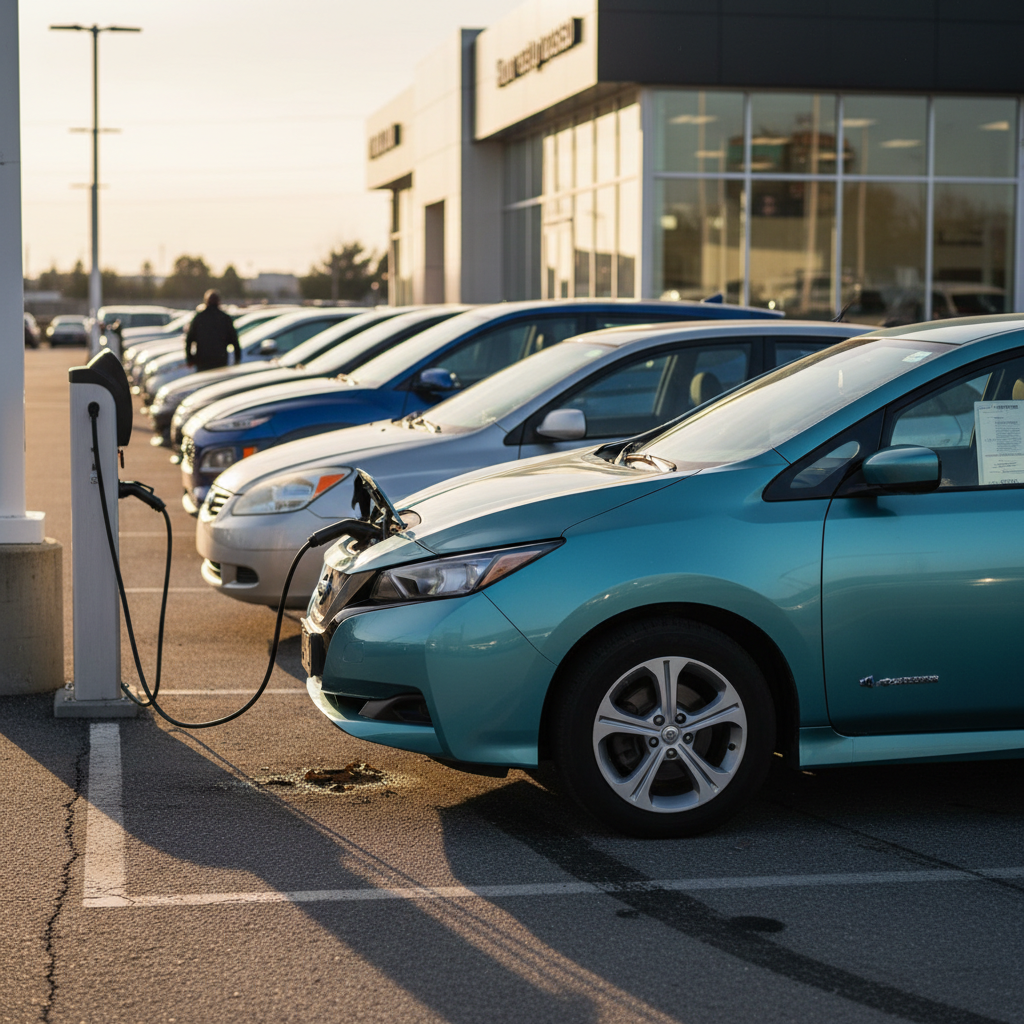
If you’re considering a Mini Cooper SE, you’re probably wondering how it holds its value over time. The Mini Cooper SE depreciation curve over 5 years looks a little different from both gas Minis and longer‑range EVs, and understanding that curve is the key to knowing when to buy, what to pay, and what you can expect to get back when you sell.
Quick snapshot: 5-year Mini Cooper SE depreciation
Mini Cooper SE depreciation basics
Before you dive into numbers, it helps to translate depreciation into something practical. Depreciation is simply how much of the car’s original price disappears over time. For the Mini Cooper SE, the key context is that early cars carried a sticker around $30,000–$37,000 depending on trim and options, but many buyers stacked hefty federal and state incentives on top of that.
Key Mini Cooper SE price reference points
The combination of modest original MSRP, generous incentives and limited range created an unusual value story: the first owners absorbed a big hit early, but by years 4–6 the curve tends to flatten. That’s where used‑EV shoppers can often find real value.
The 5-year Mini Cooper SE depreciation curve
Every car’s curve is slightly different based on mileage, condition and equipment, but most Mini Cooper SEs follow a similar five‑year pattern. To keep things simple, let’s assume a well‑optioned car with an original MSRP around $35,000, not including incentives.
Illustrative 5-year Mini Cooper SE depreciation curve
Approximate value vs. original MSRP for a typical Mini Cooper SE with average mileage and clean history.
| Age of vehicle | Typical position on depreciation curve | Approx. value vs. $35,000 MSRP | What’s happening |
|---|---|---|---|
| Year 1 | Sharp early drop | $25,000–$27,000 (70–77%) | New‑car discounts, incentives and first‑year perception of limited range pull values down quickly. |
| Year 2 | Continued adjustment | $22,000–$24,000 (63–69%) | Used shoppers price in short range vs. newer‑tech rivals; incentives on new EVs keep pressure on values. |
| Year 3 | Bottoming out | $19,000–$22,000 (54–63%) | Many 3‑year‑old Minis cluster here; buyers view them as "second car" city EVs. |
| Year 4 | Curve starting to flatten | $18,000–$20,000 (51–57%) | Depreciation slows as most of the range‑driven discount is already baked in. |
| Year 5 | Stabilizing zone | $17,000–$19,000 (49–54%) | Well‑kept Minis often settle just under half their original MSRP after five years. |
Actual prices will vary by market, mileage, options and macro EV trends, but this curve reflects how many early Mini SEs have behaved in the real world.
On paper, that translates to roughly 45–55% 5‑year depreciation for many Mini Cooper SEs, meaning they’re worth around half their original window‑sticker price after five years. Owners who bought new and didn’t use tax credits feel that drop; buyers coming in at years 3–5 often see it as an opportunity.
Remember the incentive effect

How the Mini Cooper SE compares to average EV depreciation
Typical EV depreciation over 5 years
- Many mainstream EVs see 55–65% depreciation over five years, especially earlier models with fast‑moving tech.
- Luxury EVs and high‑MSRP models can lose 60–70% or more as newer, longer‑range rivals arrive.
- Rapid improvements in range and charging speed make older EVs look dated faster than comparable gas cars.
Where the Mini SE fits in
- With roughly 45–55% loss in value over five years, the Mini Cooper SE sits in the "moderate" depreciation camp for BEVs.
- Its short rated range caps top‑end resale values, but strong brand appeal and build quality prevent total freefall.
- Limited production volume helps, fewer cars mean less used‑market oversupply than some mass‑market EVs.
Good news for used EV shoppers
Factors that shape the Mini SE depreciation curve
What really drives Mini Cooper SE depreciation?
Four big levers explain why one Mini SE drops faster, or holds better, than another.
1. Range and use case
The Mini SE’s real‑world range is typically under 120 miles. That’s plenty for city duty, but it limits appeal as an only car. Shoppers who want a road‑trip EV will look elsewhere, which keeps resale values from climbing too high.
2. Local market and charging
In dense, urban markets with short commutes and good public charging, a Mini SE looks like a perfect city car. In rural areas with long highway stretches, that same range feels restrictive and softens demand.
3. Mileage and usage pattern
A five‑year Mini SE with 25,000 mostly city miles will be valued differently from one with 80,000 highway miles. Low to average mileage matters more on a short‑range EV, because buyers count on a long second life as a commuter.
4. Battery health & model reputation
So far, first‑gen Mini SE packs haven’t shown widespread failure trends. When a pre‑purchase report confirms strong battery health, buyers are willing to pay closer to the top of the value range.
Model‑year nuance matters
Sample 5-year value scenarios for the Mini Cooper SE
To make the depreciation curve feel real, here are three simplified five‑year scenarios. These aren’t appraisals, but they do illustrate how different histories move the needle around that 45–55% five‑year baseline.
Three illustrative 5-year Mini SE depreciation stories
Scenario A: Enthusiast one‑owner, low miles
Bought new for about $35,000, garaged, dealer‑serviced, and driven 6,000 miles a year. At five years and 30,000 miles, clean history and strong battery health could support a resale in the <strong>$19,000–$20,000</strong> range, around the top of our 5‑year curve.
Scenario B: Typical commuter, average miles
Original MSRP around $33,000, used as a daily commuter at 10,000–12,000 miles a year. At five years and roughly 55,000–60,000 miles, a realistic resale range might be <strong>$17,000–$18,500</strong>, assuming solid service records.
Scenario C: Hard‑use, high miles
Car started life as a city carshare or high‑mileage commuter, now at 80,000+ miles in year five, with cosmetic wear and sketchy records. Market may value it in the <strong>$14,000–$16,000</strong> band, or lower if battery health is questionable.
Why exact numbers are always local
When buying a used Mini Cooper SE makes the most sense
Because of how the Mini Cooper SE depreciation curve front‑loads its biggest drops into the first three years, there’s a sweet spot where you can let the first owner absorb the heavy hit and step in just as values are stabilizing.
- Years 3–6 are often the value zone: range expectations are already priced in, but the car still feels modern and fresh.
- If your daily driving is under 50–60 miles and you have reliable home or workplace charging, a five‑year‑old Mini SE can feel almost new in day‑to‑day use.
- If you’re cross‑shopping gas Minis, you’ll often find that a used Mini SE with decent options costs similar money, but with lower fuel and maintenance outlay.
How Recharged fits into the picture
Ready to find your next EV?
Browse VehiclesHow battery health affects Mini Cooper SE resale value
With any used EV, battery condition is the linchpin between a good deal and a regret. The Mini Cooper SE uses a relatively small pack compared with many newer EVs, so every kilowatt‑hour of remaining capacity matters for both range and resale.
Battery health and depreciation: what buyers look for
Two Minis with the same mileage can sit at very different points on the curve.
Healthy pack, documented care
Cars that show high state of health on a proper diagnostic report, combined with moderate DC fast‑charging use and sensible charging habits, often track at the upper half of our 5‑year value range.
Question marks or visible degradation
If range is noticeably lower than expected or the seller can’t document service and charging patterns, buyers will demand a discount. That can shave several thousand dollars off a five‑year price.
Use data, not guesswork
Tips to get the best value on a used Mini Cooper SE
Smart steps to beat the depreciation curve
1. Decide how much range you really need
Map your real daily driving. If you’re doing 25–50 miles a day with easy access to charging, you can confidently shop older Mini SEs that have already taken most of their depreciation.
2. Focus on years 3–6 of age
Cars in this band have usually completed their steepest drop. You’re buying past the "new tech" hype cycle and into the stable value phase.
3. Make battery health your first filter
Prioritize cars with <strong>documented battery diagnostics</strong>, not just a clean Carfax. A healthy pack lets you sit closer to the top of the value range without overpaying.
4. Compare price to original MSRP, not just other listings
If a Mini SE stickers at $35,000 and you’re shopping a five‑year‑old example, ask where the asking price falls as a percentage of that. Around 45–55% is a reasonable band for a clean car with average miles.
5. Watch local EV incentives and rates
When new‑EV incentives grow more aggressive or interest rates move, used prices can adjust. If new cars are heavily discounted, a private‑party seller clinging to yesterday’s used price may be out of step with reality.
6. Consider total cost of ownership, not just sticker
Factor in lower fuel and maintenance versus a gas Mini, plus any remaining warranty. A car that looks average on depreciation might be excellent once you include running costs.
Trade‑in and financing can soften depreciation
FAQ: Mini Cooper SE depreciation curve and resale value
Frequently asked questions about Mini Cooper SE depreciation
The bottom line on Mini Cooper SE 5-year depreciation
If you’re buying new, the Mini Cooper SE asks you to accept a steeper early‑years depreciation curve in exchange for character, build quality and a lower upfront price than many EVs. If you’re buying used, especially around the 3‑ to 6‑year mark, that same curve works in your favor: you’re stepping in after the big drop, paying compact‑car money for a premium electric city hatchback.
The key is to shop the curve with clear eyes, know what a five‑year‑old Mini SE should be worth, verify battery health, and factor total cost of ownership rather than obsessing over depreciation in isolation. When you’re ready to look at real cars instead of theoretical curves, Recharged can connect you with used Mini Cooper SEs that have transparent pricing, verified battery diagnostics, financing options, and nationwide delivery, so you can enjoy the fun part of EV ownership while keeping depreciation in check.