If you’re shopping for an electric car in 2025, safety belongs at the top of your list right alongside price, range, and charging. The good news is that many of today’s **safest electric cars** score extremely well in crash test ratings from IIHS and NHTSA, sometimes better than their gas counterparts. The challenge is knowing how to read those scores and what they actually mean for you and your family.
Short on time?
Why crash test ratings matter even more with EVs
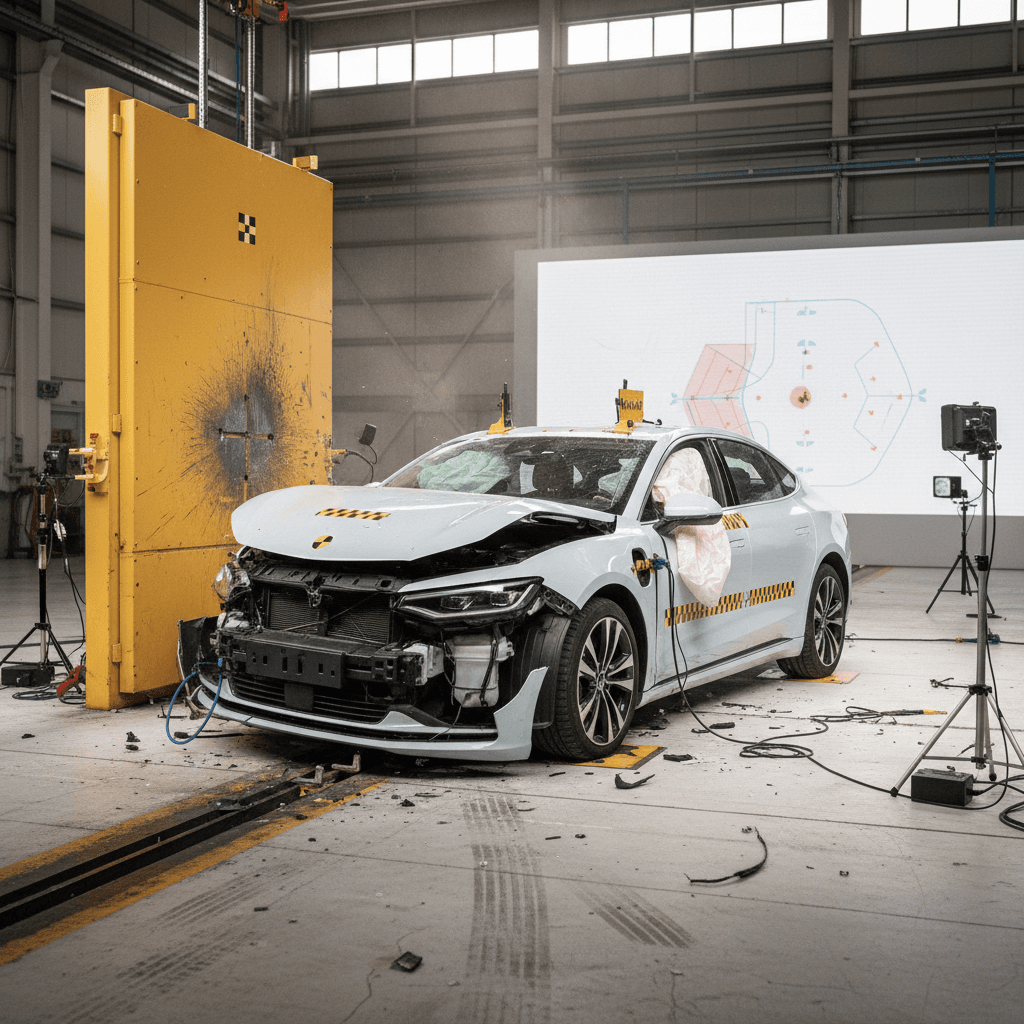
Electric vehicles package a heavy battery low in the chassis, which can improve stability but also changes how the car behaves in a crash. That weight is a double‑edged sword: in a collision with a lighter vehicle, the EV’s occupants often fare well, but crash forces can be higher for the people in the other car. Well‑designed crash structures and restraint systems are what keep your family safe, and that’s exactly what IIHS and NHTSA are testing.
- EVs are typically **heavier** than comparable gas cars, so managing crash energy is critical.
- Battery packs must be protected so they don’t intrude into the cabin or create a fire risk.
- High‑voltage systems need to shut down safely after a crash.
- Advanced driver‑assistance systems (ADAS) can prevent or reduce the severity of many crashes in the first place.
Don’t assume all EVs are automatically safer
How EV crash test ratings work: IIHS vs. NHTSA
IIHS (Insurance Institute for Highway Safety)
- Independent, nonprofit funded by insurers.
- Gives awards: Top Safety Pick and Top Safety Pick+.
- Rates crashworthiness as Good, Acceptable, Marginal, Poor.
- Newer, tougher tests for small overlap fronts, updated moderate overlap, and pedestrian crash prevention.
NHTSA (National Highway Traffic Safety Administration)
- Federal agency that runs the 5‑Star Safety Ratings program.
- Overall score from 1 to 5 stars.
- Focuses on frontal crash, side crash, and rollover resistance.
- Results show up both on NHTSA.gov and new‑car window stickers.
How to quickly compare safety
Crash test ratings at a glance
Safest electric cars 2025: quick cheat sheet
The specific winners change slightly from year to year, but several electric models consistently appear on lists of the **safest EVs based on crash test ratings**. Always verify the exact year and trim you’re shopping, but this cheat sheet will give you a strong starting point.
Electric models frequently earning top crash test honors
These EVs have recently combined strong IIHS and NHTSA results. Always confirm the rating for the exact model year and build date you’re considering.
| Segment | Model (recent MY) | IIHS award* | NHTSA overall rating* | Safety notes |
|---|---|---|---|---|
| Small/Midsize car | Hyundai Ioniq 6 | Top Safety Pick+ | 5 stars (recent MY) | Excellent crash scores plus strong pedestrian crash‑prevention; one of the highest‑rated EV sedans. |
| Small SUV | Tesla Model Y | Top Safety Pick+ | 5 stars (recent MY) | Very strong occupant protection and active safety, especially with updated IIHS tests. |
| Small SUV | Hyundai Ioniq 5 | Top Safety Pick+ (earlier MYs) / strong ratings | 5 stars (recent MY) | Consistently high marks; check year, as IIHS tightened criteria after 2022. |
| Small SUV | Kia EV6 | Top Safety Pick+ (earlier MYs) / strong ratings | 5 stars (recent MY) | Good crash results with robust active safety tech; verify for 2024–2025 builds. |
| Small SUV | Subaru Solterra / Toyota bZ4X | Top Safety Pick+ (certain 2024–25 builds) | Strong global ratings; check U.S. NHTSA status | All‑wheel drive and structural updates put them among the safer compact EV SUVs. |
| Midsize SUV | Ford Mustang Mach‑E | Top Safety Pick+ | 5 stars (recent MY) | Solid crash structure and advanced driver‑assist suite; widely recommended on safety lists. |
| Midsize/Luxury SUV | Genesis Electrified GV70 | Top Safety Pick+ (post‑update builds) | Strong results (check NHTSA) | High scores in updated IIHS tests plus extensive standard safety tech. |
| Large 3‑row SUV | Kia EV9 | Top Safety Pick (2024+ builds) | 5 stars (recent MY) | Rare three‑row EV with both IIHS and NHTSA recognition; check notes about build dates. |
| Luxury sedan | Lucid Air | Strong IIHS results (check for awards by MY) | 5 stars (2025 MY) | Engineered from the ground up with safety in mind; excellent occupant protection. |
| Pickup truck | Rivian R1T | Top Safety Pick+ (2024–25) | Strong results (check NHTSA) | Among the safest electric pickups tested, with high IIHS crash and avoidance scores. |
Use this as a starting list, then double‑check year, trim, and build notes on IIHS.org and NHTSA.gov.
About the asterisk
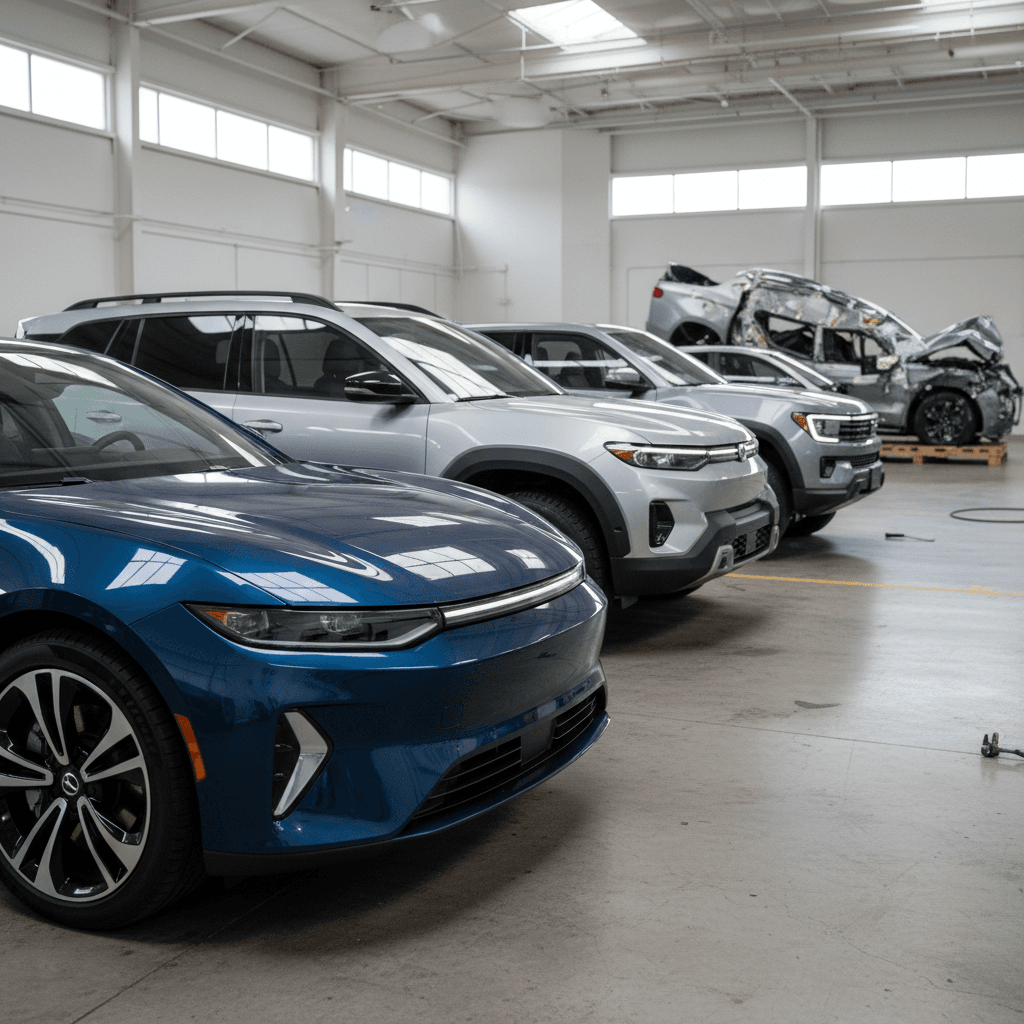
Standout EVs with top crash test ratings
EVs that tend to rise to the top
Always verify the exact year, trim, and build notes before you buy, especially on the used market.
Hyundai Ioniq 6
Aerodynamic midsize sedan with top‑tier crash and crash‑avoidance scores in recent testing, plus excellent range.
Best for: Drivers who prioritize efficiency but want luxury‑car safety numbers.
Tesla Model Y
Compact electric SUV that routinely scores among the highest in IIHS and NHTSA testing, with strong occupant protection.
Best for: Families wanting a small SUV with very strong crash and ADAS performance.
Kia EV9
One of the few 3‑row electric SUVs to pair IIHS awards with a 5‑star NHTSA rating.
Best for: Larger families who want space without sacrificing safety.
Good news for used‑EV shoppers
Ready to find your next EV?
Browse VehiclesSize matters: how vehicle class affects safety
Crash test ratings compare vehicles **within the same size class**, not across the entire market. A small electric hatchback that’s a Top Safety Pick+ isn’t directly comparable to a large three‑row SUV with no award at all.
- In a crash between a big, heavy SUV and a small car, the SUV usually protects its occupants better.
- Within each class, IIHS and NHTSA show you which EVs are at the top of the heap.
- If safety is your top priority and you have flexibility, consider moving one size class up, for example, from a subcompact EV to a compact crossover with top ratings.
How to think about class vs. ratings
Beyond the score: key EV safety features to prioritize
Crash tests are the starting point, not the finish line. Two EVs with similar ratings can feel very different to live with because of their **active safety tech** and usability details. When you test‑drive, or shop online, put these features under the microscope.
Must‑have safety features in a modern EV
Most top‑rated electric cars include these as standard or widely available options.
Automatic emergency braking
Look for forward collision warning with automatic emergency braking that detects pedestrians and cyclists, not just vehicles.
Lane‑keeping and lane‑centering
Helps keep you from drifting out of your lane, especially on long highway drives. Check whether it works smoothly, not just whether it exists.
Side and rear safety tech
Blind‑spot monitoring, rear cross‑traffic alert, and safe‑exit warnings are especially helpful in taller SUVs with thicker pillars.
Adaptive cruise control
Maintains following distance and can reduce fatigue on commutes. On some EVs it integrates with lane‑centering for semi‑automated driving.
Child‑seat friendliness
Well‑designed LATCH anchors, clear labeling, and enough rear‑seat room make it easier to install child seats correctly.
Battery safety engineering
You won’t see this directly, but good EVs protect the pack from intrusion, manage heat, and isolate high‑voltage components in a crash.
Test the tech, not just the spec sheet
How to use crash test ratings when buying a used EV
Buying used adds a layer of complexity. You’re not just picking the right model, you’re matching **model, year, build, and vehicle history** to the crash test data. Here’s how to make the ratings work for you instead of becoming a source of confusion.
1. Start with the model’s best‑case rating
Look up the EV on IIHS.org and NHTSA.gov to see the best crash results it has achieved in recent years. That tells you the model’s potential.
2. Match the exact model year
Filter to the specific model year you’re considering. Ratings can change when tests change, even if the vehicle doesn’t.
3. Check build notes and trims
IIHS often says things like “applies to vehicles built after January 2024” or “applies only to models with specific headlights.” Make sure the VIN you’re considering falls inside that window.
4. Pull a history report
A prior serious crash can compromise any vehicle’s original safety performance. Always run a history report and have the structure inspected, especially on a used EV.
Where Recharged fits in
Step‑by‑step safety checklist for EV shoppers
A practical crash‑test and safety checklist
1. Confirm IIHS status
On IIHS.org, verify whether the EV you’re considering is a <strong>Top Safety Pick or Top Safety Pick+</strong> for the specific model year, and whether any build‑date notes apply.
2. Check NHTSA’s star rating
On NHTSA.gov or the window sticker (for newer models), confirm the **overall star rating** and look at individual frontal, side, and rollover scores.
3. Compare within the same size class
Cross‑shop safety ratings against other EVs in the same size class, small SUV vs. small SUV, midsize car vs. midsize car, so you’re making apples‑to‑apples comparisons.
4. Verify active safety features
Make a short list of must‑have ADAS features (AEB with pedestrian detection, lane‑keeping, blind‑spot monitoring, etc.) and confirm they’re included on the exact trim you’re considering.
5. Review crash and repair history
Get a vehicle history report and, if possible, a pre‑purchase inspection to ensure there are no prior major repairs that might have affected structural integrity.
6. Align safety with your use case
If you regularly carry kids or do highway road trips, prioritize <strong>rear‑seat protection, child‑seat usability, and highway driver‑assist systems</strong> in addition to top crash scores.
Common misconceptions about EV safety
- “All EVs are safer than gas cars.” – Many are extremely safe, but safety varies widely. Ratings still matter.
- “A Top Safety Pick+ small car is safer than a non‑award full‑size SUV.” – Not necessarily; remember that crash tests compare vehicles within size classes.
- “Battery fires are common in EV crashes.” – Incidents make headlines, but statistically they are rare relative to gasoline fires. That said, good battery protection design is a must.
- “If a car has the latest driver‑assist package, it must be safe.” – ADAS helps, but underlying crash structure, restraints, and how well those systems actually work are just as important.
Don’t ignore recall and software updates
FAQ: Safest electric cars and crash test ratings
Frequently asked questions about EV crash test ratings
Bottom line: choosing a safe electric car
The safest electric cars on the road today don’t just happen to score well in crash tests, they’re engineered from the ground up with crash structures, restraint systems, and active safety tech that work together. Your job as a shopper is to make sure the **specific EV in front of you** really matches those stellar scores by checking IIHS and NHTSA data, confirming build notes, and reviewing the vehicle’s history.
If you do that, and you’re willing to favor models that pair **Top Safety Pick or Top Safety Pick+ honors with 5‑star NHTSA ratings**, you’ll dramatically narrow your search to some of the safest vehicles on the road, EV or otherwise. And if you’d like help translating crash‑test charts into real‑world peace of mind, Recharged can walk you through options, provide a detailed Recharged Score Report, and even arrange financing, trade‑in, and delivery so you can bring home a safe electric car with confidence.