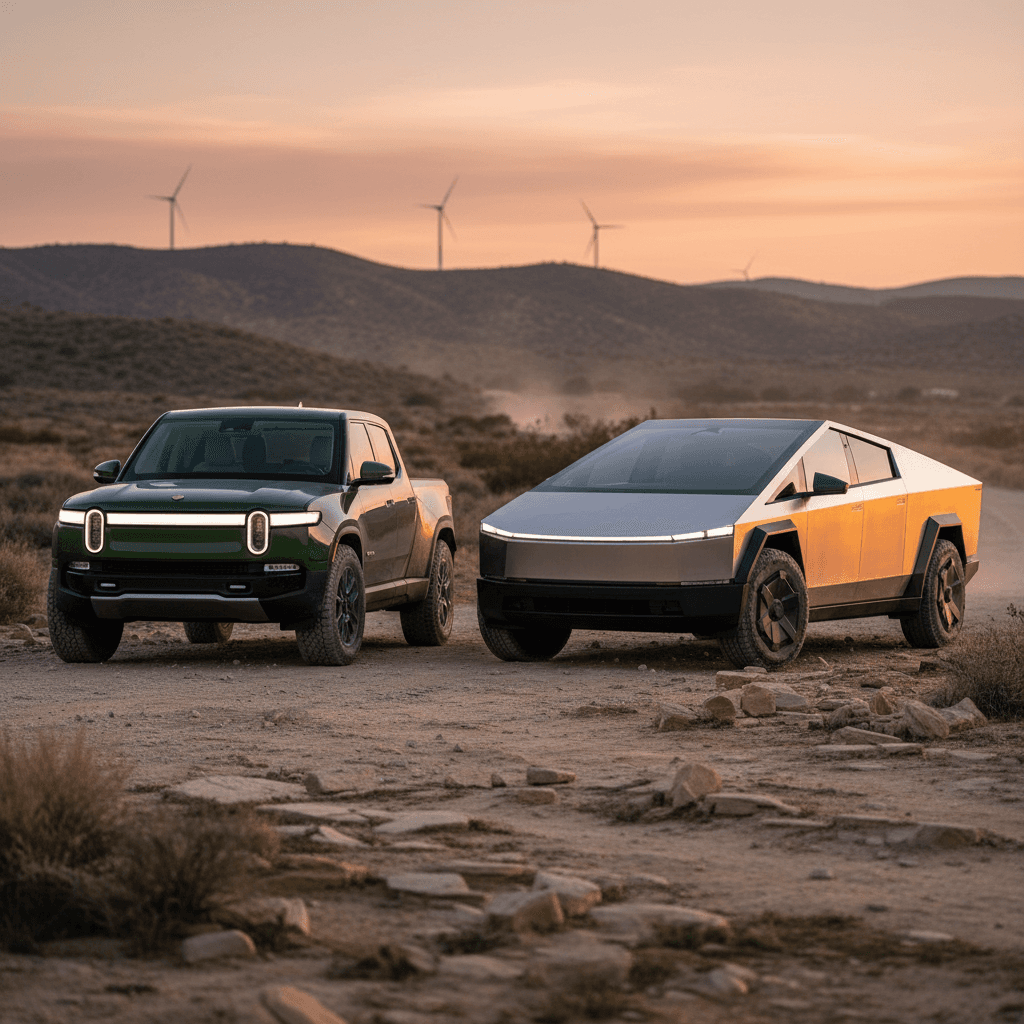
You’re not here for another spec sheet. You want to know, in plain language, Rivian R1T vs Tesla Cybertruck, which is better for the way you actually live? One is the handsome overland lifestyle truck; the other looks like it escaped from a PS2 loading screen. Both promise huge power, big range, and 11,000‑lb towing. But they couldn’t feel more different from behind the wheel or over a 5‑year ownership cycle.
Quick verdict
Rivian R1T vs Tesla Cybertruck at a Glance
Headline Numbers: R1T vs Cybertruck
Key Specs: Rivian R1T vs Tesla Cybertruck (2025 Snapshot)
Approximate headline specs for popular configurations as of 2025. Exact numbers vary by wheel/tire, options, and software updates.
| Spec | Rivian R1T (popular Dual‑Motor Large/Max pack) | Tesla Cybertruck AWD | Tesla Cybertruck Cyberbeast |
|---|---|---|---|
| EPA range (approx.) | Up to ~350 mi, depending on pack and wheels | ~340 mi advertised, less with heavy off‑road wheels | ~320 mi advertised, drops with options |
| Max towing | 11,000 lb | 11,000 lb | 11,000 lb |
| Payload | ~1,760–1,950 lb (configuration‑dependent) | Around 2,500 lb max | Low‑2,000‑lb range |
| 0–60 mph | Low‑4s (Dual), ~3 sec (Quad) | ~4.1 sec | Sub‑3 sec range |
| Length/width | Shorter and narrower than full‑size half‑tons | Full‑size footprint, very wide | Same as AWD |
| Bed | 4.5‑ft bed + gear tunnel | 6‑ft bed with integrated tonneau | 6‑ft bed with integrated tonneau |
Always check the latest manufacturer configurator before you order.
Spec sheet reality check
Who Each Electric Truck Is Really For
Personality Check: Which One Sounds Like You?
Forget the brochure. Think about your life, your driveway, and your tolerance for drama.
Rivian R1T: The Adventure Daily
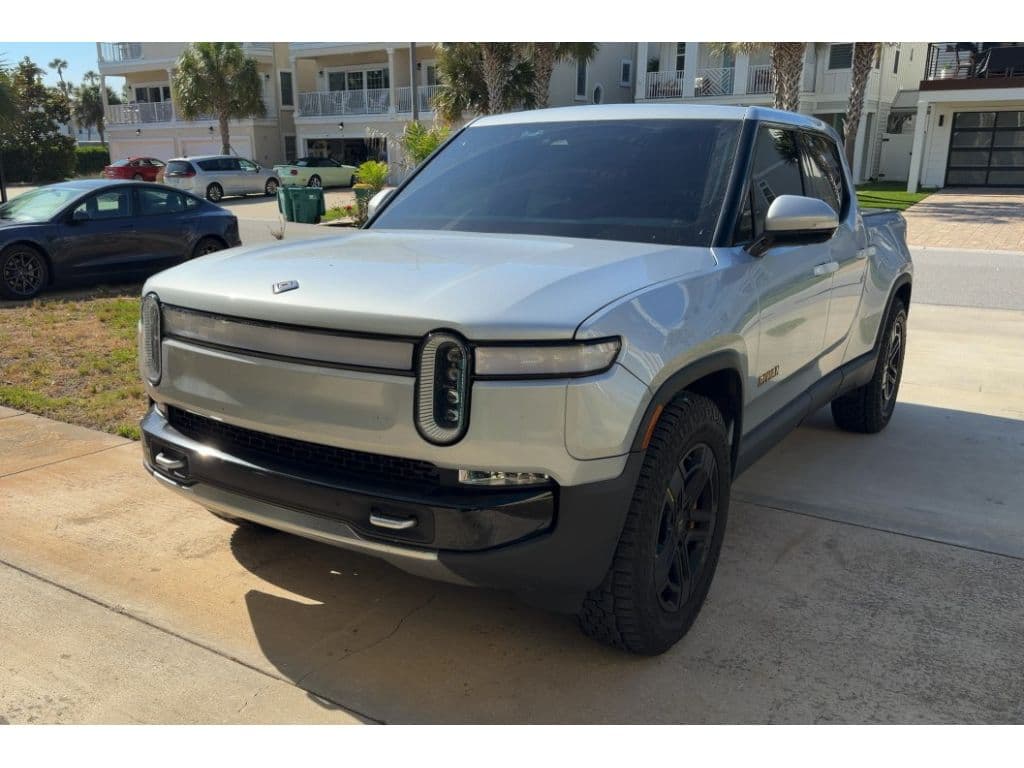
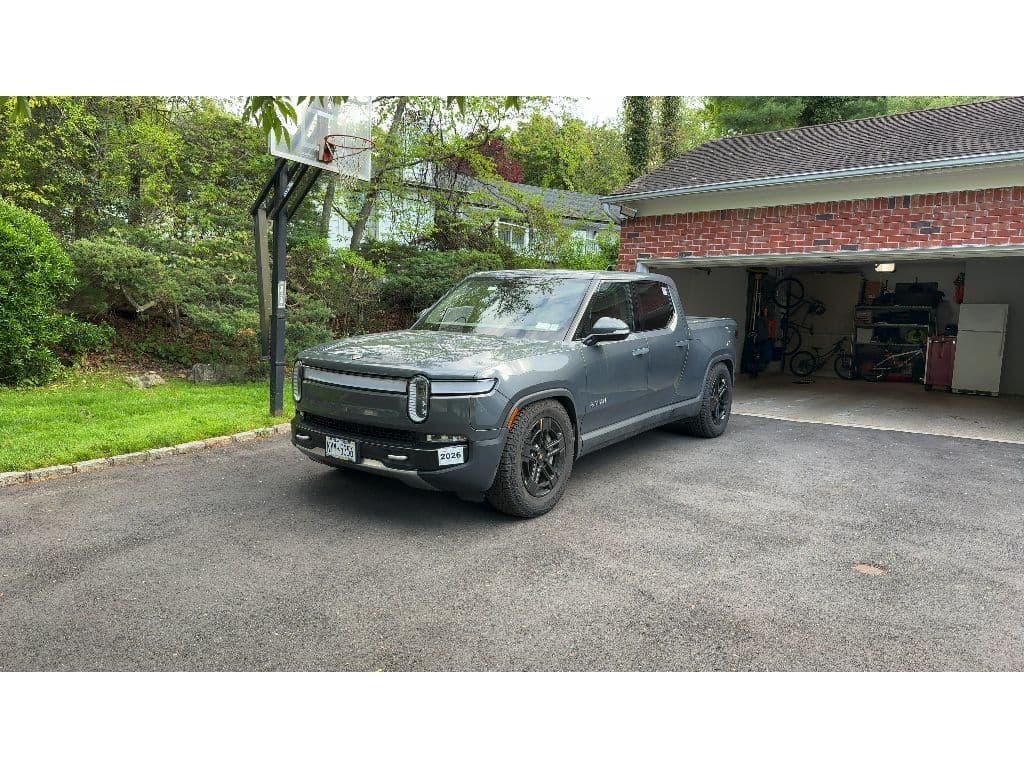
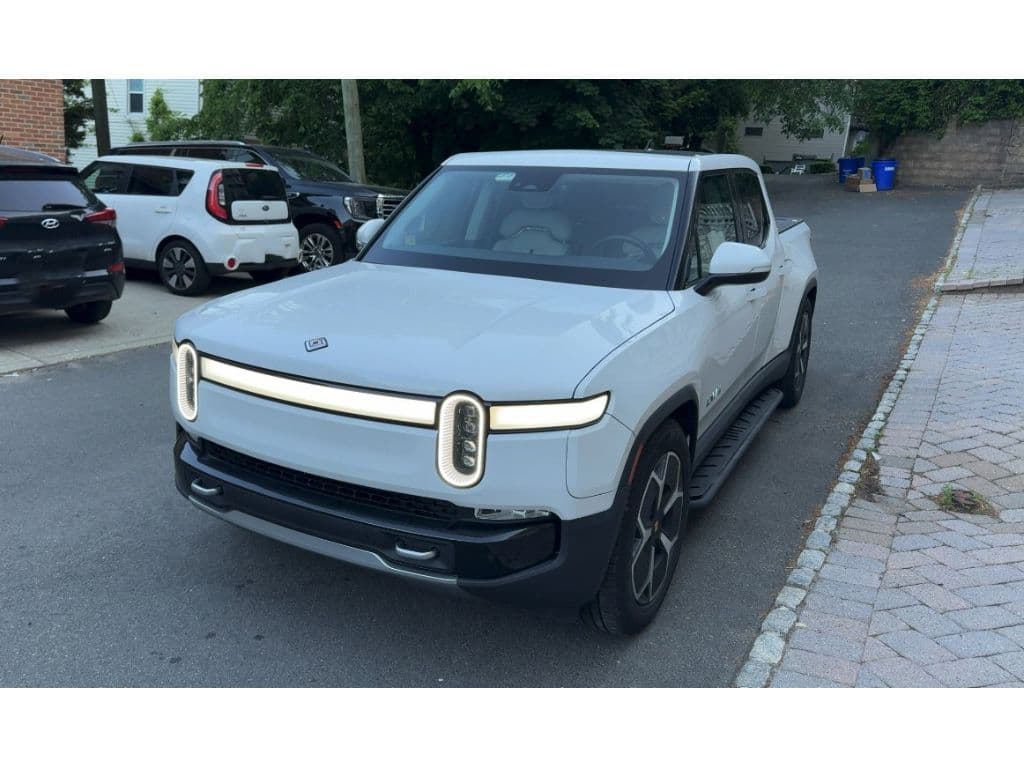
You want a truck that’s genuinely nice to live with but can disappear into the woods on the weekend. The R1T is sized between a Tacoma and a half‑ton, with a cabin that feels like a Scandinavian ski lodge.
- Great if you do Costco runs, school drop‑offs, then trailheads.
- Plenty of power without screaming for attention.
- Interior feels warm, with big glass and real design flair.
Tesla Cybertruck: Rolling Concept Car
You want your truck to start arguments at gas stations. The Cybertruck is a meme made metal: brutally fast, brutally sharp‑edged, and unapologetically weird.
- Great if you value acceleration and spectacle above subtlety.
- Bed and payload are serious; styling is a dare.
- Cabin is minimalist to the point of monastic.
Road‑trip reality
Specs, Range, and Towing Compared
Both trucks advertise 11,000‑lb maximum towing. That’s eye‑catching, but the story changes once you hitch a real trailer. Owners and testers alike see range dive well below half of the EPA figure when towing at highway speeds, regardless of badge.
- Rivian R1T: With a camping trailer near 6,000 lb, range can drop into the low‑100‑mile zone at 70 mph. That’s still workable for regional trips if you plan charging stops around DC fast chargers and Rivian’s own Adventure Network.
- Tesla Cybertruck: Similar story on paper, impressive towing rating, harsh efficiency penalty when you actually use it. The extra mass and frontal area don’t help. Expect frequent fast‑charge stops with heavy loads.
Range numbers you can actually plan around
Rivian R1T range spread
- Multiple battery packs (Standard, Large, Max) and motor layouts.
- Popular Dual‑Motor Large/Max trims land in the ~320–350‑mile neighborhood on road‑focused tires.
- Software and wheel choices can move that number up or down noticeably.
For many shoppers, that means the R1T can be spec’d for either long‑range commuting or off‑road capability without completely nuking range.
Cybertruck range reality
- Current lineup leans on two main trims: AWD and Cyberbeast.
- Advertised mid‑300‑mile range sounds competitive, but heavy 20‑inch all‑terrain wheels and accessories cut into that quickly.
- A bolt‑on “range extender” battery is promised for some builds, but it eats bed space and complicates payload math.
The Cybertruck can, in the right spec, go just as far or farther than many R1Ts. The trade‑off is weight, complexity, and a bed partly sacrificed to extra battery.
Towing verdict
Real‑World Usage: Daily Driving vs Adventure
A truck can win every spec war and still lose your driveway. Here’s where the R1T quietly, consistently shines: daily livability. It’s shorter and narrower than a full‑size pickup, which means you can actually park it where you shop. The ride, especially on updated suspension tunes and street‑biased tires, has settled into a sweet spot between firm and plush for most owners.
How They Feel in the Real World
Less about numbers, more about your spine and nerves.
In the city and suburbs
- R1T: Easier to thread through parking garages, calmer steering, excellent visibility, and a cabin that reads more "upscale SUV" than work truck.
- Cybertruck: Huge, heavy, and visually bulky. Steer‑by‑wire gives a strange, video‑game lightness at first; you get used to it, but it never feels entirely organic.
On the highway
- R1T: Stable and relaxed, with air suspension that takes the sting out of expansion joints. Wind and road noise are there, but not overwhelming.
- Cybertruck: Tracks well, but road noise and tire thrum are more pronounced. The stainless‑steel body and big tires don’t exactly whisper through the air.
Daily driver pick
Off‑Road Capability and Truck Utility
Both automakers arrived at the same conclusion: if you’re going to build an electric truck, it had better be able to put a wheel in the dirt. The R1T feels like it was conceived by people who actually camp. The Cybertruck feels like it was conceived by someone who camps on Mars.
Rivian R1T off‑road and cargo tricks
- Adjustable air suspension with multiple ride heights for rock crawling or highway aero.
- Real off‑road drive modes that sensibly manage power and traction.
- Brilliant gear tunnel between cab and bed, perfect for skis, recovery gear, stroller, or the optional camp kitchen on early builds.
- 4.5‑ft bed with available power tonneau and under‑bed storage.
The R1T is a Swiss‑Army knife: not enormous, but relentlessly useful.
Cybertruck utility and quirks
- Full 6‑ft bed with integrated power tonneau and shore‑power outlets for tools or camping gear.
- More conventional layout for anyone used to a full‑size pickup, aside from the stainless‑steel angles.
- Bed walls are high; shorter owners will find reaching over the side comical.
- Off‑road capability is serious but constrained by sheer width and weight. Narrow trails will feel very narrow.
The Cybertruck is a blunt instrument: huge capacity, less subtlety.
Utility verdict
Tech, Interior, and User Experience
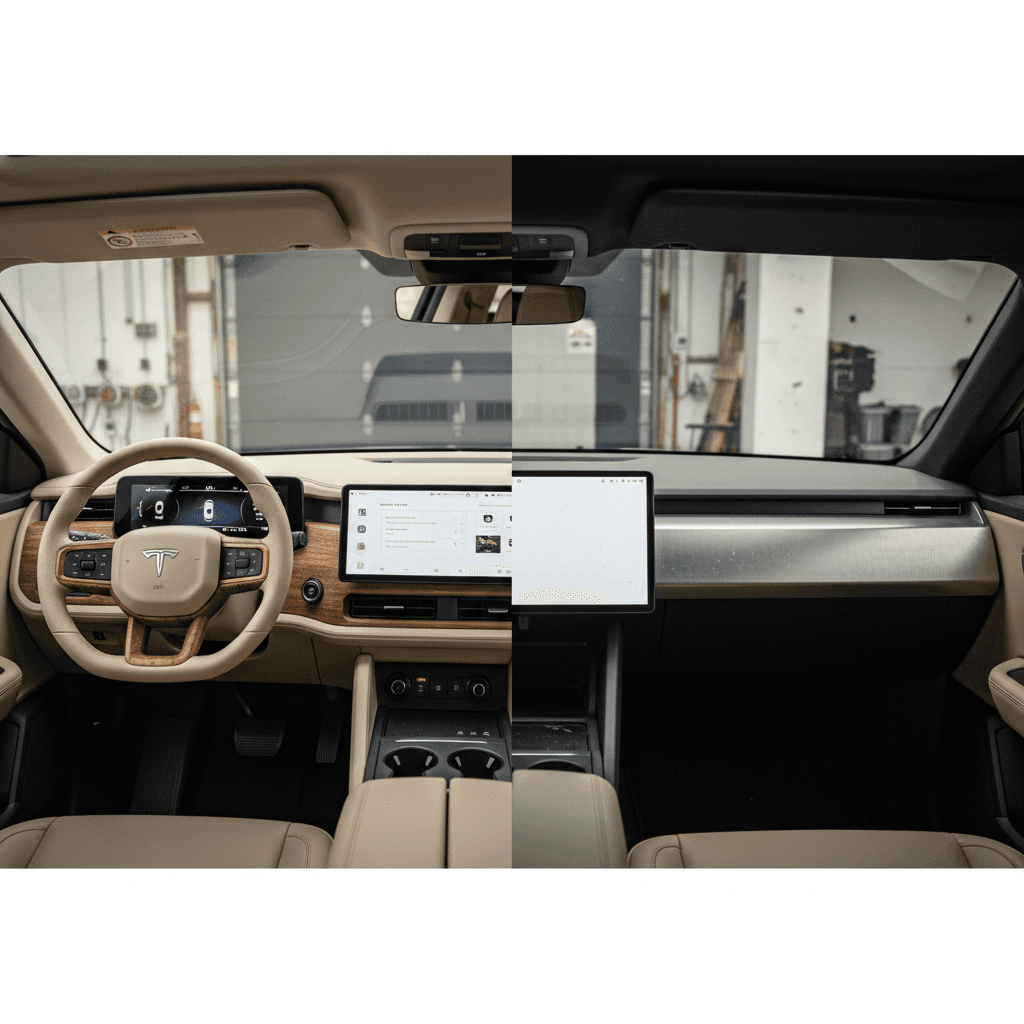
Sit in both trucks and you’ll understand their corporate philosophies in 10 seconds. The Rivian R1T interior is warm, bright, and design‑forward, with interesting materials, a big glass roof, and an interface that’s still evolving but increasingly polished. The Cybertruck is minimalist to the point of austerity: straight lines, hard edges, and a giant center screen ruling over everything.
- Neither truck bothers with Apple CarPlay or Android Auto. Both bet on their own software ecosystems.
- Rivian’s UI has grown more intuitive, with thoughtful EV‑specific features (trip planning, drive mode tailoring, thoughtful camera views).
- Tesla’s software is still the benchmark for slickness and charging integration, but the Cybertruck’s interface asks you to tolerate some odd choices (steering wheel controls, stalk‑less driving, and heavy reliance on touch for basics).
Minimalism has a cost
Price, Value, and Resale Outlook
Electric trucks are expensive experiments on wheels. The price tags reflect that. As of 2025, Cybertruck production is limited and pricing has climbed well beyond the original promises. The AWD truck now sits in traditional luxury‑truck money, and the wild Cyberbeast lives in its own tax bracket. Meanwhile, R1T pricing has softened, with factory incentives and a growing used market bringing real‑world transaction prices down.
New vs Used: Where the Value Lives
Sticker price is one thing. Depreciation is where the truth comes out.
New Rivian R1T
MSRPs still look ambitious, but discounts and deals are increasingly common as Rivian balances production and demand. You can often find lightly optioned trucks at prices that compare well with loaded gas half‑tons.
Used Rivian R1T
The used R1T market has matured. Early depreciation was steep, which is great news if you’re buying now. At Recharged, every used R1T includes a Recharged Score battery health report and fair‑market pricing, so you’re not guessing about pack condition or overpaying for the adventure aesthetic.
Tesla Cybertruck
Limited supply and hype have kept Cybertruck prices high, but sales softness and recalls have begun to pressure values. It’s not yet clear how these trucks will age in the used market, especially around stainless‑steel repairs and long‑term perception.
Value verdict
Ownership Experience, Reliability, and Service
The least glamorous part of this comparison is also the most important: what happens when something breaks. Both Rivian and Tesla are young EV truck builders dealing with complex vehicles, heavy loads, and hard use, and both have had growing pains.
- Rivian R1T: Early trucks saw their share of squeaks, suspension complaints, and software quirks. But the company has iterated quickly with over‑the‑air updates, and owner communities increasingly describe a truck that’s stable, refined, and supported by a service network that, while small, is learning fast.
- Tesla Cybertruck: Has faced a string of recalls and high‑profile quality issues out of the gate. Tesla can push out software fixes at the speed of Wi‑Fi, but hardware and finish issues on an all‑new stainless platform are harder to smooth over quickly.
Reliability wild card
Which Is Better for You? 5 Common Scenarios
Match Your Life to the Right Truck
1. Daily commuting + occasional camping
You drive 40–70 miles a day, run errands, and hit state parks on weekends. The <strong>Rivian R1T</strong> is the better fit, easier to park, more comfortable for passengers, and still hugely capable off‑road.
2. Heavy hauling and jobsite use
You routinely max payload with tools or materials. The <strong>Cybertruck</strong>’s large bed and strong payload rating give it an edge, provided your worksites and parking lots can accommodate its size.
3. Long‑distance towing
You’re hauling campers, boats, or car trailers across states. Here, the spec sheets are a tie; the real question is <strong>who has better fast‑charging coverage on your routes</strong>. Today, Tesla’s Supercharger network is still more expansive, but NACS adoption is closing that gap for Rivian owners using adapters and new NACS‑equipped chargers.
4. Family road‑trip machine
You care about second‑row comfort, noise, storage, and a cabin that feels like a nice place to spend five hours. The <strong>R1T</strong> is the safer choice. Its interior feels more like a premium SUV, and ride quality continues to improve with software tuning.
5. You want an object of pure theater
You want jaws to drop every time you pull up, and you’re willing to trade practicality for presence. That’s the <strong>Cybertruck</strong> in a nutshell. It’s a rolling conversation piece that just happens to go 0–60 like a supercar.
Shopping Used R1T vs Waiting for a Cybertruck
If you’re reading this, there’s a good chance you’re deciding between buying a used Rivian R1T today or holding your deposit for a Cybertruck that may arrive on some unknowable future Thursday. That’s not just a product choice; it’s a philosophy of risk.
The case for a used R1T right now
- Depreciation has already taken the big first bite on early trucks.
- Real‑world reliability picture is much clearer than it was in 2022.
- You can test‑drive exactly the truck you’re buying, not a promise on a configurator.
- At Recharged, every used R1T comes with a Recharged Score battery health report, so you know how the pack has aged, plus expert EV specialists to walk you through range and towing realities.
In other words, you’re buying a known quantity, not a Kickstarter reward.
The case for waiting on a Cybertruck
- You’re absolutely in love with the design and are willing to live with its compromises.
- You value being an early adopter more than you fear first‑year teething issues.
- You want the Tesla ecosystem end‑to‑end: native Supercharger access, Tesla app, and the brand’s unique software flavor.
Just go in eyes‑open: delivery timing, pricing, and long‑term resale are still moving targets.
How Recharged can help
Ready to find your next EV?
Browse VehiclesFAQ: Rivian R1T vs Tesla Cybertruck
Frequently Asked Questions
Bottom Line: Rivian R1T vs Tesla Cybertruck
If you strip away the noise, the question “Rivian R1T vs Tesla Cybertruck: which is better?” comes down to this: do you want a truck that quietly does almost everything well, or one that loudly does a few things spectacularly and asks you to live with the rest?
The Rivian R1T is the truck for people who actually camp, commute, and carpool. It’s friendlier to park, nicer to sit in, cleverly packaged, and increasingly well‑sorted as a product. The Tesla Cybertruck is for the unapologetic early adopter, the driver who wants maximum theater and is comfortable being a beta tester for a bold idea on wheels.
If your next move is electric truck ownership, not internet points, the smart money in 2025 is on a carefully chosen R1T, especially on the used market. And if you want help finding one with a healthy battery, transparent pricing, and delivery to your driveway, that’s exactly what Recharged was built to do.