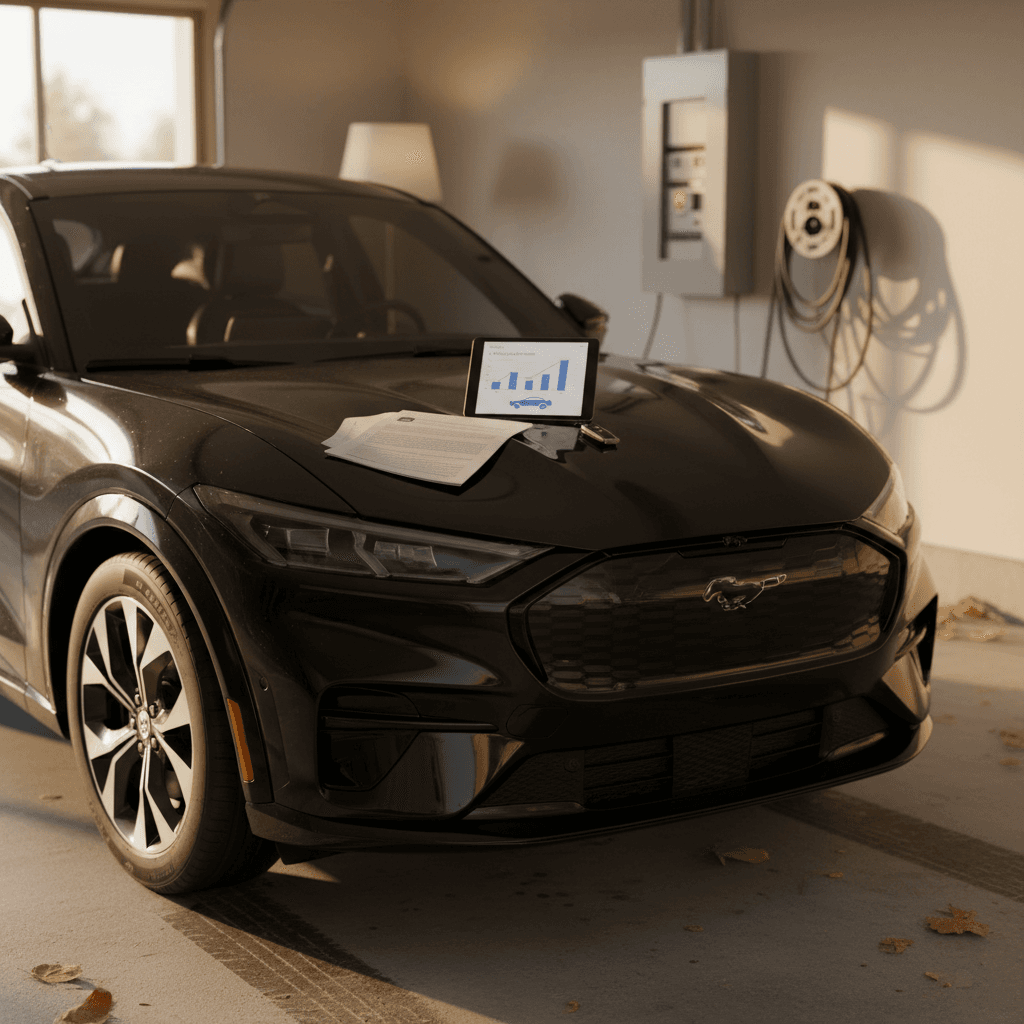
If you’ve shopped quotes for a Ford Mustang Mach‑E, you already know: this sleek electric SUV can carry a not‑so‑sleek insurance bill. The good news is you have more control over your Mustang Mach‑E cheapest insurance options than the quote screens suggest. With the right mix of car choice, coverage, and insurers, you can bring that premium back down to earth without gutting your protection.
Quick takeaway
Mustang Mach‑E insurance at a glance
Typical Mustang Mach‑E insurance snapshot (2025, U.S.)
Exact numbers vary wildly based on who you are and where you live. Some owners see barely any bump versus their old gas SUV. Others get gobsmacked with a quote that’s double what they paid before. Rather than chase one magic dollar amount, your real goal is to understand why the Mach‑E is priced the way it is, and how to push your specific quote toward the bottom of the range.
Why is Mustang Mach‑E insurance often so expensive?
From the outside, a Mach‑E looks like a friendly crossover. Insurers, however, see a high‑tech EV packed with sensors, a big battery, and repair bills that can sting if something goes wrong. That risk picture is what pushes premiums up.
- High repair and parts costs. The Mach‑E’s aluminum body panels, glass roof options, and advanced electronics make crash repairs pricey. A low‑speed tap that bent steel on a conventional SUV can mean a more complex job on an EV.
- Battery and high‑voltage components. Insurers worry about the cost of battery replacement and the need for EV‑certified shops. Even when the battery is fine, many cars get written off because diagnostics and parts add up quickly.
- Newer driver‑assist tech. Systems like BlueCruise can reduce fatigue when used correctly, but any time sensors or cameras in the bumpers, fenders, or windshield are damaged, recalibration adds cost.
- Data still maturing. The Mach‑E has only been on sale since 2021. Insurers are still learning its true long‑term loss patterns, so many price it conservatively, that is, on the higher side.
Don’t blame the “Mustang” badge alone
What does “cheapest insurance” really mean for a Mach‑E?
Chasing the absolute lowest number on the screen can backfire. The “cheapest” quote might hide big deductibles, low liability limits, or gaps that matter a lot more when you’re driving a $30,000–$50,000+ electric SUV.
“Cheapest” the wrong way
- State‑minimum liability limits that won’t cover a serious crash.
- Very high collision and comprehensive deductibles you can’t truly afford.
- No gap coverage on a loan or lease.
- No rental reimbursement or roadside even though you rely on the Mach‑E daily.
“Cheapest” the smart way
- Solid liability limits (often 100/300/100 or higher) so a bad day doesn’t become a financial disaster.
- Collision and comprehensive deductibles set where you can write the check if you have to.
- Discounts and coverage tweaks that lower rate without leaving holes.
- Shopping multiple EV‑friendly insurers and removing extras you truly don’t need.
How to judge a “cheap” quote
Typical Mustang Mach‑E insurance costs in 2025
Let’s talk about the ballpark you’re aiming for. In 2025, online analyses of Mach‑E premiums and real‑world owner reports show full‑coverage insurance often landing in the $180–$260 per month range for many drivers with clean records. In high‑cost states or big cities, think parts of Florida, Texas, New York, or California, seeing numbers above that isn’t uncommon.
Sample full‑coverage cost scenarios for a Mustang Mach‑E
These ranges are illustrative, not quotes. Your actual rate depends on your state, insurer, driving record, credit, and specific Mach‑E.
| Driver & vehicle profile | Likely monthly range | What’s driving the price |
|---|---|---|
| 35‑year‑old, clean record, suburban Midwest, 2023 Mach‑E Premium RWD | $150–$210 | Moderate repair costs but good credit and low‑risk area keep premium in check. |
| 45‑year‑old, clean record, coastal California, 2024 Mach‑E Premium AWD | $220–$320 | Higher state rates plus comprehensive and collision priced up for traffic, theft, and weather risks. |
| 28‑year‑old, one at‑fault crash, large metro, 2025 Mach‑E GT | $280–$450+ | Younger driver, performance‑oriented trim, and prior loss history compound the EV repair premiums. |
| 60‑year‑old, long clean record, small town, 2022 Mach‑E Select used | $120–$180 | Strong discounting, lower‑value used vehicle, and low‑risk ZIP keep rates relatively modest. |
Use this as a directional guide when you’re evaluating whether your quote looks high or low.
Why online “average cost” numbers look so different
15 ways to get the cheapest Mustang Mach‑E insurance
You can’t move your birthday or instantly erase every speeding ticket. But you have more levers than you think. Here’s how to systematically hunt down the cheapest solid coverage for your Mach‑E.
Practical steps to push your Mach‑E premium down
1. Get at least 3–5 quotes, not just 1
Different insurers price EVs very differently. Some are still spooked by battery repair costs; others aggressively chase EV drivers with better rates. Take a half‑hour and compare national carriers, local or regional companies, and any insurer that advertises EV‑friendly discounts.
2. Quote your Mach‑E as a crossover SUV
When you speak with an agent, describe your Mach‑E as an electric crossover or family SUV, not a sports car. That doesn’t change the VIN, but it helps the conversation focus on safety and practicality rather than performance expectations tied to the Mustang name.
3. Right‑size your liability limits
Don’t go lower than you’re comfortable explaining after a major crash. For many Mach‑E owners, 100/300/100 or higher makes sense. If you’re carrying much more than you need, carefully stepping limits down can trim cost, just don’t chase savings that leave you exposed.
4. Adjust collision and comprehensive deductibles
Bumping your collision and comp deductibles from, say, $500 to $1,000 can lop a noticeable chunk off the premium. Run the numbers: if you can’t pay the higher deductible out of pocket, the savings aren’t worth the stress.
5. Drop coverage you truly don’t need
If your Mach‑E is fully paid off and worth less than what you’d pay in two or three years of comprehensive and collision, it may be time to revisit those coverages. For newer or financed vehicles, though, you’ll almost always want full coverage.
6. Ask about EV and telematics discounts
Many insurers now offer discounts for electric vehicles, connected‑car data, or safe‑driver apps that monitor braking, acceleration, and mileage. The Mach‑E’s built‑in connectivity can qualify you for these, if you ask and are comfortable sharing that data.
7. Bundle home, renters, or umbrella policies
Putting your Mach‑E on the same policy as your home or renters insurance can earn 10–20% discounts. Get a quote with and without bundling to see which combination delivers the best net price without compromising coverage quality.
8. Clean up small rating dings
Pay tickets on time, clear old violations from your record if your state allows, and make sure any incorrect accidents or claims are disputed. Even one mis‑coded loss can keep your premium higher than necessary.
9. Rethink where and how it’s parked
If your Mach‑E sleeps in a locked garage rather than on the street, say so. That can lower comprehensive rates. In some dense urban areas, renting a garage space may partly pay for itself in reduced insurance plus less wear and tear.
10. Consider mileage and usage programs
If you work from home and only rack up a few thousand miles a year, ask about low‑mileage or pay‑per‑mile policies. The fewer hours you’re out in traffic, the less exposure your insurer has, and that can translate into a cheaper bill.
11. Remove young or high‑risk drivers from the Mach‑E
If you have a teen or higher‑risk driver at home, listing them as excluded from the Mach‑E (and assigning them to a cheaper, older vehicle) can avoid a big surcharge. Be honest, and make sure everyone understands which keys they’re allowed to grab.
12. Check how BlueCruise is rated
Some carriers may not yet recognize hands‑free systems as a safety benefit, and a few even worry about over‑reliance on them. Ask your agent how they treat advanced driver‑assist features on the Mach‑E, and don’t assume the computer will earn you a discount today.
13. Improve your credit where it’s allowed
In most states, insurers use a credit‑based insurance score. Better credit typically means lower premiums. If your state allows it, cleaning up credit card balances, late payments, or errors over time can quietly shave dollars off your Mach‑E’s bill.
14. Pay in full or set up automatic payments
Many companies tack on installment fees. Paying six or twelve months in full, or setting automatic bank drafts, can unlock small discounts that add up over years of ownership.
15. Re‑shop every 12–18 months
EV claim data is changing quickly. The insurer that was cheapest for your 2022 Mach‑E may not be the winner in 2026. Put a reminder in your calendar to check rates whenever your policy renews, especially if you’ve moved, your driving has changed, or you’ve added a vehicle.

How trim level and options change your rate
Not all Mach‑Es look the same to your insurer. A base Select RWD isn’t priced like a GT Performance Edition, and a used 2021 isn’t treated the same as a brand‑new 2025 with every tech package.
How your Mach‑E spec affects insurance
Same body, different risk picture for your insurer.
Select & lower‑priced trims
These versions usually carry lower collision and comprehensive costs because the vehicle’s overall value is lower and wheels, tires, and brakes are less performance‑oriented.
Premium & California Route 1
More equipment (panoramic glass roof, premium wheels, upgraded lighting) raises repair and replacement costs slightly, so you’ll often see a modest bump versus a base model.
GT and performance variants
Sport‑tuned hardware and the performance image can push rates higher. Insurers expect a GT to be driven harder, and the parts bill in a crash is steeper, so expect to pay a noticeable premium over a Select.
Shopping new vs. used? Run insurance numbers first
Choosing coverage limits and deductibles wisely
Coverage choices are where many owners accidentally overspend, or undershoot and regret it later. You want insurance that matches both the value of your Mach‑E and your financial comfort level if something goes wrong.
Core coverages to keep robust
- Liability: Pays others when you’re at fault. Skimping here is like under‑insuring your house, it can haunt you later.
- Uninsured/underinsured motorist: Protects you if someone else hits you and doesn’t have enough coverage. In many states, this is crucial.
- Medical payments or PIP: Important if your health insurance has high deductibles or limited coverage for crash injuries.
Places you can tweak for savings
- Collision deductible: Higher deductible, lower premium, but pick a number you genuinely can pay.
- Comprehensive deductible: You can sometimes raise this higher than collision, since glass and minor damage may be cheaper than a full crash repair.
- Add‑ons: Rental reimbursement, roadside, and custom equipment coverage are handy, but if your budget is tight, prioritize the essentials first.
Don’t skip comprehensive and collision on a financed Mach‑E
Extra insurance savings when you buy a used Mach‑E
Here’s where your choice of car really matters. A used 2021–2023 Mach‑E often carries a lower book value than a new one, which can trim collision and comprehensive premiums. But the specific vehicle you pick still makes a big difference.
Why a used Mach‑E can be cheaper to insure
And how Recharged helps you pick the right one.
Lower vehicle value, lower premium
All else equal, insuring a $28,000 used Mach‑E usually costs less than insuring a $48,000 new one. Collision and comprehensive are directly tied to what your insurer might have to pay if the car is totaled.
Know the car’s health up front
Every used EV on Recharged comes with a Recharged Score and battery health report. When you understand the car’s condition, and share maintenance receipts and inspection documents with your insurer, you’re in a stronger position to negotiate coverage and avoid surprises if there’s a claim.
If you’re choosing between two used Mach‑Es on the same budget, ask your insurer for quotes by VIN before you sign. The trim, prior damage history, and even where the car was previously registered can nudge your rate up or down.
Leaning toward used?
Ready to find your next EV?
Browse VehiclesInsurance red flags to watch for with any Mach‑E
Most Mach‑Es are straightforward to insure, but a few details should make you pause and dig deeper before you sign either a purchase agreement or a policy.
- Salvage or rebuilt title. Some insurers won’t touch these at all; others will, but at steep rates and with stripped‑down coverage. If you’re tempted by a rebuilt Mach‑E, get insurance quotes in writing first.
- Unrepaired collision or structural damage. A low price on a car with open damage can turn into an expensive problem if your insurer later refuses related claims or totals the car quickly at a lower value.
- Aftermarket modifications. Custom wheels, suspension tweaks, or cosmetic changes might require special equipment coverage. Without it, you could pay to replace your upgrades out of pocket after a loss.
- Open safety recalls. Insurers don’t usually surcharge directly for recalls, but leaving safety work undone never helps. Plan to complete recall repairs promptly, your safety and your claim experience both depend on it.
- Inaccurate garaging or usage info. Listing your Mach‑E at a low‑risk address while it actually lives and commutes in a high‑risk city can get a claim denied. Make sure the details in your policy match reality.
Always disclose prior EV damage
Ford Mustang Mach‑E cheapest insurance FAQ
Mustang Mach‑E insurance: your top questions answered
Bottom line: Your game plan for cheaper Mach‑E insurance
Insurance doesn’t have to be the part of electric‑vehicle ownership you dread. To find the Ford Mustang Mach‑E cheapest insurance that still protects you properly, treat your premium like any other major bill: compare multiple providers, question every line item, and be honest about how you drive and where you park. Trim cost with smart deductibles and discounts, not by hollowing out coverage you’ll wish you had on a bad day.
If you’re still shopping for the right Mach‑E, consider how trim level, new versus used, and financing all play into your insurance cost. A well‑chosen used Mach‑E, backed by a clear battery health report from Recharged and smart financing, can leave plenty of room in your budget for high‑quality coverage. Get those pieces working together, and your Mach‑E won’t just be fun to drive; it’ll be affordable to insure for the long haul.