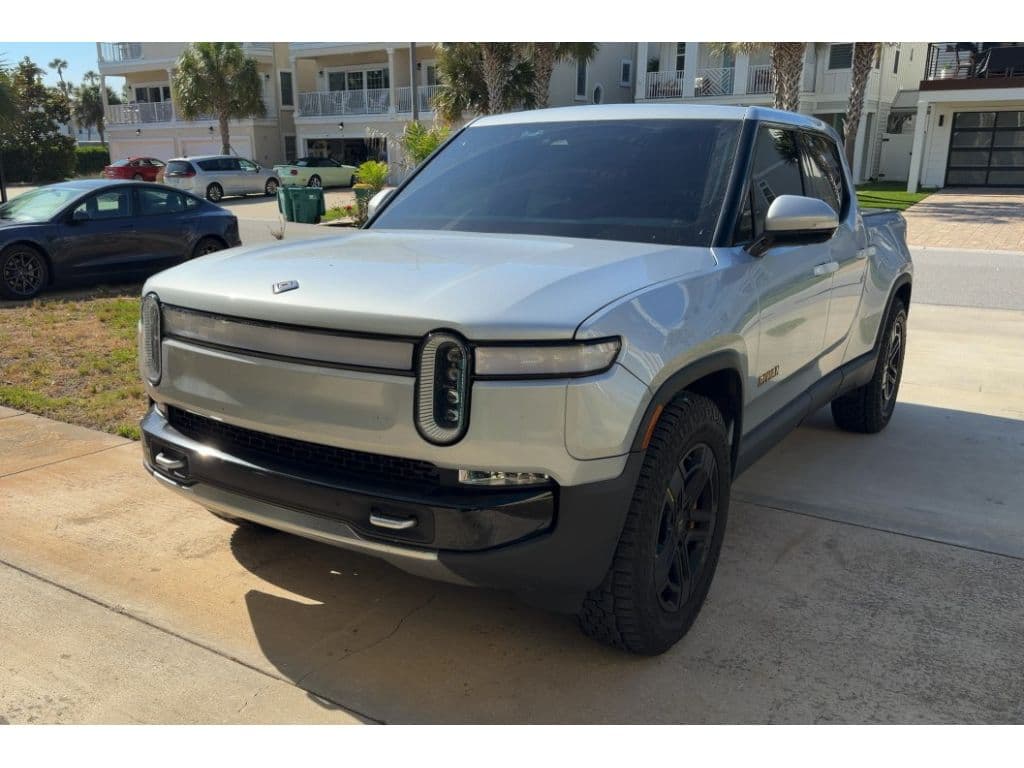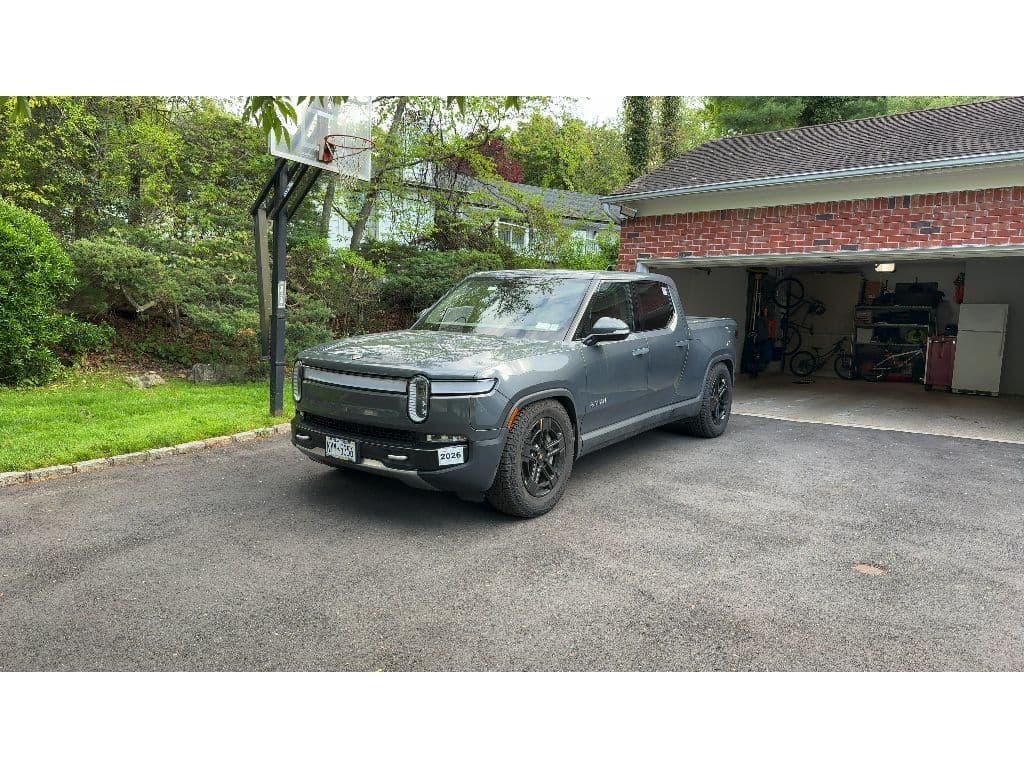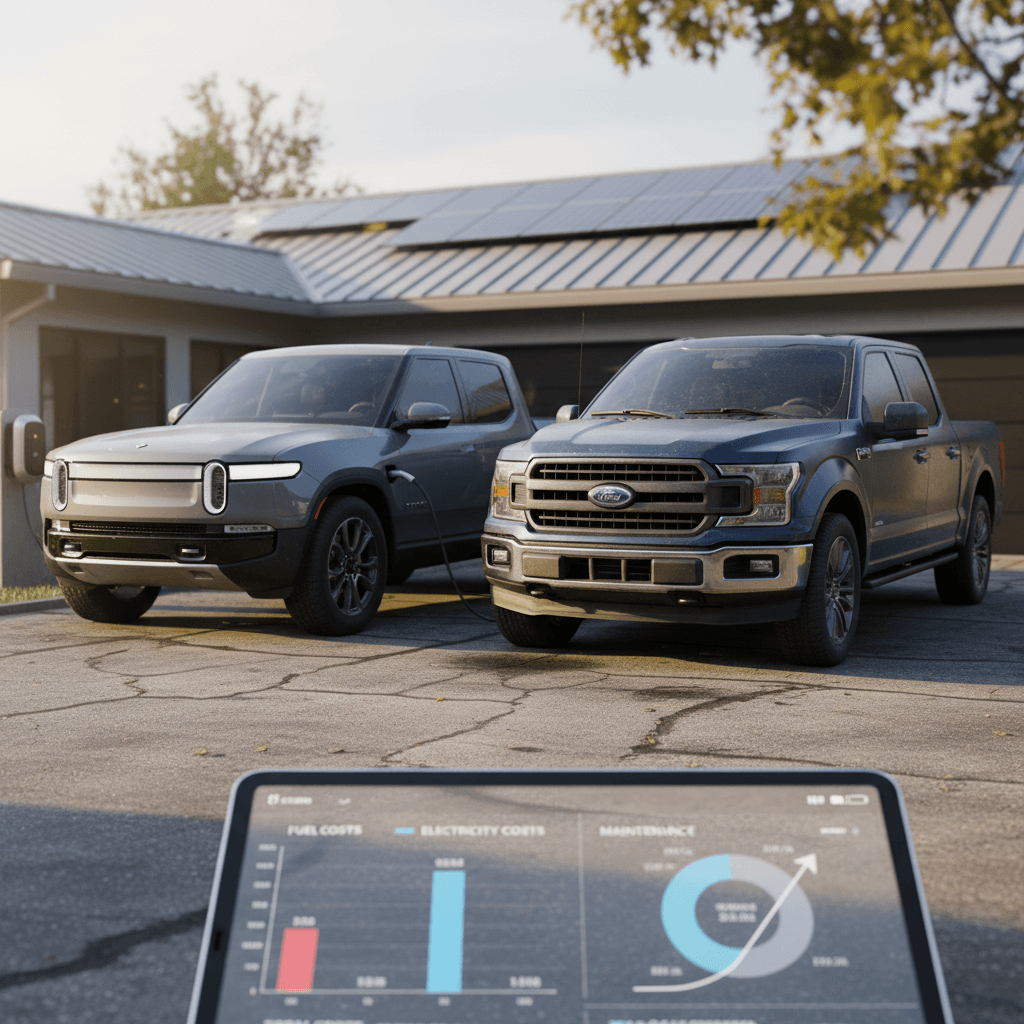
If you’re eyeing a Rivian R1T but coming from a full‑size gas pickup, the big question isn’t just sticker price. It’s the Rivian R1T total cost vs a gas truck equivalent over the years you’ll actually own it, fuel, maintenance, insurance, and resale included.
What this guide covers
Why Rivian R1T vs gas truck costs matter
Electric trucks flip the usual ownership math on its head. The R1T often costs more up front than a comparable gas pickup, but you can save thousands on energy and maintenance, especially if you drive more than average or keep vehicles a long time. The trick is understanding where the R1T wins, where it doesn’t, and how long it takes for those savings to catch up to the higher purchase price.
Who this comparison is most useful for
If you fit one of these profiles, the numbers really matter
Daily driver + weekend toys
Gas truck owners upgrading
Homeowners with driveway or garage
The baseline trucks we’ll compare
To keep things apples‑to‑apples, we’ll compare a typical R1T to a similarly capable gasoline half‑ton truck. Exact trims and MSRPs move around with incentives and model‑year updates, but this framework gets you very close.
Baseline comparison: Rivian R1T vs gas truck equivalent
Illustrative 2025‑style numbers for a well‑equipped electric and gas pickup
| Truck | Example purchase price (new) | Typical mpg / MPGe | Fuel or energy type | Typical range |
|---|---|---|---|---|
| Rivian R1T (Large Pack, dual motor) | $82,000 | ~70 MPGe equivalent | Electricity | 300+ miles |
| Gas half‑ton 4x4 (e.g., upscale V6/V8 crew cab) | $65,000 | 18–20 mpg | Gasoline | 450–500 miles |
These are rounded, example figures meant for comparison, not exact quotes.
Your numbers will vary
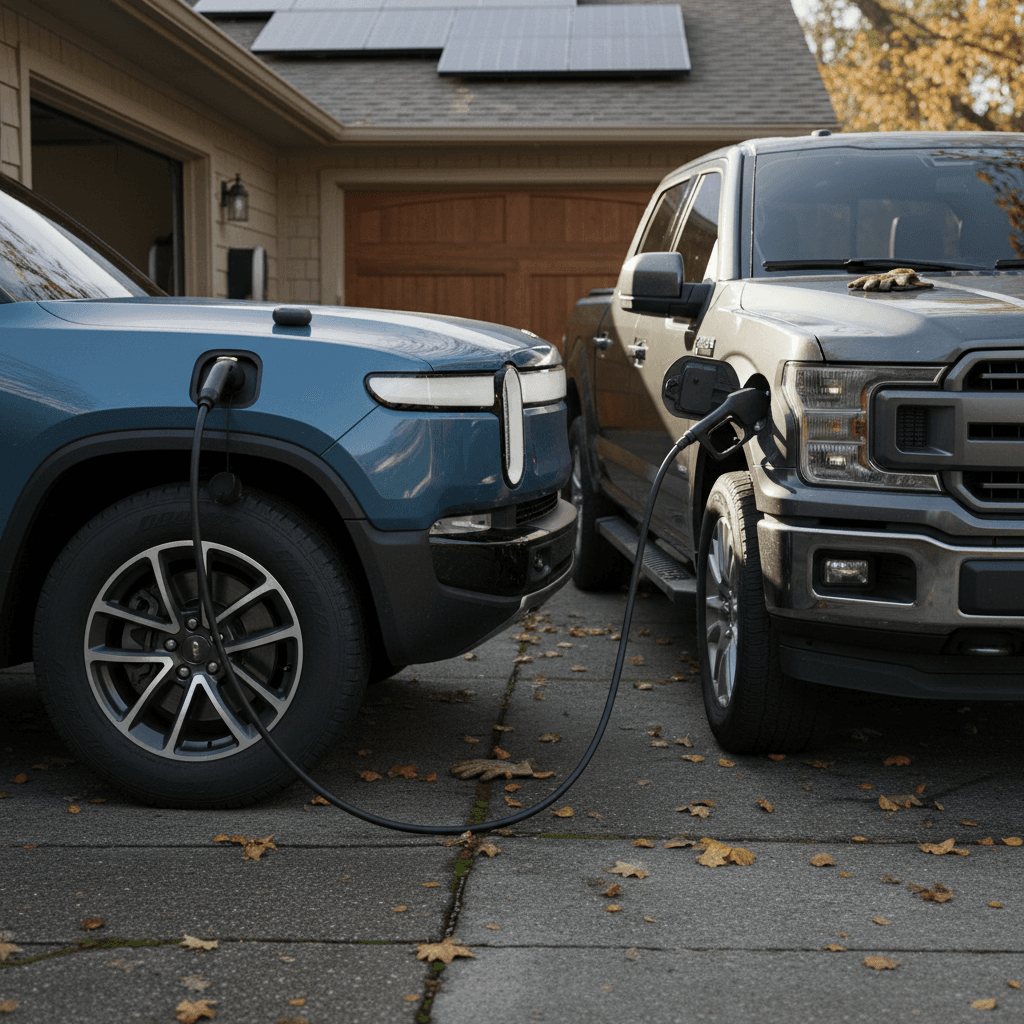
Purchase price, incentives, and financing
At first glance, the R1T usually carries a higher sticker price than a comparable gas pickup. But you also have to factor in federal and state EV incentives (when available), plus the structure of your loan or lease.
Rivian R1T upfront picture
- MSRP commonly in the high‑$70,000s to low‑$80,000s for popular configurations.
- Some buyers may qualify for commercial or business EV incentives even when consumer credits don’t apply.
- Used R1T prices can be significantly lower than new, with battery health a key consideration.
Gas truck upfront picture
- Comparable half‑ton crew cab 4x4 with luxury and off‑road packages often stickers in the mid‑$60,000s.
- Occasional rebates and discounts from dealers can lop off a few thousand dollars.
- Financing terms are similar, but gas trucks may have more aggressive manufacturer incentives at times.
Don’t forget total financed cost
Energy costs: electricity vs gasoline
Here’s where the Rivian R1T total cost vs gas car equivalent starts to swing. Electricity is typically much cheaper per mile than gasoline, especially if you can charge at home on a reasonable residential rate or time‑of‑use plan.
Typical U.S. energy cost assumptions (illustrative)
Illustrative annual energy cost: R1T vs gas truck
Assumes 15,000 miles per year, mostly home charging for the R1T.
| Item | Rivian R1T (electric) | Gas half‑ton (gasoline) |
|---|---|---|
| Estimated efficiency | ~0.48 kWh per mile (about 70 MPGe) | 19 mpg average |
| Energy price assumption | $0.14 per kWh (home) | $3.75 per gallon |
| Annual energy use | ~7,200 kWh | ~789 gallons |
| Approximate annual cost | ~$1,000 | ~$2,960 |
Numbers rounded for clarity, your local utility and fuel prices will change the exact totals.
Energy savings add up fast
Maintenance and repairs: R1T vs gas pickup
EVs like the Rivian R1T have far fewer moving parts than conventional trucks. There’s no engine oil, spark plugs, timing belts, or multi‑speed transmission. That doesn’t mean they’re maintenance‑free, but the routine service menu is shorter and generally cheaper.
Rivian R1T routine costs
- No oil changes, fuel filters, or exhaust repairs.
- Brake wear is usually low thanks to strong regenerative braking.
- Expect periodic cabin air filter changes, brake fluid checks, tire rotations, and potential suspension alignments.
- Out-of‑warranty repairs on advanced tech (air suspension, electronics) can be pricey, but they’re less frequent than engine/transmission work on gas trucks.
Gas half‑ton routine costs
- Regular oil and filter changes (two to three times per year for many owners).
- Transmission service, spark plugs, and cooling system maintenance over time.
- More complex exhaust after‑treatment on some trucks adds cost as mileage climbs.
- Similar tire and brake expenses, but brake wear is often higher without regenerative braking.
Battery health is the big variable
Insurance, registration, and taxes
Insurance is one place where an R1T can cost more than an equivalent gas truck, at least for now. It’s a high‑value, high‑performance vehicle loaded with advanced tech, so premiums often reflect that. On the flip side, some states offer lower registration fees or EV‑specific perks that reduce other ownership costs.
- In many markets, insurance premiums for an R1T are modestly higher than for a comparable gas pickup, especially for newer drivers or high‑coverage policies.
- A handful of states apply extra registration fees to EVs to replace lost gas tax revenue; others keep fees similar or offer EV‑friendly structures.
- Local tax treatment can help on the front end (purchase incentives) and sometimes with annual property or excise taxes. Always check your state and municipal rules before you buy.
Resale value and depreciation
Depreciation, the value your truck loses as it ages, is the single biggest cost of ownership, even more than fuel in many cases. Early‑adopter EVs were hit hard as technology evolved and prices moved quickly, but trucks like the R1T also benefit from strong demand in the used market.
How depreciation typically differs
Big picture trends, exact percentages will vary by market and model year
Rivian R1T depreciation
- New EVs can take a sharp hit in the first 3 years as incentives, interest rates, and tech changes move the market.
- However, demand for capable electric trucks is strong, and well‑maintained R1Ts with verified battery health tend to command solid resale values.
- Buying used after the steepest early drop can dramatically improve total cost of ownership.
Gas truck depreciation
- Full‑size pickups traditionally hold value well, especially popular trims and brands.
- Fuel‑efficient or "special" trims (off‑road packages, luxury interiors) can see particularly strong resale if gas prices rise.
- Over a long horizon, rising fuel costs and emissions policies may weigh on thirsty gas trucks more than on efficient EVs.
Why used can be the sweet spot
5‑year and 10‑year total cost scenarios
Let’s pull the pieces together. Below are simplified 5‑year and 10‑year scenarios using the example assumptions we’ve been working with: 15,000 miles per year, mostly home charging for the R1T, and average U.S. fuel and electricity prices over time. Think of these as directional rather than precise to the dollar.
Illustrative 5‑year total cost of ownership
Rounded figures combining purchase, energy, routine maintenance, and an estimate of depreciation.
| Category (5 years) | Rivian R1T (electric) | Gas half‑ton (gasoline) |
|---|---|---|
| Depreciation (purchase price minus 5‑year value) | ~$35,000–$40,000 | ~$28,000–$33,000 |
| Energy (fuel or electricity) | ~$5,000 | ~$14,800 |
| Routine maintenance | ~$3,000 | ~$5,000 |
| Insurance/fees (high‑level estimate) | Slightly higher | Baseline |
| Approximate combined total (excluding financing) | Roughly similar, with R1T often slightly higher or close to break‑even depending on incentives | Often slightly lower up front, but with higher fuel outlay |
Assumes purchase new; buying used shifts more cost into year 1 but often lowers total depreciation.
Illustrative 10‑year total cost of ownership
Showing how long‑term energy savings compound for the EV.
| Category (10 years) | Rivian R1T (electric) | Gas half‑ton (gasoline) |
|---|---|---|
| Total energy cost | ~$10,000 | ~$29,600 |
| Cumulative routine maintenance | Still generally lower; no engine or transmission overhauls | Higher likelihood of major engine/transmission or emissions repairs |
| Depreciation | Depends heavily on future EV and gas truck demand; used purchase narrows the gap dramatically | Can remain strong, but sensitive to fuel prices and market tastes |
| Long‑term total cost | Increasingly competitive, often lower than gas if you drive a lot and keep the truck | Can end up costing more overall if fuel stays expensive and major repairs pop up |
At 10 years, the efficiency advantage becomes more significant, especially at higher fuel prices.
The biggest mistake in EV vs gas math
When a used Rivian R1T makes the most sense
If you’re cost‑focused, a used R1T with documented battery health can be the sweet spot. You sidestep the steepest initial depreciation while capturing most of the energy and maintenance savings going forward.
Checklist: when a used R1T beats a gas truck on cost
You drive at least 12,000–15,000 miles a year
The more you drive, the more you benefit from lower per‑mile energy costs. High‑mileage owners see the EV advantage sooner.
You can charge at home most nights
Home Level 2 charging is usually the cheapest, most convenient way to fuel an R1T. Relying only on fast charging can erase much of the savings.
You buy after the early depreciation hit
Shopping 2–4‑year‑old R1Ts lets you capture a lower purchase price while the truck still has modern tech and plenty of usable range.
You verify battery and vehicle health
Look for objective diagnostics like the <strong>Recharged Score</strong>, service records, and a thorough inspection so you’re not inheriting hidden issues.
You plan to keep the truck for years
If you swap vehicles every 18–24 months, you’ll never fully realize the R1T’s long‑term fuel and maintenance advantages.
How Recharged helps you shop smart
Sorting through all these variables on your own can be overwhelming. That’s why Recharged was built specifically around used EV ownership and transparency.
What you get with a used R1T from Recharged
Confidence on battery health, pricing, and the buying process
Recharged Score battery diagnostics
Fair market pricing & financing
Trade‑in and nationwide delivery
Ready to find your next EV?
Browse VehiclesFAQ: Rivian R1T total cost vs gas truck
Frequently asked questions
Bottom line: should you pick an R1T or gas truck?
When you look beyond the sticker price, the Rivian R1T total cost vs a gas truck equivalent is far closer than many shoppers expect, and over a long horizon, the R1T can come out ahead, especially if you drive more than average and charge at home. A used R1T with verified battery health can be particularly compelling, combining a lower entry price with the R1T’s inherent fuel and maintenance advantages.
If you’re ready to dig into real vehicles, not just spreadsheets, browse used Rivian R1Ts on Recharged. Every truck includes a Recharged Score battery health report, transparent pricing, financing options, and EV‑specialist support from first question to final delivery, so you can choose your next truck with your head and your gut aligned.