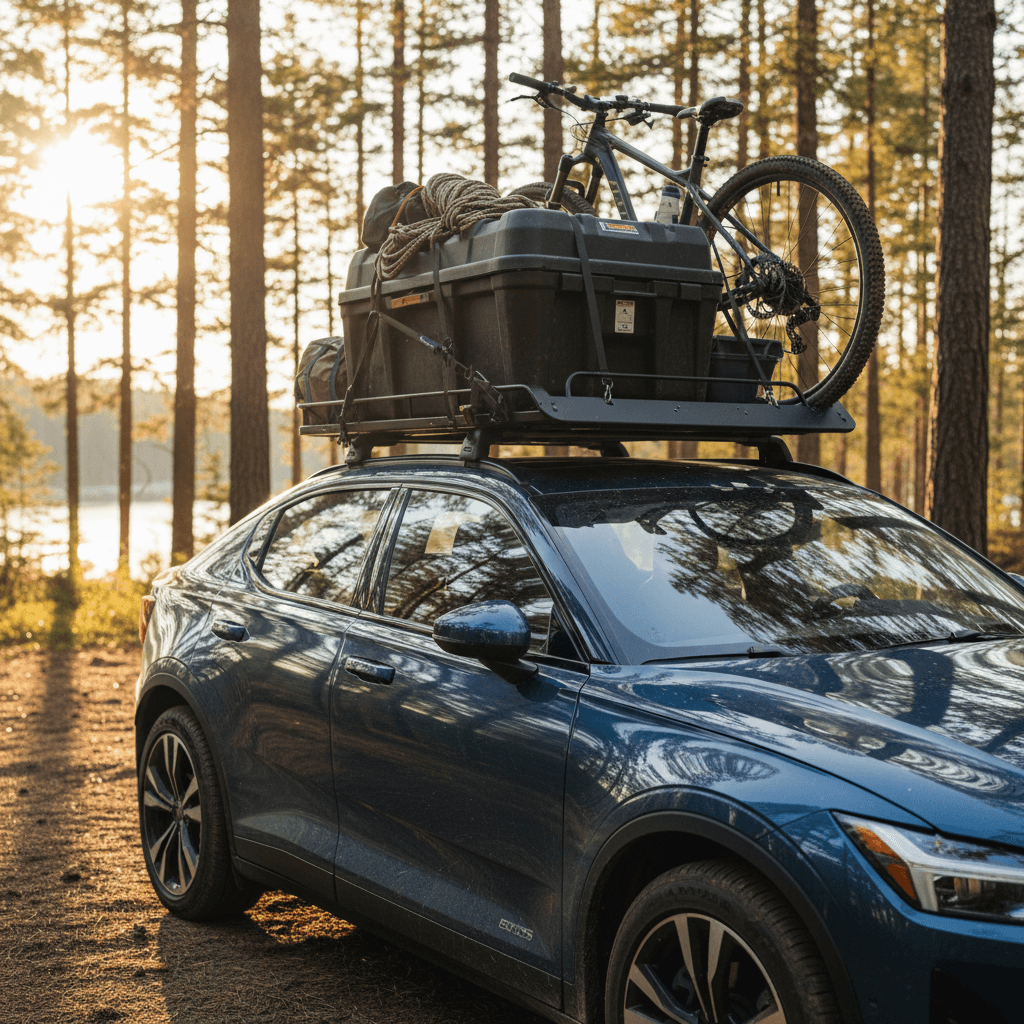
If you own a Polestar 2, sooner or later you’ll want to put something on its roof. Skis, bikes, a cargo box, maybe even a rooftop tent. That’s when you discover the fine print: the Polestar 2 roof rack weight limit is modest compared with a big SUV, and how you use that limit matters as much as the number itself.
Key spec at a glance
Polestar 2 roof rack weight limit: the short answer
Let’s start with the number everyone is hunting for. In the official Polestar 2 owner’s manual, under weights and dimensions, the line reads simply: Max. roof load: 75 kg (165 lb). That figure applies across current Polestar 2 variants and model years in the U.S. market.
- The 75 kg / 165 lb limit is a dynamic load rating – what the car can safely carry on the roof while driving.
- It’s a car-level limit, not just a bar limit. The rack, accessories, and your gear all count toward that 75 kg.
- You should never exceed the Polestar-rated limit, even if your aftermarket rack advertises a higher capacity. The lower number always wins.
Don’t confuse “rack limit” with “roof limit”
Dynamic vs static load: what the 75 kg limit actually means
Roof-load numbers are more subtle than a single spec line makes them look. The Polestar manual only gives a maximum roof load of 75 kg, which is generally understood in the industry as a dynamic load – the amount you can carry while the car is moving. But there’s also the idea of static load, and that’s where tents and Instagram fantasies show up.
Dynamic load (what Polestar publishes)
- Applies while driving: braking, cornering, potholes.
- Loads can spike several times the static weight due to G‑forces.
- Polestar’s 75 kg limit is meant to keep the structure and stability inside the safe box.
- This is the number you must obey for legal and insurance reasons.
Static load (parked, not in the manual)
- Weight when the car is stationary – for example, a rooftop tent with people inside.
- Manufacturers rarely publish a static number; Polestar doesn’t for the 2.
- In practice, the body shell can support far more than 75 kg at rest, but that doesn’t mean you can ignore the dynamic limit on the way to the campsite.
The practical takeaway
How much can you really carry on a Polestar 2 roof rack?
Once you subtract the weight of the rack itself, that 75 kg ceiling shrinks quickly. The Polestar‑branded roof bars – essentially a Thule aero system with specific feet – weigh around 5 kg. Many third‑party bars land in the same neighborhood. That gives you roughly 70 kg to play with before you even think about accessories like a ski holder or bike tray.
Polestar 2 roof load math (approximate)
Easy rule-of-thumb
Polestar 2 roof rack options: OEM vs aftermarket
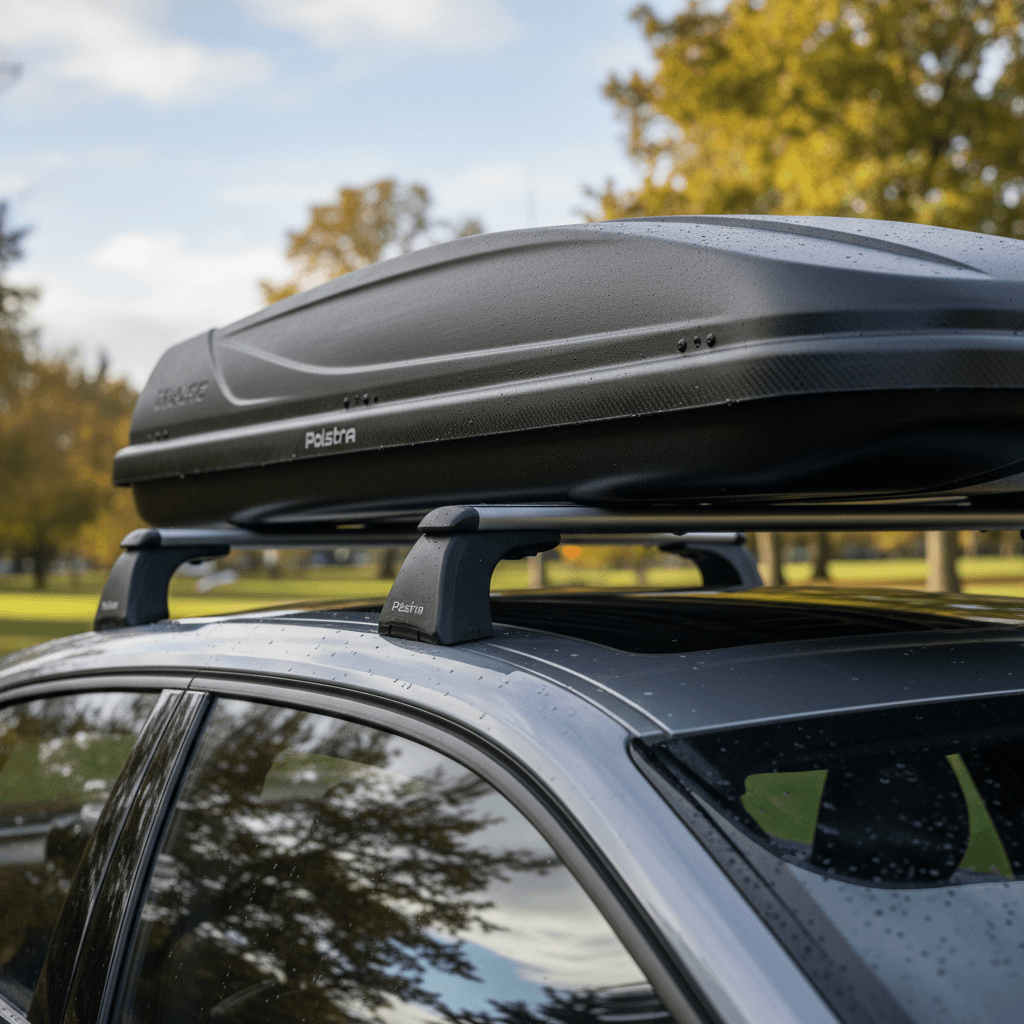
You have two main ways to get a roof rack on a Polestar 2: the official Polestar load carrier kit, or an aftermarket system from brands like Thule or various online resellers. Under the skin, several of these are kissing cousins, but there are important differences in fit, support, and how they play with that 75 kg limit.
Roof rack choices for Polestar 2
All roads lead to 75 kg, but the details vary
OEM Polestar 2 load carriers
- Developed with Thule; part-numbered for Polestar 2.
- Designed to interface with the specific roof contour and mounting points.
- Rated to match the car’s 75 kg max roof load.
- Covered under vehicle accessory warranty when installed correctly.
Best if you want plug‑and‑play fit and dealer support, especially on a newer or financed car.
Aftermarket aero bars and kits
- Thule, Yakima, and off‑brand kits increasingly list Polestar 2 fitments.
- Rack ratings sometimes exceed 75 kg, but the car still limits you.
- Cheaper options may skip rubber protection or detailed torque specs.
- Warranty and liability are more diffuse if something goes wrong.
Worth it if you already own a compatible bar system and just need new feet.
Mind the glass roof
Bikes, boxes, skis: translating weight limits into real gear
Specs are abstract; bikes and snowboards are not. Here’s how the 75 kg roof-load limit plays out with common setups. These are typical weights – always check your actual gear, because a beefy e‑bike is a very different proposition from a carbon road bike.
Common Polestar 2 roof setups vs 75 kg limit
Approximate figures; always verify weights for your specific rack, carriers, and gear.
| Setup | What’s on the roof | Approx. total weight | Within limit? |
|---|---|---|---|
| Two road bikes | Rack (5 kg) + 2 trays (8 kg) + 2 bikes (20 kg) | ≈33 kg | Comfortably under 75 kg |
| Two trail/MTB bikes | Rack (5 kg) + 2 trays (10 kg) + 2 bikes (32 kg) | ≈47 kg | Under the limit, but mind crosswinds |
| One heavy e‑bike | Rack (5 kg) + tray (5 kg) + e‑bike (25–28 kg) | ≈35–38 kg | Fine, but consider a hitch rack instead |
| Medium roof box, half full | Rack (5 kg) + box (15 kg) + luggage (35 kg) | ≈55 kg | Comfort zone for long trips |
| Large roof box, fully stuffed | Rack (5 kg) + box (20 kg) + luggage (60 kg) | ≈85 kg | Over the Polestar 2 limit – don’t do this |
When in doubt, put the heavy stuff in the trunk and leave the roof for bulky but lighter items.
Pack light, pack low
Can you run a rooftop tent on a Polestar 2?
Here’s where reality collides with marketing photos. Rooftop tents are seductive – they turn your minimalist Scandinavian fastback into a tiny house. They’re also heavy. Many soft‑shell tents start around 40–50 kg; hard‑shells can be 60–70 kg before you’ve added a single pillow.
If you put a 60 kg tent on Polestar 2 bars that weigh 5 kg, you’ve already consumed 65 of your 75 kg dynamic budget. That leaves you 10 kg for mounting hardware and perhaps a couple of sleeping bags. You haven’t even climbed in yet. Owners have documented trips with rooftop tents on the Polestar 2, but they are operating in territory the manual doesn’t explicitly bless.
Rooftop tents on a Polestar 2: honest pros and cons
It can work, but it’s not plug-and-play
Why people do it anyway
- Compact car, big adventure: the Polestar 2 + tent combo looks fantastic and can reach campsites a van can’t.
- Static strength of the roof structure is high; the shell can support parked loads much higher than 75 kg.
- With careful packing and conservative driving, many owners report trouble‑free trips.
What you need to respect
- The 75 kg dynamic limit still applies getting to and from the campsite.
- A big tent nukes your aero; expect substantial range loss at highway speeds.
- You’re deep into the grey area of warranty and liability if anything fails.
If you’re doing regular overlanding, a tow‑bar system or a different vehicle may be the better solution.
If you insist on a rooftop tent
Safe loading and driving tips for a racked Polestar 2
Checklist: using the Polestar 2 roof rack safely
1. Add up every component
Don’t guess. Look up the weight of the cross bars, each carrier, and each item you’re putting up there. Aim to stay at least 5–10 kg under the 75 kg limit for a safety margin.
2. Center and spread the load
Place heavier items between the bars, not hanging far forward or backward. Keep the load centered left‑to‑right to avoid weird handling in crosswinds or evasive maneuvers.
3. Keep the profile low and tidy
A slim ski box or neatly aligned bikes present much less frontal area than a tall, square box. Lower profile means better efficiency and less noise – both things the Polestar 2 does brilliantly stock.
4. Tie down redundantly
Use the rack’s mechanical mounts plus secondary straps where possible. Periodically stop on long drives to check clamps and straps; thermal expansion and vibration can loosen even good hardware.
5. Dial back your speed
Above 65–70 mph, aero drag from a loaded roof rises dramatically. For long highway stretches, 5–10 mph less speed can claw back a meaningful chunk of range and reduce stress on the rack.
6. Watch clearance and auto systems
Remember the extra height in garages and drive‑thrus. And be prepared for parking sensors or safety systems to behave differently if you’ve mounted something large and reflective upfront.
How a roof rack affects your Polestar 2’s range
Electric drivetrains are ruthlessly honest reporters of bad aerodynamics. Even a bare set of cross bars adds some drag; load them up with bikes or a box and the Polestar 2 slices the air more like a shoebox than a scalpel. Owners commonly report 10–20% range loss at highway speeds with bulky roof cargo, and that tracks with third‑party aero testing across many EVs.
Best case: slim, light setup
- Aero bars only, or a low, narrow ski box.
- Kept under 65 mph on the highway.
- Expect roughly 5–10% range loss compared to a clean roof.
- On a 260‑mile realistic highway range, that’s about 15–25 miles.
Worst case: tall, blunt load
- Big cargo box or upright bikes, fully loaded.
- 70–80 mph autobahn‑style cruising.
- Range loss can creep into the 15–25% territory.
- Now your 260‑mile highway range looks more like 195–220 miles.
A smarter packing strategy
Buying a used Polestar 2 with a roof rack in mind
If you’re shopping the used market, the Polestar 2 can be a terrific road‑trip partner – provided you understand its packing envelope. A previous owner’s roof‑rack habits can also tell you something about how the car was used and treated.
What to look for on a used Polestar 2 if you plan to rack it
A little inspection goes a long way
Inspect mounting points
Look for corrosion or water tracks
Check overall usage pattern
How Recharged fits in
Polestar 2 roof rack weight limit: FAQ
Frequently asked questions about Polestar 2 roof loads
The Polestar 2 isn’t a three‑row SUV, and its 75 kg roof rack weight limit is a reminder of that. It’s a lithe electric fastback first and a pack mule second. Within that envelope, though, you can carry bikes, skis, a sensibly packed roof box, and even – with care and compromise – a lightweight rooftop tent. The key is doing the math, respecting the dynamic limit, and packing with the car’s character in mind. If you’re shopping for a used Polestar 2 as your next adventure EV, a battery‑health‑verified car from Recharged plus a smart roof‑rack setup can make for a quietly brilliant long‑range companion.