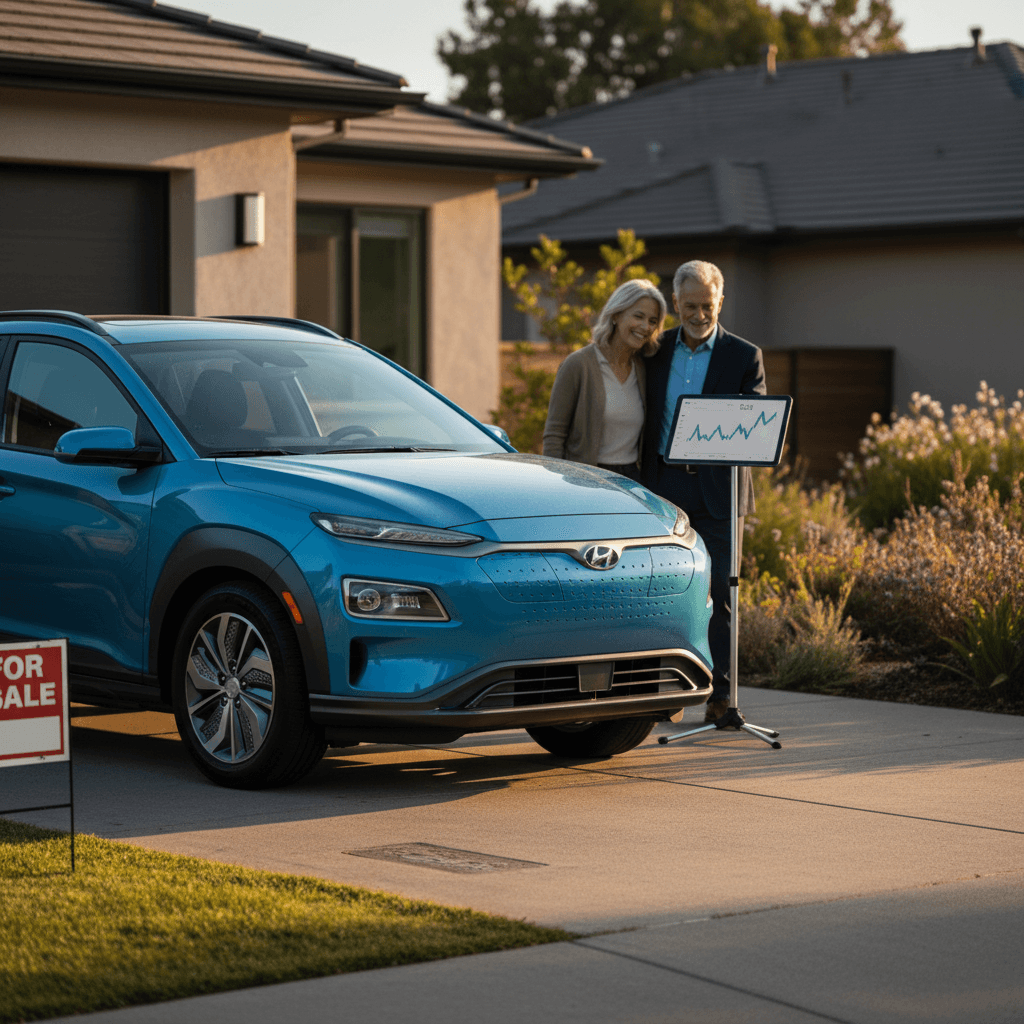
If you’re wondering how to sell a Hyundai Kona Electric, you’re already ahead of the game. This is one of the better‑behaved EVs in the used market: efficient, practical, and backed by a long battery warranty that buyers care about. The key is presenting your Kona Electric the right way, pricing it realistically, and choosing the sales channel that fits your time and risk tolerance.
Good news for Kona Electric owners
Why selling a Kona Electric is different
EV‑specific buyer questions
- Battery health and age matter more than almost anything else.
- Shoppers will ask about real‑world range, especially in winter.
- Many buyers are new to EVs and may need basic charging guidance.
Kona‑specific strengths
- Excellent efficiency (often over 4 mi/kWh) keeps running costs low.
- Hyundai’s 10‑year/100,000‑mile EV battery warranty is a huge confidence boost, even for second owners in many cases.
- Compact SUV form factor appeals to commuters and small families.
EV pricing moves faster
Step 1: Know what your Kona Electric is worth
Hyundai Kona Electric value snapshot (typical 5‑year‑old example)
Start with a realistic range, not a wish. Look up your Kona Electric on Kelley Blue Book, Edmunds, and one of the EV‑focused valuation tools. Pay attention to three numbers: trade‑in, private‑party, and dealer retail. Your likely private‑sale price sits between trade‑in and retail, depending on condition and how motivated you are to sell.
- Adjust for trim, options, and battery size (39–40 kWh vs. 64 kWh packs).
- Compare mileage to the “typical” figure those guides use, then adjust up or down.
- Search classifieds for similar Konas within 200 miles to see real asking prices.
- Note how long comparable cars have been listed, weeks on the market usually mean the price is too high.
Use a pricing band, not a single number
Step 2: Decide how you want to sell
Ways to sell a Hyundai Kona Electric
Each path trades off price, time, and hassle.
1. Trade it in
Fastest and simplest. You hand the keys to a dealer when you buy your next car.
- Pros: Same‑day deal, no strangers, tax credit in many states on the price difference.
- Cons: Usually the lowest dollar amount; dealers will price in risk and recon costs.
2. Private‑party sale
Take on the work yourself to capture more of the car’s value.
- Pros: Often nets $1,500–$3,000 more than trade‑in for a clean Kona Electric.
- Cons: You handle listing, screening, test drives, and paperwork.
3. EV specialist or marketplace
Sell to a company that focuses on used EVs, like Recharged.
- Pros: EV‑savvy pricing, guided process, can handle financing and nationwide buyers.
- Cons: Net price may sit between dealer trade‑in and private sale.
Which path fits you best?
You prioritize time over money
If you don’t want to field calls or meet strangers, a <strong>trade‑in</strong> or instant‑offer service is usually best, even if it leaves some money on the table.
You want max dollars
If squeezing every last dollar out of your Hyundai Kona Electric matters and you’re comfortable managing a sale, go <strong>private party</strong> and prepare the car thoroughly.
You want EV‑savvy help
If you like the idea of expert guidance and transparent battery health reporting, selling through an EV specialist like <strong>Recharged</strong> can be a smart middle ground.
You still owe money on the loan
Both dealers and Recharged can work directly with your lender to pay off the balance. Private buyers can too, but it adds steps and discomfort for some shoppers.
Step 3: Get your Kona Electric sale‑ready
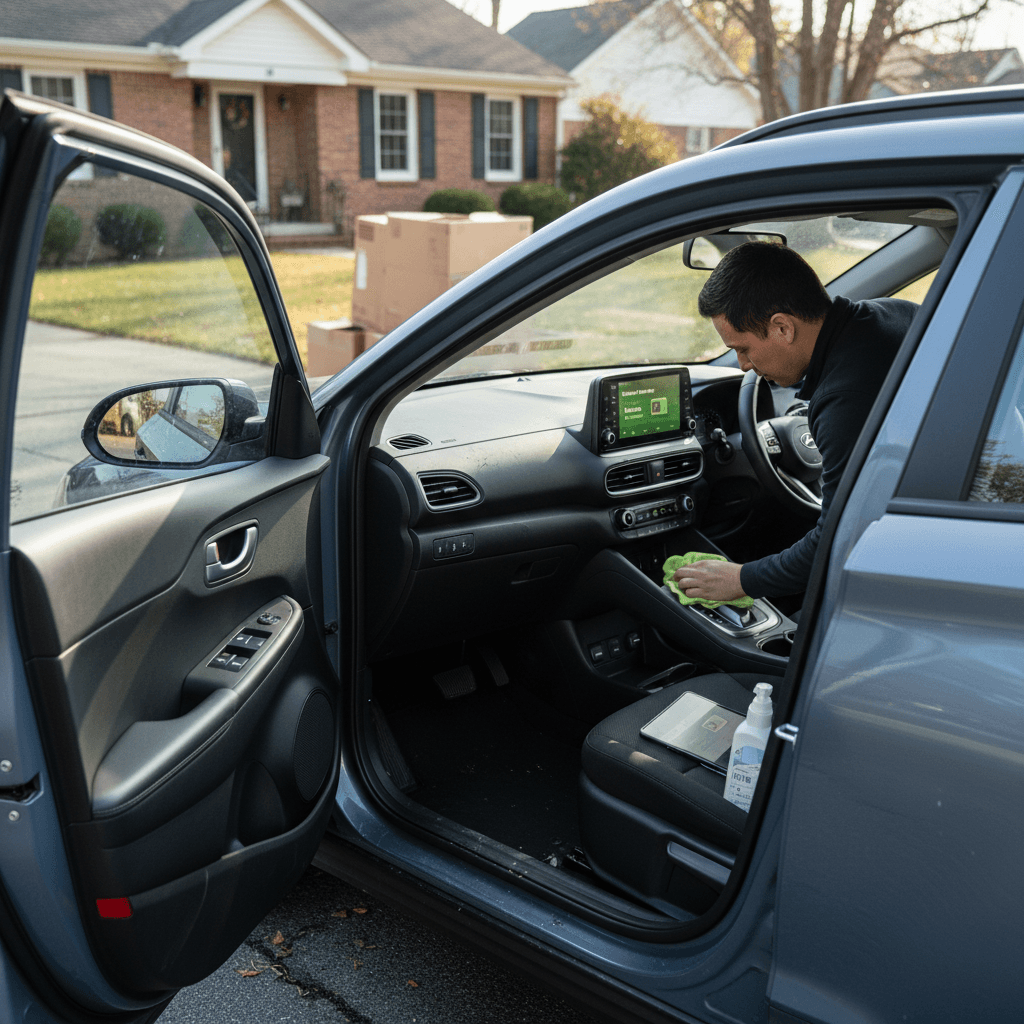
- Deep clean inside and out. Vacuum, wipe down hard surfaces, clean the touchscreen, and de‑clutter the cargo area. EV buyers notice how the interior has been treated.
- Address obvious, inexpensive issues. Replace worn wiper blades, burned‑out bulbs, and stained floor mats. Top off washer fluid and check tire tread.
- Update maintenance. Even though EVs need less service, having recent brake checks, cabin air‑filter replacements, and tire rotations documented builds confidence.
- Gather all keys, cables, and accessories. Include the OEM charge cable, any Level 2 home‑charging gear you’re not keeping, and the owner’s manuals.
- Document charging history. Screenshots from your charging app, odometer photos, and records of mostly Level 2 (vs. constant DC fast charging) use all help the story.
Small fixes, real money
Step 4: Highlight battery health and warranty
On a used EV, battery health is the new timing belt. If you want top dollar for your Hyundai Kona Electric, you need to show a shopper that the pack is in good shape and still backed by factory coverage.
Hyundai Kona Electric battery & EV system warranty basics (U.S.)
Exact terms can vary by model year and whether you’re the first owner, but here’s what most U.S. buyers expect to see.
| Item | Typical Coverage | What Buyers Care About |
|---|---|---|
| EV battery warranty | 10 years / 100,000 miles from original in‑service date | How many years and miles remain on your specific Kona’s battery coverage. |
| Powertrain warranty | 10 years / 100,000 miles (first owner; often reduced for subsequent owners) | Whether the next owner still benefits or is on the shorter 5‑year/60k term. |
| Capacity guarantee | Often around 70% of original capacity during battery warranty term | Whether Hyundai will repair/replace the pack if it degrades abnormally. |
| CPO extensions | Hyundai‑certified pre‑owned may carry additional perks | If applicable, highlight any extended coverage the car comes with. |
Always verify your specific car’s coverage in the official Hyundai warranty guide and include that information in your listing.
Check your in‑service date
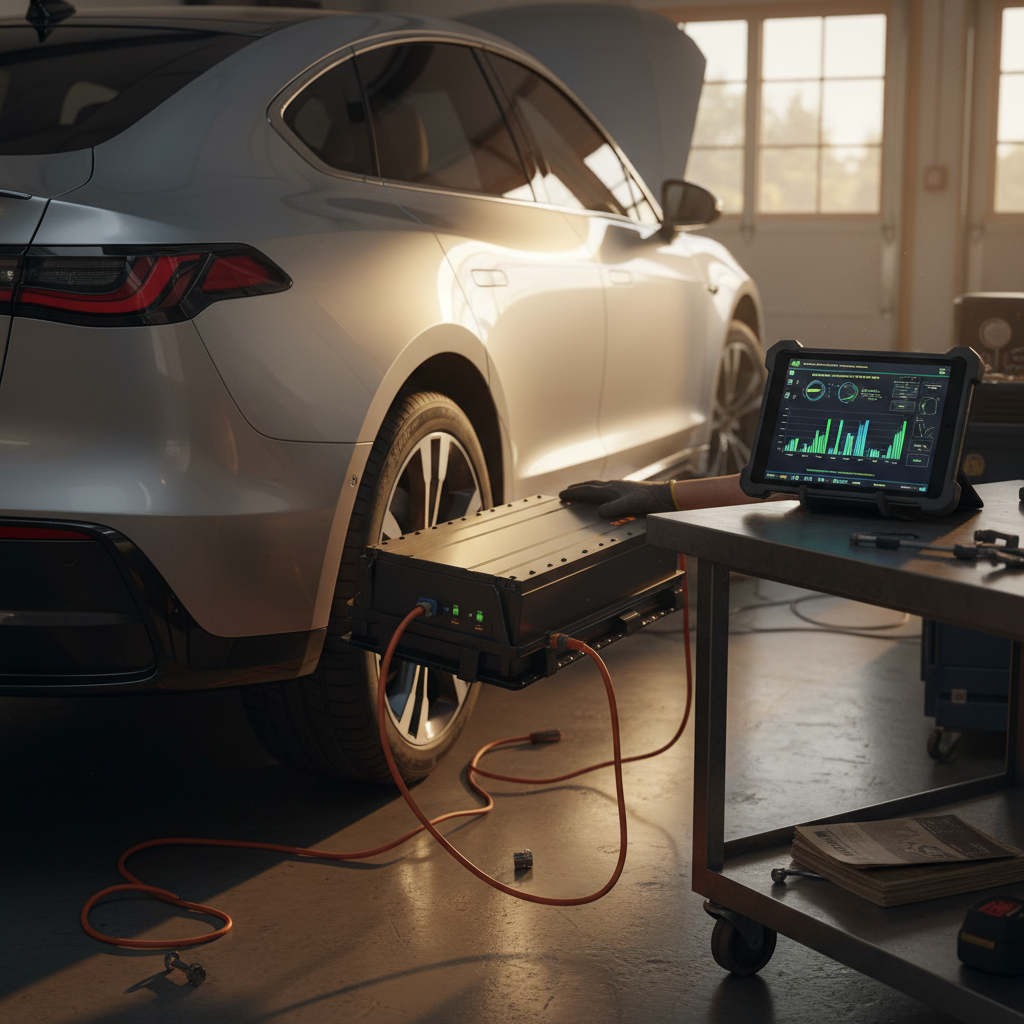
Beyond warranty, a third‑party battery health report can set your Kona Electric apart. Recharged, for example, performs a Recharged Score battery diagnostic that quantifies usable capacity and pack health. Even if you don’t sell through Recharged, a credible report helps justify your asking price and calms anxious first‑time EV buyers.
Make pack health easy to understand
Step 5: Create a compelling listing
An effective Hyundai Kona Electric listing has three pillars
Think like a cautious but interested buyer.
Clear, honest photos
- Exterior from all corners, plus close‑ups of any flaws.
- Interior seats, dash, cargo area, and touchscreen.
- Instrument cluster showing mileage and range estimate after a full charge.
Transparent description
- Year, trim, battery size, color, and key options (e.g., tech/safety packages).
- Charging habits: mainly home Level 2 vs. fast charging.
- Any accidents, repairs, or open recalls addressed.
Proof of care
- Service history and software‑update records.
- Battery health report or screenshots of range over time.
- Warranty status with dates and miles remaining.
Weave EV‑specific details into the description. Mention your real‑world range at 70 mph, how the heat pump performs in winter if equipped, and what home‑charging setup you’ve been using. This reassures shoppers who are moving out of gas cars and shows you’ve lived successfully with the Kona Electric.
Avoid over‑promising on range
Step 6: Handle test drives and negotiation
Safe, smooth Kona Electric test drives
Pre‑screen buyers
Before meeting, confirm that a buyer has a valid license, understands your approximate price, and is serious, especially if you’re still paying off a loan.
Meet in a safe, public place
Use a well‑lit public parking lot or, if possible, a bank where you might complete the transaction. For longer drives, ride along and keep the key on you.
Start with a walk‑around
Point out any cosmetic flaws up front. Transparency builds trust and reduces haggling leverage later.
Demonstrate EV basics
Show how to start the car, use regen modes, check range, and plug in. Many buyers appreciate a quick EV 101 and will value you as a helpful seller.
Set expectations on price
Use your pricing band: “I listed at $17,500 and I’m comfortable somewhere in the mid‑$16s for a smooth, quick sale.”
Have paperwork ready
Title, registration, loan payoff information, and a simple bill of sale should be printed and organized before you meet.
Protect yourself on payment
Paperwork, title, and tax considerations
Paperwork is the unglamorous part of selling a Hyundai Kona Electric, but doing it right protects both you and the buyer. Requirements vary by state, so always verify with your DMV, but most U.S. private‑party sales involve the same core documents.
Common paperwork when selling your Kona Electric (U.S.)
Check your state DMV for the exact requirements where you live.
| Document | Who Provides It | What It Does |
|---|---|---|
| Vehicle title | You (current owner or lender) | Transfers legal ownership to the buyer. |
| Bill of sale | You (or dealer/marketplace) | Records sale price, date, VIN, and parties involved. |
| Odometer statement | You | States the mileage at time of sale, required in most states under a certain age. |
| Lien release or payoff letter | Your lender | Shows that any loan on the vehicle is satisfied so the title can be transferred. |
| State‑specific forms | DMV or tax office | May include emissions exemptions, notice of sale, or EV‑related disclosures. |
If you sell through a dealer or Recharged, most of these steps are handled for you.
Used EV tax credit has changed
When it makes sense to sell your Kona Electric to Recharged
Situations where Recharged fits well
- You want a data‑driven offer that accounts for your Kona Electric’s actual battery health, not a generic EV discount.
- You’d rather avoid listing the car, meeting strangers, and figuring out paperwork on your own.
- You need financing options and nationwide exposure if you’re consigning instead of selling outright.
- You have a trade‑in or are moving into another EV and want a single, guided process.
What Recharged brings to the table
- Recharged Score Report with verified battery diagnostics, range estimates, and fair‑market pricing.
- Options to sell outright, get an instant offer, or consign your Kona Electric.
- EV‑specialist support that can explain charging, warranty, and ownership costs to the next buyer.
- Nationwide digital retail experience plus an in‑person Experience Center in Richmond, VA for test drives and delivery.
Use Recharged as a benchmark
Ready to find your next EV?
Browse VehiclesFAQ about selling a Hyundai Kona Electric
Frequently asked questions
Bottom line on selling your Kona Electric
Selling a Hyundai Kona Electric isn’t fundamentally harder than selling any other car, it just rewards a little more preparation. Price it based on up‑to‑date data, present a clean and well‑documented car, and put your battery health and warranty story front and center. Decide whether you value time, simplicity, or maximum dollars most, then choose between a trade‑in, private sale, or EV specialist accordingly.
If you’d like a data‑driven starting point, and potentially a one‑stop solution, consider getting a valuation or offer from Recharged. With battery‑health diagnostics, fair‑market pricing, and EV‑savvy support, they’re built to make selling a used electric vehicle as transparent and low‑stress as possible, whether you ultimately sell through them or simply use their insights to sharpen your own listing.