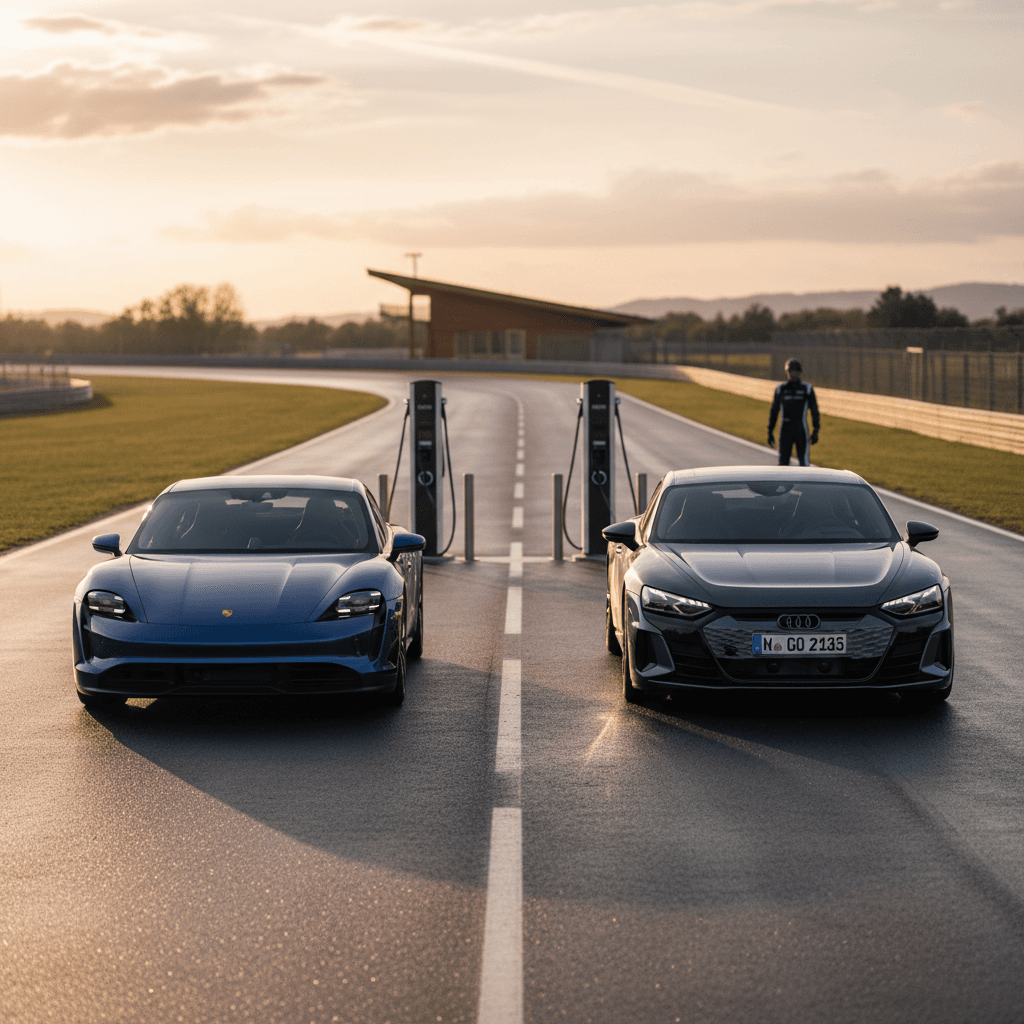
If you’re cross-shopping the Porsche Taycan vs Audi e-tron GT, you’re looking at two of the most exciting electric sedans on the road. They share a lot under the skin, but they feel very different once you’re behind the wheel, and those differences matter even more if you’re buying used.
Platform twins, different personalities
Taycan vs e-tron GT: Quick overview
How these two EVs position themselves
Same bones, different priorities
Porsche Taycan
Character: Sharp, connected, unapologetically sporty.
- Broader lineup (RWD, 4S, Turbo, Turbo S, Cross Turismo)
- Excellent steering feel and brake tuning
- Shorter official EPA range, but strong DC fast charging
- Interior skews minimalist and driver-focused
Audi e-tron GT
Character: Sleek, relaxed GT with big curb appeal.
- Fewer trims (e-tron GT quattro, RS e-tron GT)
- Slightly softer ride, more isolation
- Similar battery, slightly higher EPA range figures
- Futuristic cabin, dramatic lighting and materials
Headline numbers at a glance (recent U.S. models)
Range ratings are only part of the story
Key specs: Porsche Taycan vs Audi e-tron GT
Core spec comparison: recent U.S. models
Representative specs for common trims. Exact numbers vary by model year, wheels, and battery choice.
| Model | Drivetrain | Power (hp, approx.) | Battery (gross) | EPA Range (mi, approx.) | DC Fast Charge Peak |
|---|---|---|---|---|---|
| Porsche Taycan (RWD) | RWD | ~402–469 | 79–93 kWh | ~206–225 | Up to ~270 kW (newer models higher) |
| Porsche Taycan 4S | AWD | ~429–522 | 79–93 kWh | ~215–235 | Up to ~270 kW |
| Audi e-tron GT quattro | AWD | ~469 | 93.4 kWh | ~238–249 | Up to ~270 kW |
| Audi RS e-tron GT | AWD | ~590–637 (boost) | 93.4 kWh | ~232–240 | Up to ~270 kW |
Always verify exact specs for the specific VIN you’re considering, especially with used EVs.
Trim and model-year chaos is real
Performance and driving feel
Porsche Taycan: the driver’s car
- Steering and chassis: Heavier, more communicative steering with a sports-car stance. Optional rear-axle steering makes the Taycan feel smaller in tight corners.
- Braking feel: Porsche’s blending of regenerative and friction braking is among the best in the EV world, with a very natural pedal.
- Power delivery: Even lower trims feel eager. Performance models (Turbo, Turbo S, later Turbo GT) deliver near-supercar acceleration with repeatable launches.
- Ride quality: With adaptive air suspension, you can soften things up, but the car always feels taut and reactive.
Audi e-tron GT: grand tourer with serious pace
- Ride and refinement: Still quick, but tuned more for long-haul comfort. Road and wind noise are impressively subdued.
- Steering and grip: Light but accurate steering, with quattro all-wheel drive confidence in bad weather.
- Acceleration: The standard e-tron GT is already very quick; RS versions layer on brutal straight-line speed with a more dramatic launch feel.
- Character: Feels more like a super-stylish A7 on electric steroids than a track-honed sports car.
How to test-drive these cars back-to-back
Range, battery and charging experience
On paper, Audi usually claims a slightly higher EPA range, especially on the standard e-tron GT with its 93.4‑kWh gross battery. Many Taycan trims with the smaller pack post slightly lower numbers, though newer models with updated chemistry narrow that gap. In the real world, both cars live in similar territory: plan around 200–240 miles of comfortable mixed driving, and less if you’re hammering the throttle or running wide wheels and sticky tires.
- Battery size: Audi sticks with one large pack (93.4 kWh gross, ~84 kWh usable). Taycan offers more variety, including smaller and larger options depending on trim and year.
- Charging speed: Both vehicles support very high DC fast‑charge rates, with peak speeds around 270 kW on many trims and even quicker top-offs on newer Taycans in ideal conditions.
- On-road efficiency: Expect mid‑2s to low‑3s miles per kWh depending on how and where you drive, not class‑leading, but on par with other fast, heavy luxury EVs.
- Thermal management: Both use sophisticated battery conditioning, which helps maintain performance and fast‑charge speeds even after repeated hard use.
Cold weather matters with both cars
Comfort, interior and in-car tech
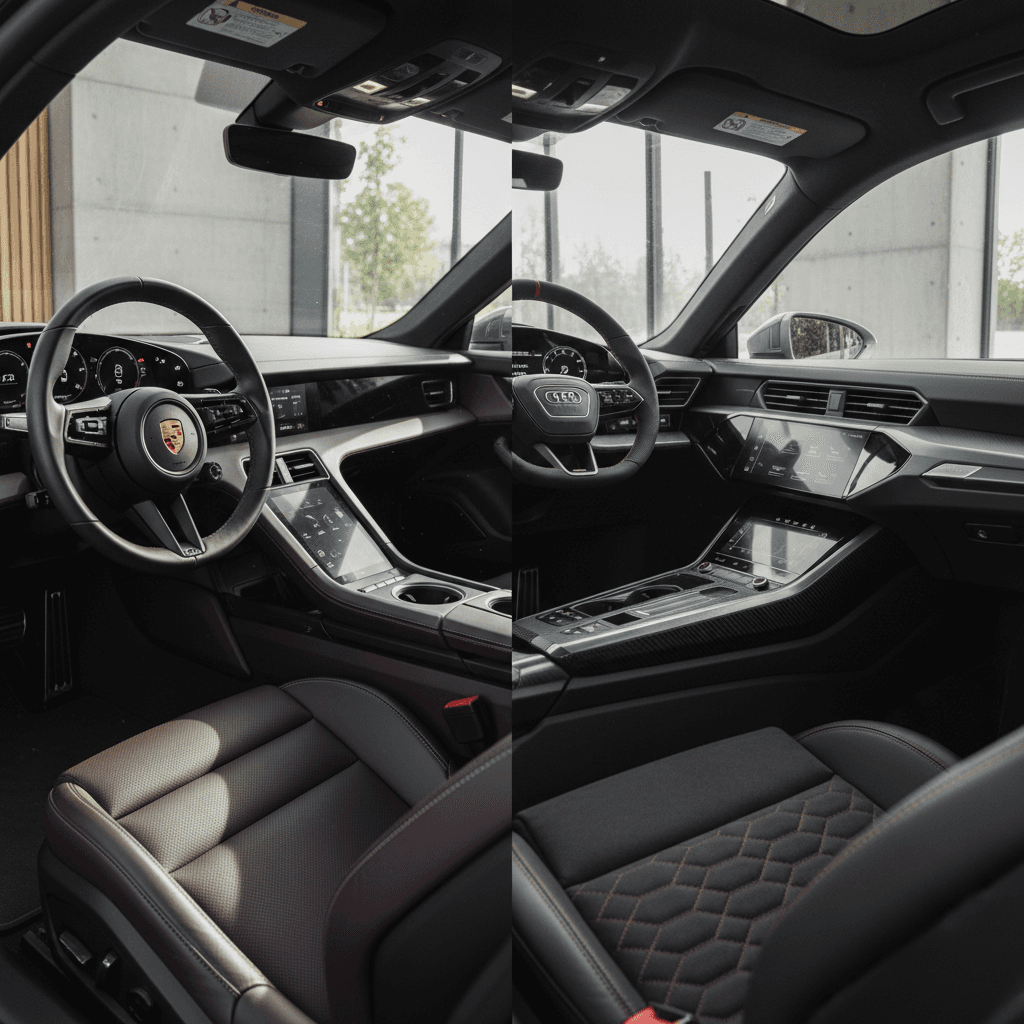
Porsche Taycan cabin
- Design: Clean, modern, almost minimalist with broad digital displays and relatively simple lines.
- Seating: Supportive, low-set seats that feel more like a 911 or Panamera than a traditional sedan.
- Space: Rear legroom is adequate but not generous, and the sloping roof can be tight for taller passengers.
- Infotainment: Porsche Communication Management is quick and crisp, with growing support for over‑the‑air updates. The learning curve is steeper but features are deep.
Audi e-tron GT cabin
- Design: Dramatic lighting, layered materials and more buttons and toggles. Feels like a futuristic take on Audi’s traditional luxury cabins.
- Seating: Slightly higher hip point and softer cushioning, better for long days behind the wheel.
- Space: Similar rear-seat footprint to Taycan, but some shoppers find the Audi a touch more forgiving for adults in back.
- Infotainment: Audi’s MMI is mature and familiar to anyone coming from a recent ICE Audi, with strong smartphone integration and a more intuitive interface for some drivers.
If you care most about cabin ambiance…
Practicality and ownership costs
Daily‑driver realities
Where these cars shine, and where they compromise
Cargo and space
- Both offer a usable frunk plus a sedan‑style trunk.
- Seats‑folding practicality is modest compared with a hatchback or SUV.
- Cross Turismo / Sport Turismo versions of the Taycan add wagon‑like space and rear headroom.
Energy and running costs
- Electricity costs will undercut comparable gas Porsches and Audis, especially if you charge at home off‑peak.
- Fast‑charging on road trips can add up; pricing varies widely by network.
- Premium tires and brakes are expensive, especially on high‑performance trims.
Maintenance and reliability
- No oil changes, but complex air suspensions, steering systems and brake hardware are not cheap to service out of warranty.
- Software and infotainment issues are more common than motor or battery failures.
- Certified pre‑owned (CPO) programs can meaningfully reduce risk on both brands.
High-performance EV, high-performance bills
Buying used: Taycan vs e-tron GT
In today’s market, both cars have taken a noticeable hit from their original MSRPs, which makes them tempting used buys. But used EVs introduce two big wild cards: battery health and complex tech. This is exactly where a structured process, and data, not just a test drive, pays off.
Used Taycan & e-tron GT: must-do checks
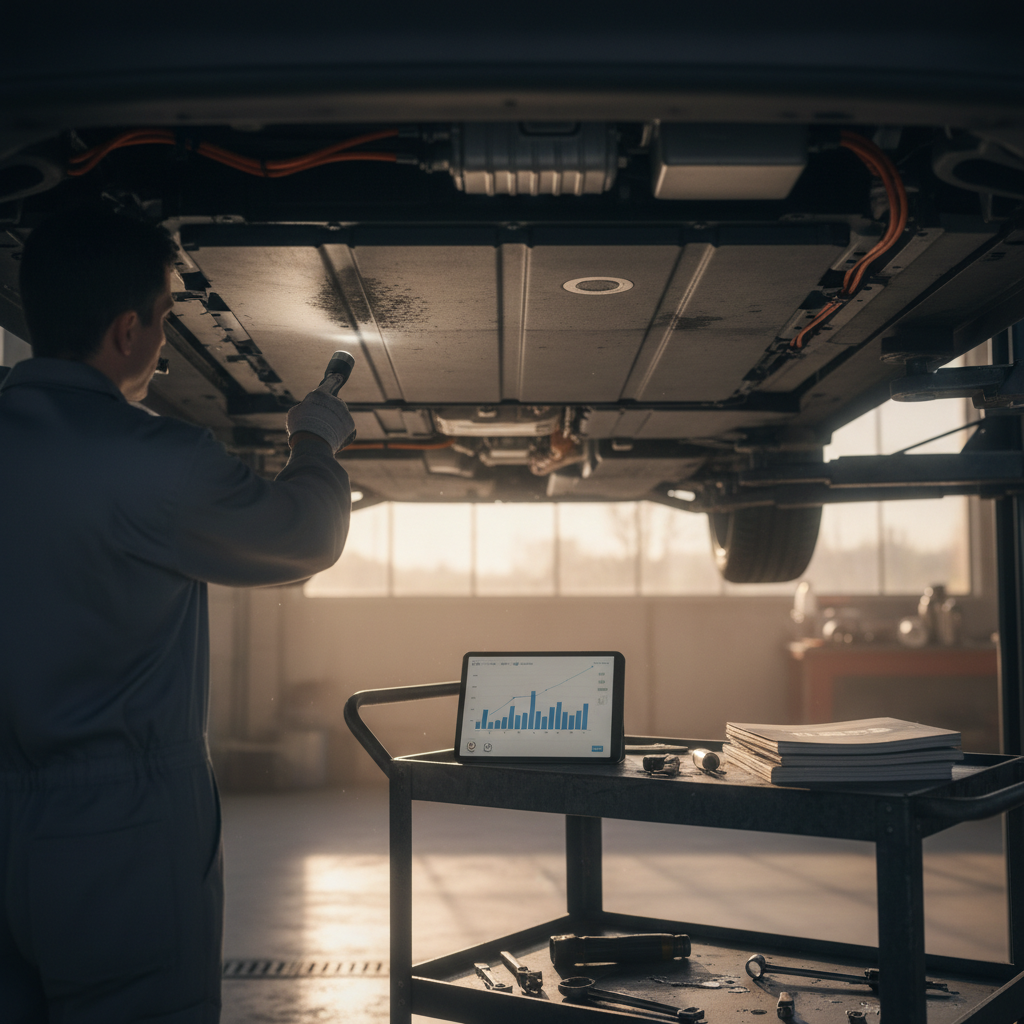
1. Get a battery health report
Battery capacity is the single most expensive component on either car. Use a third‑party diagnostic or a service like the <strong>Recharged Score</strong> to verify real battery health rather than relying on a simple range estimate on the dash.
2. Verify DC fast‑charging behavior
If possible, observe a DC fast‑charging session from a low state of charge. An unusually flat or low charging curve can hint at thermal issues, software limitations or a battery that’s been heavily fast‑charged.
3. Review software and recall history
Ask for service records and check that software campaigns and recalls have been performed. Both brands have used updates to improve range estimates, charging, and driver‑assist behavior.
4. Inspect wheels, tires and brakes
Curb rash on large wheels, mismatched tires, or heavily worn pads and rotors can signal hard use. These items are pricey on performance trims and should factor into your offer.
5. Test all driver‑assist and infotainment features
Confirm that adaptive cruise, lane‑keeping, parking sensors, cameras, and smartphone integrations all work as intended. Glitchy electronics are expensive to track down on these cars.
6. Compare pricing to current market data
Use current fair‑market pricing, not just original MSRP, to judge value. Platforms like Recharged bake market trends and battery health into pricing guidance, which matters more than a window sticker from three years ago.
How Recharged can simplify a complicated decision
Which one fits you better?
Match the car to your priorities
Use this as a quick decision guide, then dig into specific trims and years
Choose the Porsche Taycan if…
- You prioritize steering feel and chassis response over absolute range.
- You want a wider spread of trims, from efficient RWD to track‑ready Turbos and wagon‑style Cross Turismo models.
- You’re coming from a 911, Cayman or M car and want something that still feels like a driver’s car.
- You’re okay with a firmer ride and slightly tighter rear space in exchange for handling.
Choose the Audi e-tron GT if…
- You favor grand‑touring comfort and design drama over lap times.
- You like a more traditional luxury interior with familiar Audi switchgear and MMI.
- You want slightly higher EPA range figures on paper and a calmer highway demeanor.
- You’re cross‑shopping with Audi S7/RS7 or E‑class/5‑series sedans and want that same vibe, just electric.
For many shoppers, the best move is to treat the Taycan as the keener driver’s tool and the e-tron GT as the more relaxed, design‑forward GT. Both are fast, both are luxurious, both ask you to accept some range compromise in exchange for performance. If you’re buying used, the right answer isn’t just "Porsche" or "Audi", it’s the specific VIN with the cleanest history, healthiest battery, and pricing that reflects today’s EV market, not yesterday’s sticker. That’s where leaning on detailed reports and expert guidance can turn an intimidating, six‑figure decision into a confident one.