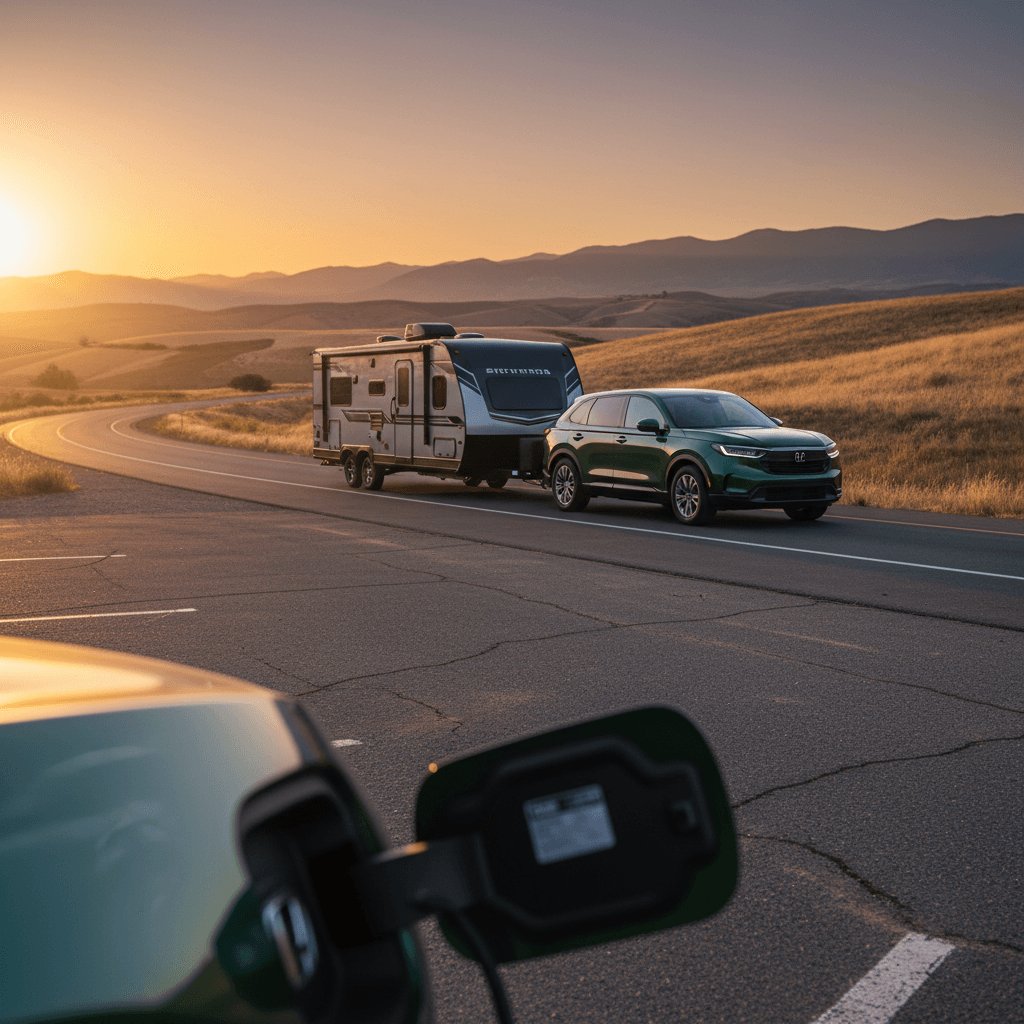
If you’re eyeing a Honda Prologue as your family hauler, the next question is obvious: what can it tow, and how badly will that trailer chew into your range? Understanding Honda Prologue towing capacity and range loss is the difference between a fun weekend away and a white‑knuckle crawl from charger to charger.
Quick answer
Honda Prologue towing basics: what it’s actually rated to pull
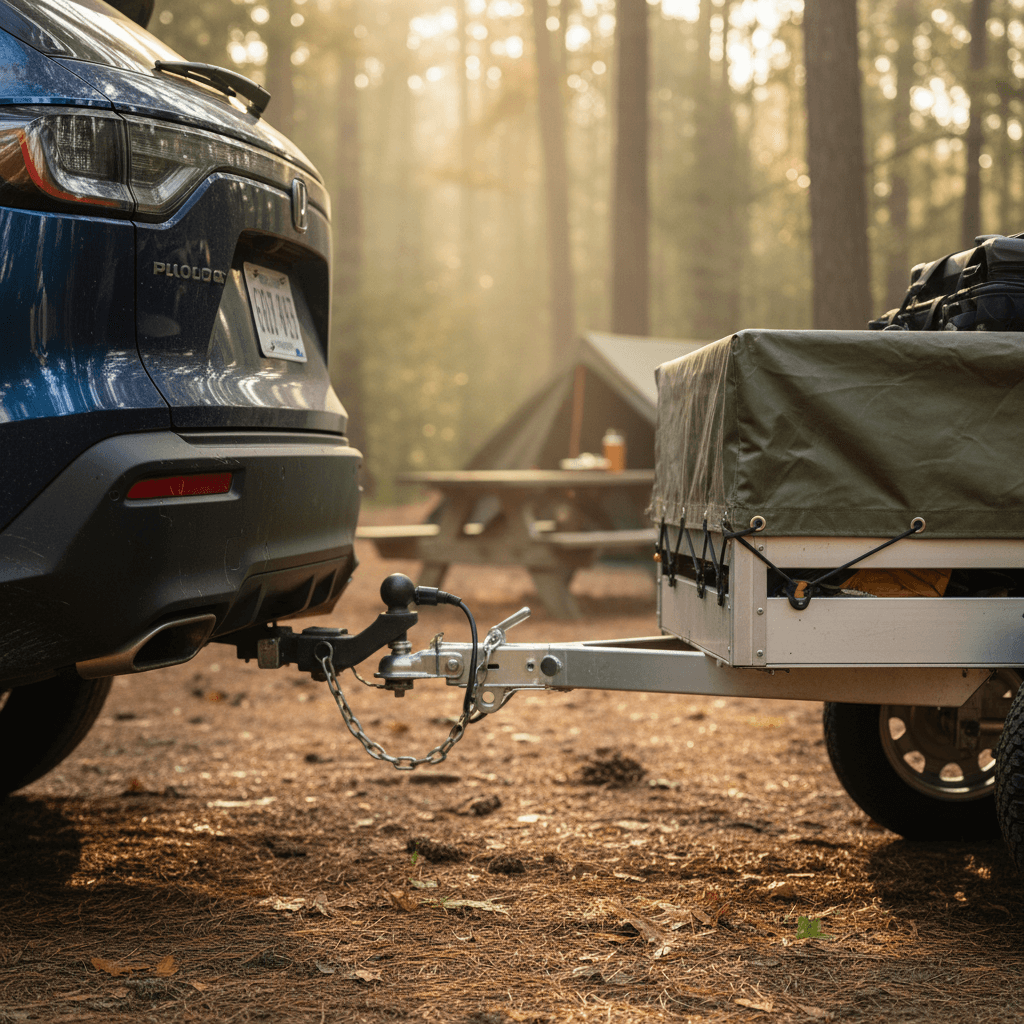
Honda keeps it simple: the 2024–2025 Prologue is rated for a maximum tow capacity of 1,500 pounds when properly equipped with a hitch and wiring. That number applies across trims (EX, Touring, Elite) and drivetrains, because the hardware behind the rear bumper is the same Ultium‑based structure.
Honda Prologue key towing specs (2024–2025)
Core factory numbers you should know before you hook up a trailer.
| Spec | Value | What it means for you | |||
|---|---|---|---|---|---|
| Maximum trailer weight | 1,500 lb (braked) | Upper limit for a loaded trailer with its own brakes | |||
| Recommended tongue weight | ~150 lb (est., ~10% of tow rating) | Weight pushing down on the hitch; counts against payload | Hitch type | 2" receiver (dealer or aftermarket) | Check that the hitch and ball mount are also rated 1,500 lb or higher |
| Drive layout | FWD or AWD | Tow rating doesn’t change, but AWD adds traction on wet boat ramps or gravel |
Always confirm final limits in your owner’s manual and on the driver’s‑door jamb sticker before towing.
Watch your payload, not just tow rating
Honda Prologue range ratings before you add a trailer
To understand range loss while towing, you first need a baseline. The Prologue uses an 85‑kWh Ultium battery pack and, in U.S. EPA testing, lands comfortably in the mid‑pack for electric SUVs. Range varies by drivetrain and wheels:
2024 Honda Prologue EPA-rated range by trim
Official combined EPA ranges for U.S. models.
| Trim | Drive | Wheel size | EPA range (mi, combined) |
|---|---|---|---|
| EX | Single‑motor FWD | 19 in | 296 mi |
| Touring | Single‑motor FWD | 19 in | 296 mi |
| EX | Dual‑motor AWD | 19 in | 281 mi |
| Touring | Dual‑motor AWD | 19 in | 281 mi |
| Elite | Dual‑motor AWD | 21 in | 273 mi |
Real‑world highway range is usually a bit lower than the EPA combined figure, even without a trailer.
Honda Prologue battery & charging snapshot
Why this matters for towing
How much range you lose towing with an electric SUV
The Prologue doesn’t have a special towing‑mode range rating, so we look to data from similar electric SUVs and trucks. Across multiple independent tests of EVs towing near their maximum rating, the pattern is remarkably consistent: towing usually cuts range by 30–50%, sometimes more in tough conditions like cold weather, steep grades, or high speeds.
Typical EV range loss when towing
These are ballpark numbers, not Prologue‑specific lab results, but they give you a solid starting point.
Small, low trailer
Think lightweight cargo trailer or tiny teardrop, kept below 1,000–1,200 lb.
- ~25–35% range loss at 60–65 mph
- Best case on warm days and flat ground
Boxy small camper
Short travel trailer or box‑shaped cargo trailer getting close to 1,500 lb.
- ~35–50% range loss is common
- Aerodynamics matter more than pure weight
Bad conditions combo
Cold weather, headwinds, hills, or higher speeds.
- Range loss can exceed 50%
- Plan shorter legs and more charging stops
Cold weather is a double hit
Estimating Honda Prologue range while towing
Let’s walk through some realistic examples so you can see how Honda Prologue towing capacity and range loss play out in the real world. We’ll assume highway driving around 65 mph, mild weather, and a healthy battery.
Sample Honda Prologue towing range scenarios
These are estimates based on typical EV towing data, not official Honda figures.
| Vehicle & trailer combo | Solo highway range (mi est.) | Expected towing range (mi) | Approx. range loss |
|---|---|---|---|
| FWD Prologue + 900‑lb teardrop camper | 240 mi | 150–175 mi | 25–35% |
| AWD Prologue + 1,400‑lb small box camper | 230 mi | 115–145 mi | 35–50% |
| Elite AWD + 1,500‑lb tall cargo trailer, winter | 220 mi | 90–120 mi | 45–60% |
Always leave extra buffer for weather, detours, and charging issues.
A simple rule of thumb
Step 1: Figure out your real solo range
Drive a familiar highway route without a trailer and note how far you go between 20% and 80% state of charge. That’s your personal, real‑world highway range window.
If you typically cover 150 miles going from 80% down to 20%, that’s 60% of the battery. Multiply by 1.67 to get a full‑pack estimate: about 250 miles of realistic solo highway range.
Step 2: Apply a towing penalty
Now apply a conservative loss:
- Small, aerodynamic trailer: multiply your solo range by 0.7
- Boxy trailer near 1,500 lb: multiply by 0.5–0.6
In the 250‑mile example, that predicts 125–175 miles between fast‑charge stops when you’re towing.
What you can safely tow with a Prologue
A 1,500‑lb tow rating doesn’t sound like much next to big electric trucks, but it’s plenty for the kinds of trailers that fit an electric crossover lifestyle. The Prologue is happier as a light‑duty tow rig than a miniature semi.
Trailer types that work well behind a Prologue
Stay safely under 1,500 lb loaded, and favor good aerodynamics.
Utility & cargo trailers
- 4x8 or 5x8 utility trailer for home‑improvement runs
- Small enclosed cargo trailer for moving or music gear
- Snowblower, lawn equipment, or bikes
These are often 800–1,200 lb loaded and relatively short, which helps range.
Teardrops & micro‑campers
- Light teardrop campers with simple interiors
- Fiberglass “egg” campers at the very small end
- Roof height close to the Prologue’s roofline
Aero‑friendly shapes can keep range loss closer to 30–40%.
Toy haulers & specialty rigs
- Small motorcycle or ATV trailer
- Kayak or canoe trailer
- Light boat on a short trailer
Here frontal area matters more than weight. A low boat can tow more efficiently than a tall box.
Be honest about “loaded” weight
Honda Prologue towing safety checklist
1. Confirm tow and tongue weights
Double‑check the Prologue’s 1,500‑lb max tow rating and your trailer’s <strong>loaded</strong> weight. Aim to keep tongue weight near 10% of trailer weight and within the rating of the hitch and ball mount.
2. Mind payload and passengers
Add up people, cargo, and tongue weight. If you’re close to the payload sticker value on the driver’s door, consider leaving a box, or a person, at home.
3. Upgrade the hitch hardware
Use a quality Class II or better 2‑inch receiver and components that are all rated above 1,500 lb. Cheap hitches and rusty ball mounts are not where you want to save money.
4. Set the right tire pressures
Inflate both the Prologue’s and the trailer’s tires to their recommended towing pressures. Underinflated tires increase rolling resistance, heat, and the risk of blowouts.
5. Practice stops and lane changes
Before heading out on a long trip, spend 15–20 minutes in a big parking lot practicing braking, tight turns, and emergency maneuvers. Regenerative braking feels different with a trailer behind you.
6. Check lights and breakaway systems
Test turn signals, brake lights, and, if equipped, trailer brakes and breakaway switch before every trip. Visibility and stopping power are your safety net.
Trip planning and charging with a trailer on the hitch
Planning an EV road trip is already a little different than road‑tripping in a gas SUV. Add a trailer and the margin shrinks, especially with a modest 1,500‑lb tow rating. But with smart planning, the Prologue can tow comfortably on regional trips.
- Use EV‑aware route planners (like A Better Routeplanner) and set a towing consumption about 40–50% higher than your solo baseline.
- Favor reliable fast‑charging corridors with multiple stations, not one lonely charger 40 miles off your route.
- Plan to arrive at chargers with 15–20% state of charge, not single digits, especially in winter.
- When possible, unhitch before fast charging so you’re not blocking traffic and can nose into tight spots.
- Build in an extra stop or two compared with solo travel; shorter legs make range loss less stressful.
Look for trailer‑friendly chargers
Protecting battery health and performance when towing
Towing doesn’t automatically “hurt” your battery, but it does ask more from it. You’re pulling more weight, pushing a bigger hole in the air, and often fast charging more frequently. All of that adds heat and cycling.
Battery‑friendly habits when towing with a Prologue
Help your Ultium pack work hard without aging fast.
Stay in the 10–80% sweet spot
The Prologue will happily charge to 100%, but for longer towing days, try to bounce between 10–80% instead of 0–100%. You’ll charge faster and reduce stress on the pack.
Watch temperature and speed
High speeds, big hills, and heavy trailers all generate heat. On hot days, backing off from 75 mph to 65 mph can lower energy use and pack temperature, and noticeably improve towing range.
Use DC fast charging wisely
Frequent DC fast charging is fine on road trips, that’s what it’s for. But if you’re towing locally, rely more on a Level 2 home charger to top up overnight and save the fast chargers for bigger adventures.
Stay on top of maintenance
Fresh tires with proper pressure and alignment reduce rolling resistance. Keeping the Prologue’s software updated also ensures you get the latest charging and energy‑management tweaks from Honda.
Good news for long‑term owners
Extra tips if you’re towing with a used Honda Prologue
If you’re shopping the used market, a Prologue can be a smart alternative to thirstier gas SUVs, especially when it comes with transparent battery‑health information and a documented towing history. But towing adds a few more items to your used‑EV checklist.
Used Honda Prologue towing checklist
1. Ask how it was used
Was the Prologue mostly a commuter, or did it regularly tow a camper every weekend? Light‑duty towing isn’t a red flag by itself, but frequent high‑load use plus constant DC fast charging is worth understanding.
2. Inspect the hitch and rear structure
Look for a properly installed hitch from a reputable brand, solid mounting points, and no signs of rust, bent metal, or cracked paint around the rear subframe and hitch attachment points.
3. Check tire and brake wear
Uneven tire wear or tired brakes can hint at heavy loads or lots of mountain descents. A pre‑purchase inspection from an EV‑savvy shop can surface issues before they’re your problem.
4. Get a real battery‑health report
Range is your real tow capacity. A detailed battery scan, like the <strong>Recharged Score</strong> that comes with every EV we sell, lets you see how much usable capacity is left compared with new.
5. Review charging habits
Service records or telematics data (when available) can show whether the previous owner relied on home Level 2 charging or lived on DC fast chargers. Either can be fine, but the pattern helps you understand past stress on the pack.
6. Do a loaded test drive
Even if you can’t tow on the test drive, load the Prologue with passengers or cargo, find a steep hill, and pay attention to power delivery, braking feel, and temperature warnings.
How Recharged can help
FAQ: Honda Prologue towing capacity and range loss
Common questions about towing with a Honda Prologue
Bottom line: Is the Honda Prologue good for towing?
If you’re dreaming about pulling a 30‑foot travel trailer across the Rockies, the Honda Prologue isn’t your rig. But if your life looks more like teardrop campers, small utility trailers, and weekend runs to the lake, its 1,500‑lb towing capacity and quiet electric powertrain fit the bill, so long as you respect the range hit.
Plan on 30–50% range loss, keep your trailer light and low, and build a few extra charging stops into the day. Do that, and the Prologue becomes a genuinely useful light‑duty tow vehicle that happens to be an efficient, comfortable electric SUV the rest of the week. And if you’re shopping used, working with a marketplace like Recharged, where every EV includes a verified battery‑health report and expert guidance, can make sure the Prologue you pick has the range and towing capability your adventures demand.