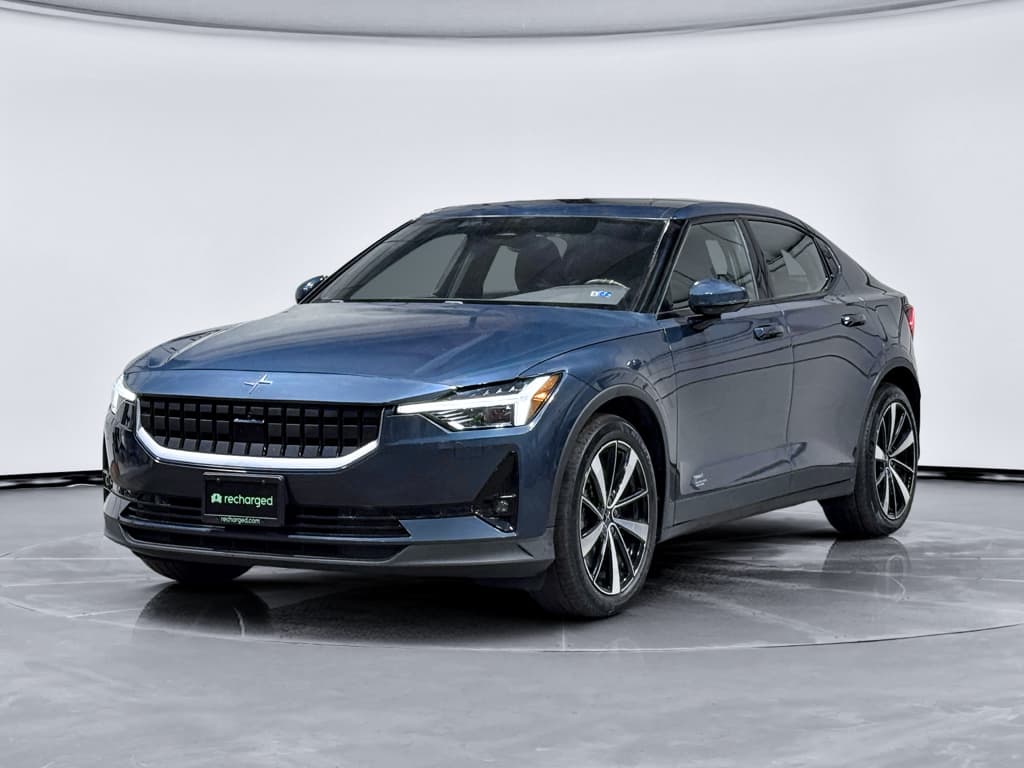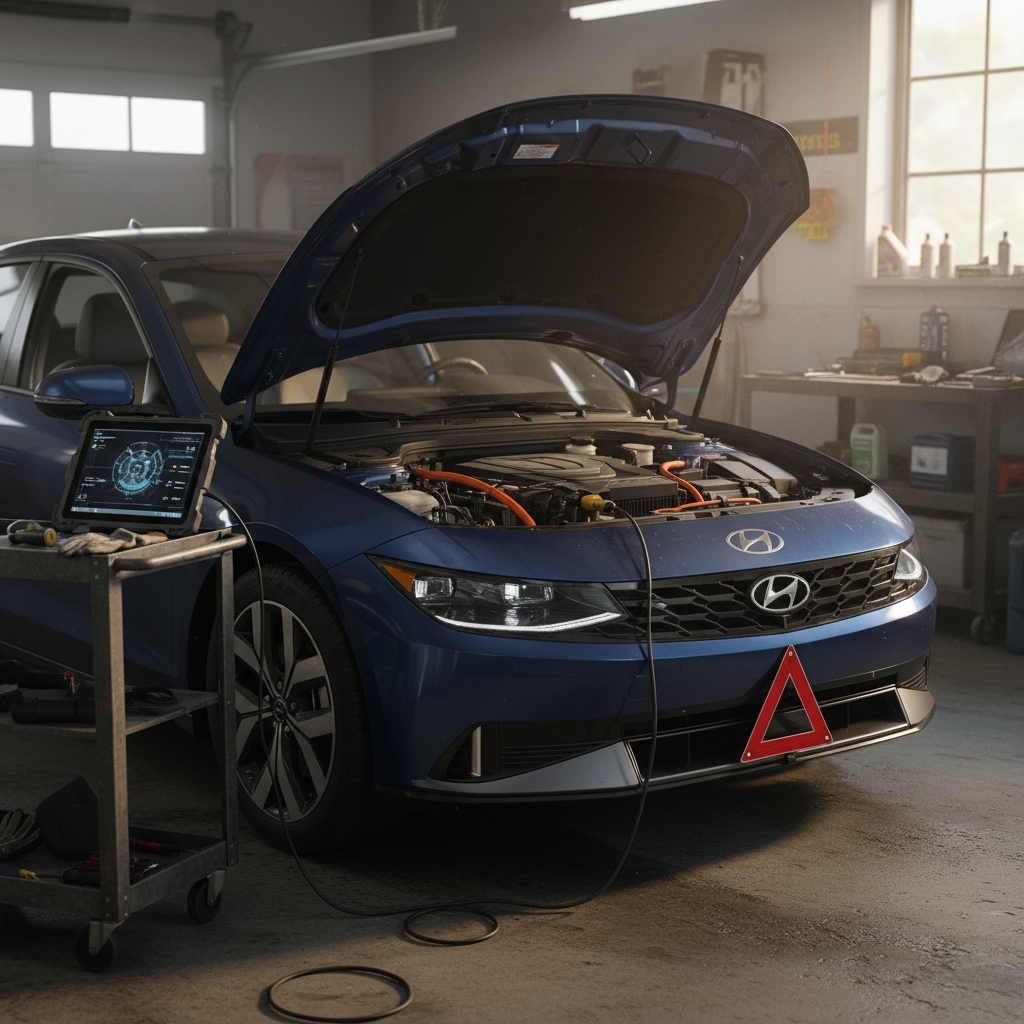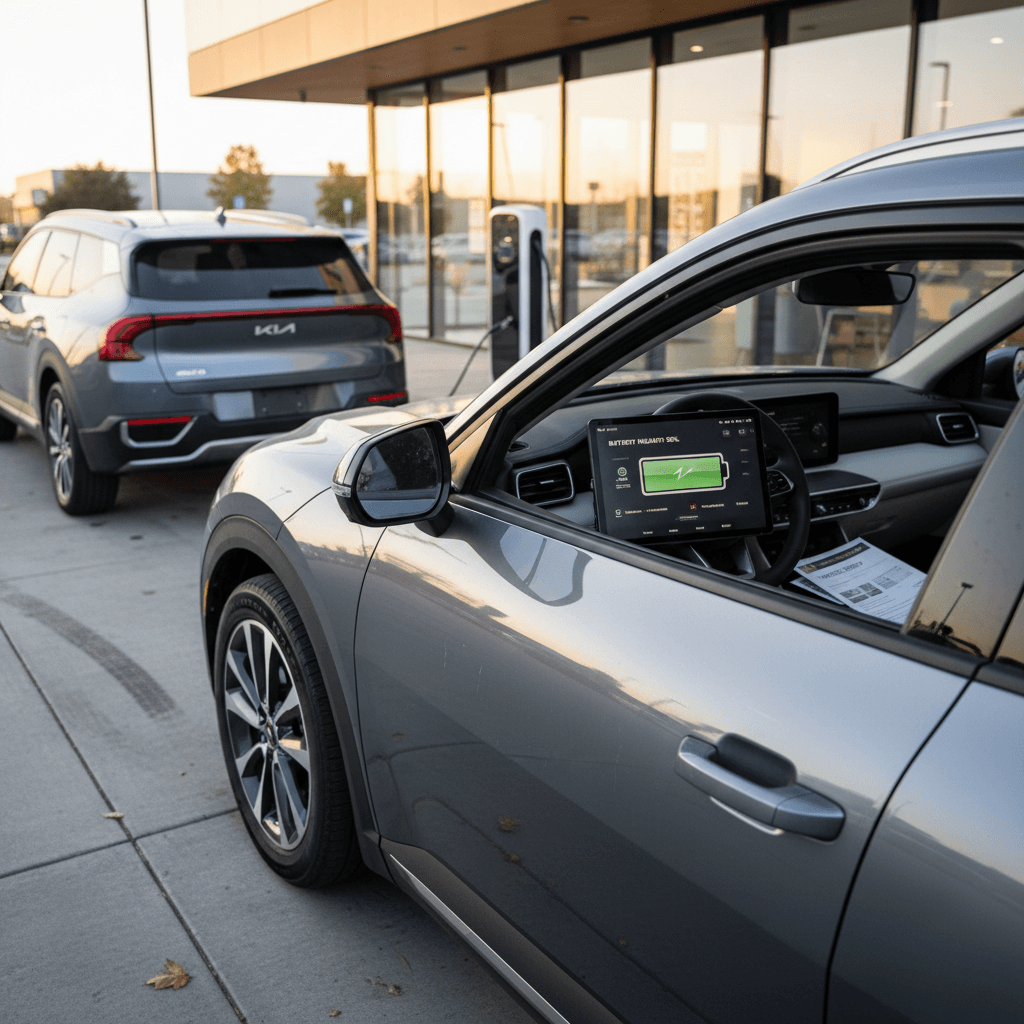
If you’re shopping for a used Polestar 2, battery health is the whole ballgame. Power, range, resale value – they all live or die with the high‑voltage pack under the floor. A proper Polestar 2 battery health check turns an opaque, six‑figure‑dollar component into something you can actually evaluate, compare and negotiate around.
Headline first
Why Polestar 2 battery health matters so much
The Polestar 2 launched as the thinking person’s alternative to a Model 3 – Scandi design, Volvo‑grade safety, a serious performance streak. Underneath, though, it’s the same story as every modern EV: the traction battery is by far the most valuable single component. You can swap a wheel bearing or an infotainment screen; a degraded pack is another matter entirely.
Three reasons battery health is the whole story
Especially when you’re buying a used Polestar 2
Real‑world range
A Polestar 2 with 90–95% State of Health (SoH) will feel very different on the highway than one that’s slipped down toward the 70s. Battery health is range, full stop.
Resale value
Buyers are waking up to battery diagnostics. A car with documented, healthy SoH commands a premium and sells faster than a similar car with no paper trail.
Risk and peace of mind
A proper battery health check reduces the risk of nasty surprises later – like rapid range loss or slow‑charging behavior that only shows up after you’ve lived with the car.
Think of it like engine compression
What “battery health” actually means on a Polestar 2
Polestar – like almost every EV maker – talks about State of Health (SoH). That’s simply the usable energy the pack can store today compared with when it was new, expressed as a percentage. A brand‑new Polestar 2 is, by definition, 100% SoH; if a used car reads 92%, it can store roughly 92% of its original energy.
State of Health (SoH)
- Long‑term measure of battery capacity
- Changes slowly over years, not days
- Main factor in long‑term range and value
- Available via dealer tools and new Polestar battery certificates
State of Charge (SoC)
- What you see as the % charge on the dash
- Changes constantly as you drive and charge
- Like a fuel‑gauge reading, not a health report
- Easily confused with SoH by sales staff who should know better
Don’t let anyone sell you SoC as SoH
5 ways to check Polestar 2 battery health
Depending on whether you already own the car or you’re kicking the tires on a used example, there are several ways to approach a Polestar 2 battery health check. None of them are perfect on their own, but together they paint a very clear picture.
- Ask for an official Polestar battery State of Health (SoH) report or certificate
- Have a Polestar or Volvo dealer run a high‑voltage battery diagnostic
- Use an independent battery test via OBD hardware and specialist software
- Infer health from real‑world range and efficiency over a known route
- Combine all of the above with warranty status and service history
Quick checks current owners can do today
1. Capture a real‑world range baseline
Set your charge limit to 90%, reset the trip computer, drive a familiar mixed route down to 20–30% and note miles driven and average efficiency. Repeat this a few times; if your range suddenly falls off a cliff with the same conditions, that’s a red flag.
2. Watch DC fast‑charge behavior
A healthy Polestar 2 should still pull strong power at low state of charge on a DC fast charger. If it struggles to climb beyond modest power even when warm and nearly empty, the system may be protecting a tired pack – or you’re at a weak charger.
3. Check the in‑car status screens
On newer Polestar software builds you can access detailed battery and charging information in the center display’s vehicle status menus. This won’t give you an official SoH number, but it can highlight warnings, temperature issues, or charging limits that merit further investigation.

Dealer checks and official State of Health reports
If you want something you can staple to a purchase contract, you need an official battery report. Polestar has leaned into this, particularly for cars sold through its own pre‑owned channels.
Polestar 2 battery checks in the real world
In practice, here’s how to get something useful from the franchise side:
- Call a Polestar or Volvo dealer’s service department and explicitly ask for a high‑voltage battery State of Health report for a specific VIN.
- Confirm there will be a printed or PDF report, ideally branded and signed, that you can keep.
- If you’re buying from a Polestar Pre‑owned program car, ask to see the Battery State of Health certificate they use internally to qualify cars.
- If the service advisor seems confused or conflates SoH and % charge, ask that they speak directly with a technician – or choose a different dealer.
What a good report looks like
Polestar 2 battery warranty and what’s “normal” degradation
Polestar’s warranty language is actually pretty generous. If the pack’s State of Health falls below 70% within 8 years or 160,000 km, the company will repair or replace it at no cost, assuming the car has been serviced according to the plan. That 70% threshold is deliberately conservative; most owners will never see a number that low.
How to sanity‑check a Polestar 2 SoH number
Rough guidance for a well‑cared‑for car in a temperate climate. Extreme heat, frequent DC fast charging, and very high mileage can push you lower.
| Age / Mileage | Healthy SoH band | What it suggests | How to respond |
|---|---|---|---|
| 1–2 years / under 25k mi | 97–100% | Essentially new pack, minimal degradation | Smile and keep driving. |
| 3–4 years / 25–50k mi | 93–97% | Normal early‑life capacity loss, then stabilizing | No action needed; maintain good charging habits. |
| 5–6 years / 50–80k mi | 90–95% | Still very respectable; typical for long‑range use | Consider a baseline dealer report if you don’t already have one. |
| 6–8 years / 80k+ mi | 85–92% | Noticeable but manageable; range hit is real but not catastrophic | Negotiate on price if buying; compare with other cars’ reports. |
| Any age / any mileage | <80% | Outlier territory; something unusual in history or use | Lean hard on warranty coverage and service records before buying. |
These bands are guidelines, not guarantees – use them as a conversation starter, not a verdict.
Don’t obsess over single‑digit differences
Reading the car for clues: range and charging behavior
Even before you get your hands on an official SoH report, the Polestar 2 will tell you a lot about its own condition – if you listen the right way. It’s the difference between a quick test drive and a proper pre‑purchase audition.
On‑the‑road signals of a healthy Polestar 2 battery
None of these replaces a formal health check, but together they’re revealing.
Predictable, consistent range
Set the climate to a normal level and drive a known route. If the car’s estimated range and real‑world miles line up sensibly with the official EPA figure (once you account for temperature and speed), that’s a good sign.
Confident DC fast charging
On a warm pack at low state of charge, a healthy Polestar 2 should quickly ramp up power at a DC fast charger and hold strong for a while. Chronic sluggish charging at good stations can indicate a battery or thermal‑management issue.
No unexplained warnings
The center display should be free of high‑voltage battery alerts, reduced‑performance messages, or aggressive charging limits when the car is used normally.
12V behavior in context
Separate from the big pack, the Polestar 2’s 12‑volt system has had some well‑documented quirks. A weak 12V can strand the car or throw errors without saying much about the main traction battery – but chronic electrical issues are still worth noting.
Mind the weather
How Recharged checks Polestar 2 battery health
If all of this sounds like a lot of homework, that’s because it is – and most private sellers won’t do it. This is exactly the gap Recharged was built to fill for used EVs, including the Polestar 2.
Inside the Recharged Score for Polestar 2
What we look at before a Polestar 2 ever hits our site
Verified battery diagnostics
We pull detailed data directly from the vehicle and interpret it with EV‑specialist technicians, not just generic OBD scans. The resulting Recharged Score report shows a clear view of battery health and usable capacity.
History and warranty context
We pair the battery data with service records, software‑update history, and remaining high‑voltage battery warranty, so you know how protected you are against edge‑case degradation.
Nationwide, fully digital
You can browse, finance, and purchase a used Polestar 2 entirely online, have it delivered nationwide, or visit our Experience Center in Richmond, VA if you want to see a car and its battery report in person.
Ready to find your next EV?
Browse VehiclesWhy this matters for Polestar 2 shoppers
Habits that protect your Polestar 2’s battery health
Lithium‑ion packs are not mysterious, fickle creatures; they’re industrial hardware that responds predictably to how you treat them. The Polestar 2 is no exception. If you’re about to buy one – or already own one – a few simple habits will do more for long‑term SoH than any miracle charger or magic additive.
Everyday battery‑friendly habits for Polestar 2 owners
Keep daily charging around 80–90%
Polestar’s own guidance is to charge to around 90% for daily use and save 100% charges for road‑trip days or an occasional battery‑management calibration. Living at 100% all the time is what really stresses cells.
Avoid running it to near‑zero repeatedly
Every battery pack has a buffer below 0%, but don’t make a habit of limping home with the dash flashing single digits. Charge when convenient, not when desperate.
Favor AC and moderate DC charging
Level 2 home charging overnight is ideal. Fast charging is fine when you need it, but running from one DC fast charger to the next as a lifestyle will age the pack faster, especially in hot weather.
Let the car manage temperature
The Polestar 2 has sophisticated thermal management. Precondition the car while plugged in on cold days and don’t override cooling or preconditioning habits just to save a few minutes; they’re there to preserve both performance and longevity.
Keep software up to date
Polestar has quietly improved efficiency, charging behavior, and battery management via over‑the‑air updates. Accepting those updates is one of the easiest ways to make sure the car is treating its own battery kindly.
What actually hurts a Polestar 2 battery
Used Polestar 2 shopping checklist: battery edition
When you distill all the technical chatter down to a Saturday‑afternoon test drive, you’re left with a short, sharp list. If you’re evaluating a used Polestar 2 from a private seller or a non‑EV‑specialist lot, walk through this list before you commit.
Polestar 2 battery health questions to get answered before you buy
1. Do you have a recent SoH report or Polestar certificate?
If yes, check the date, mileage, and SoH number, and make sure it belongs to this VIN. If not, ask the seller to obtain one from an authorized Polestar or Volvo service center as a condition of sale.
2. What’s the remaining high‑voltage battery warranty?
Confirm the in‑service date and mileage so you know exactly how long you have before the 8‑year/160,000 km coverage window closes. A car with more warranty life left is worth more money.
3. How has the car been charged?
Listen for phrases like “mostly Level 2 at home, 80–90% limit” and occasional fast‑charging. A diet of nothing but DC fast charging and 100% overnight charges deserves a lower purchase price.
4. Any history of battery or charging repairs?
Ask directly about high‑voltage battery work, DC fast‑charge issues, or repeated warning lights. Documentation of a fixed issue is fine; vague stories and missing invoices are not.
5. Can we do a long-ish test drive and quick DC fast‑charge stop?
A 20–30 minute mixed‑road loop plus a brief fast‑charge session will tell you a lot about range estimates, efficiency, and charging behavior before you ever plug into a diagnostic tool.
6. Would you be open to an independent EV inspection?
If you’re serious about the car, paying a specialist – or working with a marketplace like Recharged that already does this – is cheap insurance compared with being surprised by a tired pack later.
Polestar 2 battery health check FAQ
Frequently asked questions about Polestar 2 battery health checks
The Polestar 2 is one of the more compelling used‑EV buys on the market: handsome, quick, safe, and still improving via software. But like every electric car, it lives or dies by the condition of its pack. A proper Polestar 2 battery health check turns that unknown into a number, a report, and ultimately a better deal – whether you’re checking the car in your driveway or deciding which used Polestar 2 deserves a space in your life.