If you’re eyeing a Polestar 2, especially a used one, the big question is simple: how much does the Polestar 2 battery degrade per year, and what does that mean for real‑world range? The short answer: most owners are seeing modest, manageable losses, but how the car was driven and charged matters as much as its age.
Quick takeaway
Polestar 2 battery degradation: what “per year” really means
When people ask about Polestar 2 battery degradation per year, they usually want to know how much range they’ll lose annually. Battery engineers think about it a bit differently: modern lithium‑ion packs like the Polestar 2’s tend to lose a chunk of capacity early on, then degrade more slowly over time. So instead of a perfectly straight line, you get a gentle curve.
- Most EVs, including the Polestar 2, lose a few percent in the first 1–2 years (sometimes called “initial aging”).
- After that, degradation tends to flatten, often adding only 1–2 percentage points every few years with normal use.
- Mileage, charging habits, climate, and storage all matter as much as the car’s model year.
That’s why a three‑year‑old Polestar 2 with 40,000 miles and careful home charging might have a healthier pack than a same‑age car with 15,000 miles that lived on repeated DC fast‑charge sessions in heat.
What real-world Polestar 2 owners are seeing
Polestar doesn’t publish detailed annual degradation curves, but early‑life data from owners, service reports, and independent testing paint a consistent picture. Barring abuse or defects, the Polestar 2’s battery is holding up similarly to other premium EVs from Tesla, Hyundai, and Kia.
Polestar 2 battery health: typical real‑world patterns
Outliers exist
5 factors that speed up or slow down Polestar 2 degradation
What really drives Polestar 2 battery wear
It’s less about age, more about how the car was used.
1. DC fast charging frequency
Frequent DC fast charging (especially to 100%) heats the pack more and can accelerate wear.
- Occasional road‑trip fast charging is fine.
- Relying on DC fast charging several times a week is where you see more degradation.
2. Daily charge level & habits
Polestar, like most EV makers, recommends not charging to 100% every day.
- Best practice: Set a daily limit around 70–80% for normal driving.
- Save 100% charges for longer trips.
3. Climate & heat exposure
High temperatures are hard on lithium‑ion chemistry.
- Parking in direct sun daily, especially while at high state of charge, is tougher on the pack.
- Garaged, shaded, or covered parking slows degradation.
4. Mileage and usage pattern
High mileage isn’t automatically bad; steady highway miles can be easier on the pack than short, hot stop‑and‑go trips.
- Lots of short trips at high SOC in heat can increase wear.
- Consistent, moderate usage is generally healthier.
5. Storage behavior
Letting the car sit for weeks at either 100% or near‑empty is not ideal.
- Long‑term storage is safest around 40–60% SOC.
- For airport parking, aim to leave a buffer but not a full charge.
EV‑friendly settings to use
Year-by-year: what to expect from a Polestar 2 battery
No two cars age exactly the same, but for a Polestar 2 that’s been used and charged reasonably, here’s a ballpark view of how capacity loss tends to stack up. Think of this as a reference for what’s broadly normal, not a guarantee for every car.
Typical Polestar 2 degradation over time (healthy use)
Approximate cumulative capacity loss and real‑world range expectations for a well‑cared‑for Polestar 2.
| Vehicle age | Estimated cumulative loss | Typical SOH range | What it feels like to the driver |
|---|---|---|---|
| Year 1 | 1–3% | 97–99% | You may notice little to no change; early degradation is mostly invisible day‑to‑day. |
| Year 3 | 3–6% | 94–97% | Highway range may be down a few miles vs. new, but trip‑planning feels similar. |
| Year 5 | 6–10% | 90–94% | You’ll likely notice slightly shorter range in winter or on road trips, but daily use remains easy. |
| Year 8 | 10–20% | 80–90% | You may plan charging stops a bit earlier on long drives; around the time the battery warranty is expiring. |
| Year 10+ | 15–25%+ | 75–85%+ | Still usable for many commutes, but trip range and resale value depend heavily on pack health. |
These ranges assume balanced home charging, limited DC fast charging, and mixed climate use.
About those percentages
Polestar 2 battery warranty and what it really covers
Polestar backs the 2’s high‑voltage battery with a long‑term warranty that’s broadly in line with other premium EV brands. In North America, it typically spans 8 years or 100,000 miles (whichever comes first), and is designed to protect against manufacturing defects and excessive loss of capacity.
- Coverage is tied to time and mileage, not your charging habits alone.
- The warranty usually guarantees at least 70% usable capacity by the end of the term.
- If the battery falls below that threshold under normal use, you may be eligible for repair or replacement, subject to Polestar’s testing and policies.
Warranty isn’t a driving style license
How to check battery health on a used Polestar 2
If you’re shopping used, you don’t have to guess whether a Polestar 2’s battery is healthy. A mix of software‑based checks, real‑world driving tests, and third‑party diagnostics can give you a clear picture before you commit.
7 steps to assess a used Polestar 2 battery
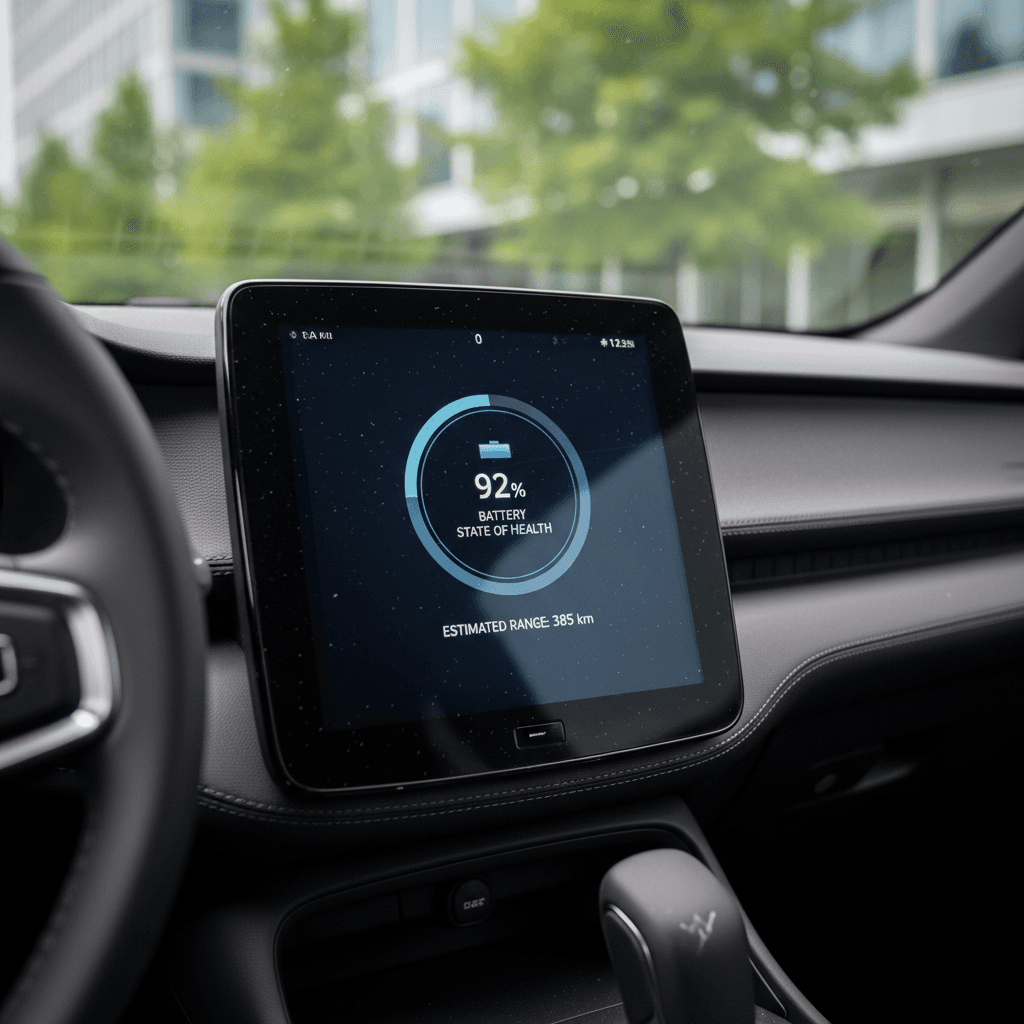
1. Start with the car’s estimated range
With the battery at or near 100%, look at the estimated range on the driver display. Compare it to the original EPA rating for that specific trim. Small differences (for example, 5–10% lower) can be normal, especially in cold weather.
2. Check for battery or charging warnings
Scan the dash and infotainment system for any warnings about the high‑voltage system or charging. Ask the seller for recent service records to see if any high‑voltage or inverter work has been done.
3. Review charge history and habits (if possible)
If the owner used Polestar’s app or a connected home charger, they may be able to show typical charge limits and patterns. Frequent 100% charges and heavy DC fast‑charge use are worth probing further.
4. Do a controlled range test
On a test drive, reset the trip computer, drive a known route, and see how many miles you get per percent of battery. It won’t be perfect, but it gives you a sanity check against the displayed range.
5. Look at charging behavior
Rapid tapering or unusually slow charging at a DC fast charger can sometimes hint at thermal or health‑related limits. It’s not definitive on its own, but it’s another data point if something feels off.
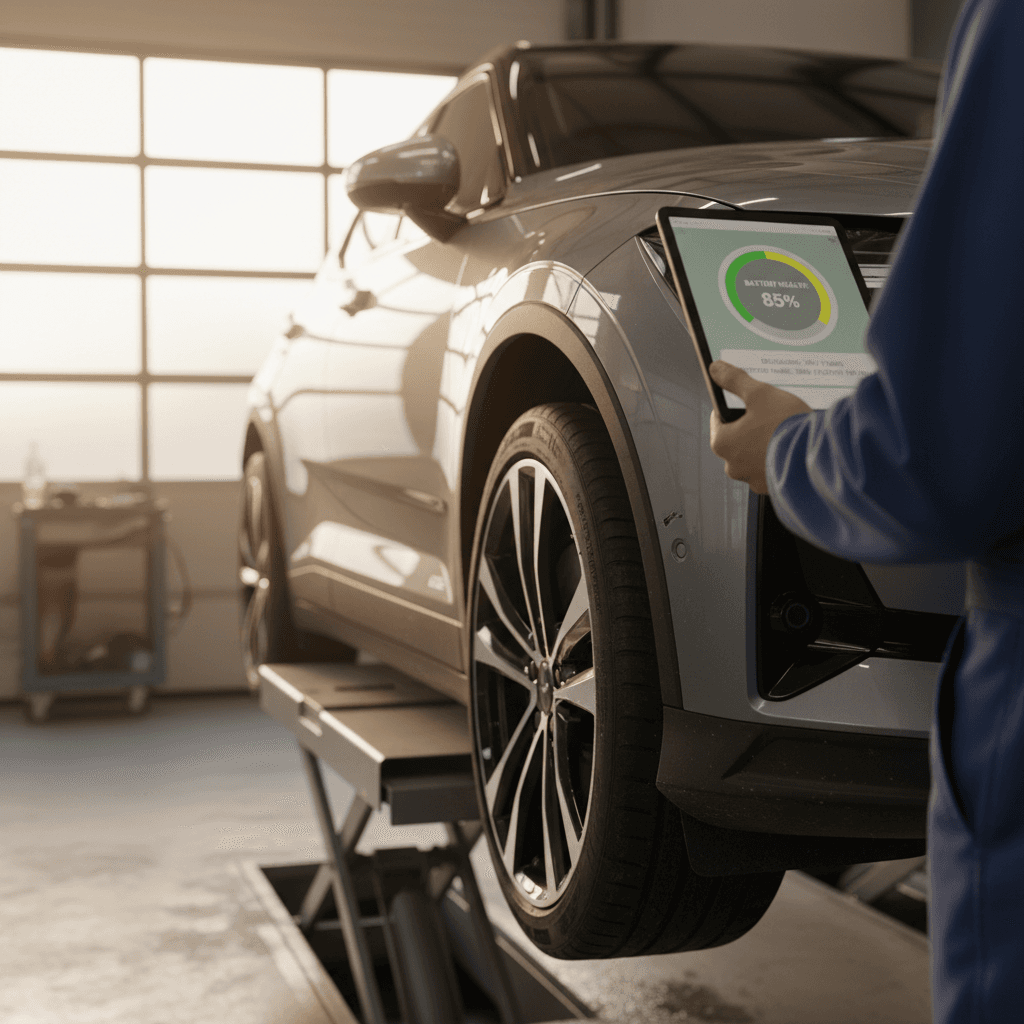
6. Use a professional battery health report
Services like Recharged’s battery diagnostics and Recharged Score use specialized tools to analyze pack health, cell balance, and usable capacity, giving you a clear, quantified picture instead of guesswork.
7. Confirm remaining warranty coverage
Verify the in‑service date and mileage to confirm how much of the 8‑year/100,000‑mile battery warranty remains. This can be a meaningful safety net, especially on earlier Polestar 2 model years.
Buying a used Polestar 2: what counts as “normal” degradation?
When you’re comparing listings, it helps to put visible or reported degradation in context. “Normal” for a five‑year‑old Polestar 2 is very different from “normal” for a two‑year‑old car that’s spent its life on a fast‑charger.
Signs of healthy, expected aging
- Capacity (SOH) in the low‑ to mid‑90s for a 3–5‑year‑old car.
- Trip range that’s only modestly lower than the original EPA rating.
- Balanced cell voltages and stable charging behavior.
- Service history without repeated high‑voltage battery complaints.
Potential red flags
- SOH already in the low‑80s or below while still under 8 years/100,000 miles.
- Noticeably erratic range estimates or sudden drops in indicated SOC.
- Documented history of heavy DC fast‑charging in hot climates.
- Battery‑related warning lights or warranty replacements without clear documentation.
How Recharged reduces the guesswork
Tips to slow Polestar 2 battery degradation
Whether you’re buying new or used, you can influence how fast your Polestar 2’s battery ages. A few simple habits can easily buy you years of healthier range.
- Use Level 2 home charging as your default and reserve DC fast charging for trips.
- Set a daily charge limit around 70–80% rather than 100% for routine commuting.
- Avoid leaving the car at 100% or near 0% state of charge for long stretches.
- Whenever possible, park in shade or a garage, especially in hot climates.
- Keep software updated, OEM updates can refine battery management and range estimates.
- Drive smoothly; constant full‑throttle launches may not destroy the pack overnight, but they increase heat and load.
Cold‑weather bonus
How Recharged evaluates Polestar 2 batteries
Used EV shoppers shouldn’t have to be battery engineers. Recharged is built around the idea that you deserve clear, transparent information about an EV’s most valuable component: its pack.
What’s inside a Recharged Score for a Polestar 2
Battery health you can actually understand before you buy.
Verified battery diagnostics
We run specialized diagnostics on the Polestar 2’s high‑voltage system to measure usable capacity, check for imbalance across modules, and flag any error codes, going far beyond a basic OBD scan.
Fair market pricing
Because Recharged bakes real battery health into every valuation, you aren’t overpaying for a Polestar 2 that’s already lost a big chunk of capacity, or missing a good deal on one that’s aging gracefully.
Expert‑guided support
EV‑specialist advisors walk you through the battery report, explain what the numbers mean in terms of range and daily usability, and help you compare Polestar 2s against other EVs you’re considering.
Ready to find your next EV?
Browse VehiclesYou can browse used EVs online, get financing, value your trade‑in, and schedule nationwide delivery, or visit the Recharged Experience Center in Richmond, VA, without having to cross your fingers about the battery you’re getting.
Polestar 2 battery degradation FAQ
Frequently asked questions about Polestar 2 battery degradation
Bottom line: Polestar 2 battery degradation per year
If you’re trying to put a number on Polestar 2 battery degradation per year, think in terms of a curve, not a straight line. A few percent loss in the first couple of years is normal, followed by slower decline, often leaving a well‑treated car with around 90–94% of its original capacity at year five and still above 80% at the end of the warranty window.
For shoppers, that means you don’t need to fear battery degradation, but you also shouldn’t ignore it. Use diagnostics, look for a documented state of health, and favor cars with clear charging histories and remaining warranty. If you’d rather not play battery detective, consider a used Polestar 2 listed through Recharged, where every EV includes a Recharged Score, verified battery health report, and EV‑savvy support from first click to final delivery.