If you’re shopping for a plug‑in hybrid and trying to decode **PHEV tax credit eligibility in 2026**, you’ve probably run into conflicting answers. That’s not your imagination. Between the Inflation Reduction Act, tougher battery‑sourcing rules, and a major policy shift in late 2025, the landscape for plug‑in hybrid tax credits has changed dramatically.
Key 2026 reality
Overview: What Happened to the PHEV Tax Credit by 2026?
For years, plug‑in hybrids qualified for the **federal Clean Vehicle Credit** (up to $7,500 for new vehicles) if they met battery‑size, income, and final‑assembly rules. That changed when Congress later passed the One Big Beautiful Bill (OBBB), which accelerated the **termination of several clean‑energy incentives, including the new and used clean vehicle credits, after September 30, 2025** for typical consumer purchases.
- New clean vehicle credit (up to $7,500) for many EVs and PHEVs ended for vehicles placed in service after September 30, 2025, when claimed by individual buyers.
- Used clean vehicle credit (up to $4,000) was likewise cut off for purchases after September 30, 2025.
- Commercial clean vehicle credits and certain leasing structures continue under different rules, which is why you still see some offers advertised in 2026.
So when people ask about **PHEV tax credit eligibility in 2026**, they’re usually trying to sort three very different situations: 1. New PHEVs purchased or leased in 2026. 2. Used PHEVs purchased in 2026. 3. PHEVs purchased before October 1, 2025, but claimed on a 2025 or 2026 tax return. Each bucket follows its own rule set, and the answer for you depends heavily on when the vehicle was placed in service and how the deal was structured.
PHEV Tax Credits at a Glance (Heading Into 2026)
How the Clean Vehicle Credit Works for PHEVs
Even though the window closed for many buyers, understanding the **clean vehicle credit framework** helps you evaluate leftover 2025 deals, amended returns, and what’s happening with leases in 2026.
- The credit was created and then reshaped by the **Inflation Reduction Act of 2022 (IRA)**.
- For new vehicles, it was split into two $3,750 pieces tied to **critical mineral sourcing** and **battery components**.
- To qualify, vehicles had to be **plug‑in** (PHEV or BEV) with at least a 7 kWh battery, meet **final assembly in North America**, stay under a **price cap**, and be bought by a taxpayer under certain **modified adjusted gross income (MAGI) limits**.
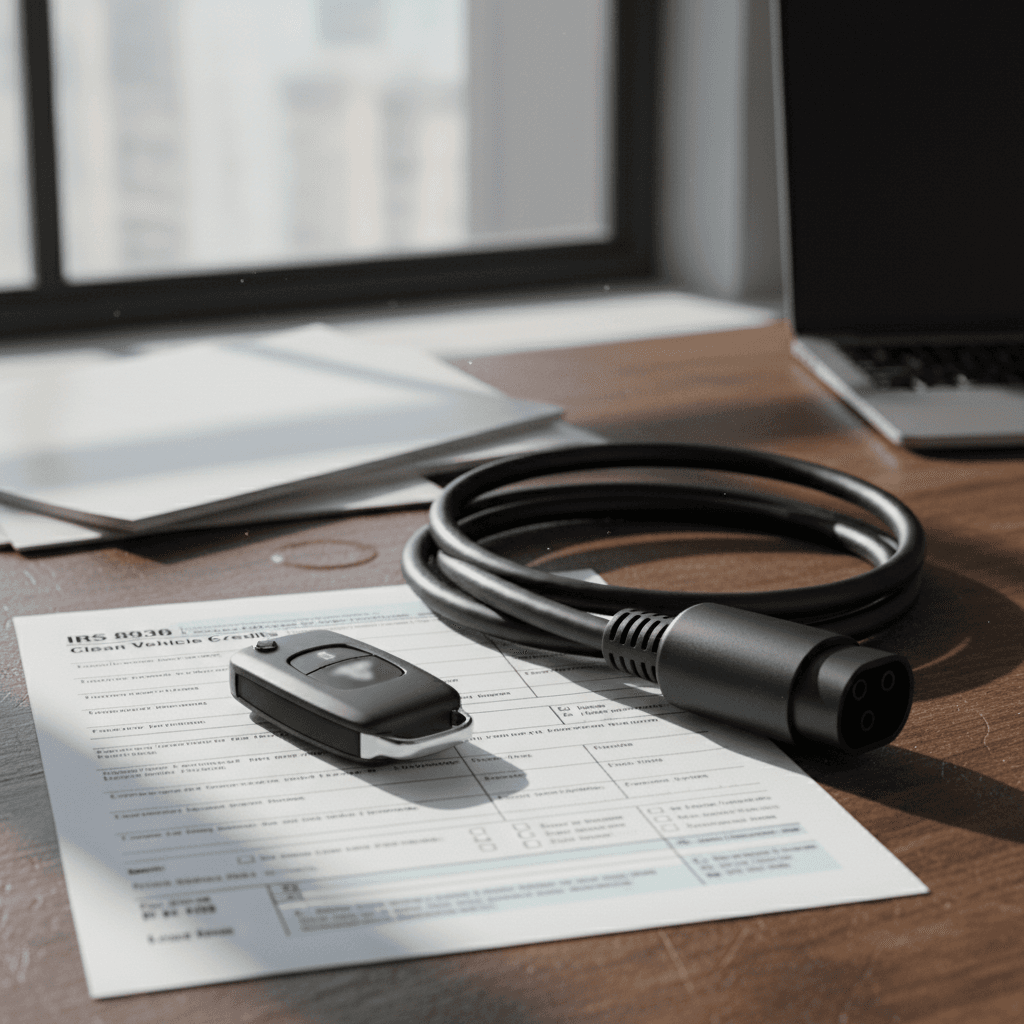
- Claiming or reporting the credit runs through **IRS Form 8936 and Schedule A**, even when the credit was transferred to the dealer at the point of sale.
Watch the dates on Form 8936
Can You Get a Federal Tax Credit for a New PHEV in 2026?
For **new PHEVs first placed in service in 2026**, the short answer is: **in most cases, no traditional consumer federal tax credit at purchase**. The new‑vehicle credit that many shoppers remember has effectively expired for ordinary retail buyers on post‑September 30, 2025 deliveries.
When a new PHEV might still touch the credit in 2026
- Vehicle ordered earlier, delivered late: If the PHEV was placed in service on or before September 30, 2025 but you’re filing the return in 2026, you can still claim/report that credit using Form 8936.
- Commercial use: Businesses may still access the separate commercial clean vehicle credit for qualifying PHEVs placed in service in 2026, subject to its own rules.
When a 2026 new PHEV buyer usually gets no federal credit
- Retail purchase in 2026: A new plug‑in hybrid bought and placed in service in 2026 generally does not qualify for the old up‑to‑$7,500 consumer clean vehicle credit.
- Non‑North American assembly: Even before the sunset, many PHEVs (for example, models built in Japan or Europe) never qualified because they failed the final‑assembly requirement.
Don’t rely on old window stickers
Used PHEV Tax Credit Eligibility in 2026
The **used clean vehicle credit** was a bright spot for shoppers hunting for affordable plug‑in hybrids. It offered **up to $4,000 (or 30% of the sale price, whichever was less)** on qualifying used EVs and PHEVs bought from licensed dealers, as long as the price stayed at or below $25,000 and several other rules were met.
However, OBBB used the same **September 30, 2025 cutoff** for typical consumer used‑vehicle purchases. That means a used PHEV **first purchased after that date doesn’t generate a new federal used clean vehicle credit** for the buyer in 2026.
When a Used PHEV Can Still Tie to a Federal Credit
Most opportunities are tied to pre‑October 2025 purchases
You bought before Oct. 1, 2025
If you purchased a qualifying used PHEV from a dealer on or before September 30, 2025 and didn’t transfer the credit at the point of sale, you may still claim it on your 2025 return using Form 8936.
You transferred the credit
If you let the dealer apply the credit as an instant discount in 2024 or 2025, you still report the transaction on Form 8936, even though the savings already hit your purchase price.
You met income & vehicle rules
Used PHEV eligibility also depended on income caps, sale price, model‑year rules, and the vehicle being your first use of the used clean vehicle credit within a three‑year window.
Pro move for 2025 buyers filing in 2026
Why Some Leased PHEVs Still Show a “Tax Credit” in 2026
You may notice something odd: **some 2026 PHEV lease offers still advertise a “federal tax credit” baked into the deal** even though the consumer clean vehicle credit has sunset for new purchases. That’s because leases often rely on a different section of the tax code.
In many cases, the **leasing company is treated as the vehicle’s owner** and can potentially claim a **commercial clean vehicle credit**. Lenders and captives can choose to pass some or all of that benefit on to you as a lower capitalized cost, effectively mimicking the old $7,500 incentive without you ever filing a credit yourself.
If you lease a PHEV in 2026
- The lessor, not you, may claim a commercial clean vehicle credit.
- Any benefit typically shows up as an upfront lease incentive or lower payment.
- You generally don’t file Form 8936 for a lease structured this way.
If you buy a PHEV in 2026
- You’re unlikely to qualify for a brand‑new federal purchase credit for a 2026 PHEV placed in service after Sept. 30, 2025.
- Your tax filing focuses on loan interest, state incentives, and overall cost of ownership instead.
Leasing can still be a smart play
Income, Price Caps, and Battery Rules That Hit PHEVs Hard
Even before the 2025 cutoff, many plug‑in hybrids didn’t qualify for the full federal credit, or any credit, because of **income limits, vehicle price caps, and stricter battery sourcing rules that ramped up through 2024–2026**.
Key IRA Clean Vehicle Rules That Affected PHEVs
These rules help explain why only a short list of PHEVs ever qualified, even before the 2025 sunset.
| Rule Type | What It Required | Impact on PHEVs |
|---|---|---|
| Battery size | At least 7 kWh usable capacity | Knocked out mild hybrids; only true PHEVs with larger packs qualified. |
| Final assembly | Final assembly in North America | Excluded popular imports built in Japan or Europe. |
| Income limits | Buyer MAGI capped by filing status | Higher‑income households in particular metro areas lost eligibility. |
| Price caps | MSRP caps depending on vehicle type | Eliminated higher‑trim or luxury PHEVs from the credit. |
| Critical minerals | Rising % from FTA countries or North America | Starting in 2024–2026, sourcing rules made it harder for some PHEVs to qualify for the full $7,500. |
| Battery components | Rising % of North American components | Further narrowed the eligible list as percentages ratcheted up year by year. |
Actual numbers can differ slightly as Treasury and IRS guidance evolves, but these are the core structural limits shoppers ran into.
Don’t chase the credit at the expense of fit
Beyond Federal: State and Utility Incentives for PHEVs in 2026
The federal picture may have dimmed, but **state, local, and utility‑level incentives** can still meaningfully lower the cost of owning a plug‑in hybrid in 2026. In some ZIP codes, those smaller programs are now the main game in town.
Common Non‑Federal Savings Opportunities for PHEVs
These vary widely by state and utility, so always check current rules before you buy.
State rebates or grants
Some states offer direct rebates on new or used plug‑in vehicles, including PHEVs, or additional bonuses for low‑ and moderate‑income buyers.
Home charging incentives
Utilities may offer rebates on Level 2 charger hardware, discounted installation, or special PHEV‑friendly rate plans for overnight charging.
Non‑cash perks
In certain regions, PHEV drivers can access HOV lanes with a single occupant, discounted tolls, or preferred parking, benefits that don’t show up on your tax return but save time and money.
Before you settle on a specific PHEV, plug your address into your state energy office site or your utility’s EV‑incentive page. The combination of a **modest local rebate + utility charger credit + efficient PHEV** can still pencil out nicely, especially for moderate‑mileage drivers.
How to Verify PHEV Tax Credit Eligibility Step by Step
Because rules have changed so often, you shouldn’t rely on a salesperson’s word or a random blog comment. Here’s a **step‑by‑step way to confirm what, if anything, your PHEV purchase touches in 2026**.
Checklist: Confirming Whether a PHEV Purchase Touches a Federal Credit
1. Pin down the in‑service date
Locate the date you took delivery and began using the vehicle. If it’s after September 30, 2025, you can usually stop right here for federal consumer purchase credits.
2. Determine new vs. used vs. lease
Was the vehicle new or previously titled? Are you leasing instead of buying? The answer determines whether the old new/used clean vehicle credits or commercial rules apply.
3. Ask for the dealer’s credit documentation
For 2023–2025 deals, the dealer should provide a document showing the VIN, credit amount, whether a transfer election was made, and whether they registered the sale with the IRS portal.
4. Check IRS and DOE qualification tools
Use the IRS and Department of Energy resources to confirm whether your specific VIN and configuration were ever on the qualified list for the year you bought the car.
5. Review income and price caps
Look back at your MAGI for the year of purchase and the vehicle’s MSRP or sale price to confirm you stayed under the relevant thresholds.
6. Coordinate with your tax professional
If you’re unsure whether to file Form 8936 for a 2025 purchase on a 2026 return, or how a transferred credit should be reported, loop in a CPA or enrolled agent.
Where Form 8936 fits in for 2026 filers
How Recharged Helps You Navigate Incentives on Used PHEVs
For many shoppers, especially in 2026, the sweet spot isn’t a brand‑new PHEV, it’s a **well‑priced used plug‑in hybrid with transparent battery health and total cost of ownership**. That’s exactly where Recharged focuses.
See beyond the disappearing federal credit
At Recharged, every used EV and PHEV listing includes a Recharged Score Report with verified battery health, pricing benchmarks, and estimated ownership costs. That helps you compare a used PHEV against both gas alternatives and full battery‑electric options without relying on a tax credit to justify the numbers.
You can also work with EV‑specialist advisors who understand how the 2023–2025 incentive rules interact with your situation, and whether a prior‑year credit might still be in play on a specific VIN.
Streamlined buying, trade‑ins, and financing
Recharged offers financing, trade‑in options, instant offers or consignment, plus nationwide delivery, all through a fully digital experience or at our Experience Center in Richmond, VA.
With federal credits largely sunset, the best way to “replace” that incentive is often a fair price, transparent battery diagnostics, and financing that fits your budget, not a line on your 1040.
Thinking about switching from gas to a used PHEV?
Ready to find your next EV?
Browse VehiclesPHEV Tax Credit 2026: Frequently Asked Questions
Frequently Asked Questions About PHEV Tax Credits in 2026
Bottom Line: Is a PHEV Still Worth It Without the Big Federal Credit?
In 2026, **PHEV tax credit eligibility** looks very different than it did just a couple of model years ago. The headline consumer credits for new and used vehicles largely sunset on September 30, 2025, and the remaining opportunities are narrower, focused on previously placed‑in‑service vehicles, commercial and leasing structures, and a patchwork of state and utility incentives.
But that doesn’t mean plug‑in hybrids stopped making financial sense. For many drivers, a well‑chosen PHEV still slashes fuel spend, softens the jump into full EV ownership, and pairs nicely with local rebates or workplace charging. The key in 2026 is to treat the federal credit as a historical bonus, not a cornerstone of your purchase plan.
If you’re considering a move into a used PHEV, or trading out of one into a full EV, Recharged can help you run the numbers carefully. With **battery‑health diagnostics, transparent pricing, financing, trade‑ins, and expert EV guidance**, you can make a confident decision in a post‑credit world where the math has changed, but the benefits of electrification haven’t.