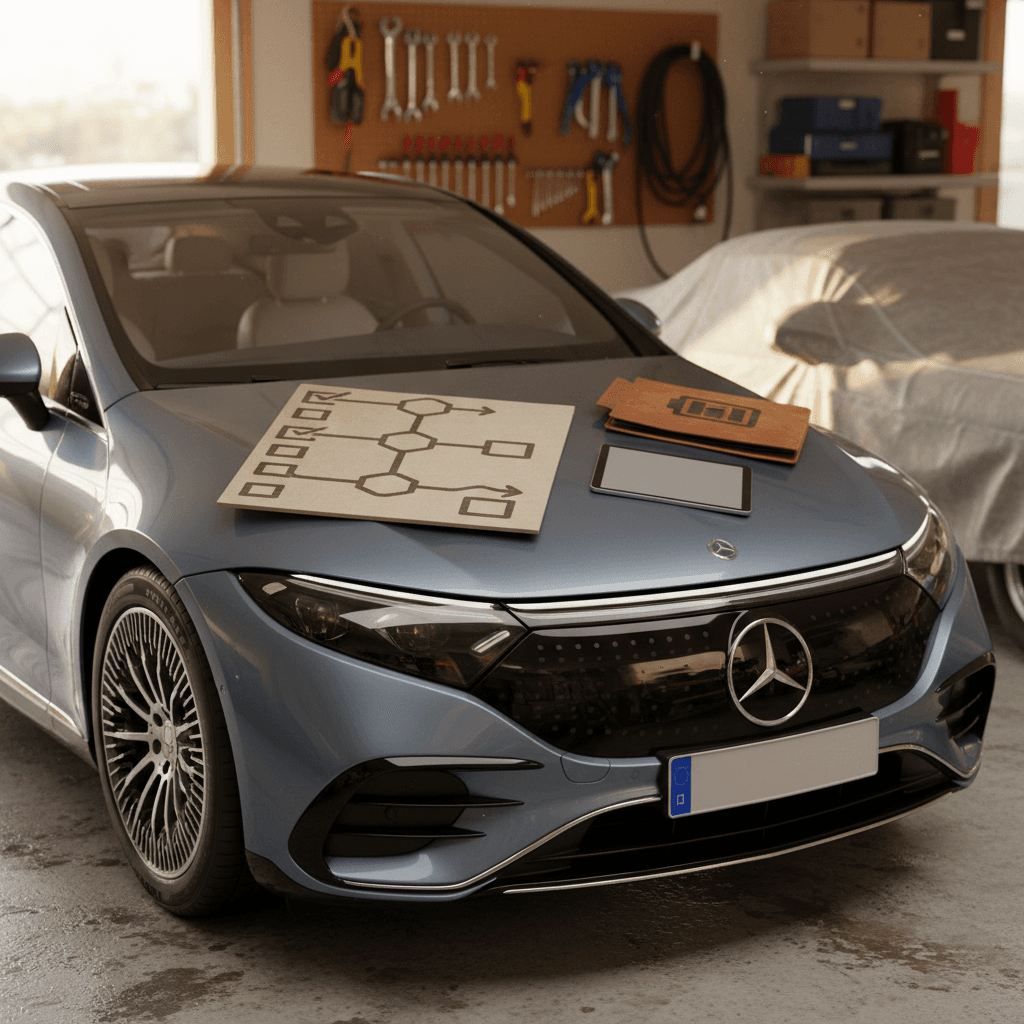
If you own a Mercedes EQE, you already know two things: it’s a comfortable, high‑tech EV, and its resale value lives in a tougher neighborhood than most gas luxury sedans. In a soft EV market where some EQE models can lose close to half their value in just a few years, going in with a structured Mercedes EQE selling checklist isn’t optional. It’s how you protect thousands of dollars when you sell.
The short version
Why a Mercedes EQE selling checklist matters in 2026
Mercedes EQE value snapshot in today’s market
The combination of aggressive discounts on new EQE models, price cuts announced for the 2026 model year, and a soft luxury‑EV market means your EQE will not sell itself. Buyers see scary headlines about EV depreciation and battery replacement costs; your job is to replace fear with facts. That’s what this checklist is designed to do.
Why rushing hurts most EQE sellers
Step 1: Decide when to sell your Mercedes EQE
How timing affects your EQE sale price
Think in years and miles, not just calendar dates
1–2 years old
Pros: Lowest miles, plenty of factory warranty, tech feels new.
Cons: You’re absorbing the steepest depreciation curve. Trading out this early often only makes sense if your payment is unsustainable or your needs changed dramatically.
3–5 years old
Pros: Depreciation starts to slow, still inside the 10‑year battery warranty, plenty of buyers looking for value.
Cons: Condition and maintenance history matter more; any neglect will show up here.
6+ years / high miles
Pros: Payment‑free ownership, great time to keep driving if the car still fits your life.
Cons: Smaller buyer pool, especially if range has dropped, cosmetic wear is obvious, or warranty is close to expiring.
Before you do anything else, be honest about why you’re selling. Are you trying to get out of a high payment, moving to a bigger vehicle, or hoping to catch the market before values fall further? Your answer shapes whether you should sell now, wait for a seasonal bump, or plan around mileage milestones.
Seasonal timing tip
Step 2: Know your EQE battery and warranty story
With EVs, battery health is the new engine compression test. The EQE’s high‑voltage battery is covered by a 10‑year / 155,000‑mile warranty in the U.S. for capacity loss and defects, and most buyers will ask some version of, “How’s the battery?” long before they ask about the sound system. Your job is to answer that question with data, not guesses.
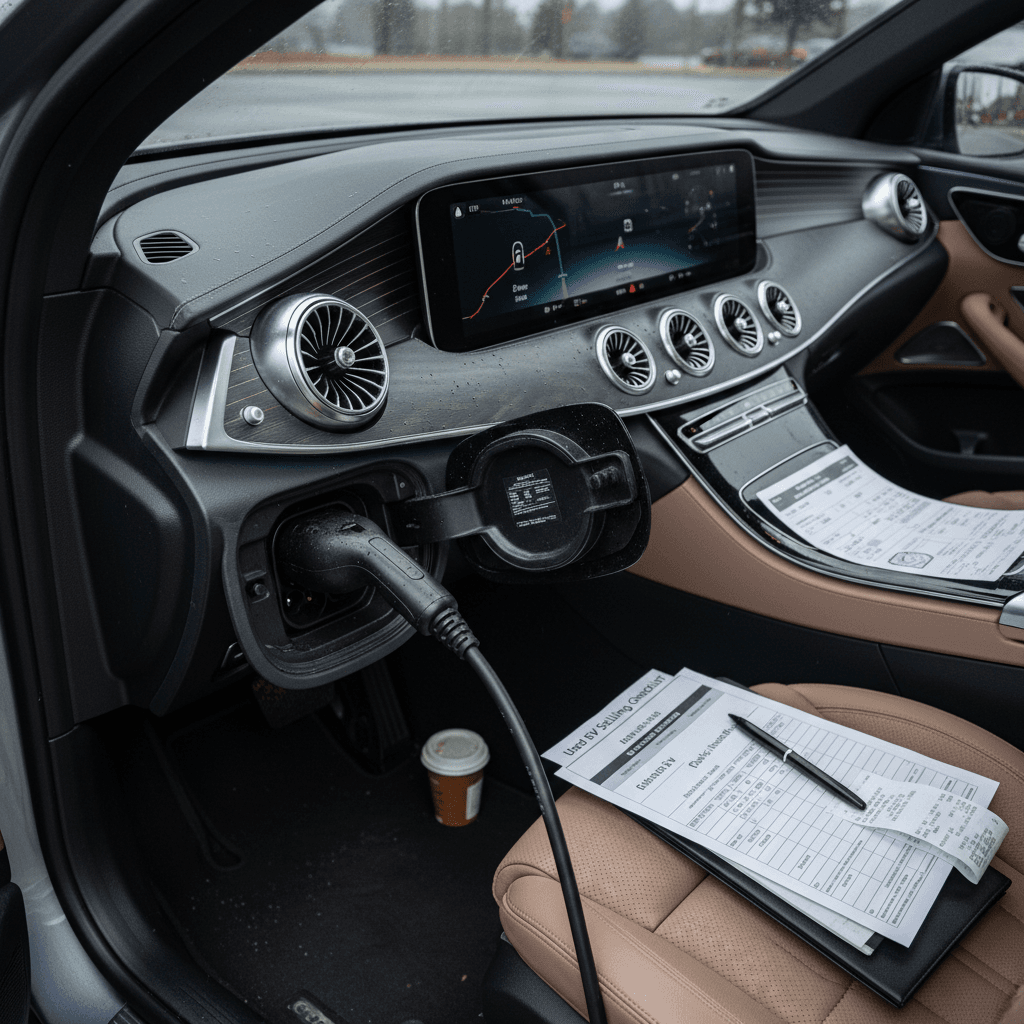
Battery & warranty checklist for your EQE
Confirm remaining battery warranty
Locate your warranty booklet or check with a Mercedes‑Benz dealer using your VIN. Note the <strong>in‑service date</strong> and make a simple note like “Battery warranty to 10/2032 or 155,000 miles.” Put that line in your listing.
Document real‑world range
Reset a trip, drive your normal route, and note the miles driven versus percent of battery used. Buyers don’t expect brochure numbers, but they value an honest statement like, “We typically see 230–250 miles in mixed driving.”
Gather charging history
If you primarily charged at home on AC, that’s a selling point. If you fast‑charge often, be ready to show that the car still charges to expected speeds. Screenshots from your charger app or in‑car history help build confidence.
Run a battery health report
A third‑party battery health test or a platform like Recharged’s <strong>Recharged Score</strong> can give you an objective state‑of‑health reading. That single document can separate your listing from a sea of “trust me, it’s fine” sellers.
Check for software updates and recalls
Make sure your EQE is current on over‑the‑air software updates and any open recalls. A quick visit to a Mercedes store for overdue campaigns can clean up your Carfax and reassure buyers that the car is properly maintained.
How Recharged can help here
Ready to find your next EV?
Browse VehiclesStep 3: Get your numbers straight – value and payoff
The fastest way to be disappointed when you sell any late‑model EV is to mix up what your EQE is worth with what you still owe. In 2026, those two numbers are often far apart. Before you walk into a dealership or create a listing, line up three key figures on paper.
Your EQE value math: three numbers you need
Fill this out before you accept any offer.
| Item | Where to find it | Example number | Notes |
|---|---|---|---|
| Current loan payoff | From your lender or Mercedes‑Benz Financial | $46,500 | Ask for a 10‑day payoff including any fees. |
| Realistic private‑party value | From multiple valuation tools and comparable listings | $38,000 | Look at similar EQE trims, options, mileage, and local market. |
| Realistic trade‑in / instant offer | From dealers and EV marketplaces | $33,000 | Expect this to be lower than retail; convenience carries a cost. |
You can’t negotiate from strength if you don’t know how these line up.
Watch for negative equity
Step 4: Choose how to sell – trade‑in, private, or EV marketplace
Dealer trade‑in
- Best for: Speed and simplicity when you’re buying another vehicle.
- Pros: One‑stop transaction, tax credit on the new car in many states, no strangers at your house.
- Cons: Typically the lowest price; many dealers are wary of used luxury EVs and will price in extra risk.
Private‑party sale
- Best for: Maximizing price when you’re willing to invest time.
- Pros: Often yields the strongest dollar amount, especially on well‑equipped EQE models.
- Cons: Requires marketing, screening buyers, handling test drives, and managing payment and paperwork.
Specialist EV marketplace
- Best for: Owners who want more than a typical trade‑in without becoming their own salesperson.
- Pros: EV‑savvy pricing, battery diagnostics, nationwide audience, and help with title and funds transfer. Recharged can list, market, and sell your EQE with options like instant offer or consignment.
- Cons: May involve a selling fee or revenue share versus doing everything yourself.
Match the channel to your situation
Step 5: Prepare your Mercedes EQE for sale
Online listings compress first impressions into a few seconds of scrolling. A clean, well‑presented EQE with complete records doesn’t just stand out, it justifies stronger offers and smoother negotiations.
EQE pre‑sale prep checklist
Deep clean inside and out
Have the EQE professionally detailed or invest the time to do it yourself: wash, clay, wax, clean wheels, and dress tires. Inside, focus on screens, piano‑black trim, and ambient‑light lenses that easily show smudges.
Fix obvious, inexpensive issues
Burned‑out bulbs, broken charge‑port door struts, missing floor mats, and curb‑rashed hubcaps are red flags that suggest bigger neglect. Fixing a few small items can be the difference between a strong offer and a lowball.”
Gather service and charging records
Print or save PDFs of recent services, tire replacements, and any warranty work. If you’ve had a consistent home‑charging routine, include a note or screenshot from your wallbox app showing typical use.
Check tires and brakes
Luxury‑EV tires and brakes are not cheap. If they’re near the end of their life, either replace them and price accordingly or be ready to show quotes so buyers understand what’s coming.
Remove personal data & customize settings
Log out of Mercedes Me, clear navigation destinations, and remove phone pairings. Reset driver profiles and privacy settings. This is both a security step and a nice courtesy to the next owner.
Assemble both keys and accessories
Buyers of premium EVs expect completeness. Locate both key fobs, charging cables, manuals, cargo nets, and any wheel‑lock keys. Missing items give buyers leverage to push your price down.
Step 6: Build a transparent listing buyers trust
Most EQE shoppers have read plenty about rapid depreciation and possible battery‑replacement costs. The way you write your listing can either amplify that anxiety or defuse it. Lean into transparency, especially around battery health, charging habits, and warranty coverage.
What every strong Mercedes EQE listing should include
Structure your ad like a professional dealer, without the fluff
1. Clear, honest headline
Instead of "Like new!" try something real: "2023 EQE 350+ | 1 owner | battery warranty to 2033 | detailed records". You’re selling peace of mind, not hype.
2. High‑quality photos
Shoot in good daylight, clean background, phone camera at chest height. Include:
- Front 3/4, rear 3/4, each side
- Interior, screen on, ambient lighting
- Close‑ups of wheels, tires, charge port
- Odometer, VIN sticker, and any flaws
- Full VIN and exact trim (EQE 350+, EQE 500 4MATIC, AMG EQE, SUV vs sedan).
- Accurate mileage and a note on current registration/inspection status.
- Battery and warranty details in one sentence: “Battery warranty to 10/2032 or 155,000 miles; currently at 41,200 miles.”
- Charging habits: home Level 2, workplace, road‑trip DC fast‑charging, etc.
- Service history summary, including any warranty work or recalls.
- Any accidents or bodywork, with receipts if repaired properly.
- Your preferred payment and meeting locations (bank branch, not your living room).
Borrow structure from professional listings
Step 7: Handle test drives and negotiation like a pro
Once your listing is live, the next challenge is separating serious buyers from tire‑kickers and keeping yourself safe. With a luxury EV, you’re not just handing over keys; you’re putting a rolling computer and a large financial asset in someone else’s hands for 20–30 minutes.
Test‑drive & negotiation checklist
Screen buyers before meeting
Ask basic questions by phone or message: "Do you have financing or funds arranged?", "Are you familiar with EVs?" Serious buyers won’t be offended; they’ll respect that you’re organized.
Meet in a safe, monitored place
Use a bank parking lot or public place with cameras, not your home address. If possible, bring another adult along and let a friend know your schedule.
Control the keys and route
Verify the buyer’s driver’s license, snap a photo for your records, and ride along. Choose a short route that shows highway behavior, ride quality, braking, and a bit of city driving.
Demonstrate key EQE features
Many shoppers are cross‑shopping Teslas, BMWs, and Hyundais. Show off what makes the EQE special: quiet cabin, MBUX interface, advanced driver‑assist, and your real‑world charging routine.
Set your floor price in advance
Decide your walk‑away number before the first test drive. When offers come in, you’re less likely to cave just because you’re tired or nervous.
Use facts, not emotion, in negotiation
If a buyer lowballs you, refer back to comparable listings, your battery report, and recent service. It’s fine to say, "Given the battery health and warranty coverage, I’m comfortable at $X."
Step 8: Close the sale safely and correctly
The last few steps are paperwork and payment, but they carry the most risk if you improvise. Whether you’re selling privately, trading in, or using a specialist marketplace like Recharged, you want a clear trail and no loose ends.
- Use verified payment only: a cashier’s check verified in‑branch, a wire transfer, or an escrow service. Avoid personal checks, payment apps, or complicated partial‑cash deals.
- If there’s a lien, plan to close at the lender’s branch or through a process they approve. You want confirmation that the lien will be released as soon as funds clear.
- Fill out a bill of sale, odometer disclosure (if required), and title transfer exactly as your state DMV outlines. Many states also have an online "notice of sale" form you should file immediately.
- Remove your plates where required, and cancel or transfer insurance only after the transaction is complete and the car is no longer in your possession.
- Log out of all connected services one last time and perform any factory resets needed to clear personal data.
How Recharged simplifies closing
Mercedes EQE selling checklist: printable overview
One‑page Mercedes EQE selling checklist
1. Decide timing
Review your mileage, remaining warranty, and financial situation. Decide if you’re selling now, in the next seasonally strong window, or after paying the loan down further.
2. Document battery & warranty
Confirm battery warranty dates, run or obtain a health report, and write a short, honest summary of your real‑world range and charging habits.
3. Know your numbers
Get your exact loan payoff, research private‑party value from multiple sources, and collect trade‑in/instant‑offer quotes, including from EV‑focused platforms like Recharged.
4. Choose your selling channel
Pick between dealer trade‑in, private sale, or an EV marketplace based on how much time you have and how much value you’re trying to preserve.
5. Prep the car
Detail the EQE, fix cheap issues, gather records, check tires and brakes, clear personal data, and assemble keys, cables, and accessories.
6. Build the listing
Write a clear headline, shoot quality photos, share range and warranty details, and be up front about any blemishes or history. Transparency sells.
7. Manage test drives
Screen buyers, meet safely, ride along, and highlight the EQE’s strengths. Decide your floor price ahead of time and stick to it.
8. Close the sale
Use secure payment methods, follow your state’s title and bill‑of‑sale rules, confirm lien payoff, and only hand over keys when funds are verified.
Mercedes EQE selling FAQs
Frequently asked questions about selling a Mercedes EQE
Selling a Mercedes EQE in 2026 isn’t about finding the one magical buyer who “doesn’t care about depreciation.” It’s about controlling what you can control: timing, preparation, battery documentation, pricing, and the selling channel you choose. Follow this checklist, and you’ll walk into every offer, whether it’s from a dealer, a private buyer, or a specialist marketplace like Recharged, with a clear story and the numbers to back it up. That’s how you turn a complicated EV resale market into a straightforward, confident transaction.