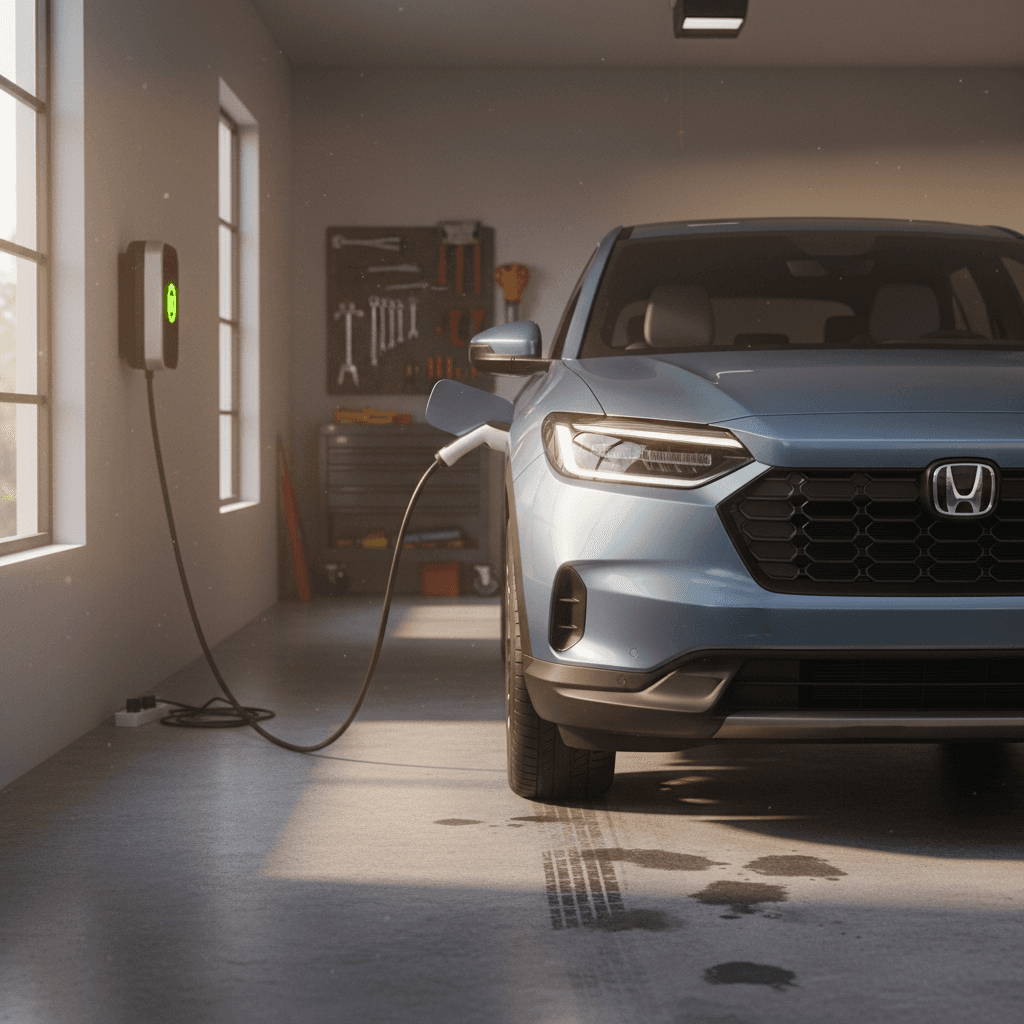
If you’ve just bought a Honda Prologue or you’re shopping for one, the best upgrade you can make is a **proper Level 2 home charger**. Public DC fast charging works in a pinch, but for day‑to‑day life, the right home unit is faster, cheaper, and easier on your battery. This guide walks through Honda Prologue charging specs, what to look for in a home charger, and which units pair best with your SUV in 2026.
Quick takeaway
Why home charging matters for Honda Prologue owners
- Convenience: You plug in at night and wake up to 80–100% every morning instead of hunting for DC fast chargers on busy weekends.
- Battery health: Relying mostly on Level 2 charging, not frequent DC fast charging, typically leads to a healthier pack over the long haul.
- Lower energy cost: In many U.S. markets, overnight residential kWh rates beat public fast charging by a wide margin.
- Time savings: Even a mid‑tier home charger adds far more miles per hour than the 120‑volt Level 1 cord that comes with many EVs, meaning full charges happen overnight instead of over days.
Prologue ownership tip
Honda Prologue charging basics: what you’re working with
Before you choose the “best” home charger for a Honda Prologue, you need to know what the vehicle itself can accept. The Prologue rides on GM’s Ultium platform, with an **85 kWh battery** and an **11.5 kW onboard AC charger** for Level 2. At home, it uses the familiar **SAE J1772 plug** for AC charging, and a CCS1 port for DC fast charging, just like many other non‑Tesla EVs.
Key Honda Prologue charging numbers
Don’t overpay for “more kW” than your Prologue can use
How fast will a home charger fill your Prologue?
Most of the confusion around the **Honda Prologue best home charger** comes from mixing up charger ratings, circuit size, and what the car itself can accept. Here’s what charging looks like in real‑world terms.
Typical Honda Prologue home charging speeds
Approximate ranges assume a healthy battery and normal temperatures. Actual times vary with driving style, climate, and grid voltage.
| Charging type | Circuit / outlet | Approx. power to car | Miles of range added per hour* | Best use case |
|---|---|---|---|---|
| Level 1 (included cord or basic EVSE) | 120V, 15–20A household outlet | 1.2–1.4 kW | 2–4 mi/hr | Emergency use, very low daily miles |
| Entry Level 2 | 240V, 20–30A dedicated circuit | 3.8–5.7 kW | 10–18 mi/hr | Apartment/condo parking, light commuters |
| Standard Level 2 (recommended) | 240V, 40A circuit, 32A charger | 7.7 kW | 25–28 mi/hr | Most Prologue owners; overnight to full from low SOC |
| High‑power Level 2 | 240V, 50–60A circuit, 40–48A charger | 9.6–11.5 kW | 30–34 mi/hr | Heavy drivers, frequent road‑trippers, multi‑EV homes |
Home charging options for the Honda Prologue, from slowest (Level 1) to fastest (strong Level 2).
How to read these numbers
What makes a home charger “best” for the Honda Prologue?
Key criteria for your Honda Prologue home charger
Match the charger to your home, driving pattern, and budget.
1. Amperage & speed
Look for a charger that can deliver at least 32A on 240V. That’s the practical baseline for a mid‑size SUV like the Prologue and turns overnight charging into a non‑event.
2. Safety & certification
Prioritize units that are UL listed or ETL certified, with solid enclosures, quality cables, and built‑in ground fault protection. This matters more than cosmetic features.
3. Smart features
App control, scheduling, load sharing, and utility integrations help you charge off‑peak, avoid overloading your panel, and track energy use over time.
4. Cable length & hardware
A 23–25 ft cable gives enough flexibility to reach your Prologue in different parking positions. Look for robust cable management and easy‑to‑use holsters.
5. Outdoor rating
If your charger lives outside, make sure it has a suitable weather rating (NEMA 3R or better) and a sturdy enclosure that can handle real‑world use.
6. Total installed cost
The best charger is the one that fits your panel and budget. Sometimes a 40A unit on an existing 40–50A run beats a more powerful unit that demands a full panel upgrade.
Good news for Prologue owners
Top home charger picks for the Honda Prologue
There’s no single “official” best home charger for the Honda Prologue, but a few categories make sense for most owners. Think in terms of **good, better, best**, and then plug in your budget and electrical constraints.
1. Honda‑branded / dealer‑recommended charger
If your dealer is pushing a Honda‑branded wallbox (often built by an established EVSE maker), it’s worth considering, especially if they’re bundling installation or rolling the cost into financing.
- Pros: Clean integration, support through the dealer network, sometimes eligible for Honda package deals.
- Cons: Typically more expensive than equivalent third‑party units; you’re paying for the badge.
Ask whether the Honda unit supports at least 32–40A and offers app‑based scheduling and monitoring.
2. Value 40A smart charger
This is the sweet spot for most Prologue owners: a 40A Wi‑Fi–enabled Level 2 charger with a 23–25 ft cable and J1772 connector.
- Plenty fast for overnight 0–100% charges.
- Enough headroom if you add a second EV later and need load sharing.
- Often the best balance of price, features, and reliability.
Popular examples in this class include mainstream wallboxes from well‑known EVSE brands and some utility‑approved models that qualify for rebates.
3. Higher‑power 48A option
If your electrician says your panel can comfortably support a 60A circuit and you drive a lot of miles, a 48A charger lets the Prologue get closer to its ~11.5 kW ceiling.
- Maximizes charge speed at home under ideal conditions.
- Useful if you regularly arrive very low and need quick turn‑around.
- Overkill for low‑mileage drivers, but nice in multi‑EV households.
Just be sure your wiring and breaker are sized correctly; overspec’d hardware on an undersized circuit is a safety risk.
Check for rebates before you buy
Comparison table: Honda Prologue home chargers
Honda Prologue home charger tiers
Use this to decide which charger tier best matches your driving and your home electrical service.
| Tier | Max output (amps) | Circuit needed | Approx. kW at 240V | Typical price (hardware) | Best for Prologue owners who… |
|---|---|---|---|---|---|
| Entry smart Level 2 | 32A | 40A | 7.7 kW | $350–$550 | Drive modest daily miles and want reliable overnight charging plus basic app features. |
| Mainstream smart Level 2 (recommended) | 40A | 50A | 9.6 kW | $450–$750 | Want a balance of speed, smart features, and future‑proofing for heavier use. |
| High‑power Level 2 | 48A | 60A | 11.5 kW | $600–$900+ | Regularly arrive near empty, do long commutes or road‑trip often, and have panel capacity to spare. |
Charger tiers are illustrative, not endorsements of specific brands.
Installation basics: circuits, outlets, and safety
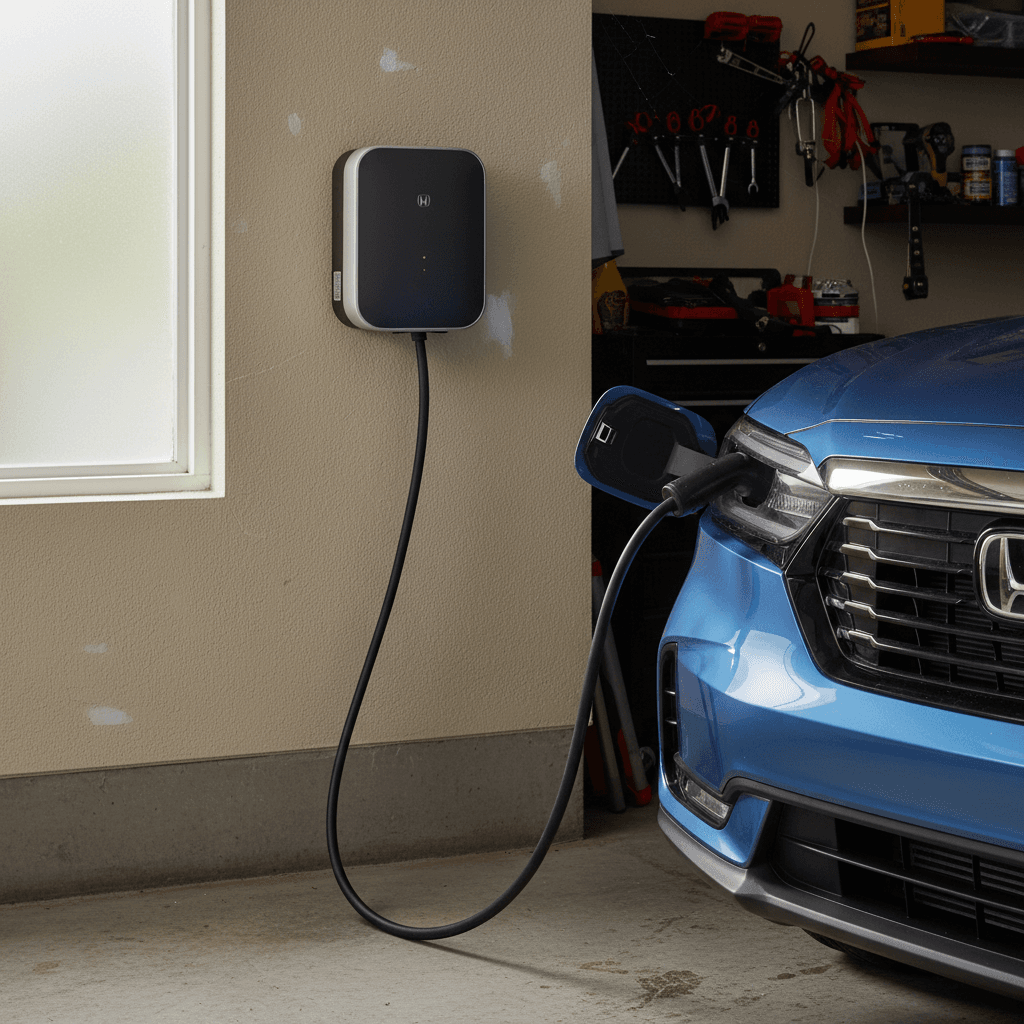
Picking the best home charger for your Honda Prologue is one decision; **installing it correctly** is another. Here’s a high‑level view of what to think through with your electrician.
Honda Prologue home charger installation checklist
1. Get a load calculation
Have a licensed electrician perform a load calculation on your main panel. The Prologue’s charger will draw 30–48A continuously; your panel needs room for that without tripping breakers or violating code.
2. Choose hardwired vs. plug‑in
Hardwired units are often more weather‑resistant and can support higher amperages. Plug‑in units (via NEMA 14‑50 or 6‑50) are easier to replace or move. Either is fine if the circuit is sized correctly.
3. Match breaker and charger amps
By code, continuous loads like EV charging must run at 80% of breaker rating. A 40A charger typically needs a 50A breaker; a 48A charger needs a 60A breaker. Don’t let anyone “fudge” this.
4. Plan charger placement
Mock‑park your Prologue and confirm where the charging port lands. Measure for a cable route that avoids tripping hazards but still reaches the port if you pull in nose‑first or back‑in.
5. Confirm permits and inspection
Most jurisdictions require a permit for adding a 240V EV circuit. Build this into your timeline so your charger is safe, insurable, and ready before you take long trips.
6. Ask about future expansion
If you might add a second EV later, discuss adding conduit or a slightly larger subpanel now. It’s often cheaper to future‑proof than to re‑do work in two years.
Don’t DIY high‑voltage work
Daily usage tips to protect your battery and lower costs
Once your Honda Prologue home charger is installed, the way you use it can **extend battery life** and **trim your electric bill**. The good news: most of this comes down to simple habits and smart‑charger settings.
Smart charging habits for Honda Prologue owners
Simple settings that pay you back over time.
Use scheduled charging
Set your home charger or the Prologue’s in‑car settings to start charging during off‑peak hours (often late at night). You’ll usually pay less per kWh and help your utility manage demand.
Avoid sitting at 100% daily
For day‑to‑day commuting, try to live in a 20–80% state of charge window. Save full 100% charges for road trips; that’s generally easier on long‑term battery health.
Make home your default
Use DC fast chargers mainly for trips. A Prologue that lives on Level 2 at home typically ages better than one that’s constantly “fast‑fed” at public stations.
Watch extreme temperatures
In very hot or very cold weather, park in a garage if possible and allow the Prologue to manage its pack temperature. Expect some variation in charging speed and range in those conditions.
Home charging is a selling point
Ready to find your next EV?
Browse VehiclesHow home charging affects used value and battery health
In the used‑EV market, **battery health is the story**, and charging behavior is a big chapter. Two Prologues with the same model year and mileage can have very different pack health depending on how they were charged and stored.
Why Level 2 home charging helps
- Gentler charge rates than DC fast charging reduce heat and stress on the pack.
- Owners are more likely to follow best practices (like stopping at 80–90%) when charging at home.
- Regular home charging reduces deep cycles, where the battery swings from very low to very high state of charge.
How Recharged factors in charging history
When a Honda Prologue shows up on Recharged, our Recharged Score Report looks at battery health and real‑world charging patterns. A Prologue that mostly lived on a quality Level 2 home charger and used DC fast charging sparingly tends to score better, which can support stronger resale value.
If you’re buying used, that report plus a solid home charger plan gives you a clearer picture of long‑term ownership costs.
FAQ: Honda Prologue home charger questions
Frequently asked questions about Honda Prologue home chargers
Bottom line: Which Honda Prologue home charger should you buy?
If you want the **best home charger for a Honda Prologue**, start with your daily mileage and your electrical panel, not marketing claims. For most owners, the sweet spot is a **smart Level 2 J1772 charger that can deliver 32–40A on a dedicated 240V circuit**, paired with off‑peak scheduling and sensible battery habits. Heavy‑use drivers and multi‑EV households can justify a 48A unit if the panel has room and the budget allows.
Whether you’re buying a new Prologue or shopping used through a marketplace like Recharged, getting home charging right will shape your ownership experience more than almost any other option. Combine a well‑chosen home charger with healthy charging habits, and your Prologue’s battery, and its future resale value, will thank you.