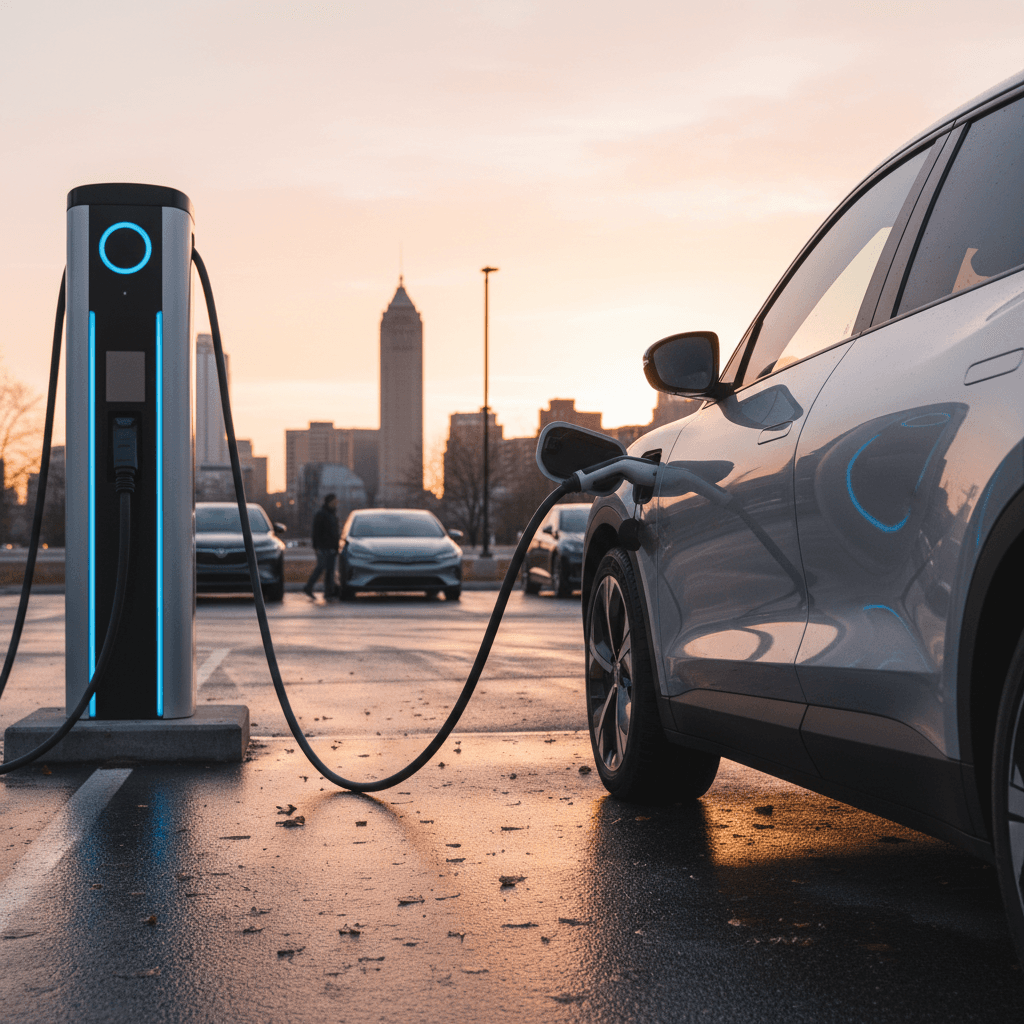
If you drive an electric vehicle in central Ohio, you’ve probably watched the map fill in with more and more EV charging stations in Columbus, OH over the last couple of years. The good news: charging access is finally catching up to demand. The catch: it’s still patchy, and not all chargers are created equal. This guide walks you through where to plug in, what it costs, how to plan trips, and what to look for if you’re shopping for a used EV in the Columbus area.
Columbus is ahead of Ohio, but Ohio is playing catch‑up
EV charging in Columbus, OH: what to expect in 2025
Columbus EV charging at a glance
On the ground, that means you’ll find a mix of Level 2 and DC fast charging scattered around shopping centers, workplaces, parking garages, and highway stops. Columbus proper is in better shape than much of Ohio, thanks in part to the Smart Columbus initiative and regional planning grants focused on charging access. But coverage still isn’t as dense or as reliable as what you’ll see in coastal EV hotspots, so you’ll want to lean on a couple of good apps and a bit of planning.
Expect a mix of great and not‑so‑great stations
The EV charging types you’ll see around Columbus
Level 1 & Level 2 (slow to medium)
Level 1 (120V) is a standard household outlet, about 3–5 miles of range per hour. You might rely on it at older homes or when visiting friends, but you won’t see it as a dedicated public option.
Level 2 (240V) is the workhorse around Columbus for daily charging. You’ll find it:
- In city‑owned garages and lots
- At workplaces, hotels, and hospitals
- At some apartment communities
- In retail parking lots and big‑box stores
Level 2 typically adds 20–40 miles of range per hour, so it’s ideal for topping up while you’re at work, out to dinner, or parked overnight.
DC fast charging (road‑trip speed)
DC fast chargers (often called Level 3) are what you want for highway stops and quick top‑ups. Around Columbus you’ll see:
- 50 kW legacy units at some older sites
- 150 kW chargers in many newer plazas
- Up to 350 kW ultra‑fast stalls on major interstates
These stations can add 100–200 miles of range in 15–30 minutes, depending on your battery size, state of charge, and weather.
Most non‑Tesla EVs use the CCS connector for fast charging, while newer models increasingly ship with NACS (Tesla‑style) ports or adapters. Columbus has an emerging mix of both, so double‑check your car’s connector and any adapters you own before you roll up to a station.
Know your car’s max charge rate
Where to find EV charging stations in Columbus
Everyday spots to plug in around Columbus
Think in terms of where your car sits for hours, not just road‑trip stops.
Downtown & Short North garages
City and private garages near the Arena District, Short North, and Capitol Square host Level 2 stations, often run by networks like ChargePoint or FLO.
- Good for office workers and events
- Plan to stay 2–4 hours for a meaningful top‑up
- Garage parking fees usually still apply
Shopping centers & big‑box lots
Retail hubs around Easton, Polaris, Lennox, and Hilliard increasingly offer a mix of Level 2 and DC fast charging.
- Charge while you shop or grab a meal
- Some stations offer discounted rates during off‑peak hours
- Check PlugShare or the network app for real‑time status
Workplaces & multifamily housing
Newer office parks and apartment communities across Columbus are quietly adding shared Level 2 chargers.
- Great for overnight or all‑day charging
- Access rules vary, some are residents‑only
- Ask leasing or HR about charger availability before you sign
The city itself has also started installing public chargers in strategically chosen neighborhoods and city‑owned lots to close the biggest gaps. A 2024 investment added new stations across Columbus, and more are tied to regional grants targeting underserved communities and highway corridors. When you open PlugShare or your favorite charging app today, you’ll see a far denser cluster of icons than even a year or two ago, but still with noticeable dead zones outside the main travel and retail corridors.
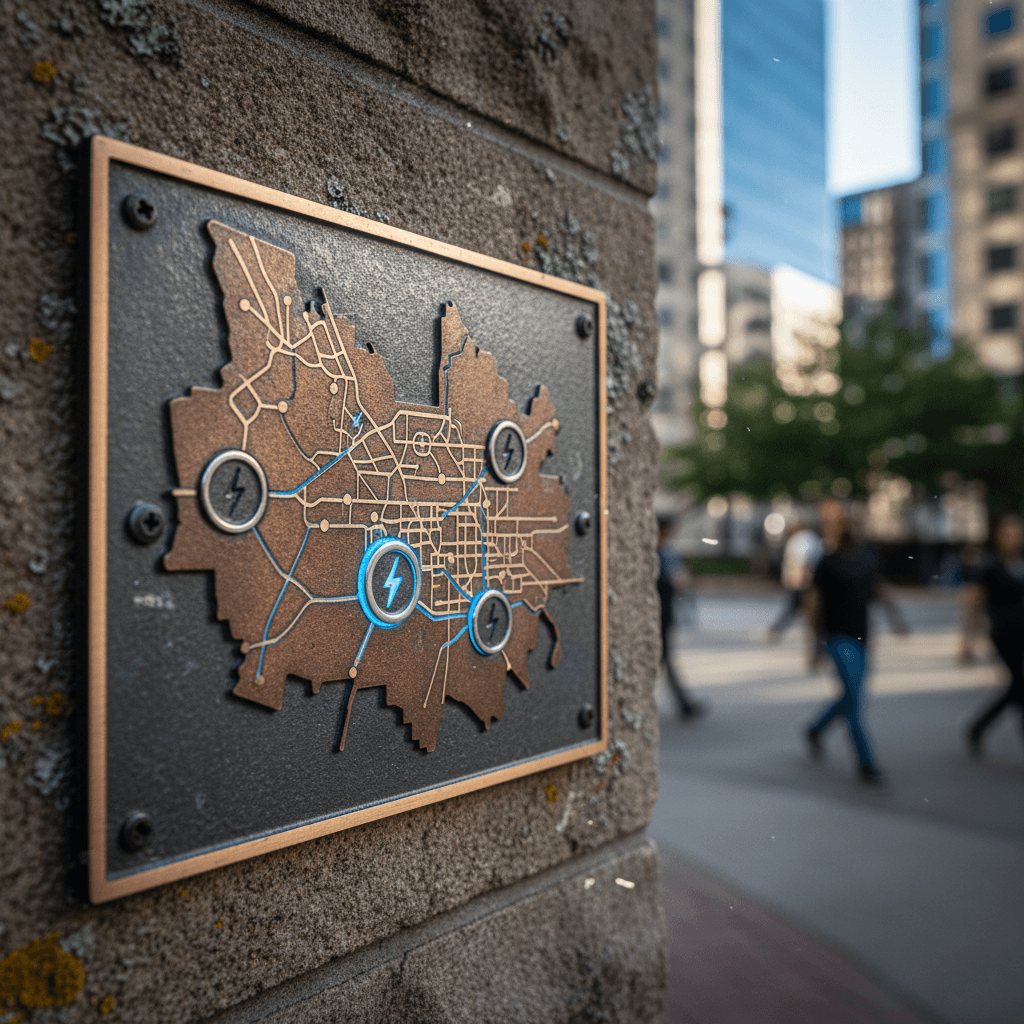
Fast‑charging corridors in and around Columbus
Key DC fast‑charging corridors for Columbus drivers
These aren’t every charger in central Ohio, but they’re the patterns most EV drivers lean on for fast top‑ups and road trips.
| Corridor / Area | Typical Networks | What it’s Good For | Tips |
|---|---|---|---|
| I‑70 east & west of Columbus | Electrify America, IONNA, others | East–west road trips toward Dayton or Zanesville | Look for plazas near highway exits with food and restrooms so your charging stop doubles as a break. |
| I‑71 north & south | Electrify America, EVgo, Tesla Supercharger (with adapters) | Trips toward Cincinnati, Cleveland, and Kentucky | New NEVI‑funded stations are filling in gaps; expect more DC fast sites to appear through 2026. |
| Outerbelt (I‑270 loop) | Mix of DC fast and Level 2 at retail hubs | Quick top‑ups while running errands around the beltway | Spot‑check PlugShare reviews, some older stations on the loop can be finicky or crowded at rush hour. |
| Downtown & campus area | Primarily Level 2, some DC fast | Day‑parking while working or attending events | Plan around your schedule: plug in when you arrive, move if needed once you’ve topped up. Watch for time‑limited spaces. |
| Suburban hubs (Dublin, Westerville, Grove City, Gahanna) | ChargePoint, Shell Recharge, utility‑linked sites | Local driving and regional commuting | Many are tucked behind shopping centers, zoom in on maps so you don’t waste time circling the block. |
Always check a real‑time app before you go, operators frequently add or upgrade stations.
Bookmark your “go‑to” fast chargers
How much does EV charging cost in Columbus?
Exact prices vary by network, time of day, and whether you’re paying per kWh or per minute, but you can think in ballparks. Around Columbus, home charging is usually cheapest, Level 2 public charging is mid‑priced, and DC fast charging is the premium option you use when your time is worth more than your kilowatt‑hours.
- Home charging (Level 1 or Level 2): At typical central Ohio electricity rates, many drivers pay the equivalent of roughly $0.03–$0.06 per mile to charge at home, less if they use off‑peak or EV‑specific utility rates.
- Public Level 2: Pricing ranges from free (subsidized workplace or hotel chargers) to roughly the cost of local residential electricity plus a convenience fee. Many city and commercial Level 2 stations in Columbus feel like paying for downtown parking with a bonus of electricity.
- DC fast charging: Expect to pay more per kWh than at home, often similar to or a bit cheaper than what you’d spend on gas per mile in a comparable hybrid. Some networks add idle fees if you stay plugged in after you’re done charging.
Watch out for idle fees and session limits
Best apps and tools for finding chargers in Columbus
Apps every Columbus EV driver should install
Use at least one live‑data app plus the network apps you frequent most.
PlugShare
Crowd‑sourced map of almost every charger, regardless of network.
- See photos, reliability scores, and recent check‑ins
- Filter by plug type, power level, and price
- Great for spotting new or hidden stations
Network apps (EA, EVgo, ChargePoint, Tesla, IONNA)
Each major network in Columbus, Electrify America, EVgo, ChargePoint, Tesla (for NACS‑equipped or adapter‑equipped cars), IONNA, has its own app.
- Start and stop sessions from your phone
- Unlock member discounts and promotions
- See stall status (in use, offline, available)
Navigation & route planners
Apps like A Better Routeplanner and built‑in planners from Tesla, Hyundai, Ford and others can auto‑route you via fast chargers.
- Great for trips beyond central Ohio
- Factor in weather, elevation, and driving speed
- Reduce guesswork on when to stop
Check recent check‑ins before you drive
Home and apartment charging in Columbus
Public EV charging stations in Columbus, OH are important, but your life gets much easier once you can plug in where you sleep. For many Columbus‑area drivers, that means adding a Level 2 circuit at home, or being picky about apartments that already offer charging.
Quick checklist for home or apartment charging
1. Confirm your parking situation
If you park in a private driveway or garage, adding Level 2 is straightforward. If you park on the street or in a shared lot, you’ll likely rely more on public stations or need permission from a landlord or HOA.
2. Talk to an electrician before upgrading
A licensed electrician can tell you whether your panel can handle a 240V circuit for a home EVSE and what it will cost. Don’t DIY a high‑amperage circuit, a poor install can be dangerous and may void insurance or warranties.
3. Look for apartment communities with chargers
More Columbus complexes are advertising on‑site EV charging as an amenity. Ask specific questions: How many ports? Reserved or first‑come? What does it cost per kWh or per hour?
4. Check for utility EV programs
Some Ohio utilities offer rebates or special time‑of‑use rates for EV owners. Even if Ohio doesn’t have big statewide tax credits, utility discounts can significantly cut your charging costs.
5. Keep a portable Level 2 in the trunk
A portable Level 2 charger that plugs into a 240V outlet (like a NEMA 14‑50) gives you flexibility for visiting family outside Columbus or using campground and RV hookups when you’re away from home.
Don’t overload old wiring
Planning EV road trips from Columbus
A few years ago, driving an EV from Columbus to Chicago or the Smokies meant careful, sometimes nerve‑wracking planning. Today, thanks to new DC fast sites on I‑70 and I‑71 and additional highway chargers funded through the federal NEVI program, the routes are much friendlier, especially if your car can use CCS or NACS fast chargers.
Road‑trip strategies for Columbus EV drivers
Short hops (under 150 miles each way)
Top off at home before you leave, start with at least 80–90% if possible.
Use PlugShare to find one reliable DC fast site near your destination as a backup, even if you think you won’t need it.
Favor destinations with Level 2 options (friends with garages, hotels with chargers, city lots) so you can charge while you do something fun.
In winter, budget extra time; cold batteries charge slower and reduce range.
Weekend trips (150–350 miles each way)
Plan <strong>one fast‑charge stop each way</strong>, ideally around 20–40% state of charge where your car can pull maximum power.
Pick highway plazas or exits with food and restrooms so the 25‑minute stop doesn’t feel like waiting, it feels like lunch.
Aim to arrive at fast chargers with at least 10–15% remaining so you have options if a stall is down.
Have a Plan B charger within 10–20 miles in case your first choice is broken or crowded.
Long hauls & holiday traffic
Use a route‑planning app that understands your specific EV’s battery size, efficiency, and preferred charge window.
Avoid peak travel times when you can; Ohio holiday weekends can make DC fast sites busier, especially at combined gas/EV plazas.
If you’re driving a used EV with some battery degradation, give yourself more buffer, both in range estimates and time.
Consider mixing in destination charging (overnight Level 2 at hotels or rentals) so you’re not competing for highway fast chargers at the worst times.
Good news: Columbus is a solid EV starting point
Buying a used EV in Columbus? Check its charging readiness
If you’re exploring the growing market of used EVs around Columbus, charging should be at the top of your inspection list, right alongside battery health and price. Older models and leases coming off their first owners can be great deals, but you want to be sure they fit today’s charging landscape, not yesterday’s.
Charging questions to ask before you buy a used EV
Does it support DC fast charging?
Some lower‑trim or older EVs either lack DC fast capability or charge very slowly. If you plan to take road trips from Columbus, confirm what connector it uses (CCS or NACS) and the car’s maximum kW rating.
What’s the current battery health?
Battery degradation reduces both range and charging speed. A detailed battery health report, like the <strong>Recharged Score</strong> that comes with every vehicle from Recharged, helps you understand how much real‑world range you can expect today and a few winters from now.
Are adapters and cables included?
Adapters can unlock more chargers. For example, a CCS‑to‑NACS adapter (or vice versa) widens your options as more Columbus sites add Tesla‑style plugs. Replacing lost adapters later can be expensive, so check what’s in the trunk.
How has the car been used?
An EV that spent its life on short city hops and mostly Level 2 charging in Columbus will usually have a happier battery than one that lived on fast chargers along I‑70. Ask about prior charging habits if you can.
Is home charging realistic for you?
Match the car to your situation. If you can’t install home charging and will rely heavily on public stations, a larger‑battery EV with solid fast‑charge performance may be worth a bit more upfront.
How Recharged fits in
Columbus EV charging FAQ
Frequently asked questions about EV charging in Columbus, OH
The bottom line on EV charging in Columbus
Columbus isn’t California, but it’s no longer the wild west for EVs either. The city and surrounding region now have a meaningful mix of Level 2 and DC fast EV charging stations in Columbus, OH, with more coming online every quarter. If you can plug in at home or work and learn which public stations you trust, daily driving becomes nearly effortless. And with improving highway corridors, road trips are shifting from science project to simple detour.
If you’re considering a used EV, pay close attention to how that car will behave on the networks that serve Columbus, connector type, fast‑charging speed, and battery health matter just as much as color and options. Recharged is built around making that decision easier, with transparent battery diagnostics, fair market pricing, and EV‑savvy support from your first search to the moment your car is parked in the driveway, plugged into the life you already live in central Ohio.