Take your right foot off the brake and the car slows, smooth and certain, all the way to a stop. No downshifts, no lurching, no squealing pads, just quiet deceleration. That, in a sentence, is one-pedal driving. If you’ve heard the phrase and wondered what it really means, or whether you should want it on your next EV, this guide has one mission: one-pedal driving explained in plain English.
Quick definition
What is one-pedal driving?
In a gas car, when you lift off the accelerator, the car coasts. You only really slow down when you press the brake pedal. In an EV with one-pedal driving enabled, lifting your foot is an active command: the car starts to slow aggressively, converting your motion back into electricity via regenerative braking instead of just coasting.
Think of the accelerator not as an on/off switch, but as a **speed control slider**. Press more, you go faster. Ease off, you get gentle slowing. Lift completely, and in many EVs, Tesla in “Hold,” Nissan’s e-Pedal, GM’s One-Pedal Driving, Polestar’s One Pedal Drive, the car can come all the way to a stop and then hold itself there until you press the pedal again.
- You still have a normal brake pedal, and you should use it for hard or emergency stops.
- Many EVs blend regenerative and traditional friction brakes automatically, so pedal feel stays consistent.
- You can usually turn one-pedal driving on or off in a settings menu or with a dedicated button.
How one-pedal driving actually works
Under the skin, one-pedal driving is just clever use of physics and software. Electric motors are reversible: feed them electricity and they spin; spin them and they generate electricity. In an EV, letting the car’s motion spin the motor effectively turns it into a generator. That electrical load resists the car’s motion, which you feel as deceleration.
- You lift off the accelerator pedal.
- The car’s computer commands the drive motor to switch into generator mode.
- The motor’s resistance slows the wheels, this is regenerative braking.
- The recovered energy flows back into the battery instead of wasting as heat like traditional brakes.
- If you need stronger deceleration than regen alone can provide, the car automatically blends in the friction brakes.
Why EVs are so good at it
Traditional coasting
- Lift off the gas, the car rolls with minimal engine braking.
- Very little energy is recovered, momentum mostly turns into brake heat later.
- Pedal feel is familiar to anyone who’s driven an automatic gas car.
One-pedal regen
- Lift off the accelerator, the motor pushes back.
- Car slows more decisively, especially at lower speeds.
- Some or most of that energy is recaptured in the battery, extending usable range.
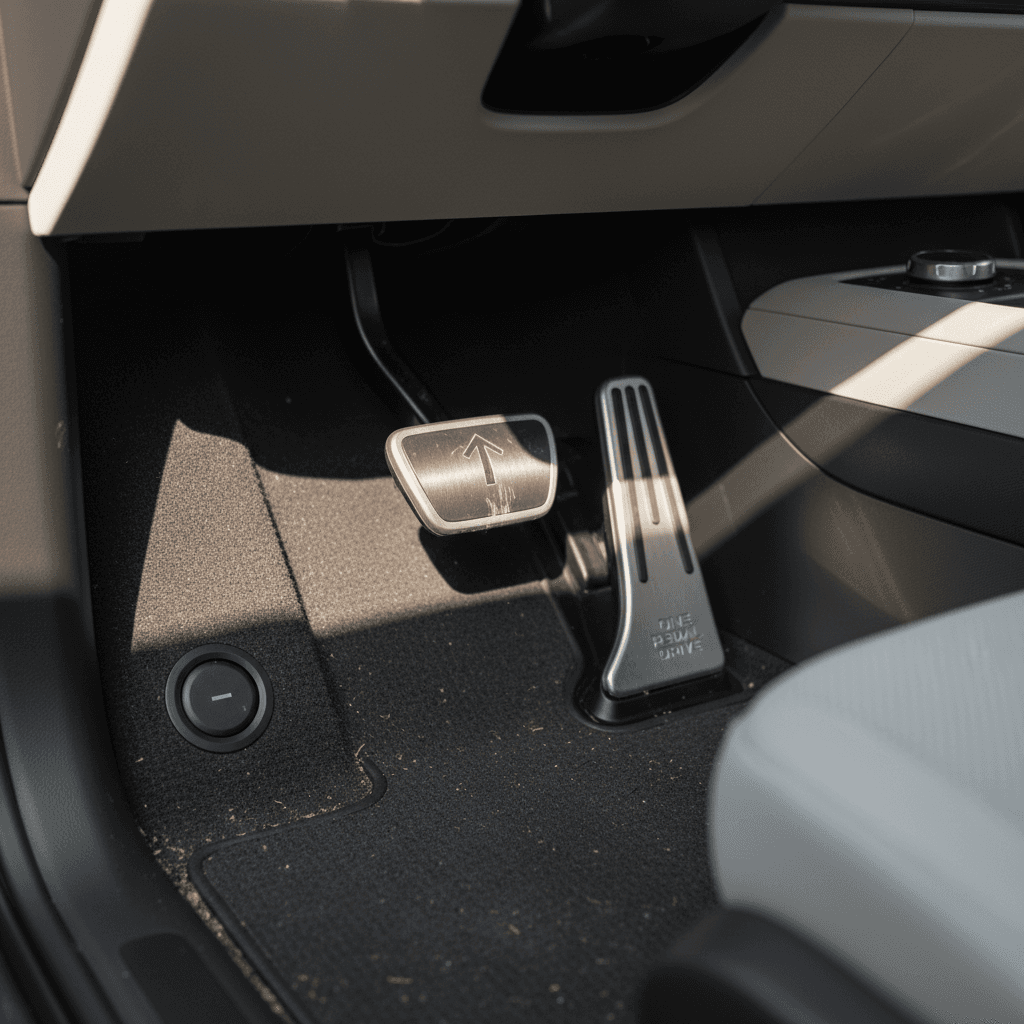
What one-pedal driving feels like on the road
If you’ve never tried it, one-pedal driving can feel a bit like switching from an old flip phone to a modern smartphone: same basic job, much smoother control.
- At low speeds, it can feel like you’re gently pulling the car back with a rubber band when you lift your foot.
- In stop‑and‑go traffic, you time your lift-off and the car glides down to a neat, no-drama stop at the light.
- On a downhill grade, lifting a bit more aggressively gives you a "virtual engine brake" while quietly sending energy back into the pack.
The learning curve
Benefits of one-pedal driving
Why so many EV drivers swear by one-pedal driving
Comfort, control, and efficiency in one feature
Less fatigue in traffic
More energy recaptured
Gentler on friction brakes
- You get very precise low‑speed control for parking and tight maneuvers.
- The car can feel more stable and predictable in stop‑and‑go traffic once you’ve adapted.
- In some EVs, lifting off early for a red light becomes a sort of game: how smoothly can you glide to a full stop without ever touching the brake?
Nice perk for used‑EV shoppers
Ready to find your next EV?
Browse VehiclesDownsides, limitations, and when not to use it
For all its virtues, one-pedal driving isn’t magic. There are situations where it’s sub‑optimal, and a few where most manufacturers flat‑out recommend you turn it off.
The fine print on one-pedal driving
Where it can surprise or frustrate you
Slippery conditions
Highway cruising
- If your battery is very full, near 100%, the car may limit regenerative braking, and one‑pedal deceleration will feel weaker until you burn off some charge.
- On very steep hills, regen alone may not provide enough braking force; you’ll still need to lean on the brake pedal.
- Passengers who aren’t used to it can get motion‑sick if your lifts off the pedal are too abrupt or choppy. Smoothness is a learned skill.
Know the limits
How to turn one-pedal driving on and off
Every automaker treats this a bit differently, but the basic pattern is the same: you either select one‑pedal driving in a settings menu, or you press a dedicated button or paddle that moves the car into a high‑regen mode. Here’s the general landscape so you know what to look for when you test‑drive:
Typical ways to activate one-pedal driving
Exact names and icons vary, but these are common patterns you’ll see across brands.
| Brand examples | Feature name | How you turn it on | Notes |
|---|---|---|---|
| Tesla | Hold / Standard regen | Touchscreen → Pedals & Steering → Regen & Stopping Mode | Lift‑off can bring the car to a complete stop and hold it. |
| GM (Chevy, Cadillac) | One-Pedal Driving | Physical "OPD" button or drive mode menu | Often defaults off at restart; needs re‑enabling each drive. |
| Nissan | e-Pedal / e-Pedal Step | Dedicated e‑Pedal switch near shifter | Intended for true one‑pedal city driving in the LEAF and Ariya. |
| Hyundai / Kia | i‑Pedal / One Pedal Driving | Drive mode menu + steering‑wheel paddles | Left paddle often temporarily adds extra regen; some models have a full one‑pedal mode. |
| Volvo / Polestar | One Pedal Drive | Drive settings menu on center screen | Multiple strength levels from "Off" to "High". |
Always check the owner’s manual or on‑screen help in the specific EV you’re driving.
Always start in a safe space
Learning one-pedal driving: step-by-step game plan
Get comfortable with one-pedal driving in under an hour
1. Start in a wide, empty space
Think grocery store lot after hours or an industrial area on a Sunday morning. You want room to experiment without anyone tailgating you.
2. Feel the difference at low speed
Accelerate gently up to 15–20 mph, then ease off the pedal halfway. Notice how strongly the car slows. Repeat with quicker and slower lift‑offs to feel how decel changes.
3. Practice full stops without the brake
Once you’re comfortable, accelerate to about 25 mph, then time your lift so that the car comes to a complete stop at an imaginary line. Your brake pedal is a safety net, but try to let regen do the work.
4. Add in traffic, but leave a buffer
On your first commute using one‑pedal driving, leave extra space to the car ahead. You’re relearning timing, and generous following distance lets you be smooth instead of jumpy.
5. Learn when to bail out to the brake
Pick a visual cue, a car door, a crosswalk, where you’ll always use the brake pedal if regen alone hasn’t slowed you enough. This keeps you honest about safety margins.
6. Experiment with alternate modes
Many EVs let you dial regen back for long highway trips or share the car with someone who hates the strong decel. Get to know where the settings live so you’re not fighting the car.
Which EVs offer one-pedal driving?
By 2025–2026, most mainstream EVs sold in the U.S. offer either true one‑pedal driving or a very strong regen mode that gets close. The exact feel varies, Tesla’s aggressive and confident, some German brands skew toward coasting, but if one‑pedal is on your wish list, you have options.
Common EV lineups with strong one-pedal options
Not exhaustive, but a useful shopping short list
Tesla
Nissan, Chevy, GM
Hyundai, Kia, Volvo, Polestar & more
Used‑EV reality check
Does one-pedal driving help battery and brake health?
One-pedal driving isn’t a magic elixir, but it can be good for the hardware that makes an EV expensive, or cheap, to own.
Impact on your EV’s hardware
Where one-pedal really pays off (and where it doesn’t)
Brakes: mostly a win
Battery: efficient, but not immortal
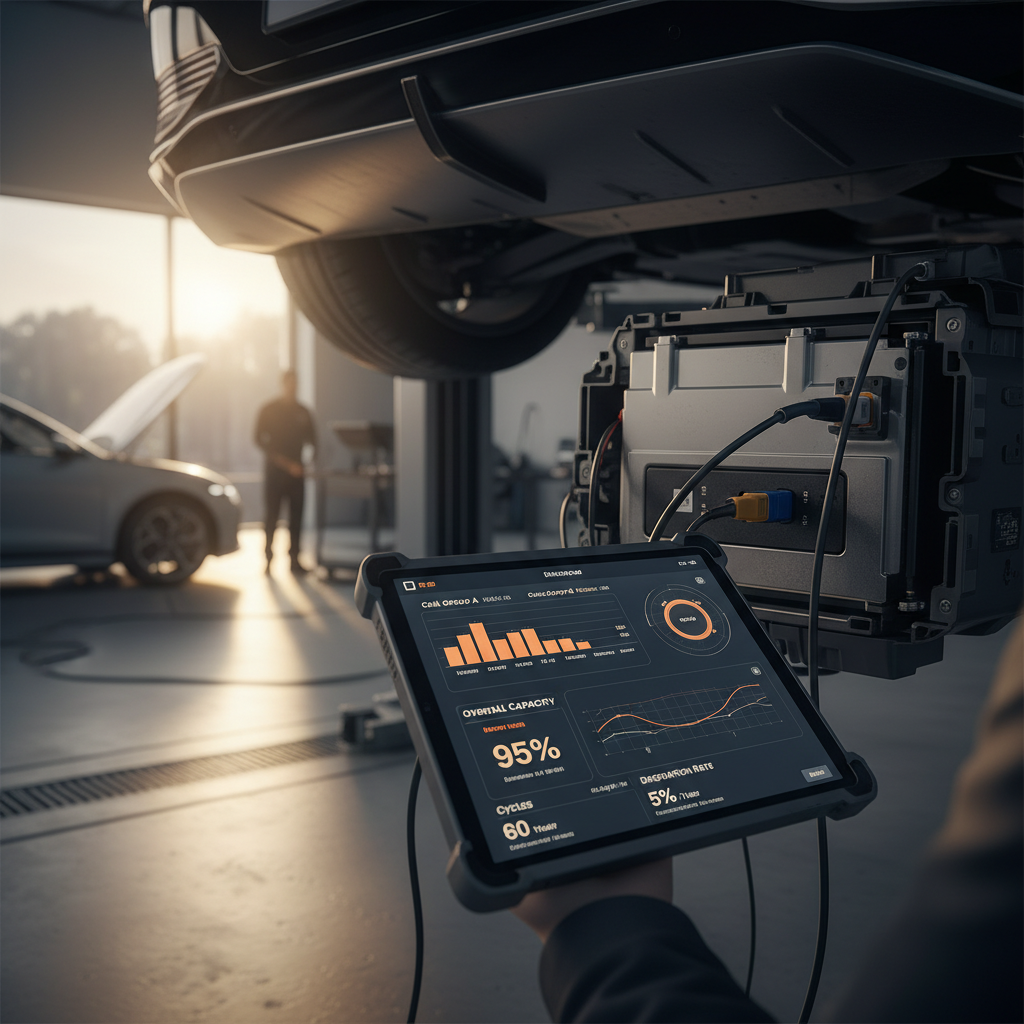
If you’re comparing used EVs, tools like the Recharged Score Report can give you a verified read on battery health and overall condition. One-pedal driving habits might have helped that car’s brake hardware live an easier life; the Score tells you how the battery itself is doing so you’re not guessing from range estimates alone.
Shopping for a used EV with one-pedal driving
If you’re EV‑curious and shopping used, one-pedal driving should sit right alongside range, charging speed, and driver‑assist tech on your test‑drive checklist. It’s not make‑or‑break for everyone, but for many owners it becomes the single feature they miss most when they hop back into a gas car.
Used‑EV shopping checklist: one-pedal edition
Confirm the car actually has it
Scan the listing for phrases like "one‑pedal driving," "e‑Pedal," "i‑Pedal," or "regenerative braking modes." If you’re using Recharged, your specialist can confirm the exact feature set for the VIN you’re considering.
Test each regen/one-pedal setting
During the test drive, cycle through all available regen levels. Make note of which modes allow a true full stop and hold versus just strong slowing.
Check for smoothness and noise
Good one‑pedal tuning feels progressive and quiet. If the car shudders, makes odd drivetrain noises, or surges when you lift, flag it for a technician to evaluate.
Look at brake wear
Ask when the pads and rotors were last inspected or replaced. Light wear at high mileage can be a sign the car has lived its life in strong regen, usually a good thing.
Ask about software updates
Some OEMs have changed regen behavior via over‑the‑air updates. It’s worth asking whether the car is on current software, especially if you’ve read owner reports about improved one‑pedal tuning.
Review the Recharged Score
On a Recharged vehicle, battery diagnostics, range estimates, and pricing are rolled into one easy‑to‑read Recharged Score, so you can weigh "nice to have" features like one‑pedal against the fundamentals of pack health and value.
One-pedal driving FAQ
Common questions about one-pedal driving
Bottom line: should you use one-pedal driving?
If you live in the real world, traffic, lights, crosswalks, school pickup lines, one-pedal driving is one of those EV features that quietly changes everything. Once your foot learns the new choreography, the car feels calmer, more precise, more willing to help.
It’s not perfect. On ice, you turn it down. On the highway, you might prefer a gentler, more coasting‑forward setup. And it’s not a reason, by itself, to buy or skip a particular EV. But as part of the package, alongside range, charging speed, and driver‑assist, it’s a legitimate quality‑of‑life upgrade.
If you’re EV‑shopping, especially in the used market, treat one-pedal driving as something to experience, not just read on a spec sheet. Take 10 minutes of your test drive to live in that mode, see how your body responds, and ask yourself if this is how you want to drive every day.
And if you’d like a shortcut, Recharged can help you compare used EVs, battery health, features like one‑pedal driving, fair pricing, and more, with the Recharged Score and expert guidance built in from the first click to the keys on your doorstep.