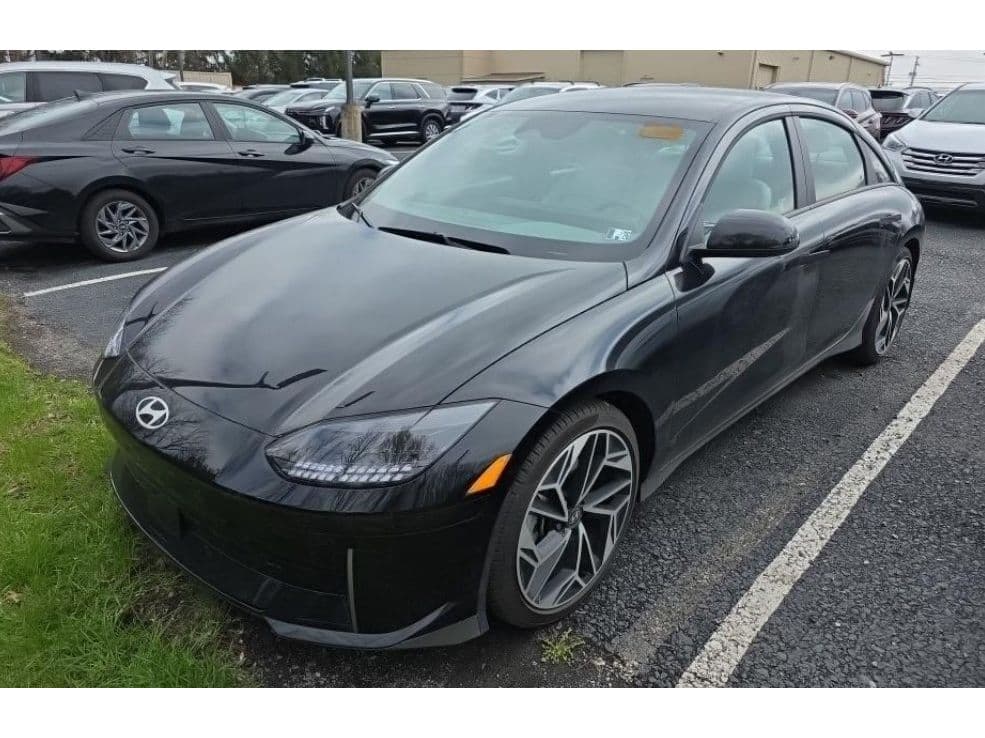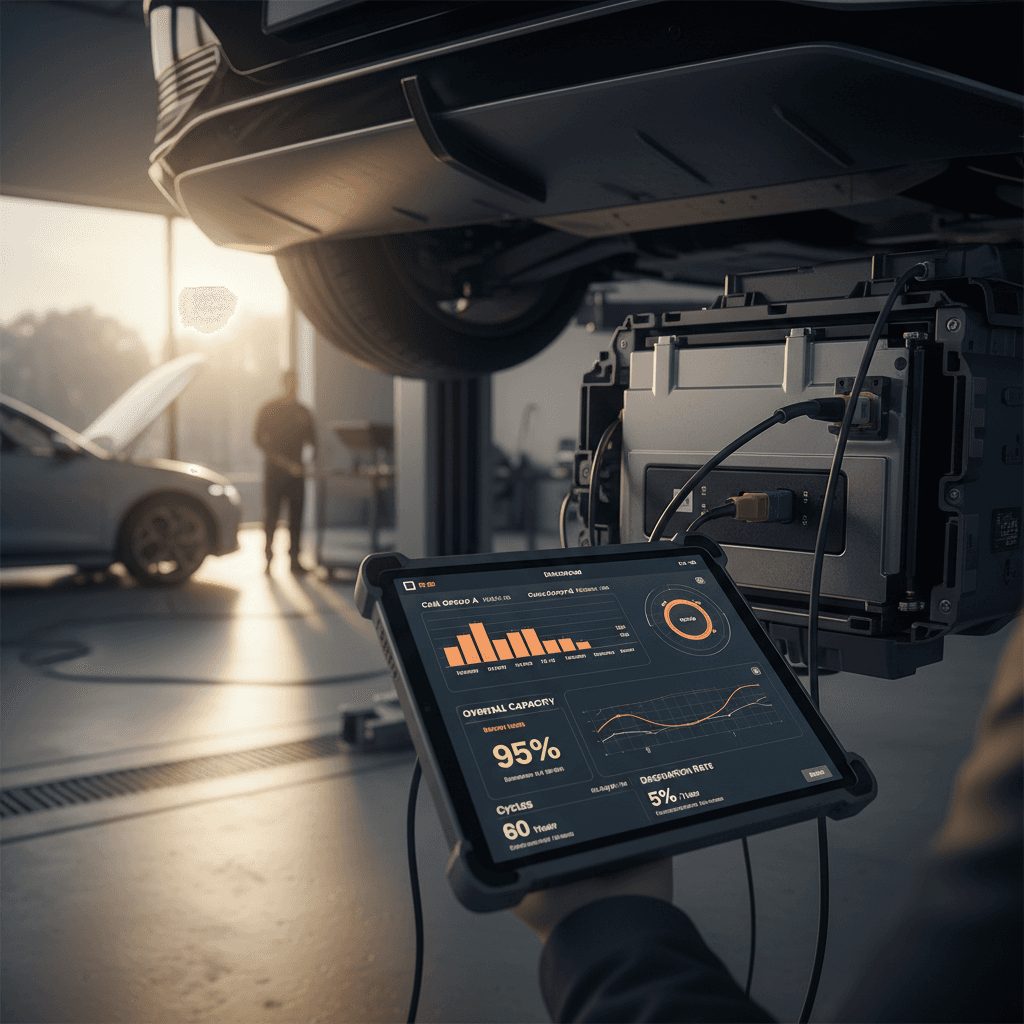
If you own a Hyundai Ioniq 6, or you’re eyeing a used one, the question lurking behind that elegant streamliner body is simple: how healthy is the battery, really? Knowing how to do a Hyundai Ioniq 6 battery health check, and how to interpret what you see, is the difference between enjoying effortless range and living with low‑key range anxiety.
Battery health in one sentence
Why Hyundai Ioniq 6 battery health matters
The Ioniq 6 uses a large, liquid‑cooled lithium‑ion battery pack that’s engineered to last many years. But degradation is inevitable: over time the pack stores a bit less energy, which shows up as less real‑world range and slower fast‑charging at very low or very high states of charge.
- Range: A tired pack can turn a 305‑mile EPA rating into something that feels more like 250 on the highway.
- Resale value: Battery health is one of the first things savvy used‑EV shoppers now ask about.
- Warranty coverage: Hyundai’s EV battery warranty is generous, but you still want to know if you’re trending toward a warranty claim, or comfortably above it.
- Road‑trip confidence: Knowing your pack’s true capability makes planning DC fast‑charging stops much less stressful.
Don’t rely on the dash range estimate alone
Ioniq 6 battery basics and typical degradation
Ioniq 6 battery options at a glance
Know which pack you’re working with before you check health
Standard‑range pack
Approx. 53 kWh usable (rear‑wheel drive only).
- EPA range: around 240 miles depending on trim.
- Best for city and shorter‑range commuters.
Long‑range RWD pack
Approx. 77 kWh usable with rear‑wheel drive.
- EPA range: up to ~361 miles in the most efficient trims.
- This is the efficiency champ of the lineup.
Long‑range AWD pack
Same 77 kWh usable battery with dual motors.
- EPA range: roughly 270–320 miles by trim.
- More performance, slightly less range.
In normal use, most modern EVs, Hyundai included, lose only a small percentage of capacity in the first few years, then degrade slowly. Real‑world owner data across EVs suggests that something like 5–10% loss by year 5 under typical driving isn’t unusual, assuming no abuse and normal mileage.
What counts as “healthy”?
Do a quick Ioniq 6 battery health check in 5 minutes
Before you dive into full‑blown range tests and spreadsheets, you can do a five‑minute sanity check that often tells you whether further investigation is needed, especially on a test drive of a used Ioniq 6.
5‑minute Hyundai Ioniq 6 battery health snapshot
1. Check odometer vs. model year
A 2023 Ioniq 6 with 12,000 miles and normal usage should not feel dramatically weaker than new. High mileage isn’t automatically bad, but it should make you more curious about battery health documentation.
2. Note the state of charge (SoC)
Is the car sitting at 100% or consistently charged to full? Living at 100% for long periods can accelerate degradation. Healthy usage tends to hover between 20–80% for daily driving.
3. Compare SoC to rated range
At, say, 80% SoC, does the dash show a range that roughly lines up with the EPA rating, adjusted for weather and driving style? If it looks drastically low on a mild‑weather day, that’s a flag for deeper testing.
4. Look for battery warnings
On the main display and in vehicle settings, check for any warning lights, reduced‑power messages, or notes about limited DC fast charging. The Ioniq 6 is usually quiet when it’s happy.
5. Glance at recent efficiency
Hyundai’s trip computer shows kWh/100 mi (or mi/kWh). If the car has been driven hard or in freezing weather, low range might just be <strong>driving style and conditions</strong>, not a weak pack.
For used‑car shoppers
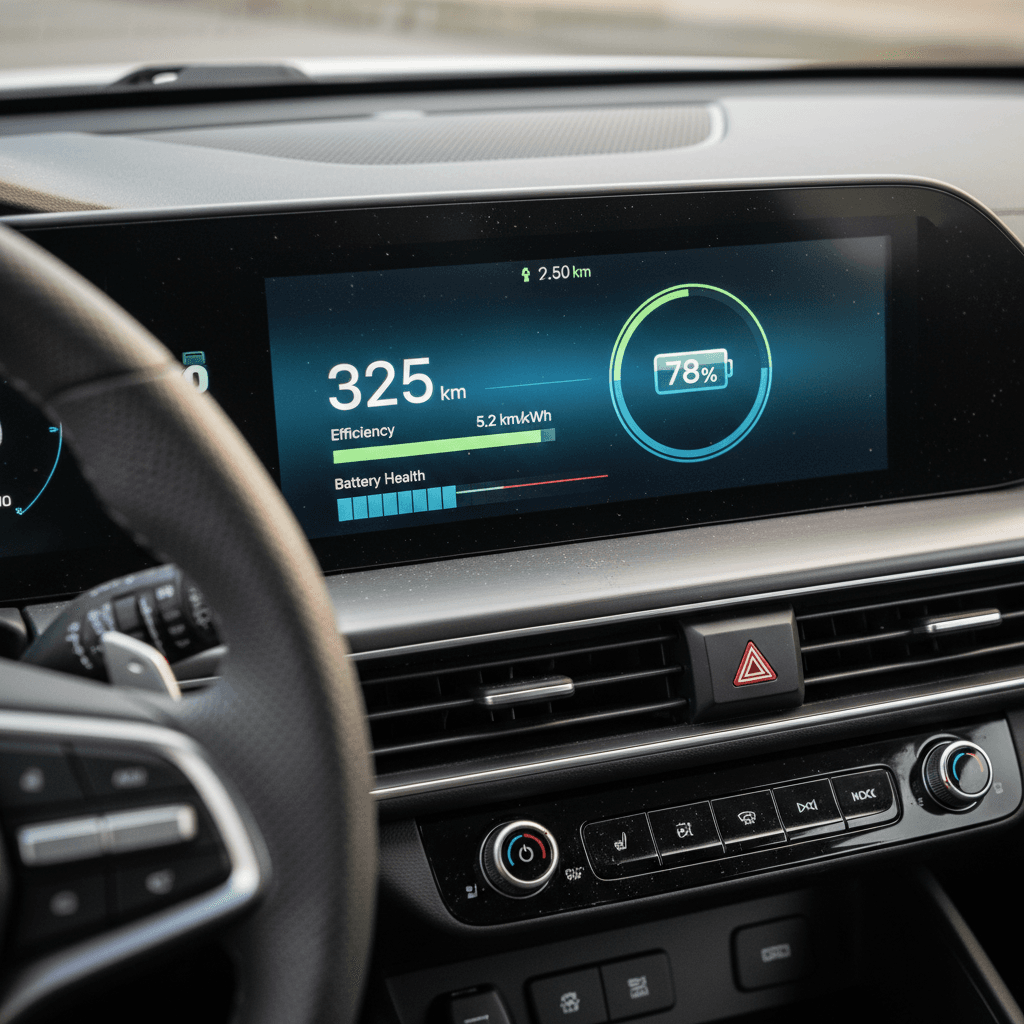
Step‑by‑step DIY Hyundai Ioniq 6 battery health check
To go beyond a quick gut check, you can use the Ioniq 6’s on‑screen menus and a bit of simple math to build a working picture of battery health, without any special tools.
- Start with a known state of charge. Ideally, begin at ~80–90% SoC after the car has finished charging and sat for 15–30 minutes to cool slightly.
- Reset a trip meter. On the digital cluster or infotainment screen, reset Trip A/B so you can track only this test drive.
- Drive a mixed route. Aim for at least 20–40 miles of real‑world driving that mixes highway and city segments at normal speeds.
- Watch energy consumption. Note the kWh/100 mi (or mi/kWh) average for this drive. This tells you how efficiently the car is being driven.
- Note SoC change. At the end of the drive, record the starting SoC, ending SoC, and exact miles driven.
- Roughly back‑calculate capacity. Using your energy use and SoC drop, you can estimate how many kWh the car delivered and compare that to what a new pack should deliver.
The back‑of‑napkin formula
Range test: How to estimate Ioniq 6 battery state‑of‑health (SOH)
If you want a more disciplined view, a controlled range test is the most accessible way for owners to estimate battery state‑of‑health (SOH) without lab gear. It doesn’t have to be a full 0–100% marathon; a well‑measured slice of the pack can tell you a lot.
Planning a practical Ioniq 6 range test
Use these guidelines to pick conditions and interpret results without torturing yourself, or the battery.
| Factor | Ideal target | Why it matters | What to avoid |
|---|---|---|---|
| Starting SoC | 80–90% | High enough to capture a big chunk of capacity without sitting at 100% | Don’t leave the car at 100% overnight just for a test |
| Ending SoC | 10–20% | Low enough that you’ve used most of the usable pack | Repeatedly running to 0%, it’s rougher on the battery |
| Weather | 50–75°F (10–24°C) | Mild temps keep HVAC load low and pack happy | Deep winter or blazing heat, unless that’s your normal |
| Route | Steady 45–65 mph loop | Less traffic and fewer stop‑and‑go extremes simplify the math | Mountain passes with huge climbs and descents |
| Driving style | Calm, steady, no drag racing | Keeps efficiency realistic but repeatable | Extreme hyper‑miling or full‑throttle blasts |
You’re not trying to recreate an EPA test cycle; you’re just creating a consistent baseline for your own car.
After your test, you’ll know three key things: miles driven, SoC drop, and average efficiency. From this you can compute how much energy you pulled and extrapolate total usable capacity. Comparing that to the pack’s approximate usable size gives you a rough SOH percentage.
Don’t obsess over single‑run results
Using apps and data logging with the Ioniq 6
If you’re comfortable with tech, OBD‑II dongles and third‑party apps can read deeper metrics from many Hyundai models, values like reported battery SOH, cell voltage spread, and pack temperature. The catch is that support can vary by model year and software version, and some apps are more experimental than others.
Data tools for Hyundai Ioniq 6 owners
Approach third‑party apps as helpful hints, not gospel truth
Official Hyundai app
Shows charge status, range, and some trip data.
- Great for everyday monitoring.
- Does not usually show explicit SOH.
OBD‑II + EV‑focused apps
Can sometimes reveal pack voltage, temperatures, and estimated SOH.
- Requires Bluetooth OBD‑II adapter.
- Support and accuracy vary, treat as estimates.
Manual logging
Simple, low‑tech approach.
- Record SoC, miles, and kWh added after charges.
- Over time, you’ll see trends in range and efficiency.
Stability matters more than the exact number
Red flags when buying a used Hyundai Ioniq 6
The Ioniq 6 is still relatively new, so most used examples should feel fresh and deliver most of their original range. When they don’t, you want to know why. Some issues are innocent; others point to hard use or battery problems lurking under the floor.
- Range that feels wrong for the trim: A long‑range RWD car that struggles to show more than ~230–240 miles at moderate SoC on a mild day deserves investigation.
- Always‑100% habit: Seller proudly keeps it plugged in at 100% all the time. Convenient, yes; battery‑friendly, not so much.
- Repeated fast‑charge abuse: A car that’s done constant 0–100% DC fast charges in desert heat may age faster than a commuter that lives on Level 2.
- Charging that throttles very early: If DC fast charging falls off a cliff extremely early in the session at moderate SoC and temps, it can signal pack or thermal issues.
- No documentation at all: On an expensive modern EV, a seller who “doesn’t believe in records” is quietly telling you to budget for surprises.
Walk‑away moments
When to get a professional battery diagnostic
DIY checks and apps are great early‑warning tools. But there are times when you want someone with the right equipment, data access, and liability to tell you what’s going on.
Situations where a pro Ioniq 6 battery check is worth it
Peace of mind is cheaper than a replacement pack
You’re about to buy used
On a high‑value used Ioniq 6, getting a documented battery health report is like a modern pre‑purchase inspection.
- Confirms capacity and checks for fault codes.
- Strengthens your position if the seller mis‑represented the car.
You see real‑world issues
If your own Ioniq 6 suddenly loses a chunk of range, charges oddly, or throws errors, a deep diagnostic can separate:
- Benign software or usage quirks
- From genuine pack degradation or hardware faults
What a good report includes
How Recharged checks battery health on used EVs
At Recharged, every used electric vehicle we list, Hyundai Ioniq 6 included, comes with a Recharged Score Report. Instead of asking you to decode a handful of app screenshots, we turn raw diagnostics into a clear story about the car’s past and future.
Verified battery health
- We use specialized equipment to assess usable capacity and pack behavior.
- The report translates that into plain‑English insights about expected range and longevity.
- No guesswork, just a transparent read on the most expensive component in the car.
Support beyond the numbers
- EV specialists walk you through the report so you know what matters and what doesn’t.
- Nationwide delivery, financing, and trade‑in options make it easy to move into the right EV.
- If you’re comparing multiple used Ioniq 6s, a Recharged Score helps you pick the one with the healthiest pack.
Leverage battery health in price negotiations
Protecting your Hyundai Ioniq 6 battery long term
Once you know where your Ioniq 6’s battery stands today, the next step is protecting it. The rules here are refreshingly simple and, mercifully, do not require you to live like a lab technician.
Simple habits that keep your Ioniq 6 battery happy
1. Live between ~20–80% for daily use
You don’t need to micromanage every charge, but avoiding long stints at 0% or 100% is one of the easiest ways to reduce stress on the pack.
2. Save 100% for road trips
It’s fine to charge to full when you’re about to leave on a long drive, just don’t leave it parked at 100% for days. Time at full charge is a bigger culprit than simply reaching full occasionally.
3. Prefer Level 2 over constant DC fast charging
The Ioniq 6 is brilliant at ultra‑fast charging, but the gentler, slower heat build‑up of Level 2 home or workplace charging is kinder to the chemistry when you’re not in a hurry.
4. Mind the heat
Try not to fast‑charge repeatedly in extreme heat, and avoid leaving the car baking at high SoC in direct sun for long stretches when you can help it.
5. Keep software up to date
Hyundai occasionally refines charging, thermal management, and range estimation logic. Staying current ensures your battery is managed with the latest firmware intelligence.
6. Schedule a check if something changes suddenly
Gradual, small range loss over years is normal. Sudden, dramatic change, especially accompanied by warnings, isn’t. That’s worth a closer look.
Good news: You don’t have to baby it
FAQ: Hyundai Ioniq 6 battery health checks
Frequently asked questions about Ioniq 6 battery health
The Hyundai Ioniq 6 arrives at a moment when people finally understand that an EV’s real soul lives in its battery. A good health check doesn’t require a lab coat; it just asks you to pay attention, to how far the car goes, how it charges, and what its data quietly says about its past. Whether you’re nursing your own Ioniq 6 into a long, useful life or comparing used examples side by side, grounding your decision in verified battery health turns guesswork into confidence. And if you’d rather have that hard work done for you, a used EV with a Recharged Score Report lets you skip straight to the fun part: enjoying the drive.