If you drive an electric car in New Jersey, you’re in better shape than you might think. The New Jersey electric car charging network is dense by U.S. standards, with chargers clustered along the Turnpike, in shore towns, and packed into the urban north. But density doesn’t always equal convenience, and knowing where, and how, you’ll charge is the difference between a relaxed drive and a white‑knuckle hunt for electrons.
New Jersey is a charging hot spot
Overview: New Jersey’s EV charging landscape
How New Jersey stacks up on charging
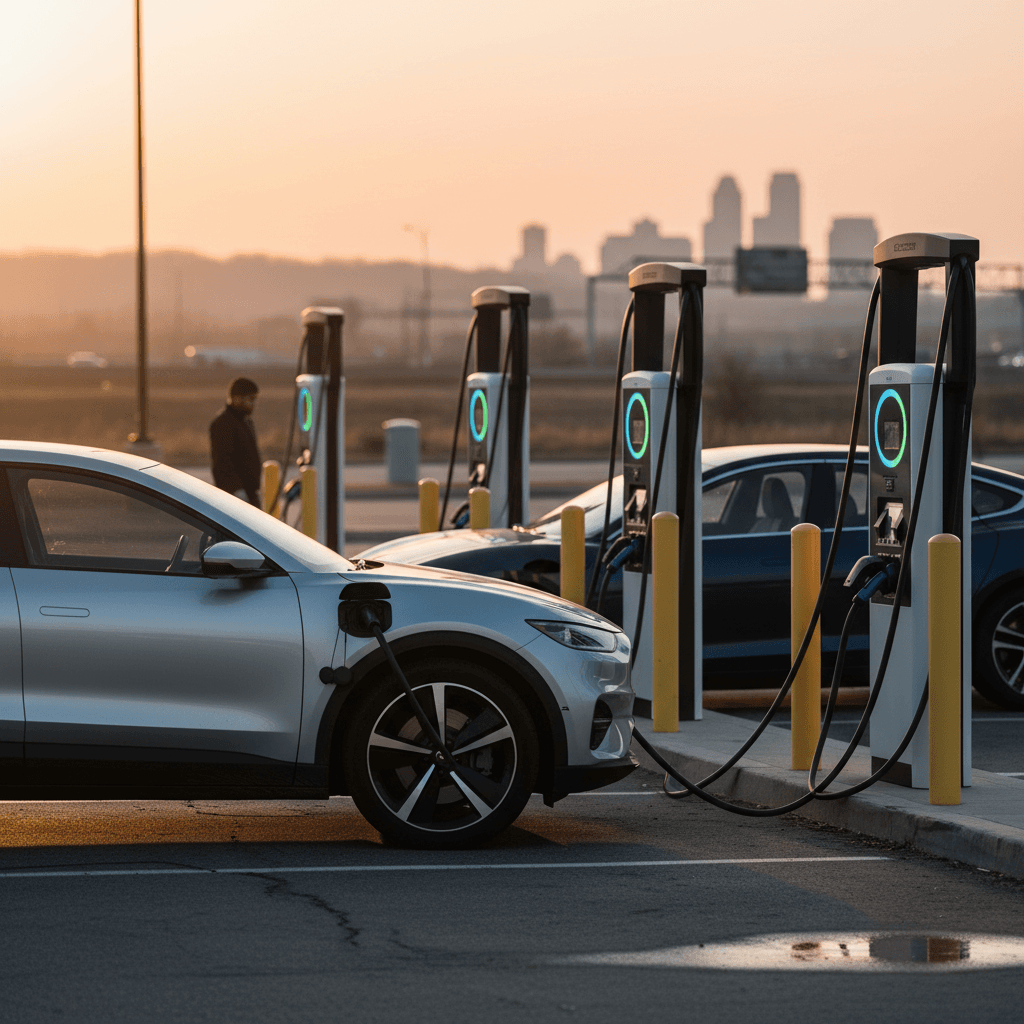
New Jersey doesn’t have California’s raw charger count, but it punches above its weight in charger density. That’s good news in a compact state where you’re rarely more than an hour from either New York City or Philadelphia. Public Level 2 chargers fill in the gaps at workplaces, parking garages, and shopping centers, while DC fast chargers line the Turnpike, Garden State Parkway, and major commuter routes.
The flip side is that the experience can still be inconsistent. Different networks, different apps, broken stations, tight parking at busy service plazas, none of that has magically disappeared. Tesla’s Supercharger network remains the gold standard for uptime and ease of use, and more of those stalls are opening to non‑Tesla EVs over time. But New Jersey is rapidly adding non‑Tesla “universal” fast chargers as well, especially along the Turnpike.

Where the chargers are in New Jersey
New Jersey EV charging hotspots
Think in corridors, not just single stations
North Jersey & NYC suburbs
Counties like Bergen, Hudson, and Essex are saturated with Level 2 and fast chargers:
- Garage and street chargers in Hoboken & Jersey City
- Shopping‑center Level 2s in Paramus and surrounding suburbs
- Multiple DC fast sites near I‑80, I‑95, and Route 3
Turnpike & I‑95 corridor
The spine of the New Jersey electric car charging network is the Turnpike and connected interstates:
- Fast chargers at key service plazas
- Standalone sites near exits and logistics hubs
- Good coverage for north‑south and east‑west travel
Shore towns & suburbia
From Cape May to Sandy Hook, infrastructure is catching up fast:
- Fast chargers at popular shore exits
- Hotel and municipal Level 2 near boardwalks
- Suburban workplace and retail chargers inland
If you plotted your favorite grocery stores, malls, and office parks, you’d get a pretty good sketch of where the Level 2 chargers live. New Jersey’s utilities and towns have leaned heavily on these moderate‑speed stations because they’re relatively easy to install and perfect for “park for a few hours and come back to range.” DC fast chargers, by contrast, are concentrated right where you’d expect: Turnpike interchanges, highway truck stops, and high‑traffic shopping corridors.
Pro move: Layer your apps
Charging on the NJ Turnpike and Garden State Parkway
For many drivers, the litmus test for an EV is simple: can I get down the Turnpike or Parkway without sweating every mile? New Jersey has been steadily upgrading highway service areas with DC fast charging, increasingly focused on “universal” access instead of brand‑specific solutions.
What to expect at Turnpike & Parkway service areas
Details vary by site, but here’s the general pattern you’ll see at highway plazas.
| Location type | Typical charger speed | Connector types | Parking experience |
|---|---|---|---|
| Major Turnpike service plaza | 150–350 kW DC fast | CCS, often NACS and CHAdeMO at older sites | Busy at peak travel times; trailer pull‑through usually limited |
| Smaller service area or rest stop | 50–150 kW DC fast | Mostly CCS, NACS rolling out | Less crowded but fewer total stalls |
| Nearby truck stop off an exit | 50–350 kW DC fast | CCS now, NACS adapters coming online | Better maneuvering room, often easier to access |
| Parkway rest area | Mix of Level 2 and DC fast | Varies; check apps | More relaxed, but slower if you land on Level 2 |
Always check your apps before a long trip, construction and upgrades can temporarily take highway chargers offline.
Tesla Superchargers on the Turnpike
Checklist before you hit the Turnpike in an EV
1. Map your fast‑charge options
Use your car’s navigation plus a third‑party app to mark at least two DC fast sites along your route, not just one. Redundancy is your friend if a site is busy or down.
2. Aim to arrive with 10–20% battery
Highway chargers are happiest when you show up with some buffer. Below 5–10%, your options shrink fast if a site is full or malfunctioning.
3. Charge only to 60–80%
DC fast charging slows dramatically above ~80%. On a long trip, short hops between chargers are often faster than one big fill‑up to 100%.
4. Watch for idle fees
Some networks bill extra if you sit plugged in after charging finishes. Move your car promptly, especially at busy plazas.
5. Plan food and bathroom breaks around charging
Think of the charger as your restaurant parking spot. Start the charge, then grab food, don’t wait in the car and then decide to wander off.
Public charging networks you’ll actually use in NJ
New Jersey doesn’t have a single “state network” the way some western states do. Instead, you’re looking at an overlapping quilt of national players and utility‑supported hardware. That’s why a little homework on networks pays off before you bring home an EV.
The big charging names in New Jersey
It pays to have accounts with at least two of these
Tesla Supercharger
Best for: Tesla drivers; some sites now open to non‑Teslas with NACS ports or adapters.
- Excellent reliability and easy plug‑and‑go experience
- Built into Tesla navigation with automatic payment
- Non‑Tesla use is site‑by‑site, always confirm in advance
Electrify America, EVgo & others
Best for: Non‑Tesla EVs and mixed‑brand fleets.
- High‑power DC fast chargers near highways and big retailers
- Pricing varies widely by time, membership, and connector
- Apps required for the smoothest start and billing
ChargePoint & utility‑backed Level 2
Best for: Topping up while you work, shop, or attend events.
- Everywhere: offices, garages, municipal lots, campuses
- Primarily Level 2 (240V), plus some DC fast
- Per‑kWh, time‑based, or even free, check the listing
Set up accounts before you need them
Home charging programs and utility incentives
Public infrastructure matters, but for most New Jersey EV drivers, the real magic happens in the driveway or garage. Overnight Level 2 charging turns your car into its own gas station, and state utilities have been offering generous “make‑ready” incentives to help with installation costs.
PSE&G: Make‑ready incentives and evolving off‑peak credits
Public Service Electric & Gas (PSE&G), New Jersey’s largest utility, has committed over $100 million to EV infrastructure and customer incentives. For residential customers, the flagship benefit is a make‑ready credit that can knock up to around $1,500 off the cost of upgrading your electrical panel, wiring, and conduit to support a Level 2 charger. There’s also support on the utility side for necessary transformer or service upgrades.
PSE&G also launched an off‑peak charging credit that rewards you for charging overnight. As of early 2026, that specific credit program is being phased out in favor of a whole‑home time‑of‑use rate expected later in the year, still a strong signal that the utility wants you plugging in when the grid is quiet.
Other New Jersey utilities
Outside PSE&G territory, other New Jersey utilities have rolled out their own versions of EV support:
- Make‑ready or rebate programs to offset Level 2 installation costs
- Off‑peak or time‑of‑use rates that offer cheaper electricity overnight
- Occasional charger rebates when you buy a specific smart charger model
Before you schedule an electrician, visit your utility’s EV page and confirm what’s currently available, programs change, and many ask you to apply before or during installation.
Setting up home charging in New Jersey
1. Confirm your electrical panel capacity
Most home Level 2 chargers need a 40–60 amp breaker. Ask an electrician whether your panel can spare that, or if you’ll need an upgrade.
2. Check your utility’s EV programs
Look for make‑ready credits, charger rebates, and off‑peak or time‑of‑use rates. You may need pre‑approval to qualify.
3. Choose the right Level 2 charger
Look for a 32–48 amp unit with a 240V supply, Wi‑Fi connectivity, and a cable long enough to reach your parking spot. Make sure it’s UL‑listed and compatible with your EV’s maximum AC charging rate.
4. Get a detailed installation quote
New Jersey homes range from century‑old row houses to new construction. Ask for a written quote that covers permits, panel work, wiring, and any trenching.
5. Register your charger if required
Some programs require registering a “smart charger” or sharing usage data to qualify for ongoing bill credits.
How Recharged can help
Ready to find your next EV?
Browse VehiclesHow fast will you charge in New Jersey?
Charging speed isn’t just about the station; it’s a dance between your car, the charger, the weather, and how full your battery already is. Understanding the three main charging “zones” in New Jersey, home, public Level 2, and DC fast, will set realistic expectations.
Typical charging speeds for NJ drivers
Real‑world speeds vary, but these ballpark figures will help you plan.
| Charging location & type | Power (approx.) | Miles of range per hour* | Best use case in NJ |
|---|---|---|---|
| Home Level 1 (120V outlet) | 1–1.5 kW | 3–5 | Apartment or driveway top‑ups under ~30 miles/day |
| Home Level 2 (240V, 32–48A) | 7–11 kW | 25–40 | Overnight charging for most commutes and weekend trips |
| Public Level 2 (work/retail) | 6–11 kW | 20–35 | Park for a few hours while you work, shop, or dine |
| DC fast (50–150 kW) | 50–150 kW | 120–400+ (to ~60–70%) | Turnpike and Parkway hops, road‑trip fuel stops |
| High‑power DC fast (200–350 kW) | 200–350 kW | Up to 600+ (peak) | Short, aggressive sessions on road trips in newer EVs |
Battery size, temperature, and starting state of charge can swing these numbers up or down, but they’re good planning baselines.
Why fast charging slows near 80%
What it really costs to charge an EV in New Jersey
New Jersey’s residential electric rates are on the higher side nationally, but efficient EVs still undercut gasoline on a cost‑per‑mile basis, especially if you lean heavily on home and workplace charging.
Home charging: your cheapest "fuel"
Assume a typical New Jersey residential rate in the ballpark of the national average for the region. A reasonably efficient EV might use around 28 kWh to go 100 miles. Multiply your local per‑kWh price by that usage and you’ll usually land well under the cost of driving 100 miles on gasoline in a comparable sedan.
Add in off‑peak or time‑of‑use rates, where overnight electricity is cheaper, and your per‑mile cost only improves. For most households with home charging, public fast chargers are an occasional convenience, not a daily habit.
Public DC fast charging: pay for speed and convenience
Public DC fast chargers in New Jersey often charge a premium. You’re paying for highway‑grade hardware, real estate, and 24/7 access. Used sparingly, say, on road trips or emergency top‑offs, the higher rate is a small price for the time you save.
The trick is balance: rely on home and workplace charging for routine driving, and treat DC fast as your long‑distance lifeline and safety net.
Mind the pricing model
Planning New Jersey road trips in an EV
One of the joys of living in New Jersey is how many states you can hit in a single day: Pennsylvania ski trips, New York city weekends, Delaware and Maryland beaches, even quick dashes to Boston or D.C. A well‑planned EV makes all of that possible, with less drama than you might expect.
Common EV road‑trip routes from New Jersey
How New Jersey’s charging network supports your weekend plans
South to D.C. and beyond
Route: NJ Turnpike → I‑95 through Delaware and Maryland.
- Multiple DC fast options at New Jersey service plazas.
- Dense charging through Delaware and Maryland, including Tesla and non‑Tesla sites.
- Plan one or two 20–30 minute fast‑charge stops depending on your battery size.
West to Pennsylvania & the Poconos
Route: I‑80, I‑78, or I‑76 toward the mountains.
- Fast chargers in eastern PA towns and highway stops.
- Level 2 at many ski areas and hotels, plug in while you sleep.
- Winter range drops mean planning a bit more buffer in cold snaps.
Down the shore
Route: Garden State Parkway to shore towns.
- Increasing DC fast coverage at key exits and near shopping centers.
- Level 2 at hotels, municipal lots, and some boardwalk‑adjacent garages.
- On peak summer weekends, expect more competition for stalls.
North to NYC & New England
Route: I‑95/I‑287 toward New York and New England.
- Heavy charger coverage near metro New York and along I‑95.
- Mix of Superchargers and third‑party fast chargers.
- Use your car’s planner to route around notorious traffic bottlenecks.
Cold‑weather planning
Buying a used EV that fits New Jersey’s charging network
Not every EV is equally happy with the way New Jersey’s charging network is built. Some sip gently at DC fast chargers, others gulp power like a long‑distance sprinter. Some shine on Level 2 and hardly ever need a highway stop. If you’re shopping the used market, it pays to match the car’s strengths to the reality of your routes.
Questions to ask before you buy
- How big is the battery? A larger pack gives you more Turnpike flexibility and less winter anxiety, but don’t overbuy if you mostly commute locally.
- How fast can it DC fast‑charge? Older or budget EVs may max out at 50–70 kW, which is fine for occasional road trips but slower than newer models that can handle 150 kW and up.
- What connector does it use? Most non‑Tesla EVs in this era use CCS for fast charging and J1772 for Level 2. Newer models are shifting to NACS, the Tesla‑style plug, which should only improve access over time.
- What’s the real‑world range now? Battery health matters more than the window sticker number. Ask for data, not guesses.
Where Recharged comes in
Every used EV sold through Recharged includes a Recharged Score Report with verified battery health, fair‑market pricing, and expert guidance. That means you can see how much range a particular car realistically delivers today, not just when it was new, and talk through how that fits into your New Jersey life, from Turnpike commutes to shore weekends.
Our EV specialists can also help you think through home charging, utility incentives, and which public networks you’re most likely to lean on based on where you live in the state.
Frequently asked questions about New Jersey’s EV charging network
New Jersey EV charging FAQ
The bottom line for New Jersey EV drivers
New Jersey is one of the better places in the U.S. to live with an electric car. The public network is dense for such a small state, highway fast charging is steadily improving, and utility incentives help make home charging practical in everything from mid‑century capes to newer townhomes. It’s not perfect, no state is, but you’re far from the bleeding edge.
If you pair a realistic view of your daily miles with smart use of home charging and a little app‑based scouting, the New Jersey electric car charging network becomes less of a question mark and more of an invisible helper in the background. And if you’re shopping the used market, working with a retailer like Recharged, where battery health, fair pricing, and EV‑savvy guidance are baked in, can make the whole transition feel a lot less experimental and a lot more like the new normal.