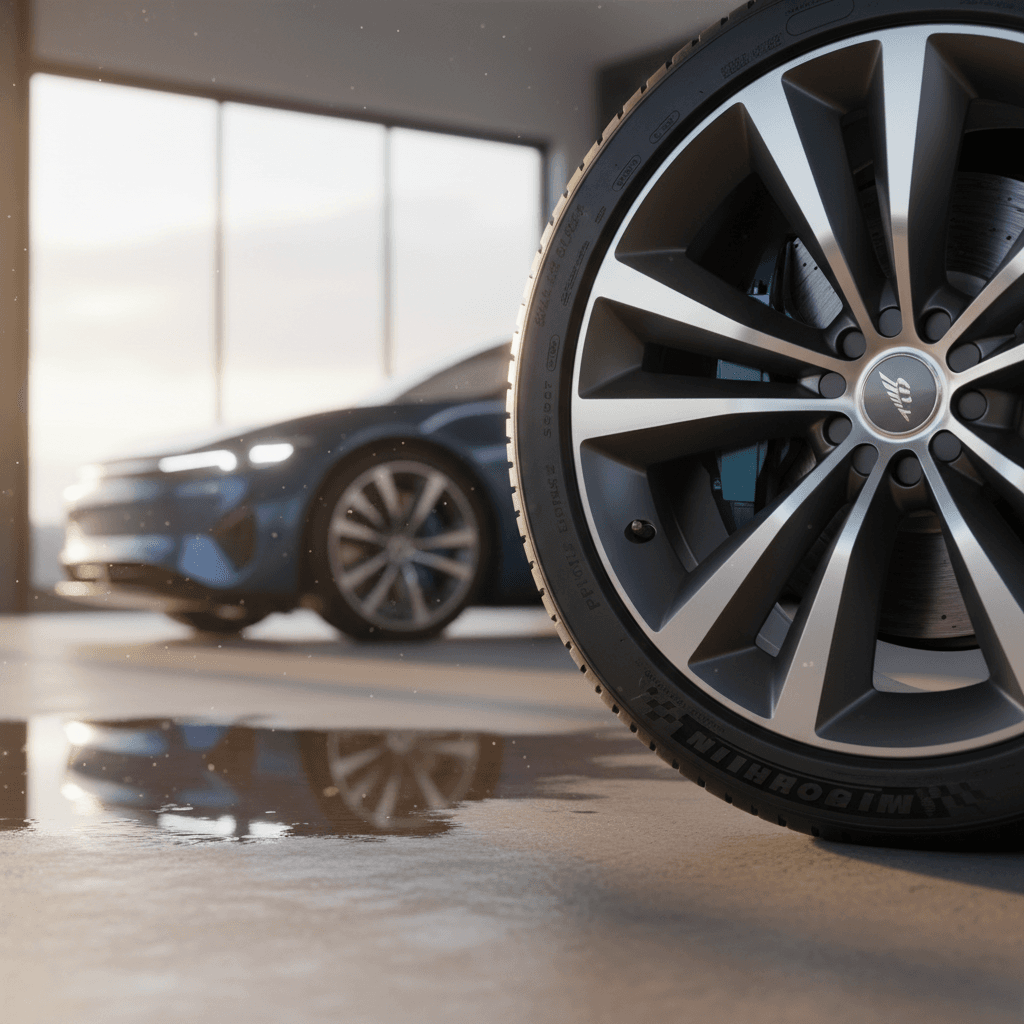
If you’ve bought an electric car in the last few years, there’s a good chance it rolled out on Michelin electric car tires. Tesla, Hyundai, Kia, Mercedes, Polestar, Porsche and others all spec Michelin rubber on many of their EVs. But when it’s time for replacement, the alphabet soup, Pilot Sport EV, e·Primacy, Primacy MXM4 T1, can feel like trying to order dinner in a language you half remember.
EV tires are not just marketing
Why Michelin electric car tires matter on an EV
On a gasoline car, you can sometimes get away with treating tires as an afterthought. On an EV, they’re a major part of the driving experience, and your monthly energy bill. Michelin has been building EV-specific tires since long before most people had charged a car at home, and many automakers turned to Michelin first when they needed rubber that could quietly carry a battery pack.
What your tires can change on an electric car
Put simply: the wrong tires can make your EV feel harsh, loud, and thirsty for electrons. The right Michelin EV tire can help you squeeze out a bit more range, keep the cabin calm, and still hang onto a twisty road.
How Michelin electric car tires differ from regular tires
1. Rolling resistance and range
Rolling resistance is the constant drag your tires create as they deform against the road. Michelin’s EV tires use special compounds and internal construction to reduce that drag without turning the tire into a hard, skittish hockey puck.
- e·Primacy and many Primacy EV fitments chase maximum efficiency.
- Pilot Sport EV splits the difference: still efficient, but tuned for performance EVs.
Lower rolling resistance means your car needs fewer watt-hours per mile, especially noticeable at steady highway speeds.
2. Noise, comfort, and cabin feel
Take the engine away and suddenly you can hear everything else. That’s why Michelin developed acoustic foam inserts (a polyurethane ring bonded inside the tire) and intricate tread patterns designed to cancel out repetitive road noise.
On some sizes, Michelin says this can cut perceived cabin noise by about 20%, which is the difference between constantly turning up the podcast and just enjoying the drive.
3. Stronger construction for heavy EVs
Electric cars usually carry big battery packs slung between the axles, which drives curb weight up. Michelin EV tires use reinforced belts, sidewalls, and sometimes higher load ratings so the tire doesn’t squirm under weight or chew through tread in 20,000 miles.
That’s why you’ll see some Michelin EV fitments labeled with higher load indices or special markings indicating they were engineered for a specific model.
4. Compounds for instant torque
When you mash the accelerator in an EV, torque arrives now, not eventually. Michelin’s ElectricGrip and similar compounds aim to provide strong off-the-line traction without sacrificing range. They’re also tuned to maintain grip as they wear, so your safety net doesn’t quietly vanish halfway through the tire’s life.
Don’t assume ‘any 19-inch tire’ will work
Key Michelin electric car tire families for 2025
Michelin doesn’t sell a single “EV tire.” Instead, they’ve woven EV-focused tech into several families. Here are the ones you’re most likely to see on an electric car in the U.S. today.
Michelin’s main electric car tire lines
From commuter range-hunters to performance EV weapons
Michelin Pilot Sport EV
Best for: Performance EVs and spirited drivers.
- Summer tire tuned for electric sports sedans, coupes, and SUVs.
- ElectricGrip compound for strong traction and cornering on heavy, high-torque cars.
- Lower rolling resistance than comparable non-EV performance tires, helping preserve range.
- Often OE-marked for cars like Tesla, Porsche, Mercedes, Hyundai N, and others.
Michelin e·Primacy
Best for: Daily-driven EVs prioritizing efficiency.
- Eco-focused tire with very low rolling resistance to help maximize range.
- Targeted at compact and midsize cars and crossovers.
- Quiet ride and comfort first, with traction tuned for everyday driving rather than track days.
Primacy EV & Primacy MXM4 T1
Best for: Premium EVs needing quiet comfort.
- Primacy line is widely used as original equipment on luxury EVs.
- Acoustic foam and carefully tuned tread blocks for low cabin noise.
- Balanced blend of comfort, low rolling resistance, and all-season capability on many fitments.
Other Michelin choices you’ll see on EVs
Not EV-only, but EV-ready in the right sizes
CrossClimate & winter lines
If you commute through serious winters, tread design matters more than a small hit to range. Michelin’s all-weather CrossClimate and dedicated winter tires are available in EV-friendly load ratings and sizes, giving you cold-weather grip and braking confidence.
Defender and touring tires
On some plug-in hybrids and lower-torque EVs, long-life touring tires such as Defender 2 can make sense. They focus on tread life and comfort, with rolling resistance still competitive against some EV-branded rivals.
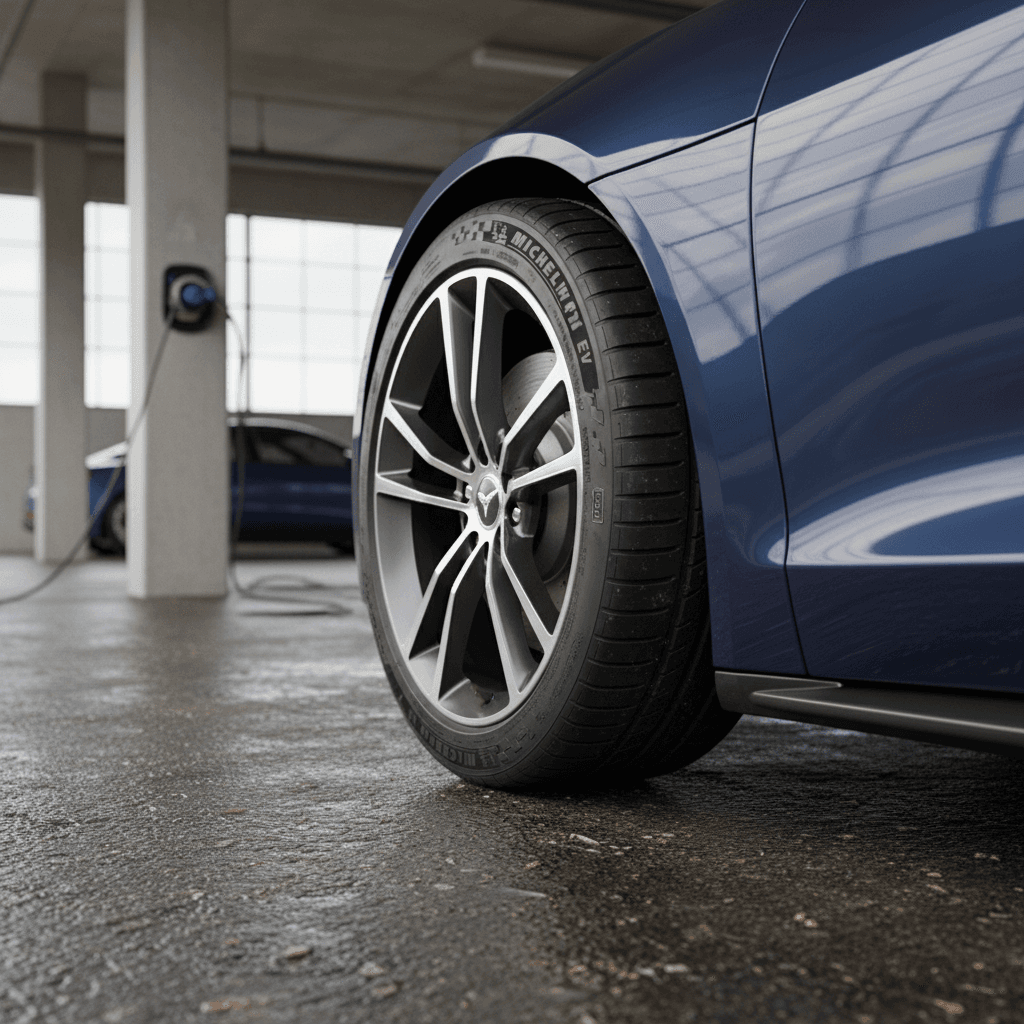
How to choose the right Michelin EV tire for your driving
Michelin EV tire buying checklist
1. Start with your owner’s manual and door sticker
Confirm the exact tire size, speed rating, and load index your EV requires. That load index is not optional, on a heavy battery car, it’s non‑negotiable for safety.
2. Decide your top priority: range, grip, or comfort
If you road‑trip often and watch every mile of range, a low‑rolling‑resistance option like e·Primacy or a Primacy EV fitment makes sense. If you care most about steering feel and dry grip, look at Pilot Sport EV instead.
3. Match the tire to your climate
In warm climates, a summer tire like Pilot Sport EV can shine. In four‑season states, an all‑season Primacy or CrossClimate EV‑ready fitment is often the better choice for year‑round safety.
4. Consider how you actually drive
Hammering highway miles at 75 mph? Range‑friendly compounds help. Mostly city driving with short hops and lots of stop‑and‑go? You’ll feel the difference more in noise and comfort than in raw efficiency.
5. Respect OE markings when possible
Many Michelin EV tires include codes on the sidewall, TES for Tesla, POR for Porsche, and so on, indicating they were tuned for that specific model. Sticking close to OE spec helps preserve the feel and range your car was designed for.
6. Compare total cost, not just price
A cheaper, non‑EV tire that wears out 15,000 miles earlier or costs you efficiency is no bargain. Factor in tread life, range, and how much you care about cabin quiet before chasing the lowest quote.
Where to ask questions
Michelin EV tires and range, noise, and longevity
Range: squeezing more miles from each charge
EV‑optimized Michelins like e·Primacy and Pilot Sport EV run meaningfully lower rolling resistance than many conventional performance tires. In practice, that can mean roughly 5–10% more efficiency depending on your driving style, speed, and vehicle weight.
It’s not magic, you won’t turn a 250‑mile car into a 400‑mile one, but on road trips that extra cushion can be the difference between arriving with 12% battery or white‑knuckling the last few exits.
Noise: foam, tread tuning, and EV cabin silence
Michelin uses two main tricks to make EVs quieter on the road:
- Acoustic foam rings bonded inside the tire, soaking up resonance before it echoes through the cabin.
- PIANO Noise Reduction Tuning, which fine‑tunes tread block shapes and spacing so they don’t drum at one irritating frequency.
In some applications, that combination can cut perceived tire noise by around 20%, which you’ll especially appreciate on long drives.
Longevity: EV weight vs. tread life
More weight and more torque typically mean faster tire wear. Michelin counters that with stronger carcass construction and compounds designed to retain grip even as they age. Some EV‑appropriate touring models are capable of impressive mileage when properly maintained.
The key is rotation. On a torquey rear‑drive EV, a set you forget about can vanish in a shockingly short number of miles.
Trade‑offs: you can’t have it all
A tire that chases efficiency above all else will usually give up some ultimate wet or dry grip. A tire that clings like race rubber will drink more energy and may wear faster. Michelin’s EV range tries to balance these compromises, but you still need to choose what matters most for your style of driving.
Maintenance tips to protect your Michelin EV tires
- Check tire pressure at least once a month and before road trips. EVs are heavy; a few PSI low can chew through tread and range faster than you’d expect.
- Rotate your tires on time, often every 6,000–8,000 miles for EVs, or as your owner’s manual specifies.
- Have alignment checked if you notice uneven wear, a pull to one side, or a steering wheel that’s off‑center.
- Avoid full‑throttle launches on cold tires; instant torque and cold rubber are a recipe for wheelspin and premature wear.
- Inspect tread for embedded stones, cuts, or bulges, especially if you frequently drive on rough pavement or construction zones.
- When replacing tires, do all four if possible, mixing drastically different models or tread depths can upset handling and stability control.
Watch your load rating
Signs it’s time to replace your EV’s tires
Four warning signs your Michelin EV tires are done
Don’t wait for the wear bars to shout at you
Tread depth at or near wear bars
If your tread is down to 2/32 of an inch, or you can barely see the built‑in wear bars, it’s replacement time, especially on an EV where wet braking distances grow fast as tread disappears.
Nervous in the rain
Notice the car hydroplaning sooner or the ABS chattering on rainy stops? Even if the tires look acceptable, diminished wet grip is your cue to start shopping.
Uneven or cupped wear
Feathered edges, cupping, or one shoulder wearing faster than the other often points to alignment or suspension issues. Fix the cause and replace the tire, EVs are sensitive to these changes.
New noises or vibration
A fresh hum at certain speeds or vibration through the steering wheel may indicate a separated belt, internal damage, or a tire that’s simply aged out. Have a pro inspect it before your next road trip.
FAQ: Michelin electric car tires
Frequently asked questions about Michelin electric car tires
How Recharged helps you get more from your EV
Tires may be the only part of your EV that physically touch the road, but they influence everything, from the range you see on the dash to how confident you feel in a downpour. Michelin electric car tires are built around that reality, trading in a little compound wizardry so you don’t have to think about it every time you drive.
If you’re shopping for a used EV, tire choice and condition should sit right alongside battery health on your checklist. Every vehicle listed on Recharged comes with a Recharged Score report, including verified battery diagnostics and fair‑market pricing, plus expert guidance on what to expect next, right down to wear items like tires and brakes. When you’re ready, you can finance, trade in, or sell your current car and have your next EV delivered to your driveway, all with EV‑savvy support at every step.
Whether you’re dialing in your first electric daily driver or hunting for the perfect performance EV on Michelin Pilot Sport EVs, taking tires seriously is one of the simplest ways to make electric ownership smoother, safer, and a lot more enjoyable.