If you’re trying to decode EV incentives in Virginia for 2026, you’ve picked a tricky moment. Federal tax credits are being phased out, Virginia still doesn’t have its own statewide EV rebate, and utility programs are changing under your feet. The good news: if you understand the new rules and act on timing, you can still knock thousands off the real cost of owning an electric vehicle, especially a used one.
Quick snapshot: Virginia EV incentives in 2026
Overview: EV incentives in Virginia in 2026
Let’s start with the landscape. By early 2026, the federal system of clean‑vehicle tax credits that came out of the Inflation Reduction Act has been trimmed back. Congress’s 2025 tax package, the so‑called One Big Beautiful Bill Act, set sunset dates for both new and used EV credits and the EV charging equipment credit, with most support ending between September 30, 2025 and June 30, 2026. At the same time, Virginia has not created a new statewide purchase rebate, even as the number of battery‑electric and plug‑in hybrids on its roads keeps climbing.
Virginia’s EV moment, by the numbers
So 2026 is a transition year. Incentives are no longer doing as much of the heavy lifting on price. That puts more pressure on finding the right car, at the right price, with a battery you can trust. This is where buying used, and buying smart, really matters. A platform like Recharged leans into that reality: every used EV comes with a Recharged Score Report that shows verified battery health, fair market pricing, and expert guidance so you don’t have to guess whether the car in front of you was priced with those now‑disappearing incentives in mind.
What’s changed since 2024–2025?
2024–2025: Peak incentive complexity
- Federal New Clean Vehicle Credit (up to $7,500) and Previously Owned Clean Vehicle Credit (up to $4,000) for qualifying models.
- Point‑of‑sale transfer allowed you to use the credit as an upfront discount at participating dealers.
- Federal EV charging equipment credit helped offset the cost of a home Level 2 charger.
- Dominion Energy and other utilities offered modest rebates and managed‑charging payments for residential customers.
- EVs in Virginia lost their long‑standing HOV lane perk by fall 2025, removing one non‑cash benefit for solo commuters.
2026: Incentives shrinking or gone
- Federal EV purchase credits for new and used vehicles end for purchases after September 30, 2025, under the 2025 tax law changes.
- Credit for EV charging equipment expires for property placed in service after June 30, 2026.
- No statewide Virginia rebate or tax credit for buying an EV has been enacted as of early 2026.
- Some utility programs, such as Dominion’s EV Charger Rewards, have been scaled back or closed to new enrollment, while others (like turnkey charger‑install offerings) remain.
- Out‑of‑pocket purchase prices matter more, making used EVs and verified battery health increasingly important for value‑minded buyers.
Watch the cutoff dates carefully
Federal EV tax credits through 2025, and what happens after
Even though you’re shopping in 2026, the most powerful EV incentives you’ll hear about are federal, and tied to what happened before September 30, 2025. Here’s how to think about them.
Federal clean vehicle credits Virginians still need to understand
Even if they’re ending, they shape 2026 used‑EV pricing.
New Clean Vehicle Credit (ended for new purchases)
This credit offered up to $7,500 for qualifying new EVs, depending on battery minerals and assembly rules, income limits, and MSRP caps.
For Virginians, it effectively ended for purchases made after September 30, 2025. If a vehicle was bought new before that date, the original owner may have benefited, but that doesn’t repeat for you when you buy it used in 2026.
Previously Owned Clean Vehicle Credit (used EVs)
This used‑EV credit was worth 30% of the sale price, capped at $4,000, for qualifying used EVs purchased from licensed dealers, subject to income limits, price caps ($25,000 or less), and “once‑every‑three‑years” rules.
It also ended for purchases after September 30, 2025. Any used EV bought after that date is not eligible, but cars that were sold while the credit was still in effect may be priced accordingly in today’s used market.
EV charging equipment credit (still alive in 2026, barely)
The federal credit for home and commercial EV charging equipment, often called the 30C credit, helps cover part of the cost of a Level 2 charger or other EVSE installation.
Under the 2025 tax bill, this credit is scheduled to expire for property placed in service after June 30, 2026. If you’re in Virginia and planning a home charger, 2026 is your last, best shot to use it.
Pro move for 2026 home‑charging planners
Does Virginia offer its own EV incentives?
Virginia has flirted with the idea of state‑level EV rebates, but as of April 2026 it still does not offer a broad statewide EV purchase incentive for regular drivers. The state’s "environmental credits" on the books focus on equipment like emissions‑testing gear and clean‑fuel infrastructure, not on cutting you a check when you buy a Leaf, Bolt, or Model 3.
- No statewide rebate or tax credit for buying a new or used EV for personal use.
- No ongoing HOV lane exemption for solo EV drivers, those privileges ended in late 2025 when federal authorization expired.
- Property‑tax treatment for EVs and charging equipment can vary by locality, so check with your county or city.
- Most tangible incentives for Virginians now flow through utilities, local programs, and the tail end of federal credits, not the state income‑tax system.
Don’t overlook non‑cash benefits
Dominion Energy EV programs in Virginia
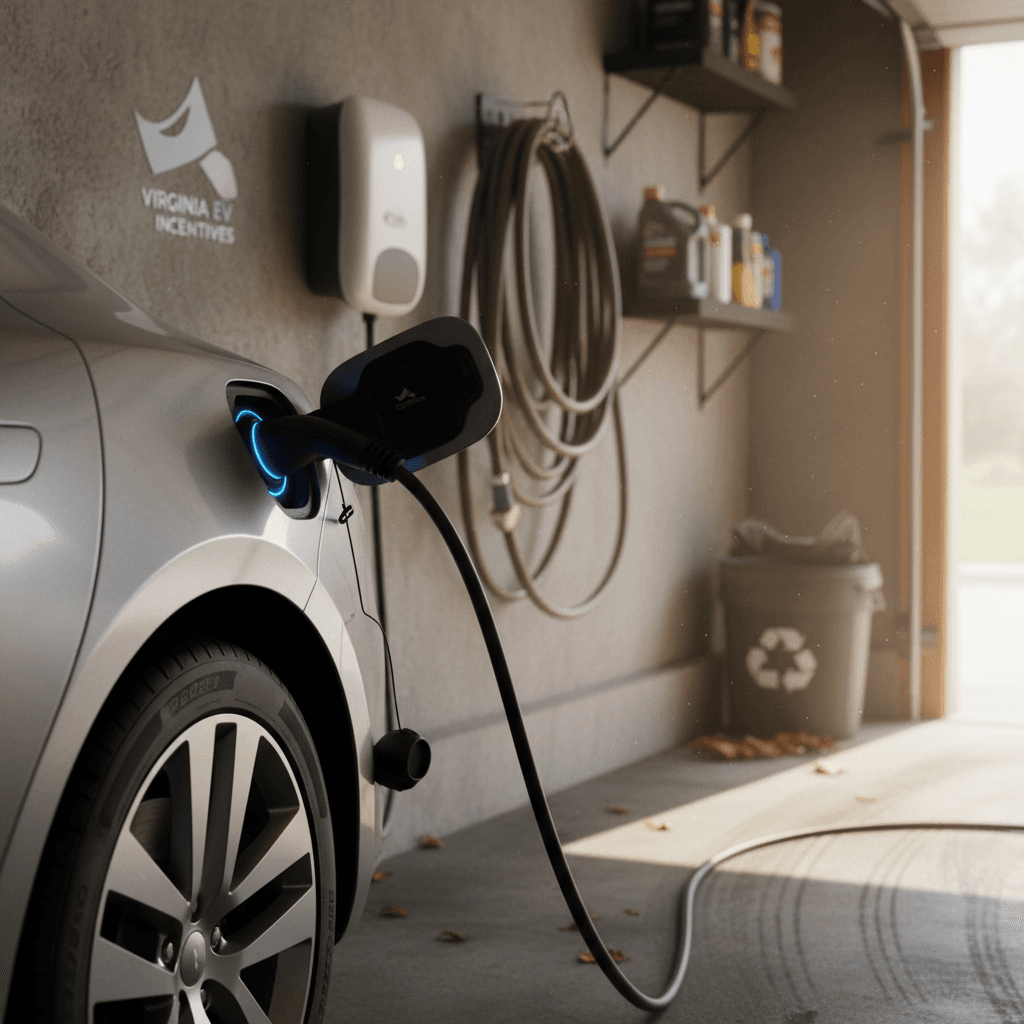
If you get your power from Dominion Energy Virginia, their EV programs may be the closest thing you’ll see to a "Virginia EV incentive" in 2026. The details have shifted over time, so it’s important to separate what used to exist from what you can still use.
Dominion Energy Virginia: Key EV‑related programs
Always confirm current terms on Dominion’s website before you commit, programs and enrollment windows change.
| Program | Who it’s for | What it offers in practice (2026) | What to watch for |
|---|---|---|---|
| Residential Charger Program | Dominion residential customers in single‑family homes | A turnkey Level 2 charger solution: approved hardware, vetted installers, and the ability to roll some costs into your bill or receive bundled pricing. | You may trade flexibility on charger choice for simplicity. Check if total project cost (after any federal credit) beats sourcing your own equipment and installer. |
| Former EV Charger Rewards program | Residential customers with qualifying Level 2 chargers | Previously offered a small rebate for enrolling an approved charger plus an annual payment (around $40/year) for allowing off‑peak charging control. | As of early 2026, this program has been discontinued for new enrollees. If you were already enrolled, verify whether your incentives continue under grandfathered terms. |
| Environmental Justice Community (EJC) EV Charging Program | Non‑residential customers (businesses, multifamily, community sites) in designated EJ communities | Support for installing charging in underserved areas, including make‑ready infrastructure and potential hardware support. | Great for property managers and employers rather than individual homeowners. Can make workplace or public charging more available where it’s been scarce. |
| Other rate and pilot programs | Select Dominion territories and customer classes | Time‑of‑use or EV‑friendly rates, and occasional pilot offerings that reward off‑peak charging. | Availability is patchy and can change quickly. Call Dominion or check their EV page to see what still accepts applications in your ZIP code. |
Utility‑side support won’t buy your car, but it can soften charging costs.
Utility programs are not set‑and‑forget
Local and regional EV perks in Virginia
Once you’ve exhausted federal and utility options, the rest of the incentive picture in Virginia is highly local. Counties and cities may make their own decisions about taxes, parking, and charging access.
Common local EV perks to look for
These won’t buy the car, but they can sweeten ownership.
Discounted or free parking
Some cities offer reduced parking fees or special EV spaces in municipal garages. It’s rarely advertised widely, so check your city’s parking or transportation department pages.
Local tax treatment
Personal‑property tax on vehicles is set locally. A few jurisdictions may classify EVs differently or offer modest relief. It’s worth a call to your Commissioner of the Revenue if you’re on the county line deciding where to garage your car.
Public charging build‑outs
Regional planning bodies and counties are using federal infrastructure dollars to add fast chargers along highways and Level 2s at parks, libraries, and commuter lots. Better charging access is an incentive in its own right, especially if you can skip installing a second home charger.
Do a 30‑minute local incentive audit
How to stack savings on a used EV in Virginia
In 2026, the most realistic place for Virginians to find value is in the used EV market. The old rules still matter: many used EVs on the market today were originally bought new or used under the federal credit regime. That history shows up, in quiet ways, in today’s asking prices and depreciation curves.
A practical playbook for maximizing used‑EV value in Virginia
1. Focus on cars whose original buyers took the hit
Models that qualified for the new‑EV credit in 2024–2025 may have sold faster and depreciated more predictably. By 2026, much of that benefit has already been "baked in," which is exactly what you want as a second or third owner: a lower entry price without worrying about changing tax rules.
2. Let battery health trump everything else
On a used EV, battery condition is the new resale value. A vehicle with a strong, independently verified pack can be worth far more in real‑world usability than one that simply looks cheaper. Every vehicle on <strong>Recharged</strong> comes with a Recharged Score Report that quantifies battery health so you’re not guessing based on a vague "feels fine."
3. Look for cars previously sold with the used‑EV credit
For vehicles that changed hands in 2024 or 2025 using the Previously Owned Clean Vehicle Credit, that earlier buyer already got the federal help. You don’t get it again in 2026, but that previous discount may have nudged market values down compared with what they’d otherwise be.
4. Compare total monthly cost, not just price
With federal credits fading, the game shifts to monthly cost. Factor in your electricity rate, possible time‑of‑use savings, what a Dominion program might shave off your home‑charging setup, and what you’ll save on gas and maintenance. A slightly higher purchase price on a very efficient EV can still be the cheaper car to live with.
5. Use EV‑savvy lenders and pre‑qualification
Financing can make or break the deal on a used EV. Some lenders understand EV residuals and offer better terms. With Recharged, you can <strong>get pre‑qualified online</strong> with no impact to your credit, then shop knowing exactly what your payment window looks like.
6. Time your purchase against policy deadlines
If you’re planning a home charger install, try to align your vehicle purchase and charger project so that the EVSE is in service before June 30, 2026. That way you’re not scrambling later and missing the last of the federal charger credit.
Planning a 2026–2027 EV purchase strategy
With incentives in flux, timing matters. But so does avoiding analysis paralysis. Here’s a simple way to think about your next 18–24 months if you live in Virginia and want an EV.
Choosing your EV timing in Virginia
If you need a car in 2026
Start shopping used EVs now, focusing on models with strong battery reputations and verified health reports.
Prioritize vehicles that already reflect post‑credit market pricing, instead of depending on a credit that no longer exists.
If you own your home, schedule a conversation with an electrician immediately so a Level 2 charger can be installed before the June 30, 2026 federal equipment‑credit deadline.
Check Dominion and your locality for any still‑open programs that support home charging or offer off‑peak rates.
If you can wait until 2027
Expect to live in a world with <strong>few or no federal purchase incentives</strong>, barring new legislation.
Watch how used EV prices evolve as incentives fade; historically, depreciation often accelerates when policy support shrinks.
Focus even more on total cost of ownership, battery health, and proven reliability, especially for high‑mileage commuters.
Use 2026 to get your home charging squared away while the equipment credit still exists, and build a clear savings or down‑payment plan.
If you’re considering a second EV
Ask whether a second home charger is truly necessary or if better scheduling on one Level 2 will do.
Model the cost difference between a newer, longer‑range used EV versus a cheaper, shorter‑range city car.
Pay attention to how your utility bills shift with each EV; a time‑of‑use or EV‑friendly tariff may become more attractive as your electric miles go up.
Treat incentives as a bonus, not a requirement. If the numbers only work with a hypothetical future credit, the deal is too tight.
Where Recharged fits into your plan
Ready to find your next EV?
Browse VehiclesEV incentives in Virginia 2026: FAQ
Common questions about Virginia EV incentives in 2026
Key takeaways for Virginia EV shoppers
EV incentives in Virginia in 2026 aren’t the green‑colored tsunami they were a few years ago. Federal credits for new and used EVs are ending, the home‑charging credit is on a short fuse, and the state hasn’t stepped in with its own broad rebate. But that doesn’t mean the EV moment is over. It means your strategy has to shift, from chasing tax codes to hunting for real‑world value: the right used EV, a healthy battery, a smart charging plan, and financing that fits your life.
If you’re ready to start that search, do it with eyes wide open. Check which incentives still apply, time your home charger wisely, and lean on experts who live and breathe used EVs. At Recharged, that’s the entire job description. You can browse a curated selection of used EVs with verified battery health, get pre‑qualified for financing online without a credit‑score hit, bring a trade‑in to the table, and even arrange delivery straight to your driveway. In a world where incentives are fading, that kind of clarity is the new rebate.