If you’re eyeing a Tesla Model S, new or used, the question lurking behind the 0–60 times is simple: what does Tesla Model S maintenance cost over the years? Electric cars famously need less service than gas cars, but that doesn’t mean they’re free to run. The Model S trades oil changes and timing belts for tires, software, and an enormous battery pack you’d rather not have to buy twice.
Quick takeaway
Why Tesla Model S maintenance costs matter
The Model S lives in the same mental garage as S‑Class, 7 Series, and Audi A8, cars that can drain a savings account at every service visit. The difference is that a Model S has far fewer moving parts and no engine maintenance, but it does carry a battery pack that costs as much as a compact car. Understanding maintenance costs isn’t about fear; it’s about knowing where the money actually goes so you can decide if a new or used Tesla Model S fits your life.
Tesla Model S ownership cost snapshot (typical, not guaranteed)
Every car is different
How much does Tesla Model S maintenance cost?
Let’s put some stakes in the ground. If you average 12,000–15,000 miles per year, a realistic long‑term view of Tesla Model S maintenance cost looks something like this (excluding insurance, charging, and depreciation):
Estimated Tesla Model S maintenance cost over 5 years
Illustrative estimates for a typical owner driving 12,000–15,000 miles per year. Assumes mostly trouble‑free ownership with no major battery or drive unit failures.
| Ownership scenario | Routine maintenance (5 yrs) | Tires (5 yrs) | Repairs & wear items | Estimated 5‑yr total |
|---|---|---|---|---|
| New or late‑model S (under warranty) | $2,500 | $2,400–$3,600 | $1,000–$2,000 | ≈ $5,900–$8,100 |
| Used S, 5–8 yrs old, partial warranty | $2,500–$3,000 | $2,400–$3,600 | $2,000–$3,500 | ≈ $6,900–$10,100 |
| Older S, 8–10+ yrs, out of warranty | $3,000–$4,000 | $2,400–$3,600 | $3,500–$7,000 | ≈ $8,900–$14,600 |
These are not guarantees, just realistic planning numbers for budgeting.
How this compares to gas luxury sedans
Routine Tesla Model S service: what you actually do
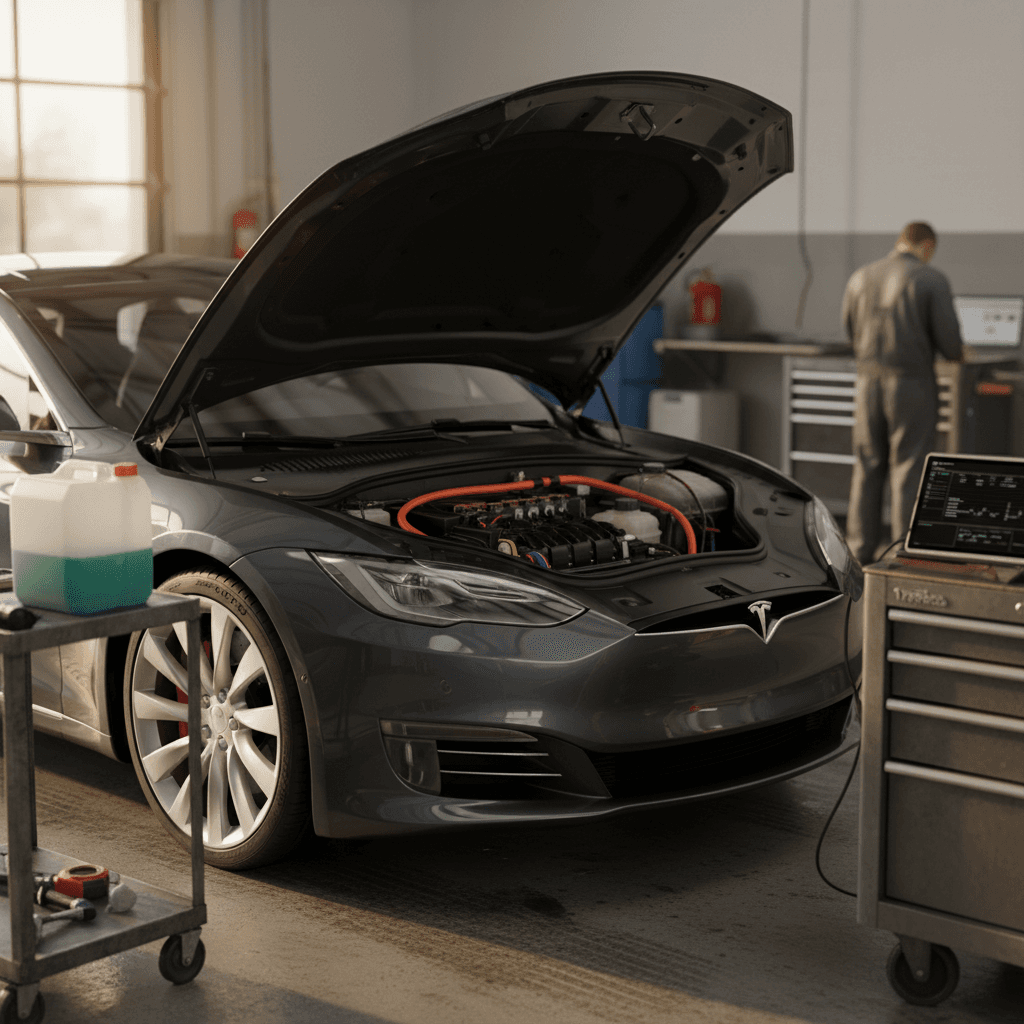
Tesla doesn’t have traditional mileage‑based service intervals. Instead, the Model S follows a condition‑based approach: the car pings you when it wants something. In practice, routine Model S service tends to include the same cast of characters year after year.
Common routine services on a Tesla Model S
What you’ll actually pay for instead of oil changes
Cabin air filters
Tesla recommends replacing these around every 2 years. Expect roughly $100–$200 at a service center, or much less if you DIY with aftermarket parts.
Brake fluid & pads
Brake fluid inspection is recommended about every 2 years. Pads last a long time thanks to regen; many owners go 80,000+ miles before replacement unless they drive aggressively.
Tire rotation & alignment
To keep those big tires alive, rotate every 6,000–7,500 miles and check alignment annually. Plan on $100–$250 per year combined if you use a good independent shop.
HVAC & desiccant
On older cars, desiccant bag replacement and A/C service sometimes crop up. Think of this as the EV version of keeping your climate system happy, usually a few hundred dollars when needed.
Inspections & squeaks
Periodic inspections can catch early wear in control arms, bushings, and links. Budget $150–$300 occasionally for checkups, especially on higher‑mileage cars.
Software & recalls
Over‑the‑air software updates land automatically, and recall work is covered. Occasionally, those updates even improve efficiency or add features, something no gas car ever did in your driveway.

No oil, no spark plugs, no exhaust system
Major costs: tires, brakes, and suspension
If routine maintenance is the subscription, then tires and suspension are the surprise season finales. The Model S is heavy, fast, and often wears very sticky, very expensive tires. That’s where a big slice of your Tesla Model S maintenance cost lives.
- Tires: Performance‑oriented 19–21" tires typically run $1,200–$1,800 for a full set installed. Aggressive driving or lots of highway miles can shrink tread life to 20,000–25,000 miles. Gentle drivers sometimes see north of 35,000.
- Brakes: Thanks to regenerative braking, pads and rotors can last dramatically longer than in a gas car. But when you do need them, especially on performance models, expect costs broadly in line with other big luxury sedans.
- Suspension: Older Model S vehicles, particularly those with air suspension and big wheels, can eventually need control arms, links, and bushings. Individual components often land in the low hundreds each plus labor, but a big suspension refresh can escalate into the low thousands if you let everything go at once.
Heavy cars punish cheap tires
Battery and drive unit costs: the big question
The question everyone whispers: “What if the battery dies?” In practice, total battery failures on the Model S are rare compared with the number of cars on the road, and most degradation is slow, measured in a few percentage points over many years. The car is designed so that the battery is a life‑of‑vehicle component, not a scheduled replacement item.
How Model S battery and drive unit costs really play out
Less horror movie, more actuarial table
Battery packs
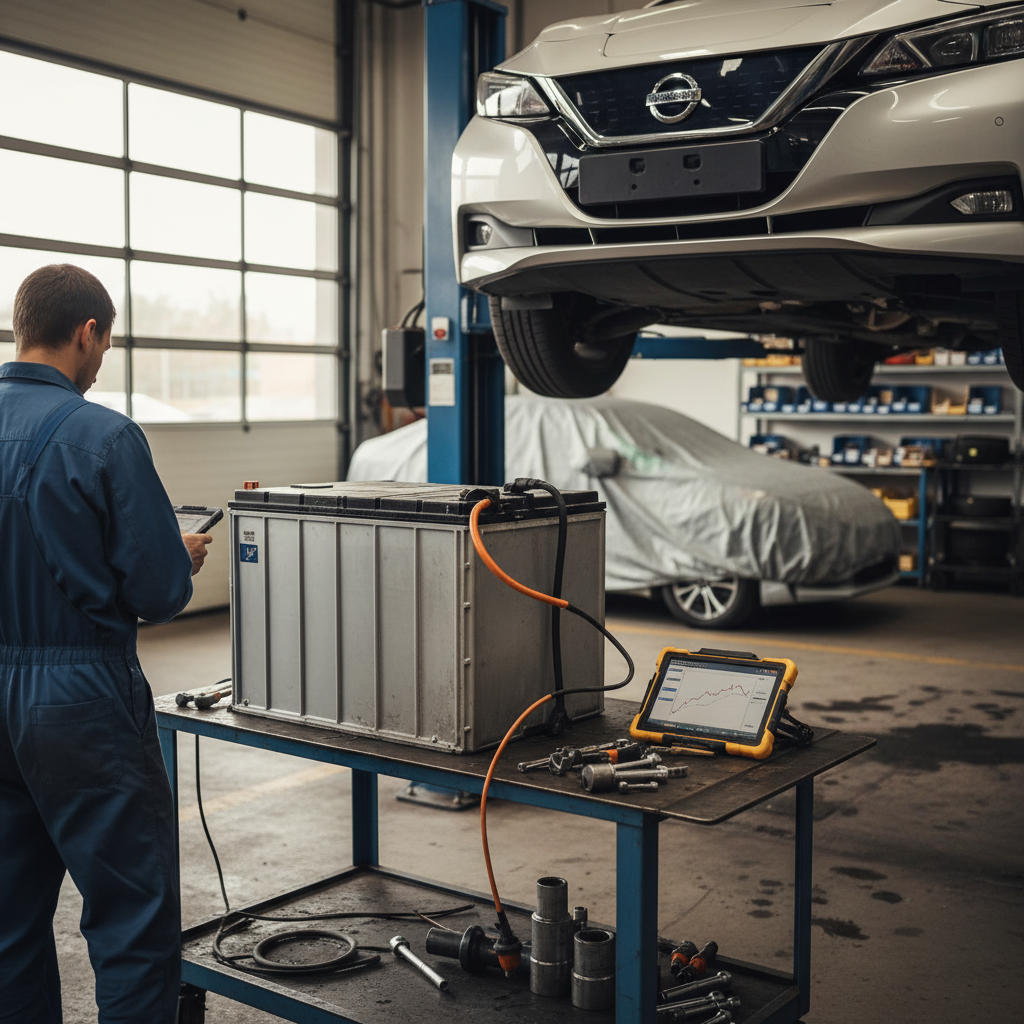
When a pack truly fails out of warranty, replacement can cost as much as a decent used compact car. But that’s the outlier scenario. Most owners see gradual capacity loss; a few percent over the first years, then a slower taper.
Shopping used? Look for verified battery health data rather than guessing from the range gauge.
Drive units (motors)
Early Model S cars had more drive‑unit replacements under warranty than Tesla would like to talk about, but later revisions are more robust. Out of warranty, a replacement unit is a serious bill, but far from inevitable.
How Recharged handles battery risk
Warranty coverage and what happens when it ends
Warranty is really an argument about who pays when a part fails. With the Model S, the details matter, especially on older cars where different battery sizes and model years came with slightly different terms. But in broad strokes, you’ll usually see a shorter basic warranty for the car, and a longer one for the battery and drive unit.
Basic vehicle warranty
When new, the Model S carries a limited warranty on the non‑battery, non‑drivetrain parts of the car. Once that expires, most wear‑and‑tear and typical repair items are yours. If you’re looking at a used Model S, it’s worth confirming exactly when this coverage started and ended.
Think of this like the bumper‑to‑bumper coverage on a gas luxury sedan, only shorter in duration, because Tesla leans heavily on the separate powertrain warranty.
Battery & drive unit warranty
The battery and drive units typically carry longer coverage from new, with both time and mileage limits. This is Tesla’s way of telling you they don’t expect widespread early failures.
On a used car, check the in‑service date and current mileage so you know exactly how much of that safety net is left. A car that still has several years of battery warranty remaining changes the risk profile, and usually the price tag.
Out of warranty? Now it’s your show.
Maintenance costs: new vs used Model S
A new Model S and a ten‑year‑old P85D both say “Model S” on the back, but from a maintenance‑cost standpoint they might as well be different species. The younger car sits under the umbrella of modern parts, current software, and robust warranty coverage. The older car is cheaper to buy, but every rattle and warning light is a direct line to your wallet.
New vs used Tesla Model S: maintenance and repair expectations
High‑level comparison of upkeep expectations; individual cars will vary widely.
| Model S age at purchase | Upsides | Downsides | Maintenance cost profile |
|---|---|---|---|
| 0–3 years (new or nearly new) | Latest tech, full or near‑full warranty, fewer age‑related issues | Highest purchase price, steeper depreciation | Lowest maintenance costs, mainly tires and routine service |
| 4–7 years (sweet‑spot used) | Lower price, much depreciation already taken, often some battery warranty left | More wear on suspension and interior, early cosmetic aging | Moderate maintenance; budget for tires, suspension items, and occasional repairs |
| 8–10+ years (value play) | Lowest upfront price, huge spread between good and neglected cars | May be out of all warranty, older tech, more likely to need suspension and cosmetic work | Highest maintenance risk; costs depend heavily on prior care and battery health |
Use this to frame your expectations, not as a promise of specific bills.
The used EV arbitrage
How Recharged helps you shop by true ownership cost
Most used‑car shopping stops at price, mileage, and a handful of listing photos. With an electric car, especially a complex one like the Model S, that’s not nearly enough. You want to know not just what the car costs today, but what it’s likely to cost you over the next five to ten years.
Shopping a used Tesla Model S with Recharged
Less roulette wheel, more informed decision
Recharged Score battery diagnostics
Every car on Recharged includes a Recharged Score report with verified battery health. That means real diagnostics and data, not just a seller saying, “range looks fine to me.”
Fair market pricing
We benchmark each used Model S against the market, factoring in age, mileage, options, and battery health so the price lines up with reality, not wishful thinking.
EV‑specialist support
From financing to trade‑in and nationwide delivery, you get people who spend their days living in the EV world. If you’re comparing two Model S generations, or wondering how an old battery warranty changes the math, you can just ask.
Because Recharged is built entirely around used EVs, the whole experience is set up for this kind of decision‑making: transparent reports, digital paperwork, and an easy way to understand battery health at a glance.
Cost-cutting tips for Tesla Model S owners
You can’t control every bolt or software update, but you have more influence over your Tesla Model S ownership costs than you might think. A few habits and setup decisions go a long way.
Smart ways to keep Model S maintenance costs in check
1. Treat the battery kindly day‑to‑day
Living at 0% or 100% is stressful for lithium‑ion chemistry. For daily use, aim to keep your charge limit in a healthy middle band and save 100% charges for trips. You’re not babying the car; you’re preserving your most expensive component.
2. Invest in good tires and alignments
Buy quality tires that are actually rated for EV weight and torque, and schedule alignments if you notice uneven wear or pulling. Spending a bit more upfront often saves you from replacing a prematurely worn set.
3. Use regen, but exercise the friction brakes occasionally
Regenerative braking does the heavy lifting, but light brake use now and then keeps pad surfaces cleaner and hardware freer. It’s less glamorous than Plaid launches, but it’s cheaper than seized calipers.
4. Don’t ignore clunks and squeaks
Early suspension noise is the car telling you something is getting loose. Catching a worn control arm or link early is cheaper than waiting until multiple components are unhappy.
5. Build a relationship with a good EV‑savvy shop
Tesla Service Centers aren’t your only option for many out‑of‑warranty items. An independent shop that understands EVs can rotate tires, align the car, replace suspension parts, and often save you money.
6. Keep software and basic service up to date
Let the car take its software updates and don’t skip simple service items like filters and brake‑fluid checks. Boring maintenance tends to be cheaper than exciting failures.
FAQ: Tesla Model S maintenance cost
Frequently asked questions about Tesla Model S maintenance
Bottom line: is a Tesla Model S expensive to maintain?
Taken in isolation, $1,500 for performance tires here, a few hundred for an alignment there, the Tesla Model S maintenance cost can feel like any other premium car: not cheap, but predictable if you’re paying attention. Stack that against an S‑Class or 7 Series of similar age, and the Model S usually comes out ahead, especially once you remove engine maintenance from the equation.
Where the Model S truly differs is in its long‑term bet on the battery. If you choose your car well, treat the pack kindly, and budget realistically for tires and suspension, the big‑ticket nightmare scenarios stay mostly theoretical. That’s the appeal of EV luxury: more of your money goes into the way the car drives every day, less into feeding and fixing a complicated engine.
If you’re shopping used, the smartest move is to buy a Model S whose story you actually understand, battery health, service history, pricing that matches reality. That’s the niche Recharged lives in: used EVs, verified batteries, and honest numbers, backed by financing, trade‑in options, and nationwide delivery. Start there, and the rest of the ownership equation becomes much easier to like.