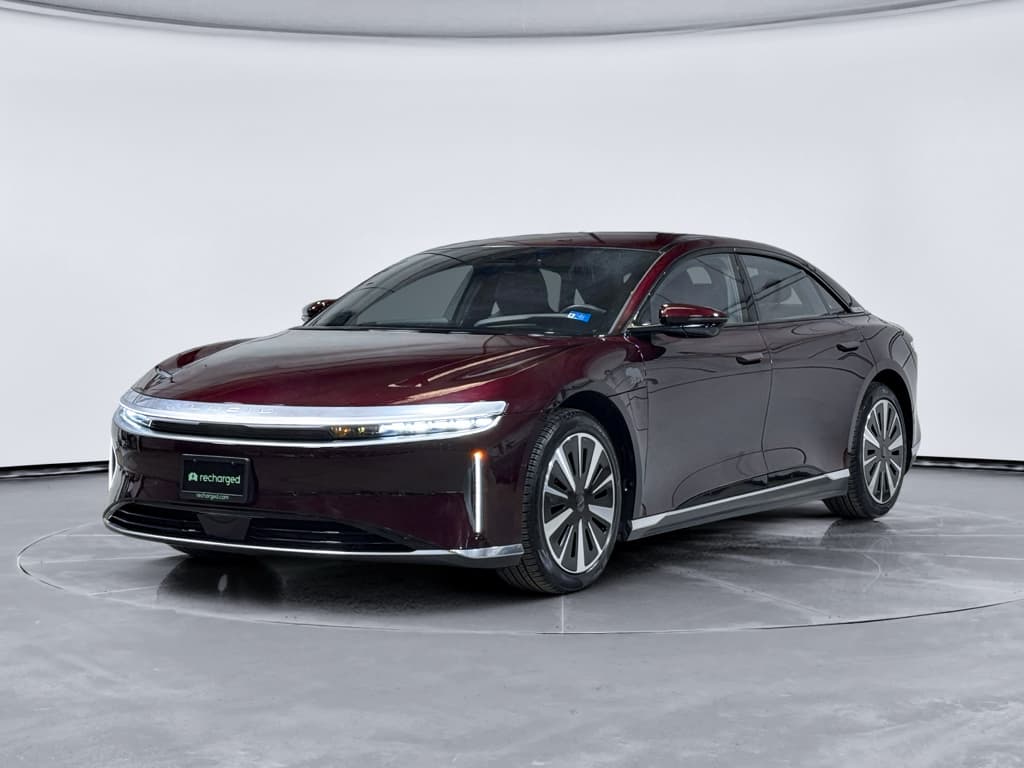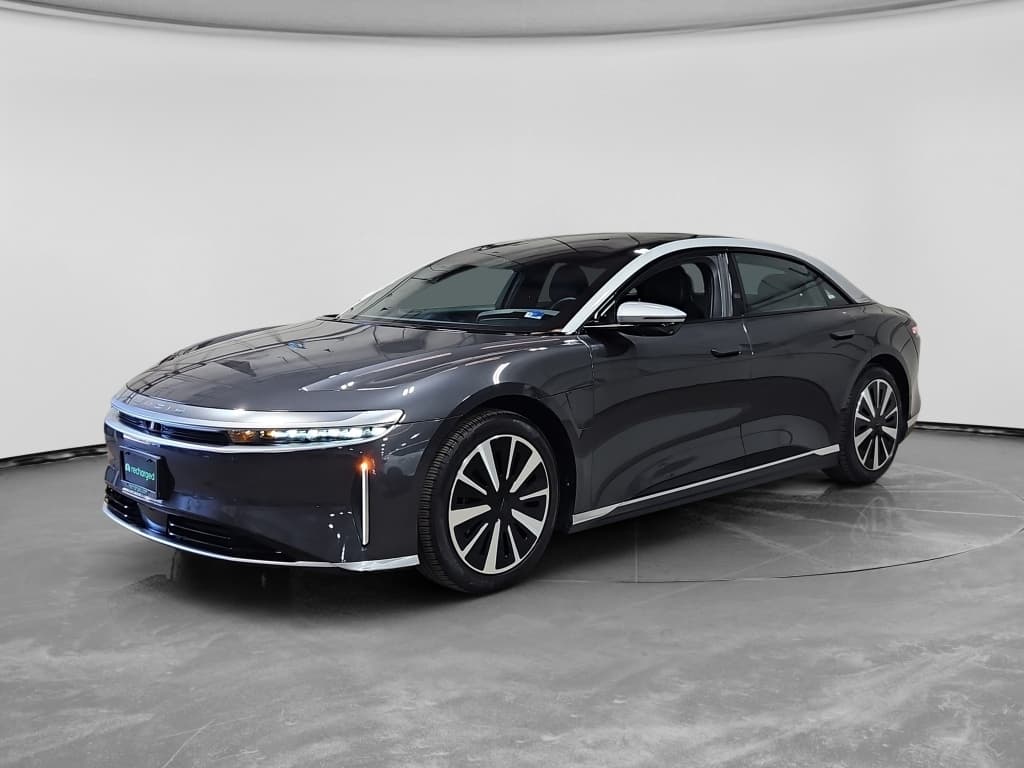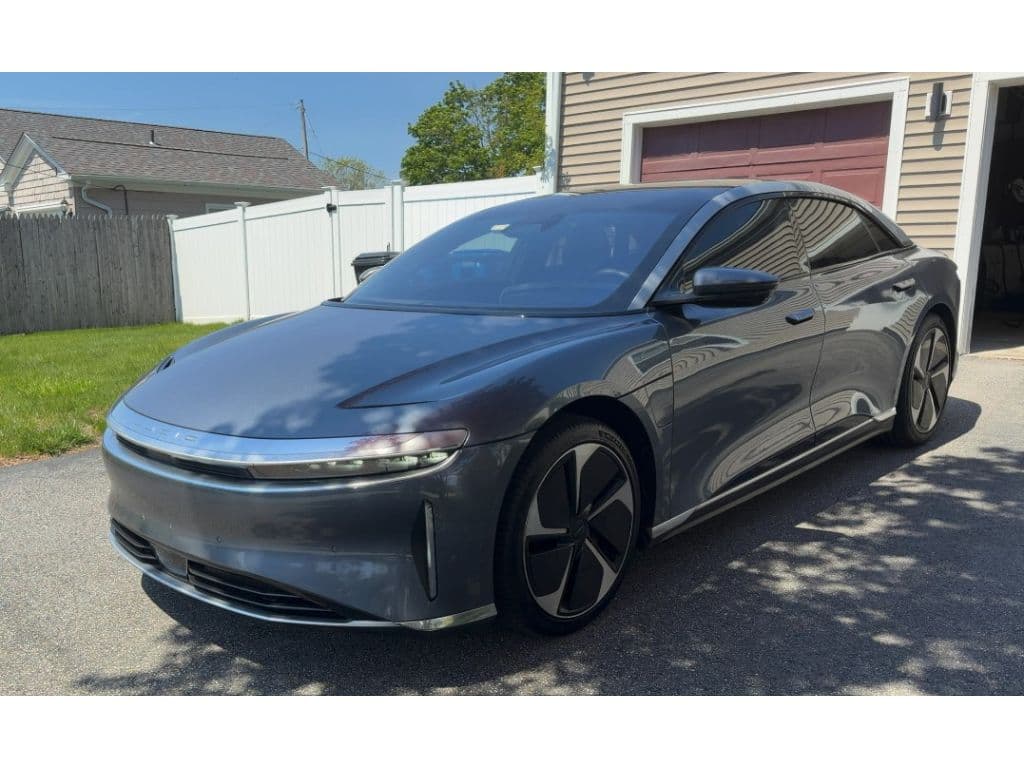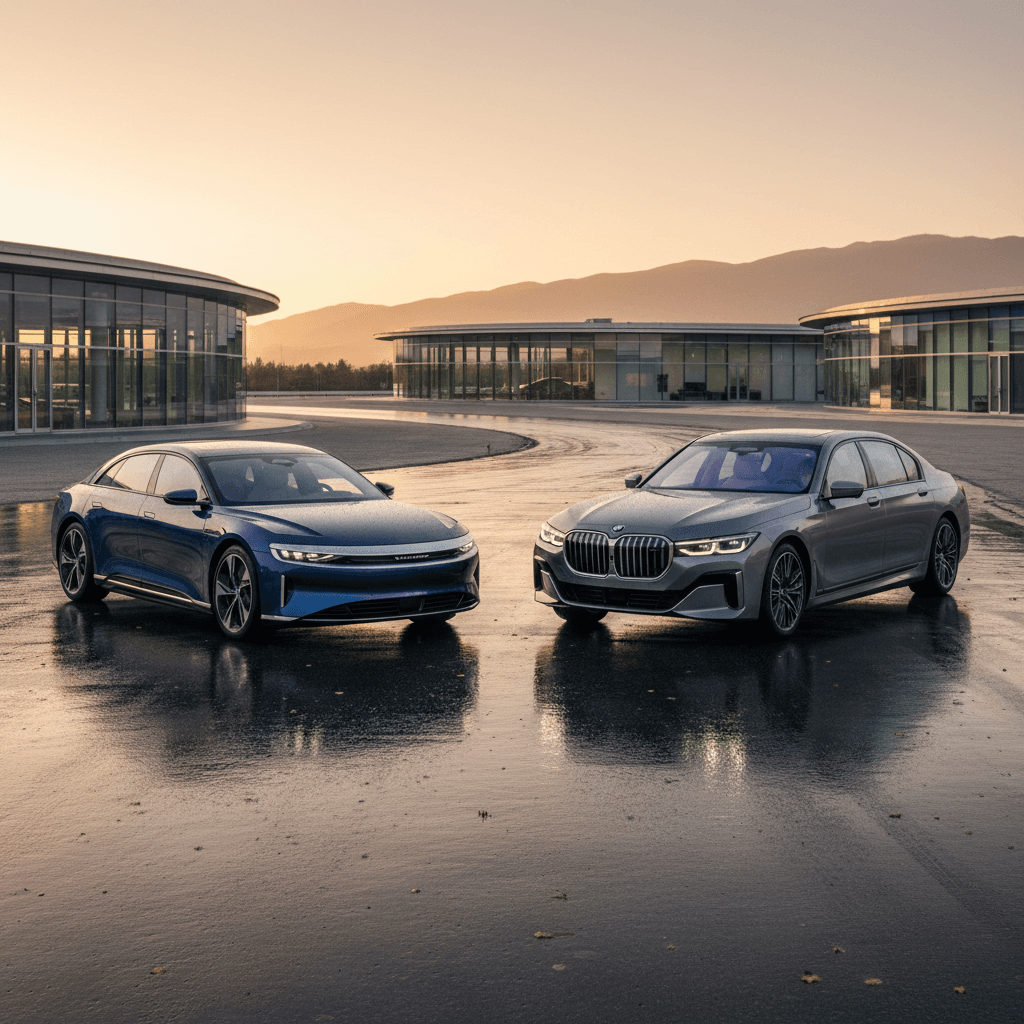
If you’re cross‑shopping the Lucid Air vs BMW i7, you’re looking at the pinnacle of electric luxury sedans. Both deliver six‑figure comfort, serious performance, and cutting‑edge tech, but they get there in very different ways. One is a range‑obsessed EV startup flagship, the other a battery‑powered evolution of a decades‑old luxury icon. This guide breaks down how they compare and which one actually fits the way you drive and own a car.
Two very different takes on flagship EVs
Lucid Air vs BMW i7: who they’re for
Lucid Air: tech-forward efficiency play
- Best for: Long‑range drivers, efficiency nerds, early adopters, and buyers who care more about range and performance than badge prestige.
- Standout traits: Class‑leading EPA range (up to ~516 miles on some trims), extremely efficient motors, airy packaging, and distinctive design.
- Trade‑offs: Smaller dealer/service footprint, younger software stack, and more start‑up risk perception than legacy brands.
BMW i7: electric S‑Class rival
- Best for: Chauffeured owners, brand‑loyal BMW customers, and anyone who prioritizes ride comfort, build quality, and dealership support.
- Standout traits: Superb cabin isolation, traditional luxury feel, rich materials, and BMW’s deep dealer/service network.
- Trade‑offs: Less range and efficiency than Lucid, heavier feel, and more conservative styling.
Headline numbers at a glance (2024–2025 U.S. specs)
Powertrain and performance
Both cars are seriously quick even in their base trims, but they emphasize performance differently. The Lucid Air leans into almost absurd power and light‑on‑its‑feet dynamics, while the BMW i7 focuses on effortless, quiet thrust that fits its executive‑luxury mission.
Lucid Air vs BMW i7: powertrain snapshot (2024–2025)
Key trims most shoppers cross‑shop. Exact figures vary by wheel/tire and equipment; always confirm for a specific VIN when buying used.
| Model | Drivetrain | Approx. Power | 0–60 mph (est.) | Usable Battery | EPA Range (best case) |
|---|---|---|---|---|---|
| Lucid Air Pure | RWD | ~430 hp | ~4.5 s | ~88 kWh | ~410–419 mi |
| Lucid Air Touring | AWD | ~620 hp | ~3.4 s | ~92 kWh | ~425+ mi |
| Lucid Air Grand Touring | AWD | ~819 hp | ~3.0 s | ~112 kWh | Up to ~516 mi |
| BMW i7 eDrive50 | RWD | ~449 hp | ~5.3 s | ~101.7 kWh | Up to ~321 mi |
| BMW i7 xDrive60 | AWD | ~536 hp | ~4.5 s | ~101.7 kWh | ~296–308 mi |
| BMW i7 M70 xDrive | AWD | ~650 hp | ~3.5 s | ~101.7 kWh | ~274–291 mi |
Power and range figures are manufacturer or EPA estimates; real‑world results will vary.
How the two feel from behind the wheel
Range and efficiency
This is the clearest gap between the Lucid Air and BMW i7. Lucid built its brand around world‑class efficiency; BMW is packaging a big battery into a very traditional full‑size sedan. The result: the Air sits at the very top of the EV range leaderboard, while the i7 is merely competitive.
- Lucid Air: Depending on trim, EPA ranges run from the low 400‑mile bracket up to roughly 516 miles, currently the highest of any production EV on sale. Even the entry Pure RWD is in the ~410–419‑mile ballpark on modest wheel sizes.
- BMW i7: All trims use roughly a 101.7 kWh usable battery, but EPA ranges sit between about 274 and 321 miles depending on trim and wheels, with the eDrive50 RWD on smaller wheels delivering the best figures.
EPA numbers vs real life
Efficiency philosophy: Lucid vs BMW
Why the Lucid Air goes so much farther on a charge
Low‑drag design
In‑house powertrain
Weight & packaging
Charging experience and road-trip ability
Range is only half the story on a long trip. You also care how quickly each car charges and how easy it is to find fast chargers that actually work when you pull in. Here the story is closer than the raw range numbers suggest, but Lucid still has an edge for serious road‑warriors.
Charging comparison overview
Approximate capabilities; speeds depend heavily on state of charge, temperature, and charger conditions.
| Model | Peak DC Fast Charge | 11 kW AC Onboard? | Road‑trip feel |
|---|---|---|---|
| Lucid Air (most trims) | Up to ~250–300 kW on capable stations | Yes | Longer legs between stops, very fast from low state‑of‑charge, fewer total stops needed. |
| BMW i7 (all trims) | Up to ~195 kW | Yes | Shorter legs, but still competitive charging curves; network reliability matters more than absolute peak speed. |
For any used EV, always test a DC fast charge session before committing if road‑trips matter to you.
Network access and connectors
Practically, if you’re driving cross‑country, the Lucid’s combination of higher efficiency and strong DC charging means fewer, shorter stops, especially in sparse‑charger regions. The i7 can absolutely road‑trip, but think more in terms of 250–300‑mile legs with 25–35‑minute charging sessions when conditions are ideal.
Interior luxury, tech and driving feel
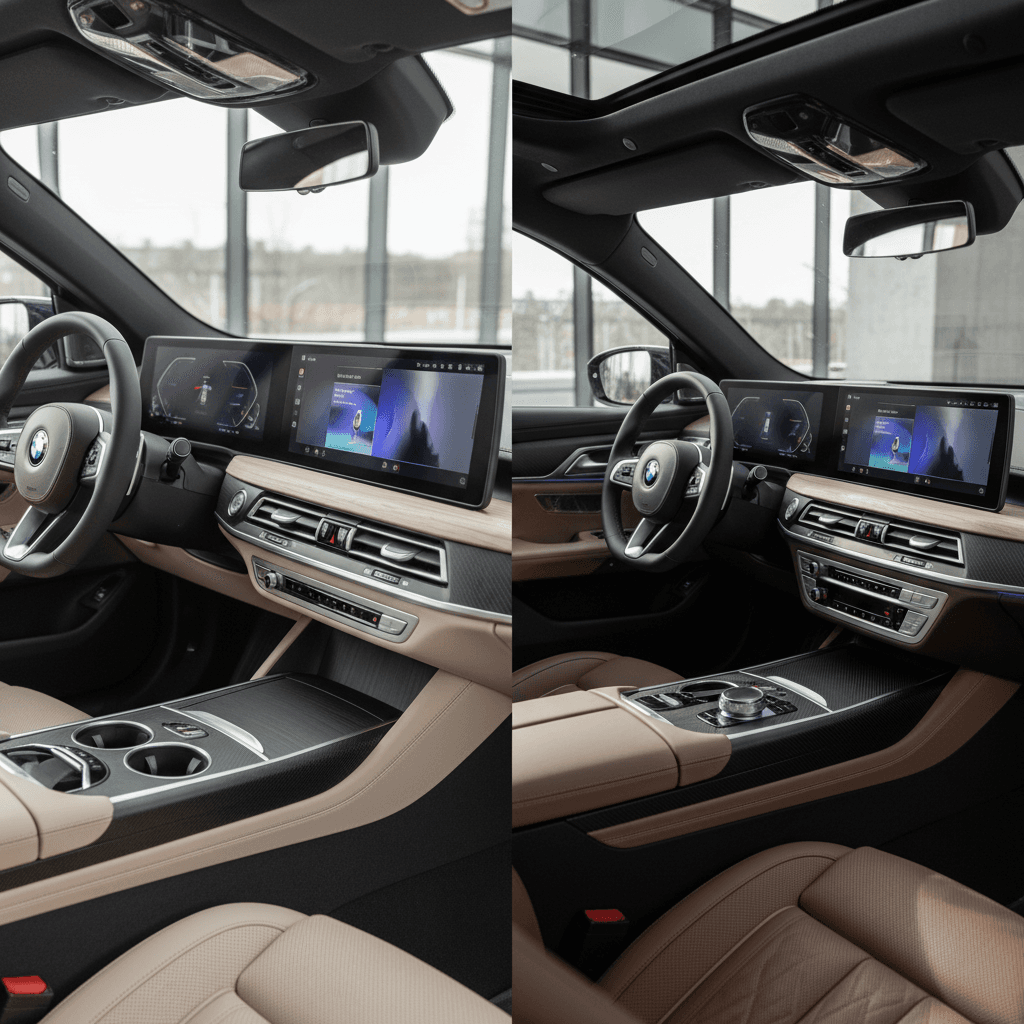
Inside, these two sedans feel like they’re aimed at slightly different customers. The Lucid Air leans modernist and airy; the BMW i7 is unapologetically plush, with an emphasis on isolation and old‑school craftsmanship layered with new‑school screens.
Cabin experience: Lucid Air vs BMW i7
Where you spend your time matters more than spec sheets
Lucid Air interior
- Design: Minimalist, light‑filled cabin with slim pillars and excellent outward visibility.
- Screens: Curved main display plus lower center screen; UI feels more startup‑tech than German‑luxury.
- Space: Big rear seat, generous legroom, and a large frunk plus trunk thanks to EV‑first packaging.
- Drive feel: Light, quick steering and a more EV‑special experience, especially in performance trims.
BMW i7 interior
- Design: Rich materials, heavy sound insulation, complex ambient lighting, and a classic limo feel.
- Screens: BMW Curved Display up front; available theater‑style rear screen on some builds.
- Space: Extremely comfortable rear seat, especially with executive seating packages.
- Drive feel: Heavier and more insulated, with effortless power but less sense of lightness.
ADAS and driver assistance
Pricing, trims and value
On paper, base pricing for a new Lucid Air Pure and BMW i7 eDrive50 isn’t wildly different, but options and trims can push either car deep into six‑figure territory. On the used market, depreciation patterns and brand perception start to matter just as much as MSRP.
2024–2025 U.S. pricing snapshot (new, before incentives)
Approximate starting MSRPs; exact pricing varies by model year, destination, and option packages.
| Model | Approx. Base MSRP New | Positioning |
|---|---|---|
| Lucid Air Pure | Low–mid $70Ks | Entry Lucid Air with strong range and RWD power. |
| Lucid Air Touring | Mid–high $80Ks | Higher power AWD, more features and range. |
| Lucid Air Grand Touring | $120K+ | Flagship long‑range performance trim. |
| BMW i7 eDrive50 | Low–mid $70Ks–$80Ks | Single‑motor RWD luxury baseline. |
| BMW i7 xDrive60 | Around $120K | Dual‑motor AWD sweet‑spot trim. |
| BMW i7 M70 xDrive | $160K+ | High‑performance flagship with maximum power. |
Used‑market pricing can diverge significantly from these figures, especially for high‑spec trims and early builds.
How incentives and financing change the math
Daily usability and practicality
Luxury flagships are often judged on their spec sheets, but living with them day‑to‑day is about much more than 0–60 times. Here, packaging, visibility, storage, and software maturity can matter more than dyno charts.
Practical questions to ask yourself
1. How often do you road‑trip over 250 miles?
If you routinely drive 300–400 miles between charges, the Lucid Air’s extra range can materially change how often, and where, you need to stop. If most of your life happens within a metro area, the i7’s range is more than sufficient.
2. Do you need a frunk?
Lucid’s EV‑first packaging includes useful front storage; BMW packages hardware differently. If you travel with lots of smaller bags or outdoor gear, that extra compartment can be surprisingly valuable.
3. Who’s actually sitting in the back?
If you (or someone else) will be chauffeured often, the i7’s rear‑seat comfort and available theater screen are a major selling point. If the back seat is mostly for kids and the occasional friend, the Lucid’s airy cabin will still feel plenty special.
4. How close is your nearest service center?
BMW’s service footprint is dense in most U.S. metros. Lucid’s is growing but still limited. For a used purchase especially, consider how far you’d need to travel for warranty work or software‑related issues.
5. What’s your tolerance for software quirks?
Start‑up brands iterate software quickly, but that can come with occasional bugs or interface changes. BMW’s iDrive is more mature, though not everyone loves its complexity. Spend real seat time with both before deciding.
Weight, tires and repair costs
Buying used: Lucid Air vs BMW i7
Because these are six‑figure cars new, the used market can offer eye‑opening value, if you know what you’re looking at. Depreciation hits early adopters hard, but the complexity of these vehicles makes due diligence essential.
Key used‑EV considerations
What to check before you fall in love with the spec sheet
Battery health & range
Software and recall status
Warranty and support
Why a structured inspection matters more on these cars
Which luxury EV should you choose?
Choose the Lucid Air if…
- You care deeply about maximum range and efficiency and want to stop less on road‑trips.
- You like the idea of owning a clean‑sheet EV that doesn’t share bones with a gas car.
- You prefer a light, modern driving feel and airy cabin to old‑school plushness.
- You’re comfortable with a younger brand and a smaller service network in exchange for cutting‑edge tech.
Choose the BMW i7 if…
- You prioritize ride comfort, isolation and rear‑seat luxury above all else.
- You value BMW’s extensive dealer network and decades of experience building executive sedans.
- You’re more interested in quiet, effortless power than record‑shattering range numbers.
- You want a cabin that feels like an evolution of classic 7 Series luxury, with EV power underneath.
The good news is there’s no objectively wrong choice between the Lucid Air and BMW i7, only the wrong choice for how you actually drive. If you’re planning frequent long‑distance EV road‑trips and you geek out on efficiency, the Lucid Air is hard to beat. If you primarily shuttle within a metro area or between nearby cities and want a cocoon with a roundel on the hood, the i7 delivers exactly that. Either way, taking the time to compare real‑world range, charging access, and ownership support, and to drive both cars back‑to‑back, will tell you more than any single spec ever could. And if you’re exploring the used market, Recharged can help you find a carefully vetted example with transparent battery health, fair pricing, and expert guidance all the way from first click to delivery.