If you’re shopping for, or already driving, a Genesis GV60, one of your first questions is simple: how long does it take to charge? Because the GV60 uses an 800‑volt architecture and a roughly 77–80 kWh battery, charge times can range from two days on a wall outlet to under 20 minutes on a 350 kW fast charger. This guide breaks down real‑world charging times, what affects them, and how to choose the right setup for your life.
Quick answer
Genesis GV60 charging basics in 30 seconds
Key Genesis GV60 charging specs to know
These numbers explain why the GV60 can charge so quickly on the right equipment.
Battery size
Most Genesis GV60 trims use a battery around 77.4–80 kWh usable, depending on model year and market. That’s the energy you’re refilling when you charge.
Onboard AC charger
The GV60 includes an 11 kW onboard AC charger. That’s the maximum it can accept from Level 2 home and public AC stations.
Fast‑charging capability
Built on Hyundai’s E‑GMP platform, the GV60 supports 800 V DC fast charging and can go from 10% to 80% in about 18 minutes on a 350 kW charger under ideal conditions.
Genesis GV60 headline charge times
Official Genesis GV60 charge times
Genesis’ own quick‑reference materials give us a solid baseline. For recent GV60 model years, the brand lists roughly 7 hours for a 10–100% charge on a 240 V, 48 A Level 2 charger and about 18 minutes for a 10–80% session on a 350 kW DC fast charger. Those are ideal‑case numbers with a healthy battery, warm pack, and high‑power charger.
Genesis GV60 published charging times (approximate)
These are representative numbers from Genesis specs and real‑world tests. Actual times vary with temperature, charger, and battery state of charge.
| Charging type | Power source example | State of charge change | Approx. time |
|---|---|---|---|
| Level 1 (AC) | 120 V wall outlet, 12 A | 0% → 100% | ~50–60 hours |
| Level 2 (AC) | 240 V, 32 A (7.7 kW) | 10% → 100% | ~9–10 hours |
| Level 2 (AC) | 240 V, 40–48 A (9.6–11 kW) | 10% → 100% | ~7–8 hours |
| DC fast (50–150 kW) | Older or mid‑speed DC fast chargers | 10% → 80% | ~30–45 minutes |
| DC ultra‑fast (250–350 kW) | Modern highway hubs | 10% → 80% | ~18–25 minutes |
Times assume a roughly 77–80 kWh GV60 battery and good charging conditions.
Specs vs. your driveway
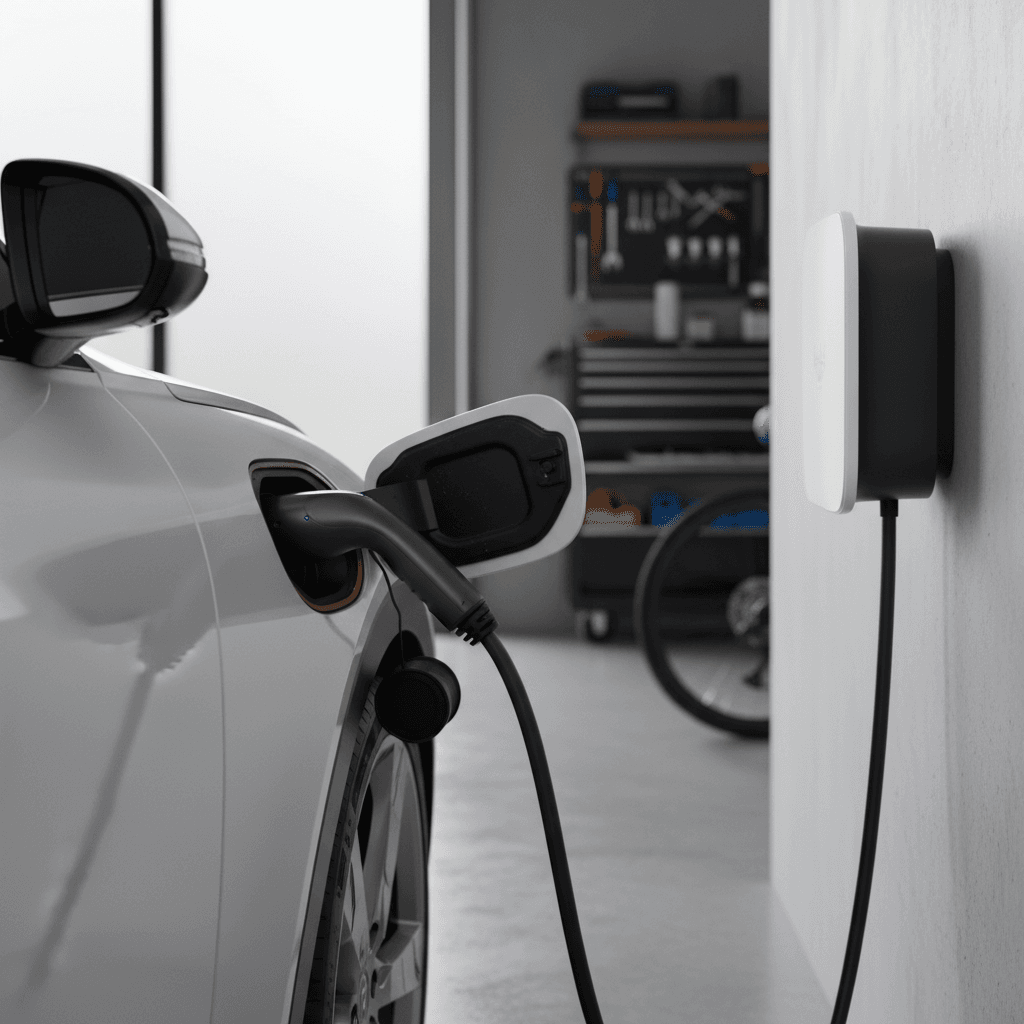
How long to charge a Genesis GV60 at home
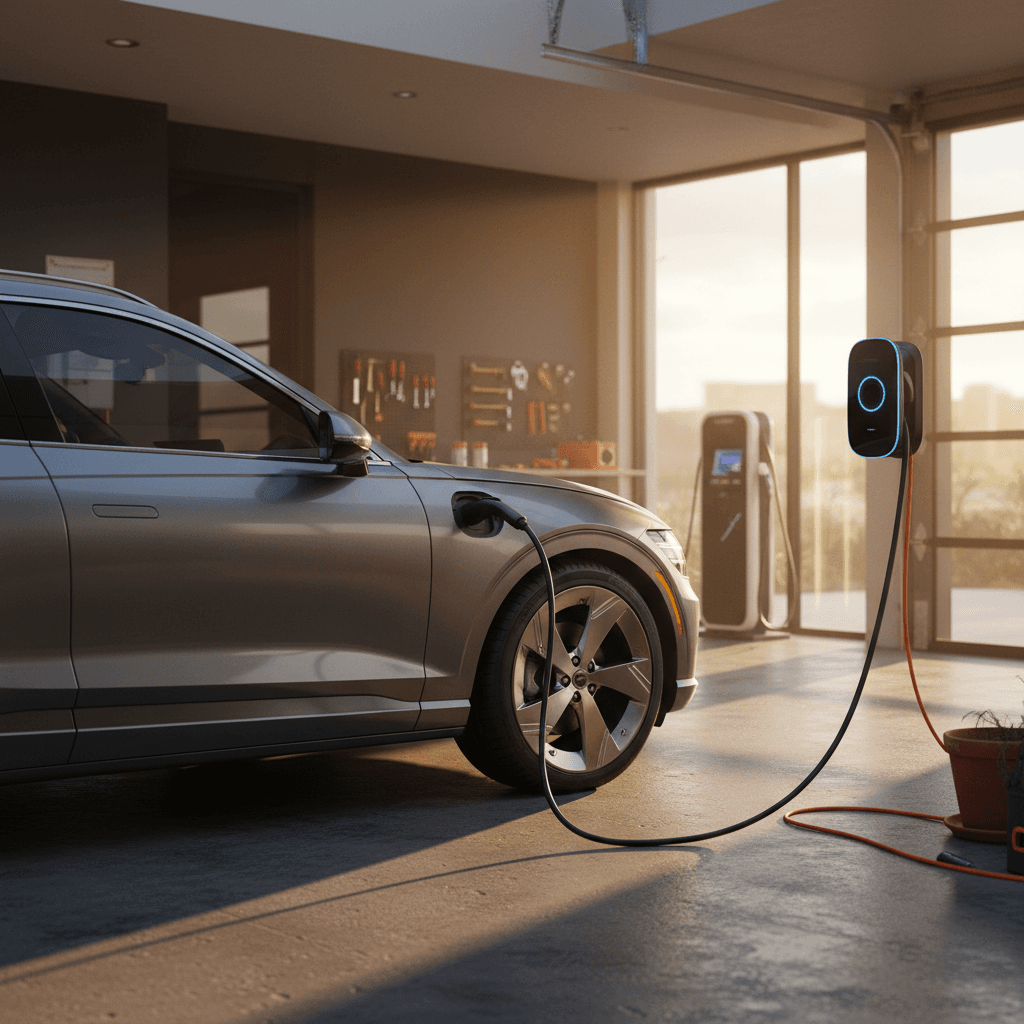
For most owners, the real question isn’t how quickly the GV60 can charge at a 350 kW monster on the highway. It’s how long it takes to refill overnight at home. Let’s look at three common scenarios in a typical U.S. garage or driveway.
- Level 1: Standard 120 V wall outlet (included mobile charger).
- Level 2 (lower power): 240 V, 30–32 A circuit (about 7.2–7.7 kW).
- Level 2 (higher power): 240 V, 40–48 A circuit (about 9.6–11 kW).
1. Level 1 (120 V): marathon, not a sprint
Plugging your GV60 into a regular household outlet using the included Level 1 cord will typically deliver around 1.4 kW of power. For a ~77 kWh battery, a full 0–100% charge can easily take 50–60 hours.
That sounds terrible, but there are use cases. If you only drive 15–25 miles a day, you can slowly add that back overnight. Think of Level 1 as a backup, not your primary fueling plan.
2. Level 2 (240 V): the GV60 sweet spot
Install a 240 V Level 2 charger and the story changes completely. On a 32 A circuit (about 7.7 kW), you’re looking at roughly 9–10 hours to go from 10% to 100%. On a 40–48 A circuit (9.6–11 kW), that drops to about 7–8 hours.
In practice, many owners arrive home with 30–50% left and charge to 80–90%, which is usually a 3–5 hour session, easily covered while you sleep.
Rule of thumb for home charging
DC fast charging: 10–80% in about 18 minutes
The Genesis GV60 rides on Hyundai Motor Group’s E‑GMP platform, the same 800‑volt architecture you’ll find under the Hyundai Ioniq 5 and Kia EV6. That’s why DC fast charging is one of this car’s party tricks: under ideal conditions, a high‑power station can push the GV60’s battery from 10% to 80% in roughly 18 minutes.
What DC fast charging really looks like
How the 18‑minute headline time translates when you’re on the road.
Ultra‑fast 250–350 kW
On a top‑tier station with a healthy battery and warm temperatures, expect 18–25 minutes from 10–80%. The GV60 can briefly spike above 200 kW before tapering.
Mid‑power 100–150 kW
On many U.S. highway chargers, you’ll see more like 25–35 minutes for 10–80%, especially if other cars share the power cabinet.
Lower‑power or cold battery
On 50 kW units or in cold weather with a cold-soaked pack, 10–80% can stretch toward 45 minutes or more. The car protects the battery by limiting power.
Don’t live on DC fast charging
5 factors that change how long your GV60 takes to charge
What really changes your Genesis GV60 charge time
1. Starting and target charge level
Charging from 10% to 80% is much faster than 10% to 100%. The last 10–20% of the battery fills slowly to protect cell longevity, so if you don’t need 100%, stopping around 80–90% saves time.
2. Charger power and wiring
A 48 A wallbox on a 60 A circuit is noticeably faster than a 30 A unit on a 40 A breaker. Undersized wiring, shared circuits, or older public stations can all reduce the power your GV60 can actually pull.
3. Temperature and battery pre‑conditioning
Lithium‑ion batteries hate the cold. In winter, a cold‑soaked pack will limit charging speeds until it warms up. Using the GV60’s navigation to route to a fast charger can pre‑condition the battery and shorten sessions.
4. State of charge curve
Every EV has a charging curve. The GV60 takes power aggressively when the battery is low, then tapers as it approaches 60–80% and again near 100%. That’s why a ‘quick top‑off’ from 40% to 60% can be very fast, while 90% to 100% crawls.
5. Battery age and health
Over time, all EV batteries lose a bit of capacity and may adjust their charging behavior. A well‑cared‑for GV60 that avoids constant 0–100% and extreme heat will keep close to its original times for many years.
Planning real‑world stops in a Genesis GV60
On paper, the Genesis GV60’s combination of 230–290 miles of EPA range (depending on trim) and ultra‑fast charging makes it an excellent road‑trip partner. In practice, how long you spend at each station depends more on trip planning than specs. Here’s how to think about it.
Everyday driving
For commuting and errands, the goal is simple: start most mornings around 70–90%. If you have a Level 2 charger at home, you can set a schedule to charge during off‑peak hours, then forget about it.
In this world, your ‘charge time’ is effectively zero because the car fills while you sleep. Even if you arrive home at 30% and charge to 80%, a 40 A Level 2 will get that done in 3–4 hours.
Highway road trips
On long drives, plan around 10–15 minute stops every 2–3 hours of driving. Start charging around 10–20% and unplug near 60–80% instead of waiting for 100%. You’ll spend less time overall, and your GV60’s charging curve will stay in the high‑power sweet spot.
Apps like A Better Routeplanner, PlugShare, and the built‑in navigation can help you map out reliable fast‑charging stops on your route.
What this feels like in real life
Ready to find your next EV?
Browse VehiclesHome charger setup tips for GV60 owners
If you want your Genesis GV60 to behave like a luxury SUV with a magically full tank every morning, the key is a proper Level 2 home charger. Getting this right matters more than arguing over a few minutes at a fast charger once a month.
Dial in your GV60 home charging
A few smart choices up front make daily charging painless for years.
Size your circuit correctly
For the GV60’s 11 kW onboard charger, a 50–60 A dedicated circuit with suitable wiring lets you run a 40–48 A wallbox. That’s enough to refill from low battery to 80–90% easily overnight.
Pick a quality Level 2 unit
Look for UL‑listed chargers from reputable brands, with Wi‑Fi or app control if you care about scheduling and data. You don’t have to overspend, but ultra‑cheap, no‑name units are rarely worth the risk.
Use scheduled charging
Set your GV60, or your wallbox app, to charge during cheaper off‑peak hours. This shaves your electricity bill and ensures the pack is warm and ready for maximum power if you leave early.
Thinking about a used GV60?
How to charge without hurting your GV60’s battery
The Genesis GV60 is engineered to fast‑charge hard and run for years, but like any EV, how you use it matters. The same habits that preserve range and performance also keep your charge times consistent as the car ages.
- For daily driving, aim to keep the battery between 20% and 80% instead of bouncing between 0% and 100%.
- Save 100% charges for road trips or when you know you’ll need the full range soon after unplugging.
- Avoid leaving the car sitting for days at very low (under 10%) or very high (over 90%) state of charge.
- Use Level 2 for routine charging and reserve DC fast for longer trips or urgent top‑ups.
- In extreme heat, try to park in the shade or a garage, and let the car manage its own battery cooling instead of repeatedly fast‑charging a hot battery.
Why the last 10% is slow
Genesis GV60 charging time FAQ
Common Genesis GV60 charging questions
The bottom line on Genesis GV60 charging time
When you hear that a Genesis GV60 can charge from 10% to 80% in around 18 minutes, that’s impressive, and accurate under the right conditions. But for day‑to‑day life, the more important story is that a properly set up Level 2 home charger will quietly refill your GV60 in about 7–8 hours, turning your garage into a personal fueling station.
If you’re comparing EVs or shopping the used market, understanding how long it takes to charge a Genesis GV60 is just one piece of the puzzle. At Recharged, every used EV listing includes a transparent Recharged Score battery health report, expert EV guidance, and financing and trade‑in options tailored to electric ownership, so you can pick the right GV60, set up the right charger, and spend more time driving than waiting at a plug.