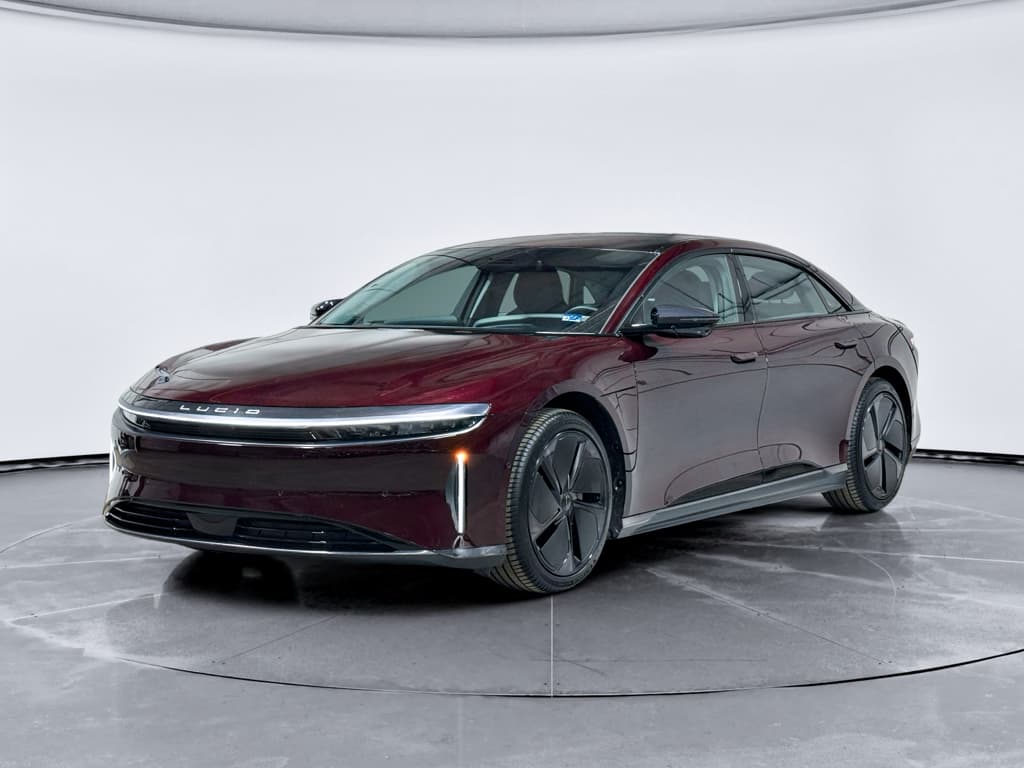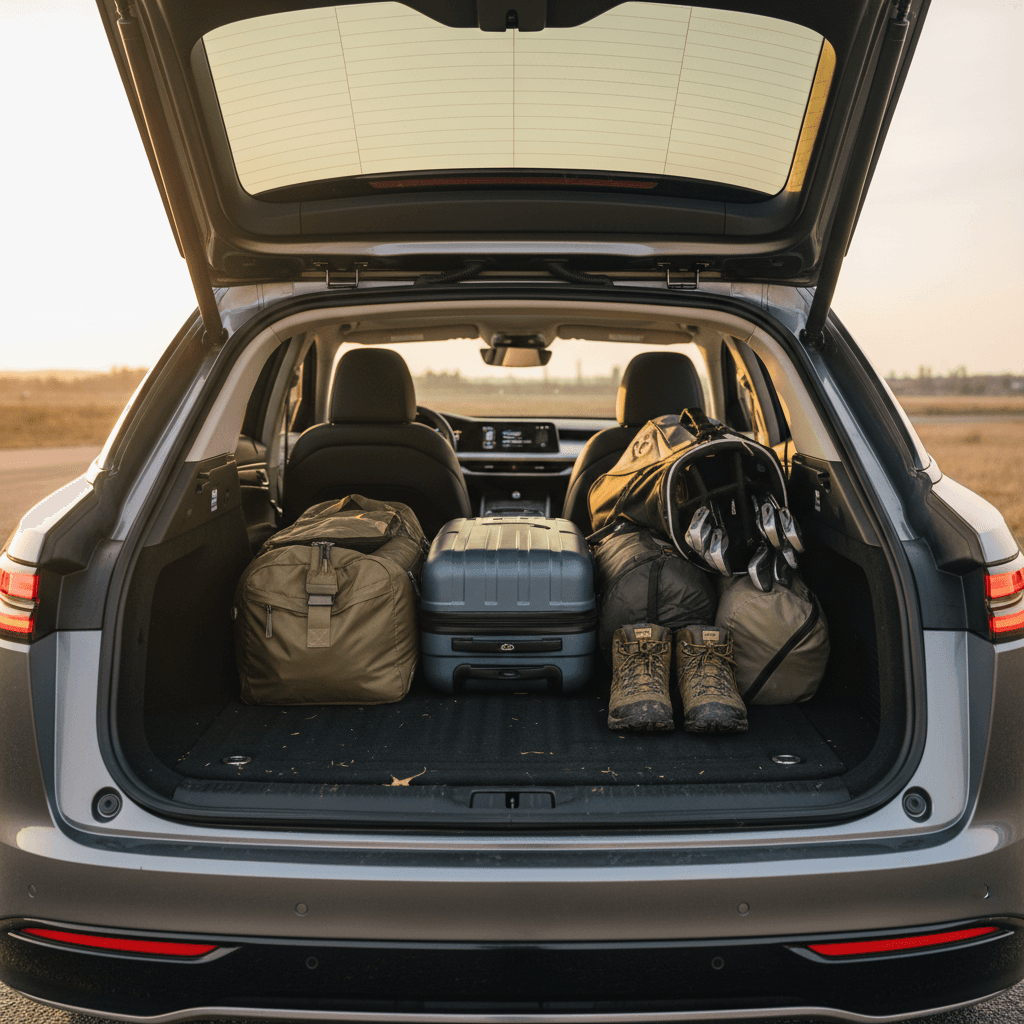
If you’re looking at a Lucid Air, you probably already know it’s an efficiency and range monster. But if you’re cross-shopping it with a Tesla Model S or a luxury SUV, the question becomes more basic: how much Lucid Air cargo space do you actually get with the seats down, and is it enough for real life, kids, strollers, golf clubs, or road-trip gear?
Quick answer
Lucid Air cargo space at a glance
Lucid Air cargo headline numbers
Lucid doesn’t publish an official cubic‑feet number for the rear seats folded, but road testers and owners consistently land around the mid‑60s cubic feet when you include the frunk. That puts the Air closer to a long‑roof wagon than a traditional mid-size sedan in terms of usable space.
Think in "what fits," not just cubic feet
How much cargo space does the Lucid Air have, seats up vs down?
Lucid Air cargo space: seats up vs seats down (estimates)
Approximate Lucid Air cargo volumes based on Lucid specs plus independent testing. Exact numbers vary slightly by model year and trim, but the pattern is consistent.
| Configuration | Rear trunk only | Frunk only | Combined cargo (seats up) | Combined cargo (seats folded) |
|---|---|---|---|---|
| Seats up | ~22–26 ft³ | ~10 ft³ | ~32 ft³ | N/A |
| Seats down (rear 60/40 folded) | ~50–54 ft³ (usable) | ~10 ft³ | N/A | ~60–64 ft³ (estimated) |
The Lucid Air’s frunk does a lot of work to close the gap with hatchback rivals.
With seats up, most Lucid Air trims give you roughly 22–26 cubic feet in the rear trunk plus about 10 cubic feet in the frunk. Fold the 60/40 rear seats and you open up a long, continuous load floor that roughly doubles your usable cargo volume to the mid‑60s cubic‑feet range, especially if you’re willing to load to the ceiling and use the frunk.
Don’t over-trust brochure math
What actually fits in a Lucid Air with the seats folded?
Real-world packing examples with seats down
Here’s what owners and testers are actually loading into their Airs.
Airport & family trips
- 3–4 full‑size checked suitcases plus 2–3 carry‑ons
- Or 2 large suitcases + stroller + soft duffel bags
- Extra small items up front in the frunk
Outdoor & sports gear
- 1–2 adult bikes with front wheels removed, loaded diagonally
- Golf clubs: 2–3 bags seats up, more with seats folded
- Camping bins, coolers, folding chairs stacked in trunk + frunk
Flat-pack & bulky items
- Long flat‑pack furniture boxes (think IKEA bookcases)
- A disassembled crib or playpen plus luggage
- Medium TVs (up to ~55" in box) slid in diagonally
The big limitation isn’t floor length; it’s the trunk opening height. The Lucid Air uses a traditional sedan trunk rather than a hatchback, so very tall or boxy items that would slide straight into a Model Y or wagon may need to go in at an angle, or simply won’t clear the opening even though there’s room once inside.
Watch the trunk opening for mobility devices
Trunk vs. frunk: how the space is laid out
Rear trunk (primary cargo area)
- Deep floor with a drop‑down well near the bumper for extra vertical space.
- 60/40 split-folding rear seatbacks with a long pass‑through for skis or lumber.
- Best for suitcases, strollers, golf bags, and bulk groceries.
- Seats down, you get a long, mostly flat floor from the trunk lip to the back of the front seats.
Front trunk (frunk)
- Large by EV standards: roughly 10 cubic feet in many trims.
- Squared‑off shape makes it ideal for carry‑on bags, soft duffels, or backpacks.
- Great for keeping dirty or smelly gear (hiking boots, sports equipment) away from the cabin.
- On road trips, use the frunk for rarely accessed items (spare clothes, tools) and reserve the trunk for daily‑use gear.
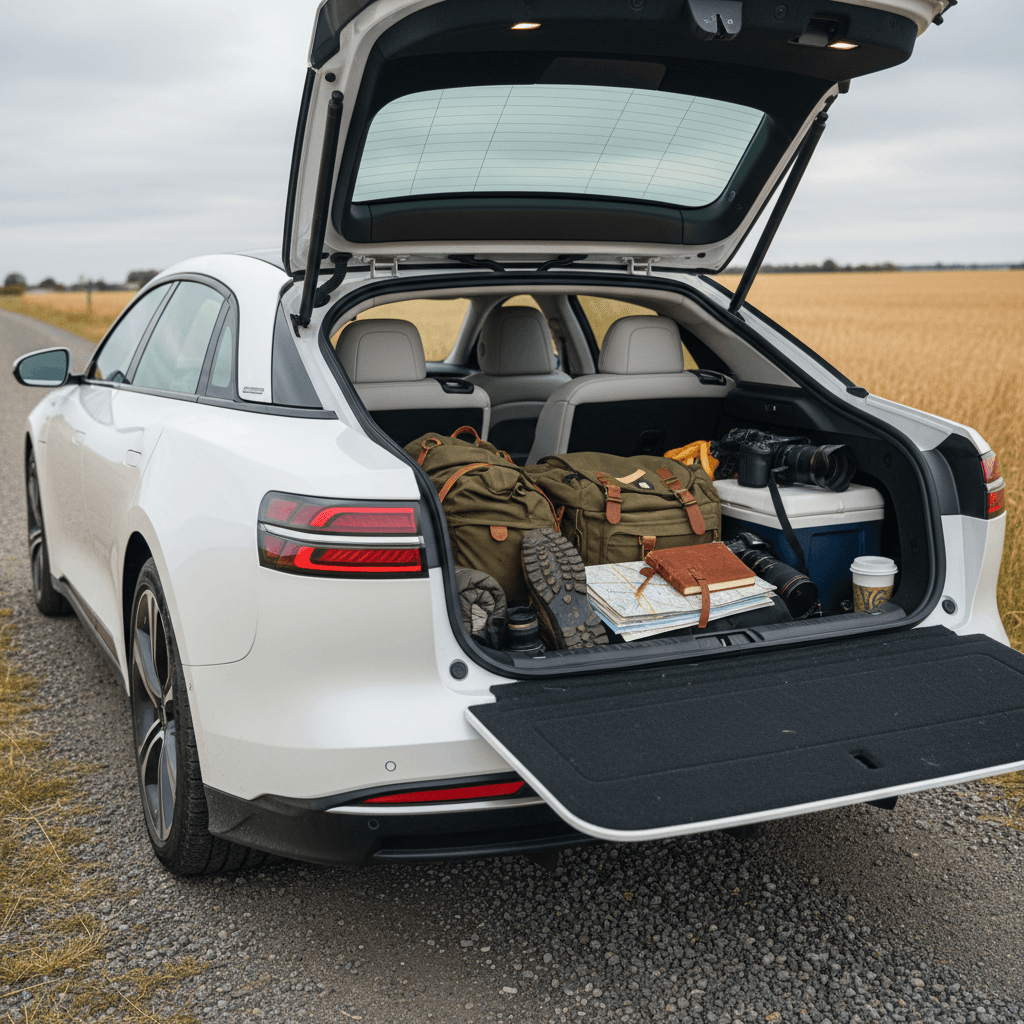
Seat folding details
Lucid Air cargo space vs. Tesla Model S and others
The benchmark in this segment is still the Tesla Model S, largely because of its hatchback. With the rear seats down, Tesla quotes about 60 cubic feet of cargo volume just in the rear. Add the front trunk and it edges higher still. On paper, that gives the Model S more pure "seats‑down" cargo volume than the Lucid Air’s sedan layout.
Lucid Air vs. Tesla and EQS: cargo space comparison
How the Lucid Air’s cargo space stacks up against key electric luxury rivals, seats up and seats down.
| Model | Body style | Rear cargo seats up | Rear cargo seats down | Frunk | Total seats-up cargo |
|---|---|---|---|---|---|
| Lucid Air | Sedan (trunk) | ~22–26 ft³ | ~50–54 ft³ (est.) | ~10 ft³ | ~32 ft³ |
| Tesla Model S | Hatchback | ~26 ft³ | ~60 ft³ | ~2–5 ft³ | ~28–31 ft³ |
| Mercedes EQS | Hatchback | ~22 ft³ | ~63 ft³ | N/A | ~22 ft³ |
Tesla’s hatch wins on maximum rear volume, but Lucid’s huge frunk helps narrow the gap for real-world use.
Where the Lucid Air fights back is combined practicality. Its frunk is dramatically larger than the Model S’s, and the cabin packaging is more efficient. For many owners, that means the difference between the Air and a hatchback shows up only with very tall or bulky items. For day‑to‑day family duty and most road trips, the Air’s seats‑down cargo feels less like a compromise and more like a different shape of the same total capability.
Bottom line vs. Model S
Everyday practicality: strollers, golf bags, and Costco runs
How the Lucid Air handles common cargo scenarios
What it’s like to live with the Air as your only car.
Kids & strollers
- Most full‑size strollers fit lengthwise in the main trunk.
- Compact or travel strollers can stand upright in the lower well.
- With one seat folded, you can run stroller + luggage for airport duty.
Golf & sports
- 2–3 golf bags fit with seats up, especially if you use the deeper well.
- Bigger tournament loads? Fold one side of the rear seat.
- Keep shoes and muddy gear in the frunk to protect the cabin.
Grocery & Costco
- Deep trunk swallows a big warehouse run, especially with reusable totes.
- Use the frunk for fragile or climate‑sensitive items you don’t want under heavy boxes.
- Seats down turns the Air into a credible light‑duty hauler.
Cold-weather note
Packing tips to maximize Lucid Air cargo space
7 ways to get the most out of Lucid Air cargo space
1. Use the frunk as a second trunk
Think of the frunk as <strong>Level 2 storage</strong>: tools, emergency kit, extra clothes, and items you won’t touch until you reach the destination. That frees up the rear trunk for day‑to‑day access.
2. Load heavy items low and forward
Put heavier suitcases in the main trunk floor close to the rear seatbacks, not on the drop‑down lip or stacked on top. That keeps weight centered and reduces the chance of things shifting under hard braking.
3. Exploit the 60/40 split for long items
If you’re carrying skis, boards, or long boxes, fold only the smaller rear seat section and slide items through the pass‑through. You keep room for a rear passenger plus most of the trunk width.
4. Use soft bags instead of hard suitcases
<strong>Duffel bags and soft‑side luggage</strong> conform better to the trunk’s curves, especially around the wheel arches and under the rear shelf. You’ll fit more gear than with all hard suitcases.
5. Protect the seatbacks
When you fold the rear seatbacks, add a blanket or cargo liner if you’re loading anything sharp, dirty, or heavy. The Lucid’s interior materials are upscale; they don’t love repeated encounters with tool boxes and dog crates.
6. Mind the trunk opening height
If a large box just barely fits through your home doorway, it may not clear the Lucid’s trunk opening. Measure the box height vs. the trunk opening, or be prepared to use another vehicle for that one big haul.
7. Plan charging stops around packing
On long trips, put <strong>snacks, jackets, charging cables, and entertainment</strong> near the trunk opening or in the cabin. Reserve the hard‑to‑reach parts of the trunk and frunk for items you’ll only need at the destination.
Secure loose items
Is the Lucid Air practical enough for your lifestyle?
When the Lucid Air works brilliantly
- You want sedan comfort and range but need real cargo flexibility.
- Your typical loads are luggage, strollers, sports gear, and Costco runs, not appliances or building supplies.
- You like the idea of a giant frunk for cleaner separation of gear (dirty vs. clean, valuables vs. bulk).
- You care more about rear-seat comfort and efficiency than a hatchback profile.
When you may want an SUV or hatch
- You regularly haul very tall, boxy items (dog crates, tall dressers, big TVs in box).
- You’re constantly loading and unloading bikes or bulky outdoor gear.
- You need a cargo area that’s easy to access for someone with limited mobility (higher hatch openings, lower liftovers).
- You want third‑row seats or the ability to haul both a big family and all their stuff at once.
From an analyst’s perspective, the Lucid Air hits a sweet spot: efficiency and performance of a flagship EV sedan with cargo flexibility that’s closer to a wagon than its traditional three‑box silhouette suggests. The seats‑down cargo space won’t fully replace a Model Y or an SUV if you’re constantly hauling bikes and furniture, but for most households, it’s genuinely practical as an only car.
Looking at a used Lucid Air?
Ready to find your next EV?
Browse VehiclesLucid Air cargo space FAQ
Frequently asked questions about Lucid Air cargo space
If you’re trying to decide whether the Lucid Air’s cargo space with the seats down is enough, the answer comes down to what you haul most often. For luggage, kids’ gear, sports equipment, and the occasional flat‑pack furniture run, it’s more than up to the task, helped along by one of the best frunks in the business. If you decide an Air belongs in your driveway, a used example with verified battery health and expert backing from Recharged can give you flagship‑EV practicality without the new‑car price tag.