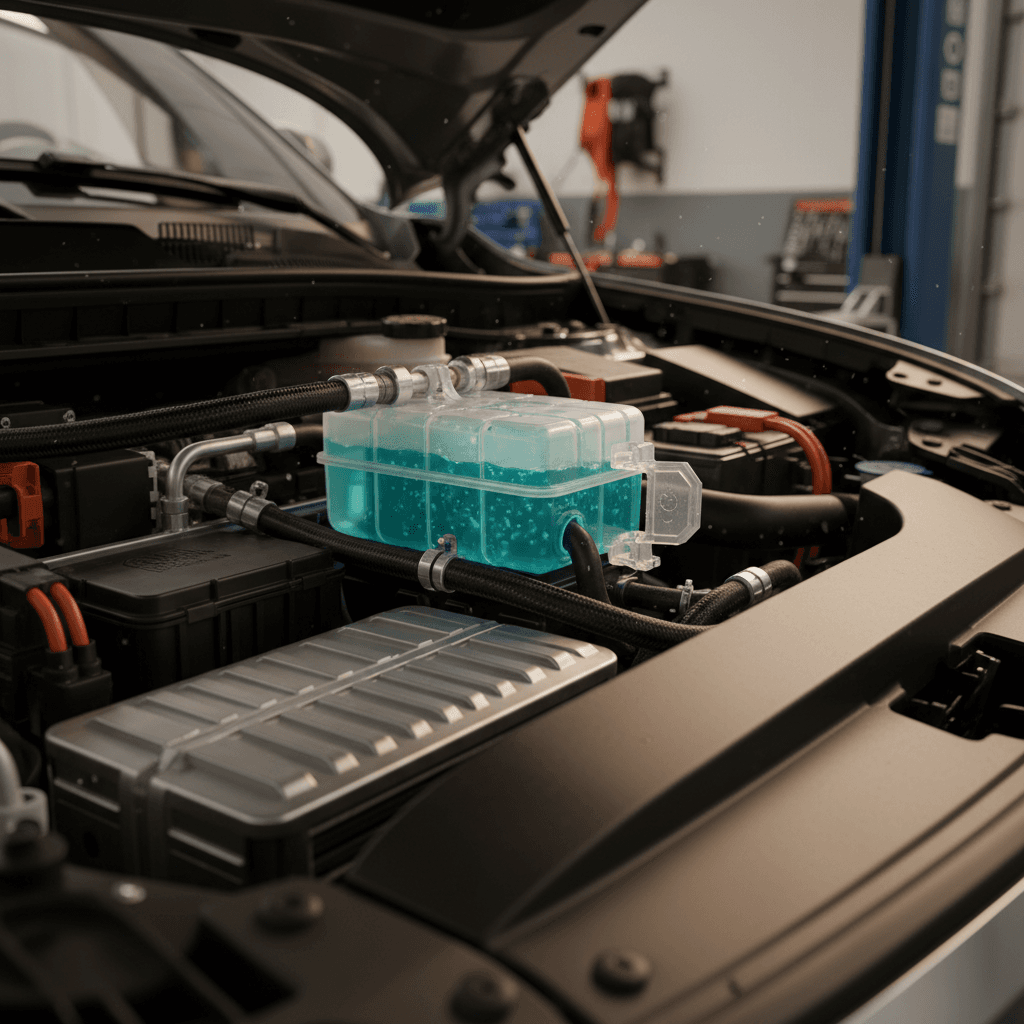
When you hear "liquid cooled vs air cooled EV battery," it sounds like the kind of engineering detail only a powertrain nerd could love. But how your battery is cooled quietly shapes everything you care about as a driver: range in hot or cold weather, how fast you can charge, and how long the pack will last before it loses meaningful capacity. If you’re choosing your first EV, or your first used EV, this is not fine print. It’s the plot.
Cooling is your battery’s insurance policy
Why EV battery cooling matters more than you think
Lithium‑ion batteries work best in a fairly narrow comfort zone, roughly 68–86°F (20–30°C). Outside that window, bad things happen. Too hot, and the chemistry ages faster, you see permanent capacity loss, and in extreme cases you risk thermal runaway. Too cold, and the battery’s internal resistance jumps, range drops, and fast charging slows to a crawl, or shuts off.
- High‑power driving and DC fast charging can generate several kilowatts of waste heat inside the pack.
- Sustained high temperatures accelerate degradation, especially when the battery sits full in hot weather.
- Uneven temperatures inside the pack create hot spots, so some cells age faster than others.
- Cold packs charge slowly and deliver less power, which is why some EVs preheat batteries before fast charging.
The job of a battery thermal management system (BTMS) is simple in theory: keep every cell as close as possible to that ideal temperature range, as evenly as possible, with as little energy as possible. How it does that, air vs liquid cooling, makes a huge difference in real‑world behavior.
How EV battery cooling works: air vs liquid, in plain English
Start with the basics: you have a big box of cells under the floor generating heat whenever you accelerate, climb a hill, or fast charge. Sensors peppered around the pack watch temperatures, and a controller decides how to move heat out (or in, during winter). There are two main ways automakers do this today: air‑cooled and liquid‑cooled systems.
Air‑cooled EV batteries
Air‑cooled packs use fans and ducting to blow air across the battery cells or modules. Some simply rely on natural airflow; others borrow air from the cabin HVAC system.
- Simple hardware: fans, ducts, vents.
- Lower cost and less plumbing.
- Limited cooling power, especially in hot climates or during fast charging.
Liquid‑cooled EV batteries
Liquid‑cooled packs route a coolant (usually a water‑glycol mix) through channels or cold plates attached to the cells, then send that heat to a radiator or a shared thermal loop.
- High heat‑transfer capacity in compact space.
- Excellent temperature uniformity across cells.
- More complex: pumps, valves, hoses, heat exchangers.
Why liquid wins the physics fight
Liquid cooled vs air cooled EV batteries: key differences
Where the market is headed
Liquid cooled vs air cooled EV battery systems at a glance
Here’s how the two approaches stack up on the things drivers actually feel.
| Factor | Air‑cooled battery | Liquid‑cooled battery |
|---|---|---|
| Heat removal ability | Low to moderate; struggles under sustained high load | High; designed for continuous high load and fast charging |
| Temperature uniformity | Often uneven; hot spots inside the pack | Very even; coolant channels keep cells within a few °C |
| Fast‑charging compatibility | OK at low–mid power; can overheat at repeated DC fast charges | Supports high‑power DC fast charging repeatedly with less throttling |
| Degradation risk in heat | Higher, especially in hot climates and when parked full | Lower; more consistent temps slow long‑term degradation |
| Cold‑weather performance | Some packs have no active heating; charge speeds suffer | Often includes active heating and preconditioning for DC fast charge |
| System complexity | Simpler: fans and ducts; fewer parts to leak | More complex: pumps, valves, hoses, coolant; potential for leaks |
| Noise | Fan noise at high speed | Quieter; occasional pump noise |
| Cost to manufacturer | Lower | Higher, but increasingly standard on modern EVs |
Liquid cooling generally costs more up front but pays you back in performance and longevity, especially in hot climates and with frequent fast charging.
Don’t confuse "air‑cooled" with "no cooling"
Real‑world examples: which EVs use air vs liquid cooling?
If you’re shopping, it helps to attach this to nameplates you recognize. Here’s a simplified snapshot of how major EVs have handled battery cooling over the last decade or so:
Examples of air‑cooled vs liquid‑cooled EV batteries
Not exhaustive, but enough to give you a feel for how the industry has shifted.
Primarily air‑cooled or minimally cooled (earlier generations)
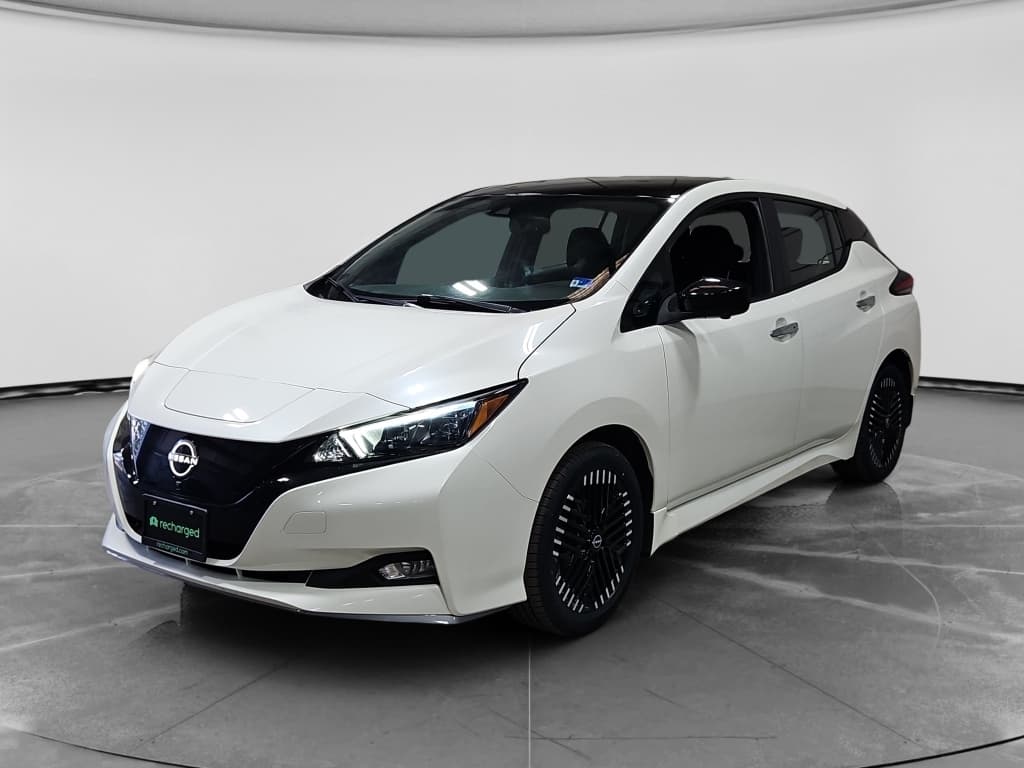
- Early Nissan Leaf (up to 2024 in the US hatchback): pack relies on passive and basic air flow; owners in hot states reported faster degradation.
- Some early compliance EVs and low‑volume city cars used simple air‑cooled or barely‑cooled packs.
These cars can be fantastic cheap commuters in mild climates, but you need to go in with eyes open on battery health.
Modern liquid‑cooled EVs
- Tesla Model 3/Y/S/X – liquid‑cooled from the beginning.
- Hyundai Ioniq 5/6, Kia EV6, VW ID.4, Ford Mustang Mach‑E, Chevy Bolt EUV – all liquid‑cooled.
- Newer platforms from most brands (including the redesigned 2026 Nissan Leaf crossover) now use liquid‑cooled packs.
If it fast charges at serious power and promises long range, it’s almost certainly liquid‑cooled.
Quick rule of thumb when you’re browsing listings
How cooling affects battery life, range, and fast charging
This is where "liquid cooled vs air cooled EV battery" stops being theoretical. Cooling strategy sits right at the intersection of how long the pack lasts, how confident you feel taking road trips, and how much value a used EV holds.
Battery life & degradation
- Heat kills batteries slowly: High average temperatures accelerate chemical wear, especially when the pack sits near 100% charge.
- Liquid cooling smooths out hot spots, so no individual pocket of cells gets abused more than the rest.
- Industry data on big battery systems suggests 10–30% longer life with good liquid cooling versus basic air cooling under similar use.
Over 8–10 years, that difference can be the line between a pack that feels "tired" and one that still drives like year three.
Range & fast charging
- On long trips, air‑cooled or minimally cooled packs often heat‑soak after one or two fast charges, forcing the car to throttle charging speeds.
- Liquid‑cooled packs actively shed heat, so they’re better at repeated high‑power DC fast charging days (think 500‑mile days on the interstate).
- In winter, many liquid‑cooled systems also pre‑heat the pack so you don’t crawl into a charger at 30 kW when the sign says 150.
Hot climate? Cooling choice matters more
Ownership, costs, and maintenance: what owners actually notice
From the driver’s seat, you’re not going to spend your weekends flushing coolant like it’s a 1973 small‑block. For most owners, the difference shows up less as "maintenance" and more as how the car feels after years of use.
- Air‑cooled EVs tend to have fewer parts in the thermal loop. There’s not much to maintain beyond the usual HVAC service, but you may see faster battery capacity loss in harsh climates or with heavy DC fast‑charging use.
- Liquid‑cooled EVs add pumps, valves, hoses, and coolant, but these are generally designed to last the life of the vehicle. Coolant changes are infrequent and often bundled into long‑interval service.
- If something does fail in a liquid system, repairs can be more expensive, but those events are rare compared with, say, tire or brake work.
- What you’re much more likely to "notice" is that a liquid‑cooled EV still fast charges close to its original spec and hasn’t lost a big chunk of range by year eight.
How Recharged helps de‑risk this for used EV buyers
Ready to find your next EV?
Browse Vehicles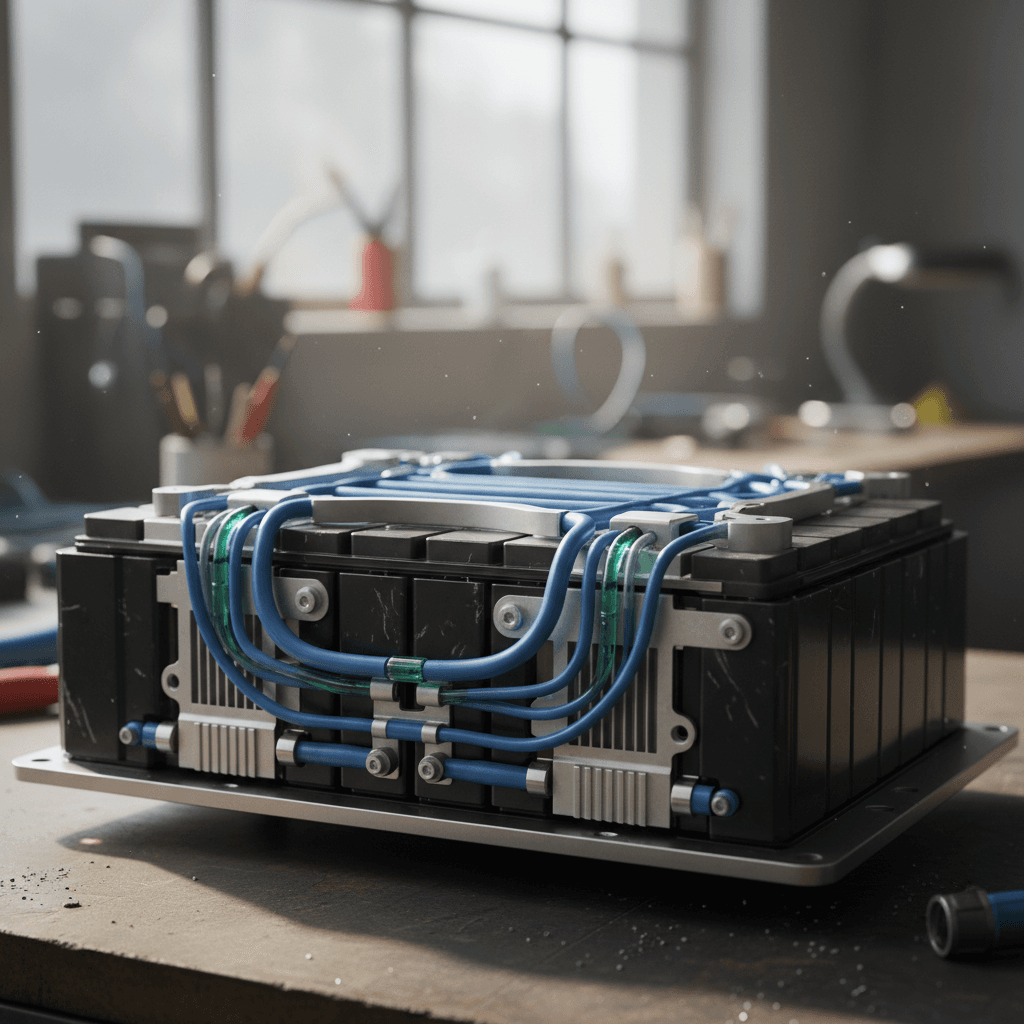
Shopping for a used EV: how to factor in battery cooling
Cooling type isn’t the only thing that matters when you’re buying used, mileage, charging habits, and climate history all have a vote. But it’s an important lens, especially when you’re comparing two otherwise similar cars at similar prices.
Used EV battery‑cooling checklist
1. Identify the cooling system
Look up whether the model and year you’re considering uses air cooling, passive cooling, or a liquid‑cooled pack. Forum threads and manufacturer specs are your friend here.
2. Consider your climate and use case
In mild climates with short commutes, a well‑priced air‑cooled EV can be a bargain commuter. If you live somewhere scorching or plan lots of road trips, a liquid‑cooled EV is usually the smarter long‑term bet.
3. Ask about fast‑charging history
An air‑cooled EV that spent its life on DC fast chargers in Phoenix is a different animal from one that trickle‑charged in Seattle. Even for liquid‑cooled cars, heavy fast‑charging use is worth factoring into price.
4. Get objective battery health data
Use tools and reports, not guesswork. A <strong>Recharged Score</strong> battery report, or similar third‑party test, will show actual state of health so you’re not relying on a dashboard guess-o‑meter.
5. Compare price versus remaining life
If an air‑cooled car is significantly cheaper but shows healthy capacity and you have a gentle use case, it might make great financial sense. If prices are close, the liquid‑cooled option usually offers better long‑term value.
6. Think about future resale
As buyers get savvier, they’ll pay more attention to thermal management and battery reports. A liquid‑cooled EV with documented health is likely to be easier to resell later.
Leaning toward a used EV?
Future trends: will air‑cooled EV batteries disappear?
The market has already voted with its feet. As battery energy density climbs and fast‑charging power rises, liquid cooling has become the default for mainstream EVs. That doesn’t mean air‑cooled or passively cooled packs vanish overnight, but their niche is narrowing.
Where each approach is likely headed
Liquid‑cooled battery systems
Standard on most long‑range BEVs and high‑performance models.
Increasingly integrated with cabin HVAC and drive unit cooling for better efficiency.
More intelligent controls that pre‑condition the pack for fast charging and extreme temperatures.
Gradual adoption of new coolants and plate designs to shave weight and cost.
Air‑cooled / minimally cooled packs
Remain in low‑cost, low‑range or niche vehicles where simplicity and price win.
More likely to be paired with smaller batteries and modest DC charging speeds.
Potentially supported by smarter software limits to protect longevity.
Over time, may feel increasingly "old tech" in the used market, which will influence pricing.
The story of EVs over the last decade is the story of heat management. More power, more range, more fast charging, all of it sits on top of clever ways to keep those cells comfortable.
Frequently asked questions about liquid vs air cooled EV batteries
Liquid cooled vs air cooled EV battery: FAQ
Bottom line: which EV battery cooling system is better for you?
In the liquid cooled vs air cooled EV battery debate, the physics are clear: liquid cooling is the right tool for modern, long‑range, fast‑charging EVs, and that’s why the industry has moved that way. It buys you better temperature control, more consistent performance, and typically slower degradation, especially in harsh climates or with heavy DC fast‑charging use.
But the right choice for you is contextual. If you’re bargain‑hunting for a second car that lives an easy life in a temperate ZIP code, an older air‑cooled EV with documented battery health can be a smart, low‑cost way into electric ownership. If you want an EV to be your do‑everything road‑trip machine for the next decade, a liquid‑cooled pack paired with a strong battery‑health report is the way to sleep at night.
Whichever path you’re on, don’t treat cooling as a footnote. Treat it like part of the powertrain. And if you’re shopping used, lean on tools like the Recharged Score battery health report, financing support, and EV‑savvy guidance so you end up with an electric car that drives as confidently at year eight as it does on day one.