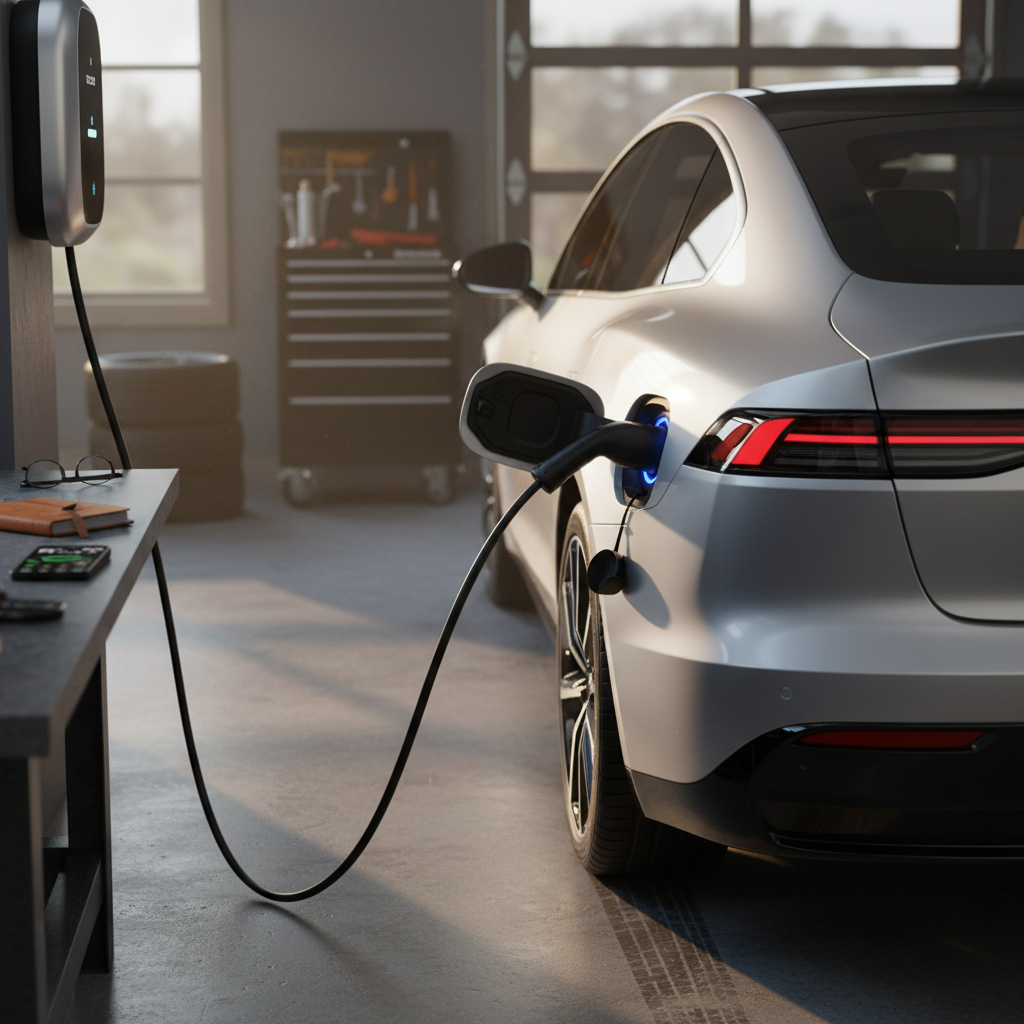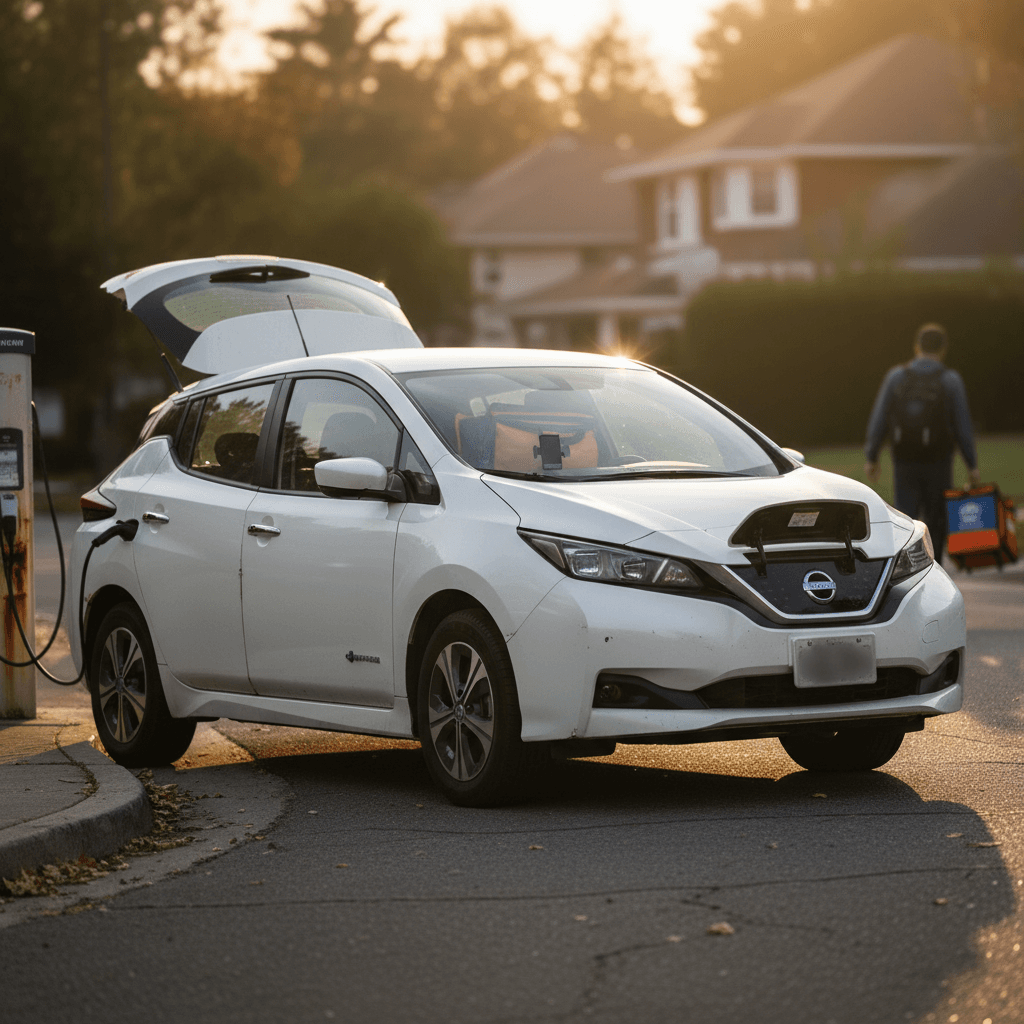
If you’re a DoorDash, Uber Eats, Instacart, Amazon Flex, or local courier driver, your car is a rolling workplace. The **best used electric car for delivery drivers** isn’t about 0–60 times or fancy screens; it’s about cost per mile, uptime, and whether you can finish a Friday double shift without range panic.
Who this guide is for
Why used EVs appeal to delivery drivers in 2025
Why high‑mileage drivers look hard at EVs
In 2025, high‑volume delivery work is exactly where EVs **can** shine. With fuel often the single largest variable cost, dropping from, say, $0.12–$0.18 per mile in gas to roughly $0.04–$0.06 in electricity changes the economics fast, **if** you can charge cheaply and the car fits your routes.
Don’t skip the total cost math
EV vs hybrid for delivery work: who really benefits
When a used EV makes sense
- High annual miles (20,000+). The more you drive, the more you benefit from cheaper electricity and lower maintenance.
- Reliable home charging. Apartment or house, you need consistent overnight charging access.
- Predictable routes. City/suburban loops where you rarely exceed 120–160 miles a day.
- Cheap used pricing. Many compact EVs have dropped hard in value, making them attractive for work duty.
When a hybrid may be safer
- No home charging. Relying solely on public fast charging quickly eats into margins and your time.
- Rural or mixed highway routes with 200+ miles/day and limited charging options.
- Extreme cold climates if you can’t pre‑condition or park indoors, where winter range loss is a business risk.
- Super tight budgets where a cheap, efficient hybrid is thousands less up front than any decent EV.
Use a hybrid as your baseline
How to size range for real‑world delivery routes
Most delivery drivers dramatically overestimate how much range they need. What matters is your **longest realistic workday**, your **charging plan**, and how much winter and degradation you need to buffer against.
Range bands that work for delivery drivers
Think in usable miles, not brochure numbers
City-only, 80–120 mi/day
If your days are dense city routes or short suburban hops, a used EV with **EPA 150–200 miles** of rated range can work, assuming:
- Overnight Level 2 charging at home.
- Occasional top‑ups between shifts.
- Mild to moderate climate.
Mixed, 120–180 mi/day
Here you want a buffer. Look for **EPA 220–260+ miles** new, so that after degradation and winter you still have comfortable margins.
Fast‑charge access on your route is a big plus.
Cold, 150+ mi/day
Plan for **20–40% winter range loss**. That 250‑mile rating might behave like 150–180 miles in real use with heat, stops, and highway speeds.
Either overspec range or accept a mid‑shift fast‑charge as part of the job.
Rule of thumb
Key features to look for in a used electric delivery car
- At least **150–180 miles of realistic range** for most urban drivers (original EPA 200+ preferred).
- A **hatchback or small crossover body** for easy loading of groceries, stacked hot bags, and parcels.
- Comfortable seat and supportive driving position; eight hours on a bad seat can end your night early.
- Good **heat and A/C efficiency**, including a heat pump where available, for comfort without nuking range.
- Simple, durable interiors that are easy to wipe down between food runs.
- Safety tech like automatic emergency braking and good crash scores, because you’re in traffic all day.
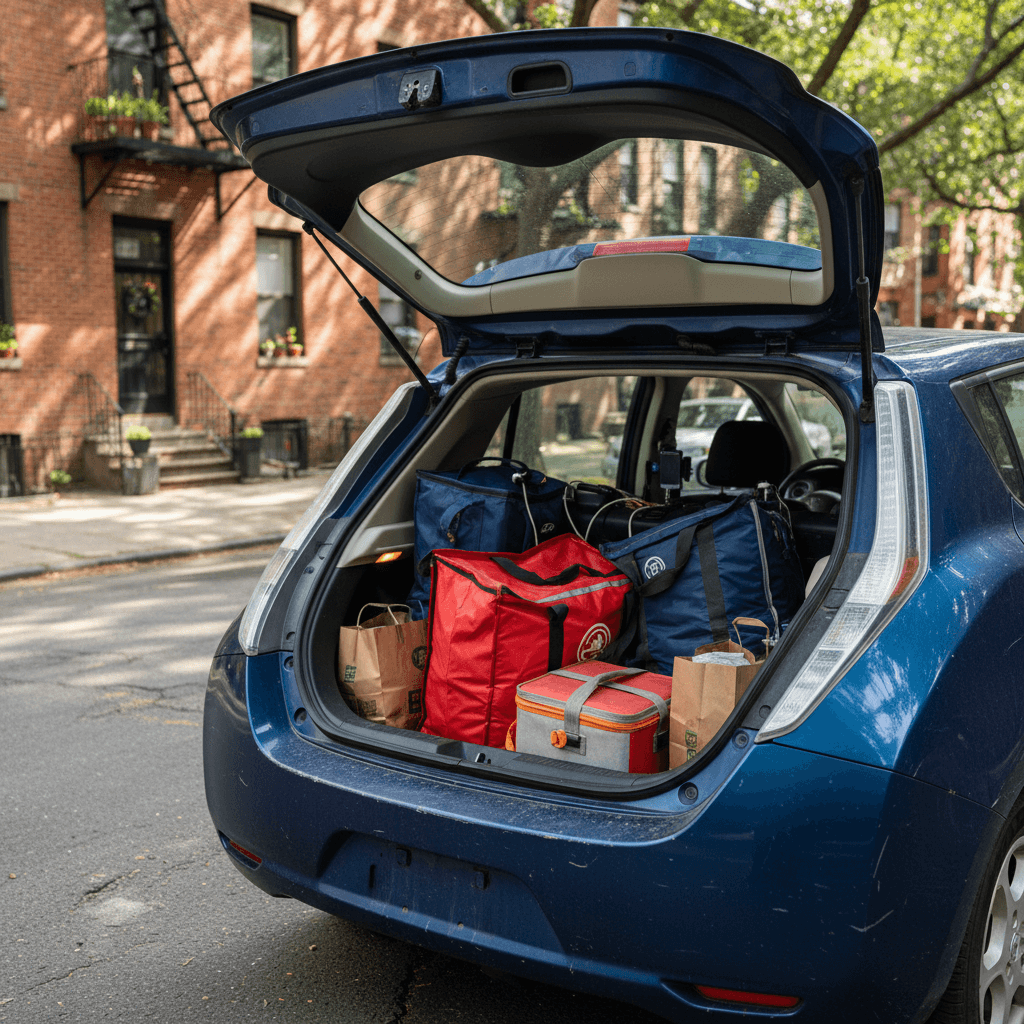
Body style sweet spot
Best used electric cars for delivery drivers: model picks
There is no single “best” used electric car for delivery drivers, but a few models consistently pencil out on cost, range, and practicality, especially now that used EV prices have corrected.
Used EV shortlist for delivery drivers
These models balance purchase price, range, and practicality for gig delivery. Always verify exact range, options, and battery warranty on the specific car you’re considering.
| Model | Body style | EPA range (new) | Why it works for delivery |
|---|---|---|---|
| Chevy Bolt EV (2017–2022) | Compact hatchback | ~238–259 mi | Super efficient, cheap on the used market, easy to park, rear seats fold flat for cargo. |
| Chevy Bolt EUV (2022–2023) | Compact crossover | ~247 mi | A bit more rear seat and cargo room than Bolt EV, still very efficient and maneuverable. |
| Hyundai Kona Electric (2019–2023) | Subcompact crossover | ~258 mi | Strong real‑world range, comfortable ride, good warranty coverage when bought used. |
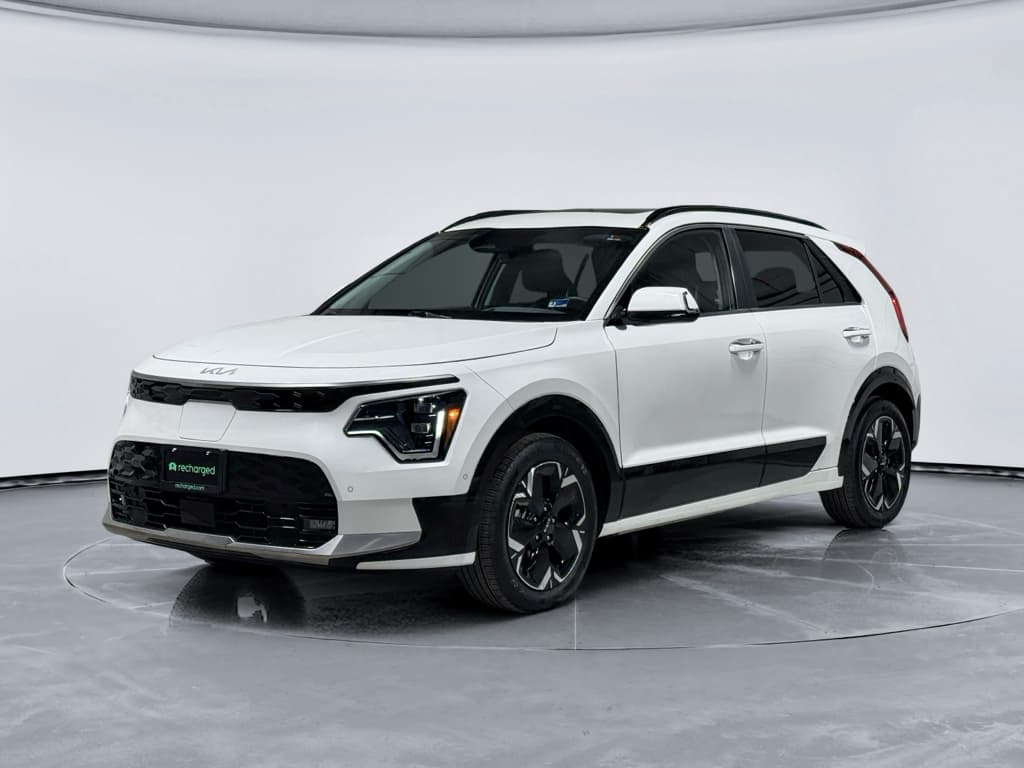
| Kia Niro EV (2019–2022) | Compact crossover | ~239 mi | Boxier cargo area for bulky grocery orders, decent efficiency, often overlooked so values can be good. |
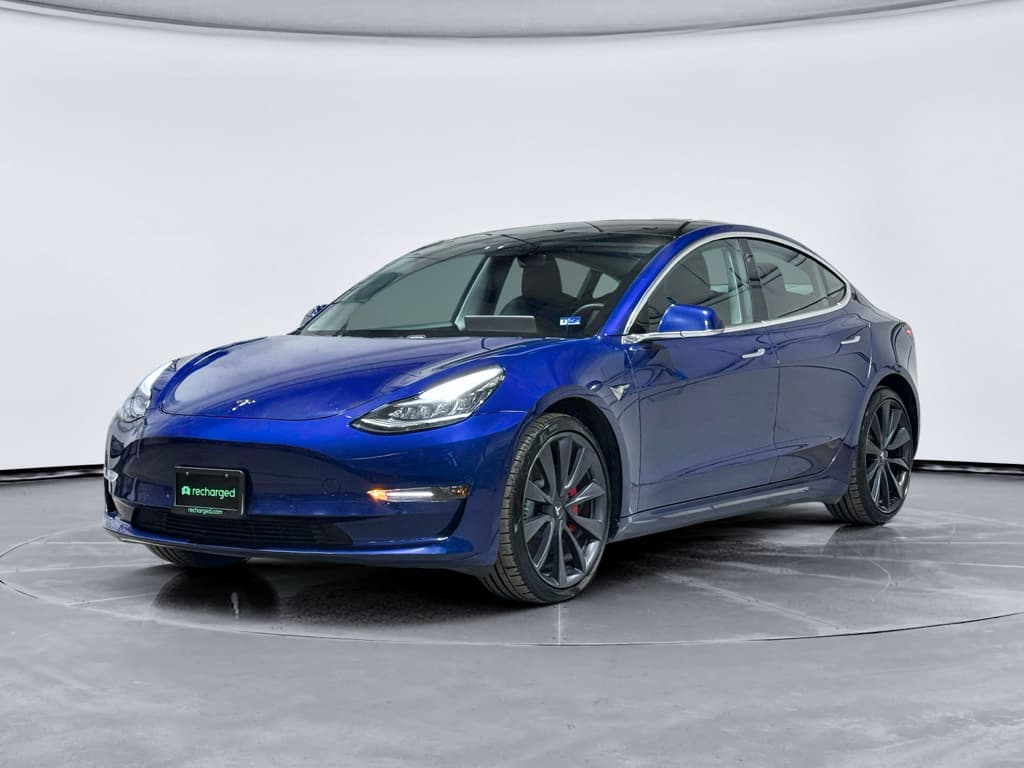
| Tesla Model 3 RWD (2018–2022) | Sedan | ~220–272 mi | Great highway efficiency, big charging network, ideal if you also do rideshare as well as delivery. |
| Nissan Leaf Plus (62 kWh, 2019–2022) | Hatchback | ~215–226 mi | Lower prices and simple packaging; better for city work due to CHAdeMO fast‑charging limitations. |
Approximate ranges are EPA ratings when new; expect less in real work use.
Be cautious with older short‑range EVs
Best used EV by delivery driver type
Match the car to how you actually work
Food & grocery only
Best bets: Chevy Bolt EV/EUV, Hyundai Kona Electric, Kia Niro EV.
These maximize **stop‑and‑go efficiency**, are easy to park at restaurants and apartments, and have plenty of space for hot bags and cases of water.
Food + rideshare mix
Best bets: Tesla Model 3 RWD, Kia Niro EV.
You get enough rear‑seat comfort and a more "normal" car experience for riders while still keeping operating costs low.
Parcel & local courier
Best bets: Kia Niro EV, Bolt EUV, Kona Electric.
Boxier cargo areas handle oddly shaped packages better, and the tall hatch openings make repeated loading less punishing.
Battery health, warranties, and high‑mileage use
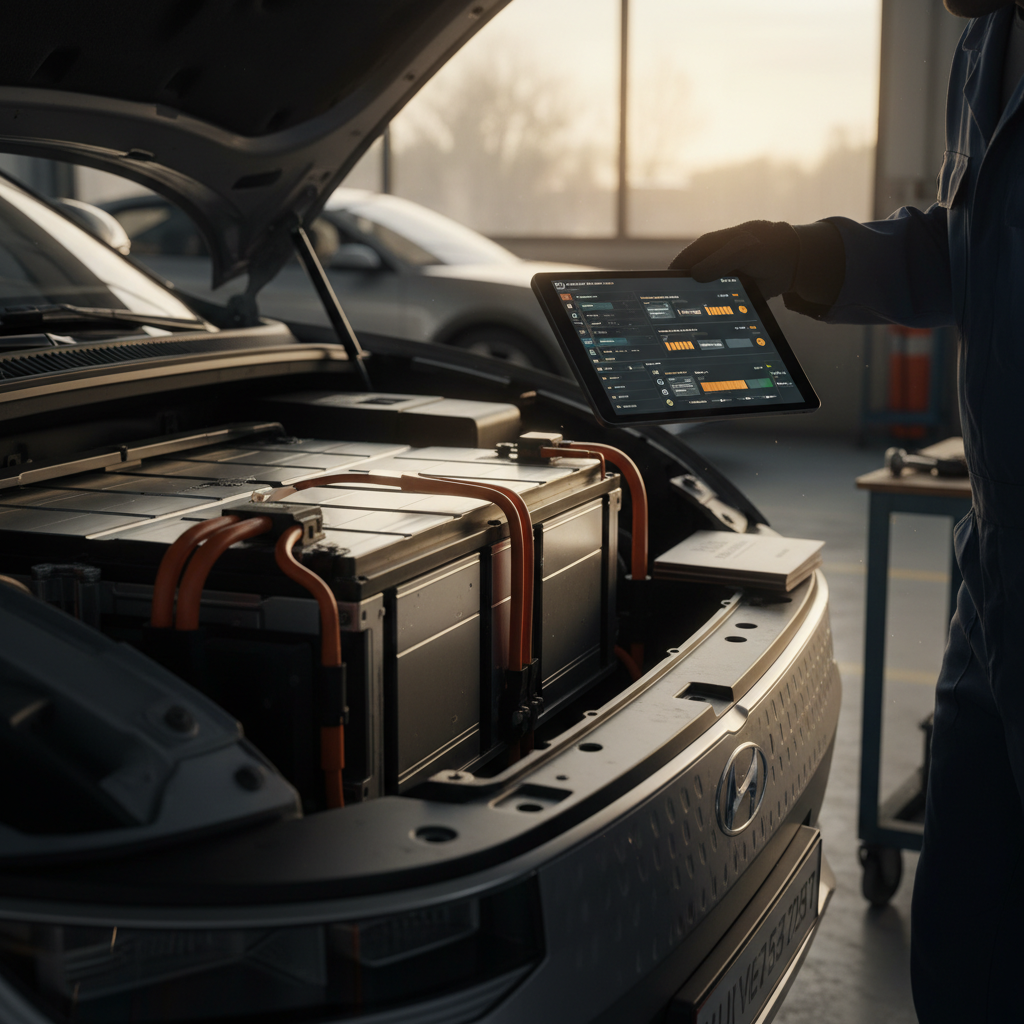
For delivery drivers, the battery is your business. You’re stacking miles much faster than a typical commuter, so you can’t treat a used EV like a normal used car purchase. You need data.
Why a battery health report matters
- Check whether the **original high‑voltage battery warranty** is still in force. Many mainstream EVs launched with 8‑year/100,000‑mile (or more) battery warranties against excessive degradation.
- Look for **documented fast‑charging habits**. A car fast‑charged multiple times per day for years may age differently than one mostly home‑charged.
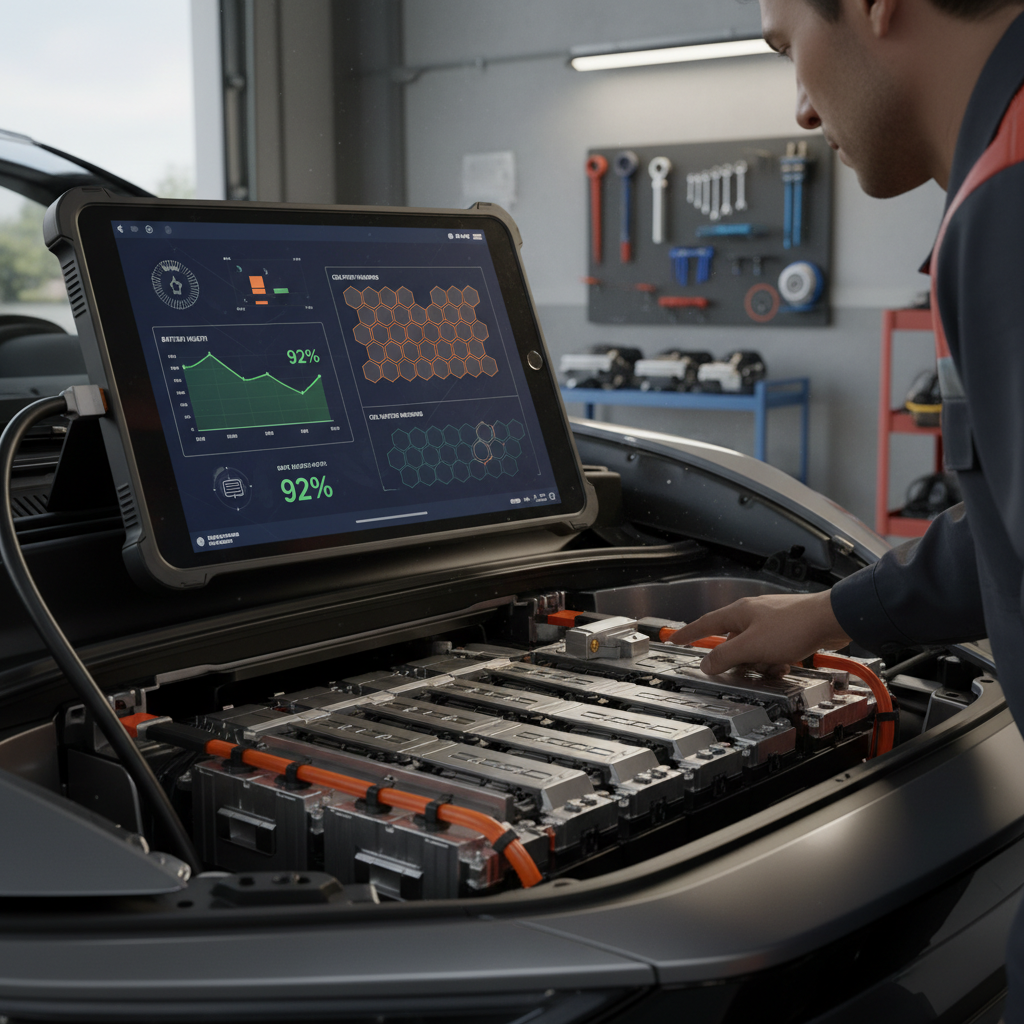
- Use an independent **battery diagnostic** (like the Recharged Score) to see real state‑of‑health instead of relying on vague dash bars.
- Favor cars that still have at least **70–80% of original usable capacity**, especially if your daily routes are already close to the car’s comfortable range.
- Understand your platform’s rules, some gig apps have specific vehicle age or condition requirements that you’ll need to meet for years to come.
How Recharged can de‑risk a work EV
Charging strategies that actually work for gig drivers
Even the best used electric car for delivery drivers will flop if your charging plan is unrealistic. Think of charging as part of your daily workflow, not an afterthought you’ll “figure out later.”
Build a charging plan before you buy
1. Lock in overnight home charging
A dedicated Level 2 charger or at least a reliable 120V outlet where you can leave the car plugged in for 8–10 hours is the foundation. If your living situation is unstable or shared, solve this first.
2. Map your daytime top‑up options
Identify **reliable public chargers** near your usual hotspots, grocery stores, popular restaurants, mall food courts. A 30–40 minute top‑up during a slow period can turn a marginal day into an easy one.
3. Know your local rates
Time‑of‑use electricity plans can make **overnight charging dramatically cheaper**. Conversely, some DC fast chargers are now expensive enough that they erase much of an EV’s fuel savings.
4. Bake charging into your schedule
Instead of treating charging as lost time, align it with dinner, admin work, or low‑demand windows. Ten minutes of planning can save you an hour of sitting in the car watching electrons trickle in.
5. Plan for winter and peak days
Have a plan for the worst case: cold snaps, big promos, or holidays. Will you accept a mid‑shift fast‑charge? Will you borrow a car? Will you cap your hours to fit the range?
Red flag: public fast charging only
Cost per mile: what your spreadsheet should actually show
High‑mileage delivery work is a spreadsheet sport. You don’t need a PhD in finance, but you do need a consistent way to compare a used EV against a used hybrid or gas car on a **per‑mile** basis.
Sample cost-per‑mile comparison: used EV vs used hybrid
Illustrative numbers for a U.S. delivery driver doing 20,000 miles/year. Adjust energy prices, purchase prices, and maintenance based on your reality.
| Cost component | Used EV (home charging) | Used hybrid |
|---|---|---|
| Energy | $0.05/mi (≈$1,000/yr) | $0.09/mi (≈$1,800/yr) |
| Maintenance/repairs | $0.03/mi (≈$600/yr) | $0.05/mi (≈$1,000/yr) |
| Depreciation & finance | Highly dependent on purchase price; a cheap used EV can undercut a newer hybrid, but an overpriced one won’t. | Similar story, older, fully depreciated hybrids can be very cheap to own. |
| Total operating cost (fuel + maint.) | ≈$0.08/mi ($1,600/yr) | ≈$0.14/mi ($2,800/yr) |
This is an example, not a quote. Always plug in your own numbers.
Compare monthly, not just per mile
Checklist: before you buy a used EV for delivery
Delivery driver used‑EV buying checklist
Confirm your charging reality
Do you have a **guaranteed place to charge overnight** most days of the week? If the answer is "maybe" or "it depends on my landlord/roommates," solve that before you shop.
Map your typical and peak days
Log a week of driving now, total miles per day, longest day, where you park between batches. That becomes your minimum viable range and charging map.
Set a hard budget and reserve
Don’t empty your savings on the purchase. Leave a **cash buffer for tires, brakes, and downtime**, gig work has no paid sick leave.
Insist on a battery health report
Whether it’s a factory report, third‑party scan, or a **Recharged Score** from Recharged, you want actual data on battery capacity, not vague reassurances.
Check warranty status and recalls
Know how much **battery warranty** is left, whether recalls (like battery replacements on some Bolts) are done, and whether you’re buying into any known issues.
Test with your real gear
Bring your hot bags, coolers, and parcel totes to the test drive. Make sure everything fits without blocking visibility or contorting your back every pickup.
FAQ: best used electric car for delivery drivers
Frequently asked questions for delivery drivers
Bottom line: should your next delivery car be a used EV?
For the right driver, the best used electric car for delivery work can feel like unlocking a cheat code: quiet, quick, cheap to run, and perfectly suited to dense urban routes. For the wrong driver, no home charging, long rural days, extreme cold, it can be an expensive distraction that eats time and mental bandwidth.
The pattern is clear: focus on **range that matches your routes**, a **battery you can trust**, and **charging that fits your life**, then let model preferences, comfort, and price sort out the rest. Whether that leads you to a humble Bolt, a versatile Kona or Niro, or a used Model 3, you’re buying a work tool, not a toy.
If you want help running the numbers on a specific car, or you’d rather see only used EVs with **verified battery health and transparent pricing**, starting your search on Recharged can take a lot of the guesswork out of the process, and help ensure the car you buy is ready for the mileage you’re about to throw at it.