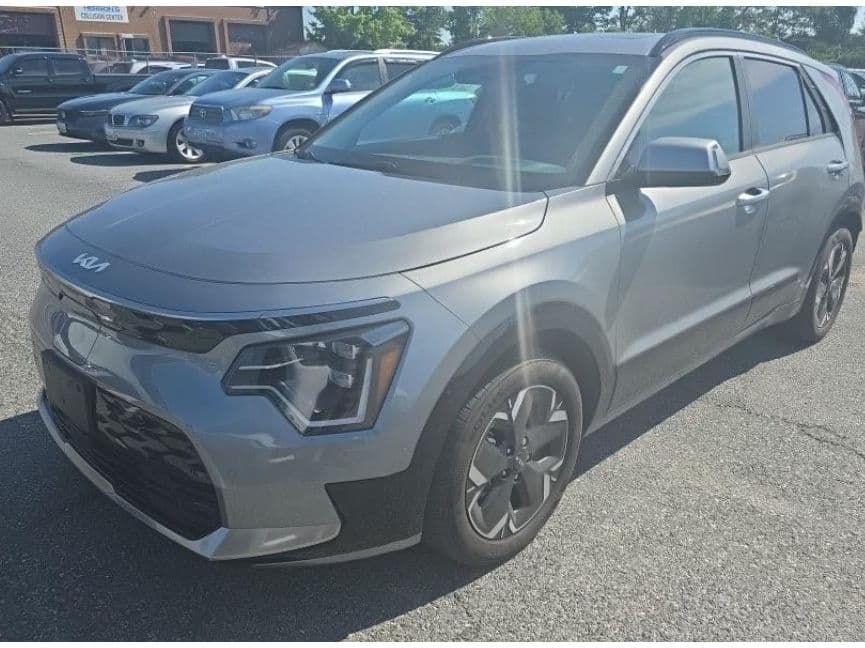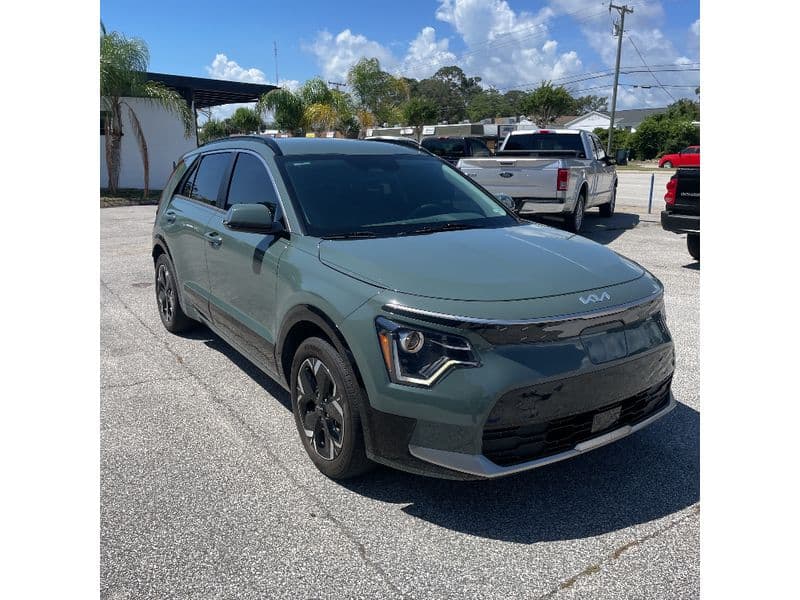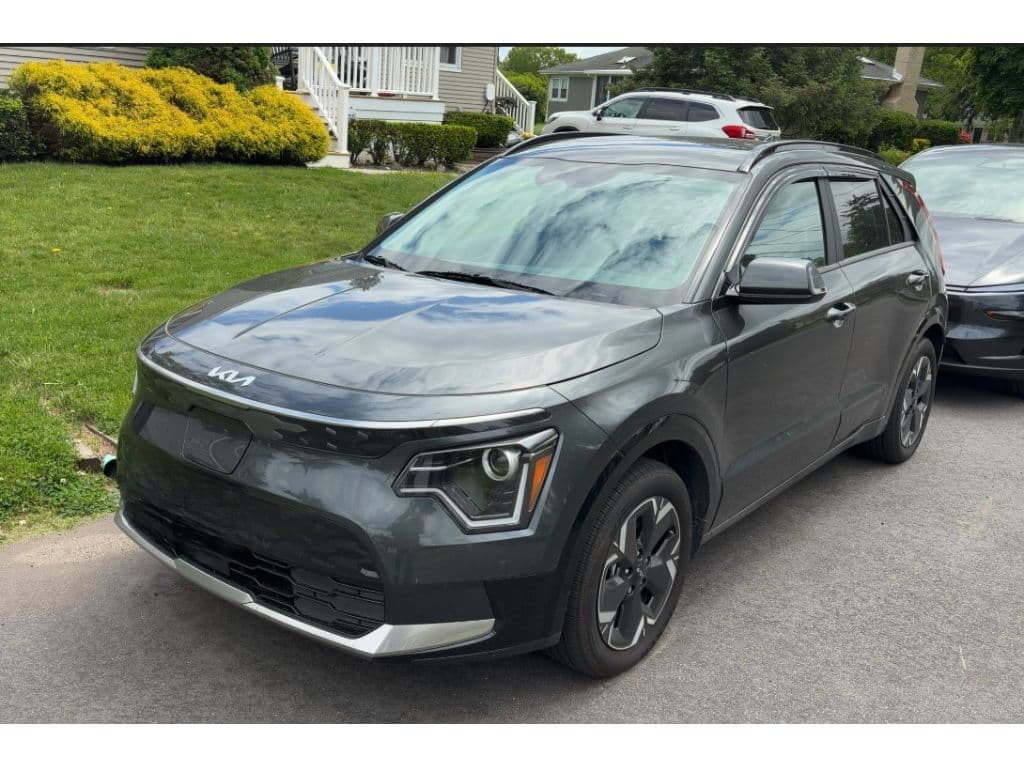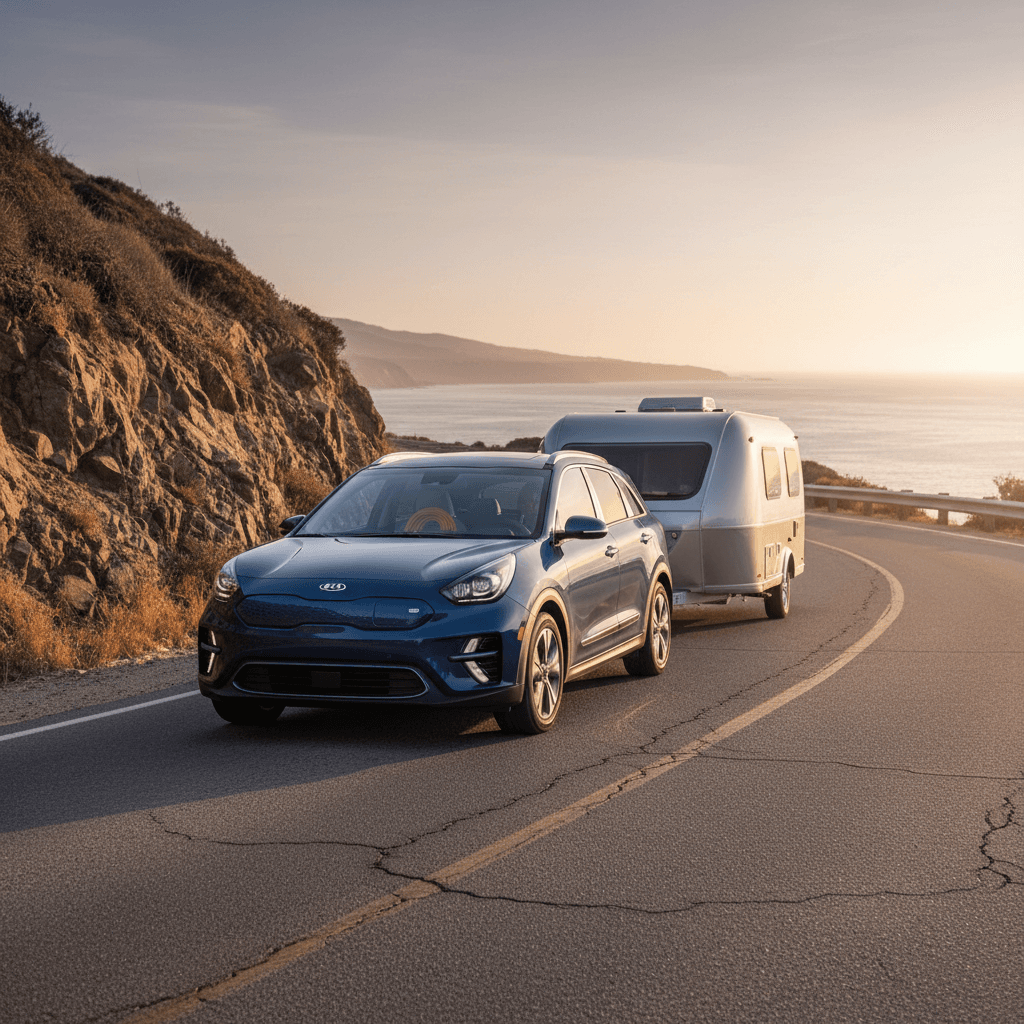
If you’re eyeing a Kia Niro EV for daily driving and the occasional road trip, you’re probably wondering two things: how far it can go on a charge and whether it can safely tow a trailer, bikes, or extra cargo. The reality is a bit nuanced. On paper, the Niro EV can tow a light trailer, but manuals and regional ratings don’t always line up, and towing has a big impact on range. This guide breaks down the Kia Niro EV towing capacity and range in plain language so you can decide what’s realistic for your lifestyle.
Key takeaway
Kia Niro EV towing & range overview
Kia Niro EV key specs at a glance
Recent U.S.‑spec Kia Niro EV models (2023–2025) all share the same basic hardware: a 64.8 kWh battery, front‑wheel drive, and an EPA range rating of about 253 miles. Where things get tricky is towing. Some spec sheets list a maximum towing capacity of roughly 1,653 pounds, yet U.S. market documentation has historically said towing is “not recommended.” That disconnect leaves owners confused. The practical approach is to treat the Niro EV as a light‑duty hauler: great for bikes, cargo boxes, and small utility trailers, but not for heavy campers or car haulers.
Official Kia Niro EV towing capacity figures
If you search around online, you’ll see different numbers – and even different philosophies – about how much a Kia Niro EV can tow. Here’s how to make sense of it.
How different sources describe Niro EV towing
These figures are typical for recent model‑year Kia Niro EVs, but always confirm against your specific VIN and owner’s manual.
| Source | What it says | Typical figure |
|---|---|---|
| Kia/third‑party spec sheets | Lists max towing capacity for braked trailer | Up to 1,653 lbs (750 kg) |
| European/Korean documentation | Often confirms light towing is allowed | ~1,300–1,650 lbs depending on market |
| Older U.S. manuals | “Towing not recommended” language | Effectively 0 lbs official rating |
| Roof load (recent models) | For racks + cargo on rails | Approx. 220 lbs including rack |
Treat these as upper limits, not targets.
Why the numbers don’t always match
From a purely engineering standpoint, the Niro EV has enough torque, brakes, and structure to move a light trailer. That’s why spec databases often list a tow rating around 1,653 lbs with a tongue weight around 165 lbs. But just because it can move that load doesn’t mean it’s designed – from a legal and warranty perspective – to do so in your market. Think of the Niro EV as a compact crossover that can pull something small and aerodynamic in a pinch, but not a factory‑endorsed tow vehicle in the way an EV6 or Ioniq 5 can be.
Is towing actually recommended in the U.S.?
U.S. guidance
Historically, U.S. owner’s manuals and dealer materials for the Niro EV have leaned on “towing not recommended” language, even when overseas models got a defined tow rating. That doesn’t mean the car will fall apart if you attach a small trailer, but it does mean you’re operating outside Kia’s intended use case in this market.
If you choose to tow in the U.S., you’re accepting extra responsibility for maintenance, safety, and potential warranty disputes.
European & other markets
In Europe, where compact crossovers commonly tow small caravans and cargo trailers, Kia publishes a conventional tow rating for the Niro EV, usually in the 600–750 kg range. Owners routinely tow small trailers, but speeds are lower, distances are shorter, and infrastructure (like trailer inspections) is different.
Those real‑world stories are useful for understanding what’s possible, but they don’t override your local warranty terms.
Warranty & liability reality check
How towing affects Kia Niro EV range
Even if you stay within very conservative weight limits, towing changes the Niro EV’s aerodynamics and workload, which has a big impact on range. The base line is simple: a solo Niro EV can realistically do 200–250 miles on a full charge in mixed driving, depending on temperature, speed, and how you drive. Add a trailer, and that number drops fast.
Typical range impact from added load
These are directional examples, not guarantees. Always plan with a safety buffer.
Light hitch rack + 2 bikes
- +100–150 lbs total
- Minimal aero drag if behind car
- ~5–10% range loss at highway speeds
Small utility trailer, lightly loaded
- ~600–1,000 lbs total
- Moderate aero + rolling drag
- 20–30% range loss is common
Boxy small camper trailer
- Approaching upper tow limit
- Poor aerodynamics
- 30–40%+ range loss at freeway speeds
In other words, a trip that normally takes you 220 miles between DC fast‑charge stops might shrink to 130–160 miles of usable range once you add a tall, square trailer. In cold weather or strong headwinds, that can fall even further. This is why many Niro EV owners choose to keep towing extremely light or stick to bikes and cargo boxes rather than campers.
A simple planning rule
Realistic towing scenarios for the Niro EV
So what does all of this add up to in practice? Let’s walk through a few realistic scenarios and how they intersect with Kia’s guidance and the Niro EV’s strengths.
Common use cases and how the Niro EV handles them
1. Hitch‑mounted bike rack
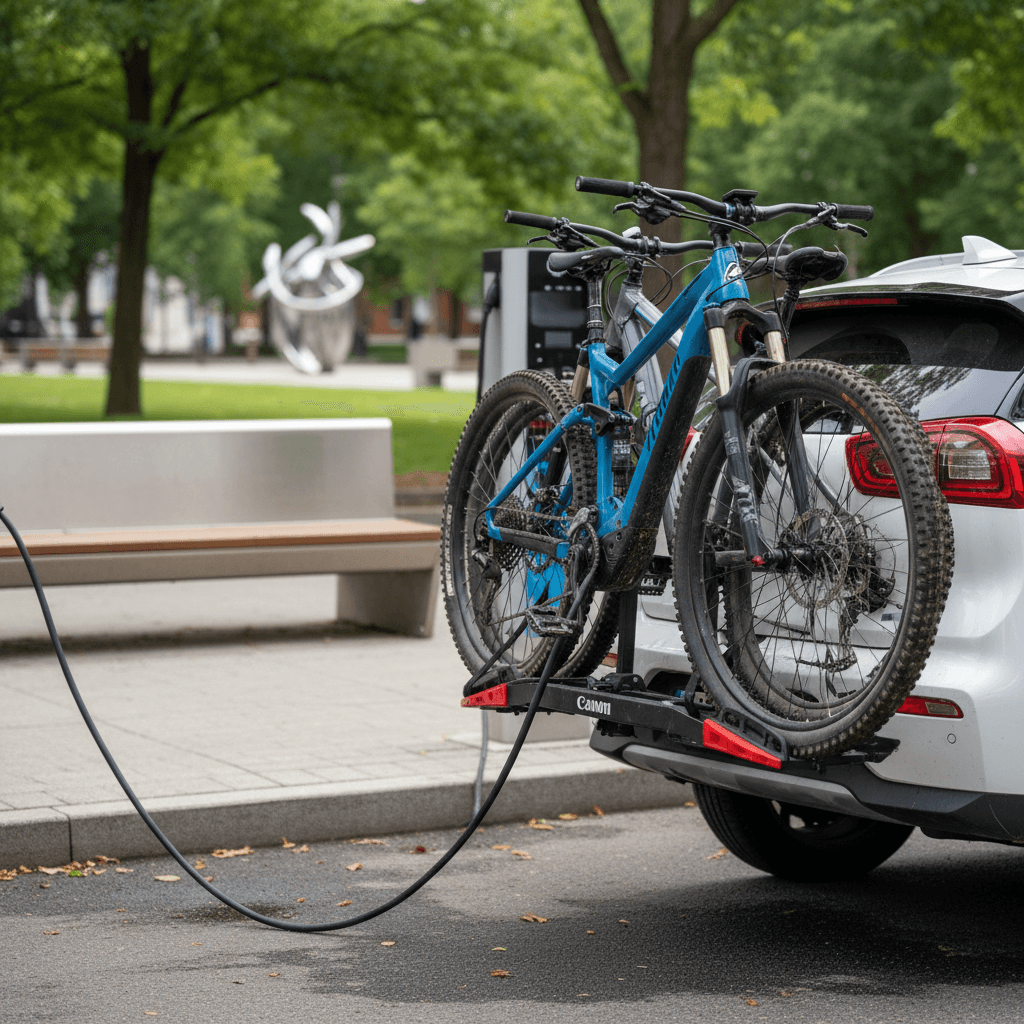
A 1.25" or 2" receiver hitch carrying 2–4 bikes is one of the best matches for the Niro EV. Weight stays modest, aero drag is limited (especially with bikes behind the car), and range loss is usually in the single‑digit percentages. This kind of setup is unlikely to raise warranty eyebrows if the hitch is rated and professionally installed.
2. Small open utility trailer
Think of a low‑sided 4x6 or 5x8 trailer with moving boxes, yard waste, or home‑improvement supplies. Keep total weight well under ~1,000 lbs, drive in Normal or Eco mode, and keep speeds reasonable. Expect a meaningful hit to range, but this kind of occasional duty is more realistic than cross‑country towing.
3. Teardrop or micro‑camper
Aerodynamic teardrop campers can weigh 900–1,300 lbs empty. That’s near the upper comfort zone for a compact EV like the Niro. You’ll likely see 30–40% range loss at highway speeds, and you’re operating in the gray zone of Kia’s towing guidance in the U.S. For most owners, this is better suited to short‑range regional trips than cross‑country adventures.
4. Car hauler or large camper
This is where the answer becomes a hard no. The Niro EV is not designed to pull multi‑ton loads, and attempting to do so risks overtaxing the motor, brakes, and cooling system. If you routinely tow heavy, you’ll be happier in a bigger EV SUV with a higher tow rating and thermal capacity.
Where the Niro EV shines instead
Roof racks, hitch racks, and cargo solutions
For many Niro EV owners, the smartest play is to think “carry” rather than “tow.” Thankfully, the car is well set up for that. Roof rails are available, aftermarket hitches are common, and the flat load floor makes it easy to haul a surprising amount of gear with the seats down.
Best ways to haul more with a Kia Niro EV
Lightweight, aerodynamic solutions preserve more of your range.
Hitch‑mounted bike rack
Keeps bikes out of the airflow and leaves the roof free. Ideal if you regularly ride and want quick on‑off convenience.
Rear cargo carrier
A small platform or enclosed box on the hitch can handle camping gear or luggage without the drag of a trailer.
Aerodynamic roof box
Roof boxes do hurt efficiency, but streamlined designs are much better than square baskets. Great for skis and bulky but light items.
Mind your weight limits
Charging and trip planning when you’re hauling
Once you start towing or carrying extra weight, range stops being an abstract EPA number and becomes a trip‑planning problem. The good news is that the Niro EV is extremely predictable: if you know your usual efficiency, you can model the towing hit fairly easily. Modern charging access, including Tesla Superchargers via adapters, helps close the gap.
- Start from your real‑world baseline, not the window sticker. If you typically see 3.5 mi/kWh in mild weather, use that, not the EPA label.
- Apply a conservative multiplier for your setup: maybe 0.9 for bikes, 0.75–0.8 for a small trailer, 0.6–0.7 for a boxy camper.
- Use routing apps that support EVs and custom consumption assumptions so you can bake in shorter legs and longer charging stops.
- When using DC fast charging, factor in that you’ll be starting sessions at lower state of charge more often when towing – the last thing you want is limping in with 2% and limited charger options.
- If you’re using a CCS‑to‑NACS adapter to tap into Tesla Superchargers, check ahead of time that the stalls you plan to use have enough maneuvering room if you’re attached to a trailer. Sometimes it’s easier to briefly unhook.
Good news on charging access
Towing with a used Kia Niro EV
If you’re shopping for a used Kia Niro EV, especially through a marketplace like Recharged, you’ll want to layer towing questions on top of the usual EV due diligence. Battery health, prior usage, and any modifications all matter more once you start putting extra strain on the powertrain.
Extra checks before towing with a used Niro EV
1. Review the owner’s manual and build data
Confirm the exact model year, trim, and official guidance for your market. Some Niro EVs may have factory or dealer‑installed hitches; note whether they’re genuine Kia parts and how they were used.
2. Inspect or verify the hitch installation
Look for proper mounting points, corrosion, and wiring quality. Poorly installed hitches can stress the body structure or fail under load. If in doubt, have a professional shop inspect it before you tow anything.
3. Check battery health and thermal history
A healthy battery and cooling system give you more margin when you’re asking the car to work harder. Tools like a <strong>Recharged Score battery report</strong> can show you how the pack has aged and whether capacity loss is within normal expectations.
4. Look for signs of hard use
Uneven tire wear, overheated brakes, or suspension issues can all be clues that the vehicle has carried or towed more than the typical commuter. None of these are automatic deal‑breakers, but they’re reasons to ask more questions.
How Recharged can help
Ready to find your next EV?
Browse VehiclesFrequently asked questions: Kia Niro EV towing & range
Kia Niro EV towing & range FAQ
The Kia Niro EV is one of the most efficient small electric crossovers on the road, and that’s exactly how Kia intends most owners to use it: commuting, errands, family trips, and the occasional weekend adventure with bikes or a bit of extra cargo. It can tow a light trailer, but towing capacity and range aren’t its headline features, and U.S. guidance remains conservative. If you stay within light‑duty scenarios, respect weight limits, and plan your charging with a margin, the Niro EV can carry more of your life than you might expect – without breaking your budget on energy. And if you’re exploring used Niro EVs, Recharged’s battery health reports and EV‑specialist support can help you match the right car to your towing and range expectations before you ever sign on the dotted line.