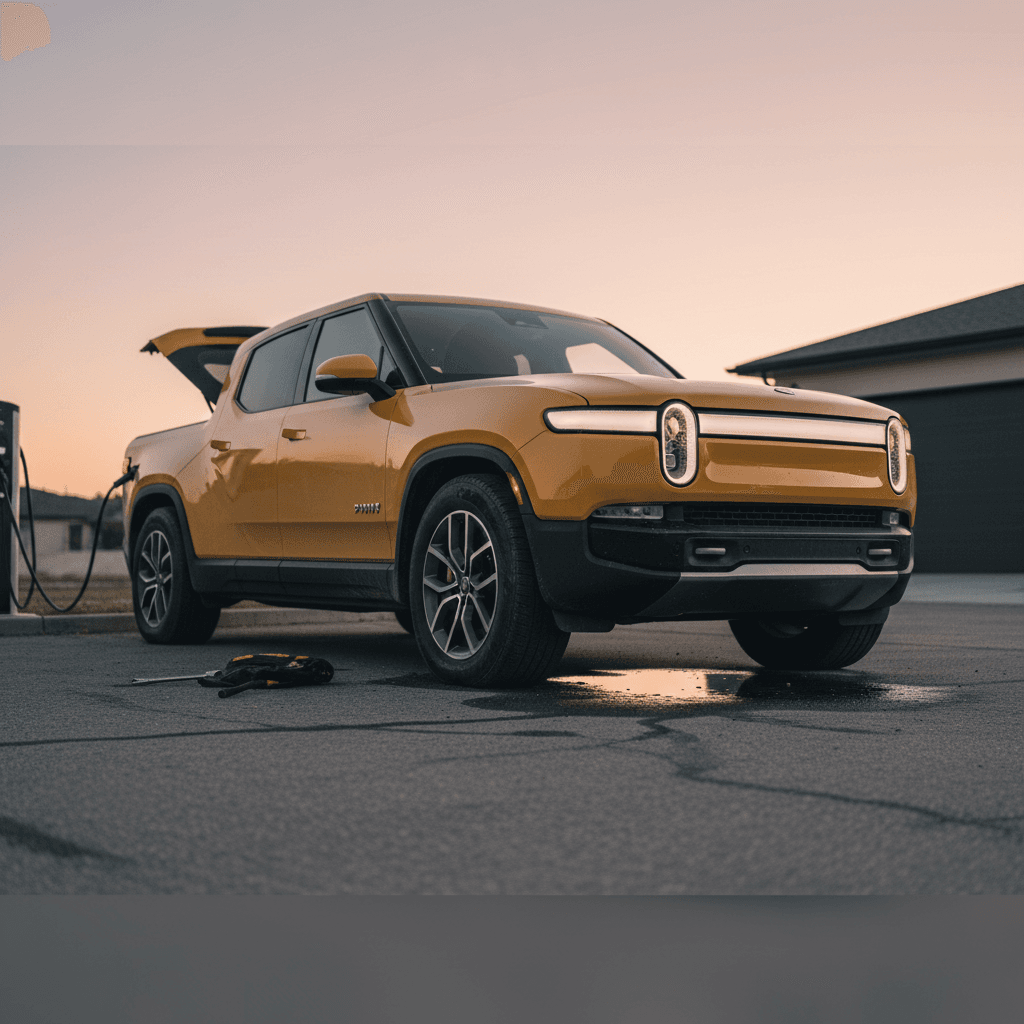
If you’re eyeing a 2023 Rivian R1T, you’ve probably heard two very different stories: it’s one of the most exciting electric trucks on the road, and one of the least reliable new vehicles you can buy. This guide walks you through 2023 Rivian R1T reliability in plain English, so you know what’s hype, what’s real, and what to look for if you’re considering a used R1T.
New brand, sharp learning curve
Is the 2023 Rivian R1T reliable?
Short answer: **no, not yet**, at least not by traditional metrics. Consumer Reports has called the Rivian R1T one of the *least reliable* vehicles it tracks, with a reliability score around the low 20s out of 100, putting it at or near the bottom of its rankings for recent model years. Several surveys and studies group the R1T among new vehicles with **below‑average predicted reliability** compared with other 2023 trucks and EVs.
At the same time, owner satisfaction paints a more nuanced picture. Kelley Blue Book owner reviews for the 2023 R1T skew strongly positive, with most owners rating it 4–5 stars for performance and comfort and reporting reliability that ranges from "rock solid" to "too many shop visits for a new truck." In other words, **the spread is wide**: some 2023 R1Ts have been nearly flawless; others have had repeated issues and long waits for parts or appointments.
How to read early EV reliability
How major rating agencies score 2023 R1T reliability
2023 R1T reliability snapshot
Consumer Reports bases its scores on owner surveys that track roughly twenty trouble areas, from squeaks and rattles to EV battery problems and charging issues. The R1T’s low score reflects **problems spread across many systems** rather than one fatal flaw: electronics, climate, body hardware, trim, and charging all show more complaints than average for a new vehicle.
J.D. Power’s predictive reliability for Rivian as a brand also sits below average. Meanwhile, independent outlets and owners rave about how the truck drives and how much they enjoy living with it when it’s not in the shop. That split, **low reliability, high satisfaction**, is the story of the 2023 R1T so far.
Common 2023 R1T problems and trouble spots
Not every 2023 Rivian R1T will suffer these issues, but patterns are emerging from owner reports, NHTSA complaints, and reliability surveys. When you’re evaluating a used R1T, these are the systems to pay closest attention to.
Most common trouble areas on 2023 R1T
What to listen and look for on a test drive
EV battery & charging
- Occasional complaints about charging problems at home or public stations.
- Some owners note less real‑world range than displayed, especially at highway speeds.
- Software updates have improved charge curves and range estimates over time.
Electronics & driver aids
- False or overly sensitive forward collision warnings and phantom braking reports in some trucks.
- Glitches in adaptive cruise or lane‑keeping that can’t always be reproduced at the service center.
- Infotainment bugs that usually resolve with updates or reboots.
Climate & comfort systems
- HVAC noises, quirky auto climate behavior, or inconsistent fan speeds in some trucks.
- Occasional issues with heated seats or steering wheel not working consistently.
- Most are annoyance‑level problems but worth checking thoroughly.
Body hardware & trim
- Rattles and squeaks from the interior, especially on rough roads.
- Loose exterior trim or window seals, misaligned panels on some early builds.
- Tailgate, tonneau, or door seals occasionally needing adjustment.
Safety systems
- At least one NHTSA complaint about the passenger airbag not arming reliably for certain occupants.
- Owners reporting traction control and ABS behavior that felt unpredictable in high‑regen mode on low‑grip surfaces.
- These are rare but important to ask about and test.
Suspension & steering
- Later recalls have focused on potential rear suspension toe‑link issues after service.
- Some reports of noises over bumps or needing alignments earlier than expected.
- Air suspension otherwise holds up reasonably well so far but is complex and expensive out of warranty.
Use the software to your advantage
Recalls affecting the 2023 Rivian R1T
By early 2026, the Rivian R1T had racked up multiple recalls across the 2022–2025 model years, and many of those campaigns touch 2023 trucks. That doesn’t automatically make a vehicle unsafe, recalls are how issues get fixed, but it does mean you need to verify that any **used 2023 R1T is fully up to date**.
Examples of recall themes affecting R1T models
Recall details and coverage can change. Always run the VIN on NHTSA’s website and in the Rivian app for the latest status.
| Area | Issue type | Potential risk | Fix type |
|---|---|---|---|
| Suspension | Improperly reassembled rear toe link after service | Toe‑link separation could increase crash risk | Inspection and replacement of affected parts at no cost |
| Seat belts | Driver’s belt cable/anchorage issue in some vehicles | Seat belt may not restrain properly in a collision | Inspection and belt replacement where needed |
| Driver assistance | Hands‑Free or highway assist logic errors on later software | System may mis‑detect or fail to track leading vehicles | Over‑the‑air (OTA) software update |
| Braking/regen tuning | High‑regen behavior in low‑grip conditions for some owners | Vehicle can feel unstable during lift‑off in deep water or snow | Software calibration updates and driver education |
| Misc. hardware & trim | Fastener torque, body hardware, or minor component campaigns | Noise, vibration, or potential long‑term durability issues | Inspection, tightening, or replacement in service centers |
Not all recalls apply to every 2023 R1T; coverage depends on build date and service history.
Non‑negotiable for used buyers
Owner experience: service and uptime
When it goes right
Plenty of 2023 R1T owners report smooth sailing: one or two visits for minor issues, quick responses in the app, and convenient mobile technicians who come to their driveway. For these owners, Rivian’s service feels more personal and modern than traditional dealers, and the truck spends almost all of its life on the road, not in the shop.
When it goes wrong
Others tell a very different story: repeated visits for the same problem, slow callbacks, or trucks waiting at service centers for days or weeks before parts arrive. In areas far from major cities, some owners say they’d “never buy again” primarily because of service access and delays, not the truck itself.
The reality is that Rivian is still building out its service network. If you live near a Rivian Service Center or in a market with strong mobile coverage, your experience is likely to be much better than someone hundreds of miles away. For a used 2023 R1T, you’re not just buying a truck, you’re buying into **a specific service ecosystem**, and its maturity varies a lot by region.
Pro move for used buyers
Battery health and range expectations
Mechanically, the R1T benefits from the same thing that helps most EVs: **far fewer moving parts** than a gasoline truck. Early‑life battery pack failures on 2023 trucks appear to be uncommon, and when they do happen Rivian has generally replaced packs under warranty and provided loaner vehicles. The bigger theme is **range realism** rather than catastrophic failure.
- Some owners who see 300+ miles of indicated range at 100% state of charge report closer to 230–270 miles in real‑world driving, especially at 70–80 mph or in cold weather.
- Towing, off‑roading, and big rooftop accessories can dramatically cut usable range, which can feel like a “reliability” issue if you’re not expecting it.
- Software updates since launch have gradually refined range estimates and charging behavior, so a 2023 truck kept up to date will usually behave better than it did when new.
How Recharged checks battery health
Warranty coverage for the 2023 R1T
Rivian backs the 2023 R1T with a warranty package that’s competitive with other premium EVs. Exact terms can depend on in‑service date and market, but in the U.S. you’ll typically see:
Typical U.S. warranty coverage for 2023 R1T
Always confirm exact warranty dates on the specific VIN, especially for early‑delivered trucks or vehicles originally registered outside the U.S.
| Component | Typical coverage | What it means for a 2023 R1T buyer |
|---|---|---|
| Basic (bumper‑to‑bumper) | Around 4 years / 50,000 miles from first in‑service date | Many 2023 trucks will be near the end of basic coverage by 2026–2027. |
| Battery & drive units | Around 8 years / 175,000 miles (with minimum capacity retention) | Most 2023 R1Ts still have several years of battery and motor coverage left. |
| Corrosion & perforation | Longer‑term, often 8–12 years on body panels | Less likely to be a concern on a young EV but useful if you live in the Rust Belt. |
| Roadside assistance | Typically tied to basic or battery warranty | Helpful if you’re far from a Service Center or still learning public charging. |
For used buyers, the remaining battery and drivetrain coverage is especially important.
Why documentation matters
Should you buy a used 2023 Rivian R1T?
If you’re a set‑it‑and‑forget‑it buyer who just wants a truck that disappears into the background for 10 years, the 2023 Rivian R1T probably isn’t your safest bet. Reliability scores and recall counts make that clear. A Toyota hybrid this is not.
But if you’re drawn to what the R1T does better than almost anything else, instant torque, off‑road ability, clever storage, a cabin that feels like a boutique hotel, and you’re willing to live with some **quirks and extra planning**, a well‑vetted 2023 can still be a fantastic daily driver and adventure rig.
Who the 2023 R1T fits (and who it doesn’t)
Match the truck to your tolerance for risk and hassle
Good fit if…
- You value driving enjoyment and tech over rock‑solid reliability stats.
- You live reasonably close to a Rivian Service Center or in a strong mobile‑service market.
- You’re comfortable with software updates and occasional bugs.
- You want a capable off‑road or adventure EV that doubles as a family truck.
Maybe skip it if…
- You live hours from the nearest Rivian service hub.
- You can’t tolerate repeated visits for minor issues or long parts waits.
- You depend on one vehicle for critical daily use with no backup.
- You prefer proven long‑term reliability over cutting‑edge tech.
How Recharged helps de‑risk a used R1T
Ready to find your next EV?
Browse VehiclesChecklist: shopping for a used 2023 R1T
Key reliability checks for a 2023 R1T
1. Run a full recall and service history check
Use the VIN to check for open recalls and have the seller show you the Rivian app service history. Confirm that any suspension, seat belt, or software campaigns have been completed.
2. Verify software and feature status
On a test drive, check that driver‑assistance features, cameras, and infotainment all work as expected. Confirm the truck is on the latest software and that OTA updates are functioning.
3. Inspect body, seals, and trim
Drive on rough pavement and listen for rattles. Look closely at panel gaps, door and window seals, and the tonneau or bed accessories. Wind noise or water leaks are reliability issues in their own right.
4. Test climate and comfort systems
Cycle the HVAC through heat, A/C, and auto modes. Test heated and ventilated seats, steering wheel heat, and defrosters. Pay attention to any unusual noises, smells, or inconsistent behavior.
5. Evaluate battery, charging, and range
Check indicated range at a given state of charge, then compare to a real‑world drive if possible. Try at least one DC fast charge and one Level 2 session to ensure the truck charges reliably.
6. Confirm warranty and roadside coverage
Ask the seller for the in‑service date and verify remaining basic and battery warranty. Make sure the truck is properly registered with Rivian so you can access roadside assistance if needed.
Don’t skip a pre‑purchase inspection
Frequently asked questions: 2023 R1T reliability
Common questions about 2023 Rivian R1T reliability
Bottom line: is the 2023 R1T worth the risk?
The 2023 Rivian R1T is a contradiction on wheels: one of the **least reliable** new vehicles according to traditional surveys, and one of the **most loved** by many of the people who own it. If you value bulletproof reliability above all else, you’ll be happier in something more conventional. But if you’re willing to trade some peace of mind for a truck that drives like the future, a carefully vetted 2023 R1T can be worth the gamble.
Where you buy it, and how deeply it’s been inspected, matters just as much as which truck you pick. That’s why Recharged pairs every used EV with a Recharged Score Report, expert EV guidance, and nationwide delivery. If you’re ready to explore a 2023 Rivian R1T or compare it with other used EV trucks, you can start your search in minutes and shop your way, online, with help when you want it.