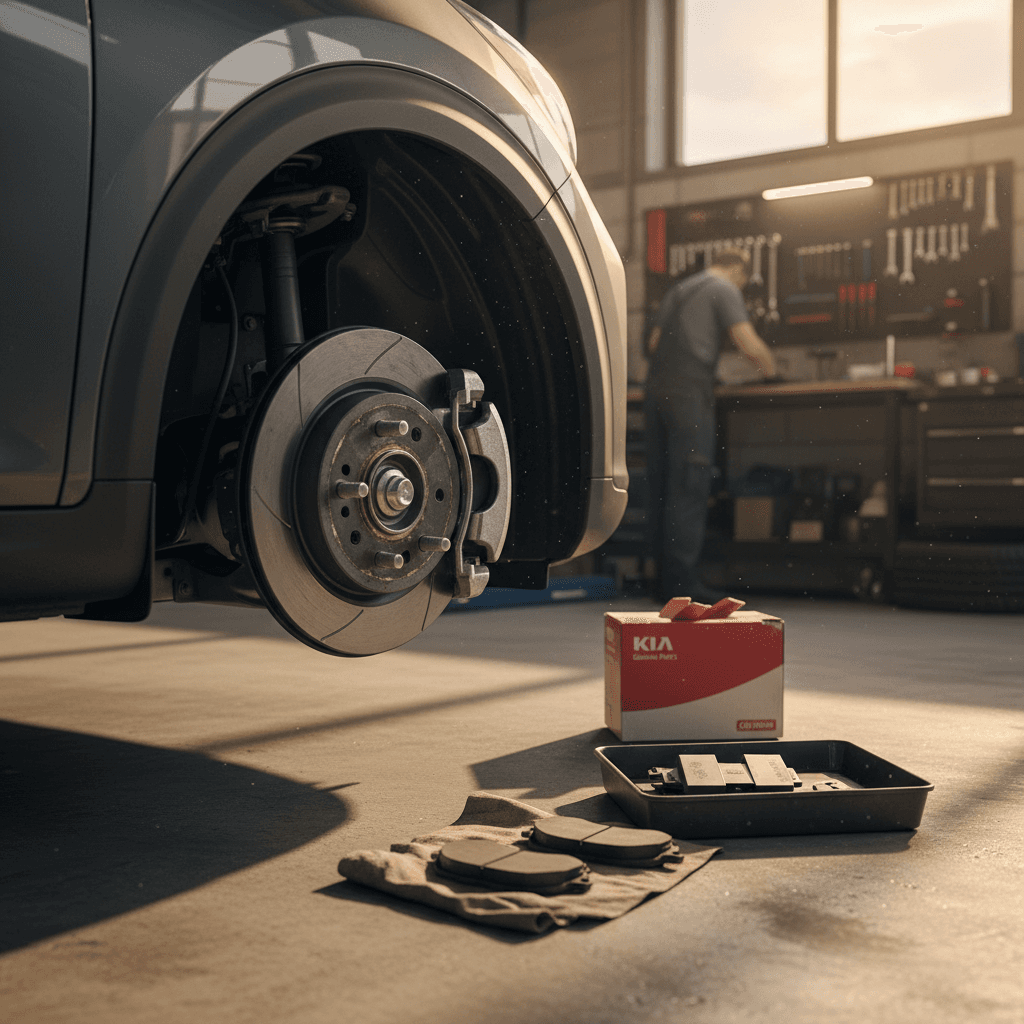
If you’re trying to budget for maintenance, knowing the Kia Niro EV brake pad replacement cost is a smart move. The good news: thanks to strong regenerative braking, most Niro EV owners go far longer between pad changes than they did with gas cars, and when you finally do need pads, the bill is usually pretty reasonable.
Quick takeaway
Kia Niro EV brake pad replacement cost overview
Kia Niro EV brake cost at a glance
Let’s put some real numbers to it. Nationally, brake work on compact crossovers like the Niro EV tends to fall into a narrow band. For EVs, parts can be slightly pricier than bargain pads for gas cars, but you’re doing the job far less often, so lifetime cost still comes out ahead.
Average Kia Niro EV brake pad replacement cost (U.S.)
Typical, not worst‑case, pricing for pads only. Rotors and fluid flushes add extra.
| Service type | Where | What’s included | Typical price (per axle) |
|---|---|---|---|
| Front brake pads | Independent shop | Pads + labor, quick road test | $225–$325 |
| Rear brake pads | Independent shop | Pads + labor, parking brake reset if needed | $240–$350 |
| Front brake pads | Kia dealer | OEM pads + labor, multi‑point inspection | $275–$400 |
| Rear brake pads | Kia dealer | OEM pads + labor, software/parking brake checks | $300–$425 |
| Front or rear pads | Mobile mechanic | Pads + labor at your driveway/office | $230–$360 |
Actual quotes in your zip code will vary, but this table gives you a realistic starting point for budgeting.
Online estimate tools that list a roughly $244 average for a Kia Niro EV brake pad replacement line up with what shops actually charge: usually somewhere in the mid‑$200s per axle for a straightforward job. A higher quote isn’t automatically a rip‑off, but it should come with better parts, extra services (like rotor resurfacing), or a dealer warranty to justify the difference.
Watch for “brake specials” that balloon
Front vs. rear Kia Niro EV brake pad costs
Front brake pad replacement
- Typical cost: $225–$325 at an independent shop, $275–$400 at a dealer.
- Why it costs what it does: Front brakes do more of the work in hard stops and use slightly larger pads and hardware.
- Time in the bay: About an hour if rotors are in good shape.
Rear brake pad replacement
- Typical cost: $240–$350 at an independent shop, $300–$425 at a dealer.
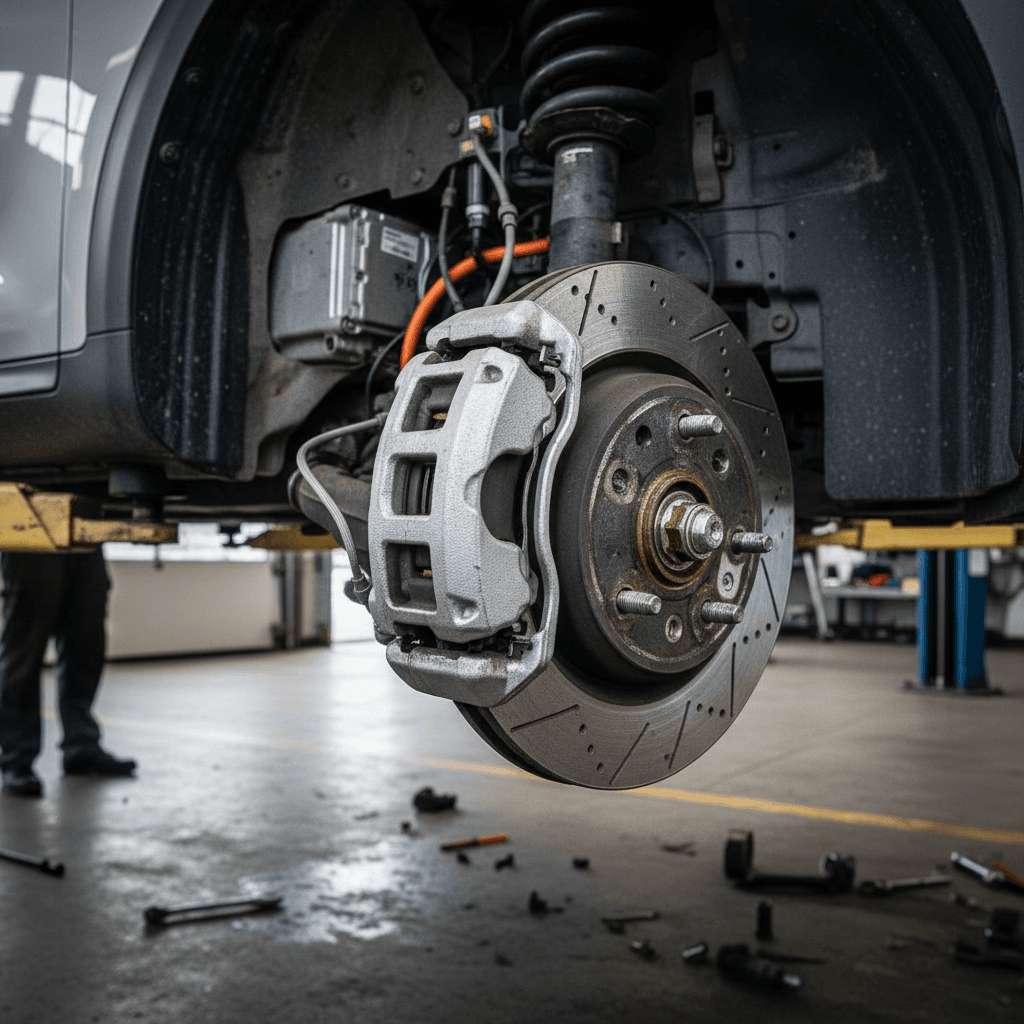
- Why it can be higher: The Niro EV’s rear calipers integrate the parking brake, so there’s a bit more labor and sometimes a scan‑tool step.
- Time in the bay: 1–1.5 hours, depending on how rusty things are.
On many EVs, rear pads actually last longer than the fronts, but they can cost a touch more to replace because of the way the electronic parking brake is built into the rear calipers. What matters most for your bill isn’t front versus rear so much as who’s doing the work and what parts they’re using.
How long do Kia Niro EV brake pads last?
This is where electric vehicles quietly shine. Regenerative braking lets the motors do much of the slowing, so the friction brakes get an easy life. Owners of modern EVs routinely report 60,000 to 100,000 miles on original pads, and the Niro EV is no exception.
What really determines your pad life
Same car, very different outcomes depending on how and where you drive.
Driving environment
Stop‑and‑go urban commuting uses regen heavily, which spares your pads. Long highway miles with gentle braking are easy on them too.
Driving style
If you leave plenty of space and let regen slow you early, your pads may feel new at 80,000 miles. If you drive hard and brake late, expect more frequent service.
Climate & corrosion
In salty, snowy regions, rust is often the enemy, not wear. Pads can seize or rotors pit long before the friction material is actually worn out.
Reality check on pad life
Dealer vs. independent vs. mobile service
A Kia Niro EV doesn’t need exotic brake work. Any shop that understands late‑model disc brakes can handle pads and rotors, but EV‑savvy technicians do have an edge when it comes to using scan tools correctly and spotting issues unique to electric cars.
Where to get your Niro EV brakes serviced
Pros, cons, and what you’ll likely pay.
Kia dealer
- Highest labor rate, usually.
- OEM pads, software updates, recalls handled.
- Best if you’re still under warranty and want everything documented.
Independent EV‑friendly shop
- Often 10–25% cheaper than dealer.
- Can use high‑quality aftermarket pads.
- Look for shops that regularly work on hybrids/EVs.
Mobile mechanic
- Convenient, no waiting room.
- Pricing similar to good independents.
- Great for simple pad jobs if rotors are still healthy.
How Recharged can help
Signs your Kia Niro EV needs new brake pads
Because the Niro EV leans so heavily on regen, it’s easy to forget the friction brakes are even there, right up until they remind you in the worst possible way. Catching pads early turns a routine $250 visit into a non‑event instead of a full brake system overhaul.
Common warning signs to watch for
1. Grinding or scraping when you brake
That nails‑on‑chalkboard sound usually means the pad is worn down to its backing plate and is chewing into the rotor. At this point you’re replacing <strong>pads and rotors</strong>, not just pads.
2. Squealing or high‑pitched chirping
Many pads have a built‑in wear indicator that chirps when you’re getting low. It’s annoying by design, so you’ll schedule service before things get expensive.
3. Pulled to one side under braking
If the steering wheel tugs left or right when you press the pedal, one side may be doing more of the work because of uneven pad wear or a sticky caliper.
4. Longer stopping distances
If you suddenly need more pedal than usual to stop the car, or the pedal feels soft, get the system inspected immediately. This is a safety issue, not something to “watch for a while.”
5. Brake warning lights on the dash
An illuminated brake or ABS light isn’t always about pads, but it’s your cue to have the system scanned. Ignoring it can turn a simple repair into a complex one.
6. Visible pad thickness under 3 mm
If you’re comfortable looking through the wheel spokes, compare the pad material thickness to a few stacked credit cards. Less than that, and it’s time to call a shop.
Don’t rely on regen alone
How to save money on Kia Niro EV brake service
You don’t have much control over parts pricing, but you have a lot of control over when you do the job and where you take the car. A little planning can easily shave $100 or more off a brake visit.
- Get a quote for pads only first, then add rotors or a fluid flush only if measurements or test results justify it.
- Ask for photos or measurements of pad thickness and rotor condition, most modern shops can text them to you.
- Shop around between at least one dealer and two independents; compare out‑the‑door prices, not just hourly labor rates.
- Consider a mobile mechanic if your rotors are fine. Without the overhead of a big service department, many charge slightly less.
- Schedule before your pads are metal‑to‑metal. Waiting until you hear grinding almost always means paying for rotors as well.
Brake costs in the bigger EV picture
Brake maintenance tips for EV owners
Your Niro EV’s brakes live an easier life than a gas Kia’s, but they’re not “set and forget.” Treat them well and they’ll pay you back with quiet stopping and fewer surprise expenses.
Smart habits that keep your brake costs low
These simple routines matter more on an EV than most people realize.
Use regen, but not exclusively
Enjoy one‑pedal‑style driving, but occasionally do a series of moderate, pedal‑based stops. It keeps the pads clean and the rotors swept.
Fight rust if you live in the rust belt
Road salt can seize sliders and calipers. A yearly brake inspection and cleaning is cheap insurance in snowy climates.
Follow the inspection schedule, not just mileage
Kia’s guidance typically calls for periodic brake inspections. Even if you haven’t hit the next mileage interval, ask for a quick look when the car is already in for tires or rotation.
- Ask the shop to lubricate caliper slide pins and pad contact points with the proper high‑temp grease during pad replacement.
- Replace brake fluid on schedule, EVs still rely on hydraulics, and old fluid can corrode components from the inside out.
- If the car sits for long periods, take it for a short drive and do a few firm stops to knock surface rust off the rotors.
- Don’t ignore shudders or steering‑wheel shake under braking; addressing slight rotor warp early can sometimes save the hardware.
Brakes and the true cost of owning a Kia Niro EV
If you’re cross‑shopping a Niro EV against a gas crossover, brake service is one of those unglamorous line items that still matters over years of ownership. Gas models often need pads every 30,000–40,000 miles, sometimes with rotors, so you see that line on the receipt more often. The Niro EV might not need its first set until you’ve owned the car for half a decade or more.
That’s why tools that look beyond shiny paint matter when you’re buying used. On Recharged, every vehicle’s Recharged Score Report is built to make long‑term costs clearer, battery health, charging behavior, and visible wear items like tires and brakes. It’s the kind of information that can turn “cheap upfront” into “smart for the long haul.”
Budget around $250–$350 per axle for Kia Niro EV brake pad replacement, expect it far less often than you’re used to with gas cars, and stay ahead of warning signs instead of waiting for a grind. Do that, and brakes become one more place where driving electric quietly saves you money.