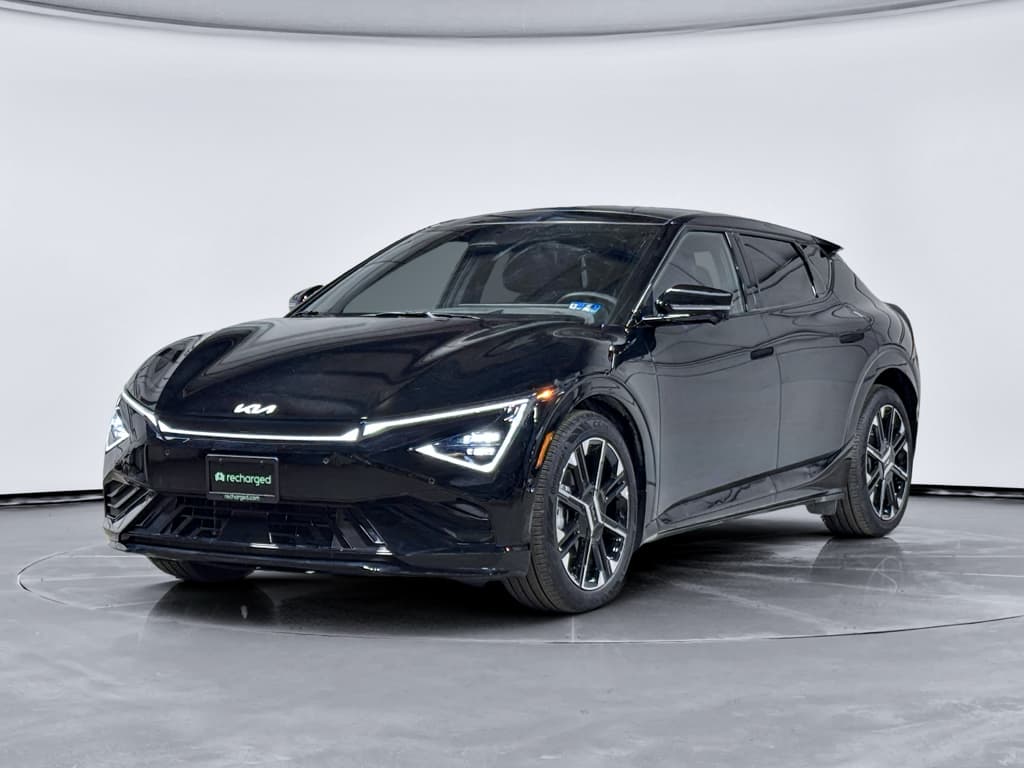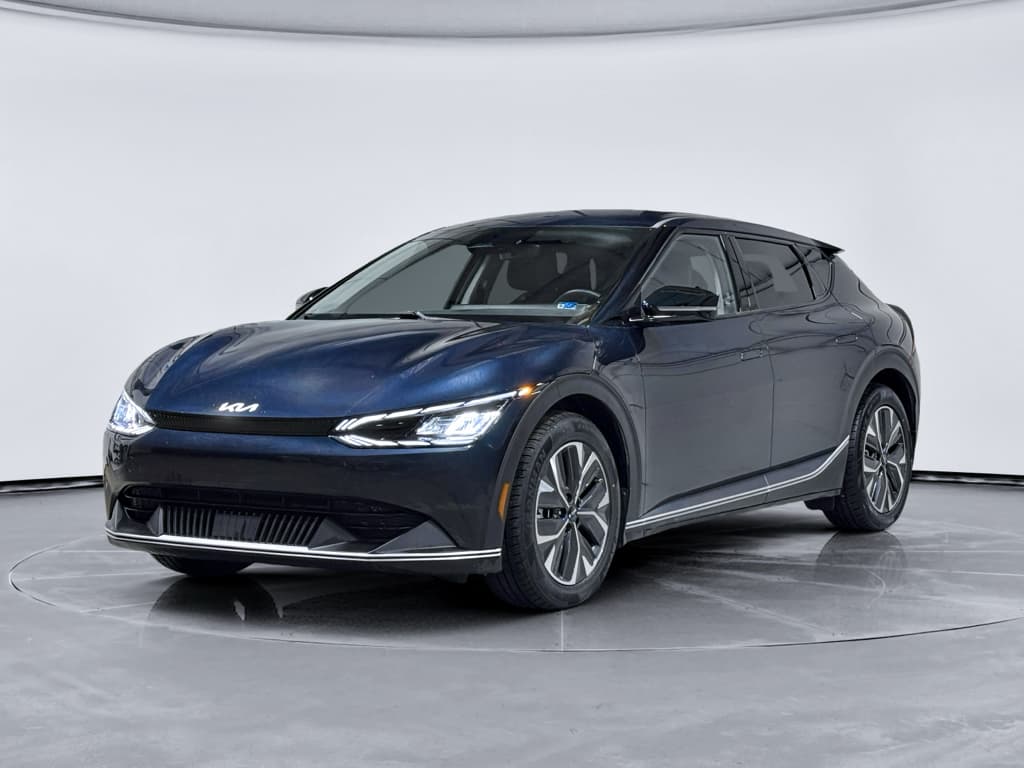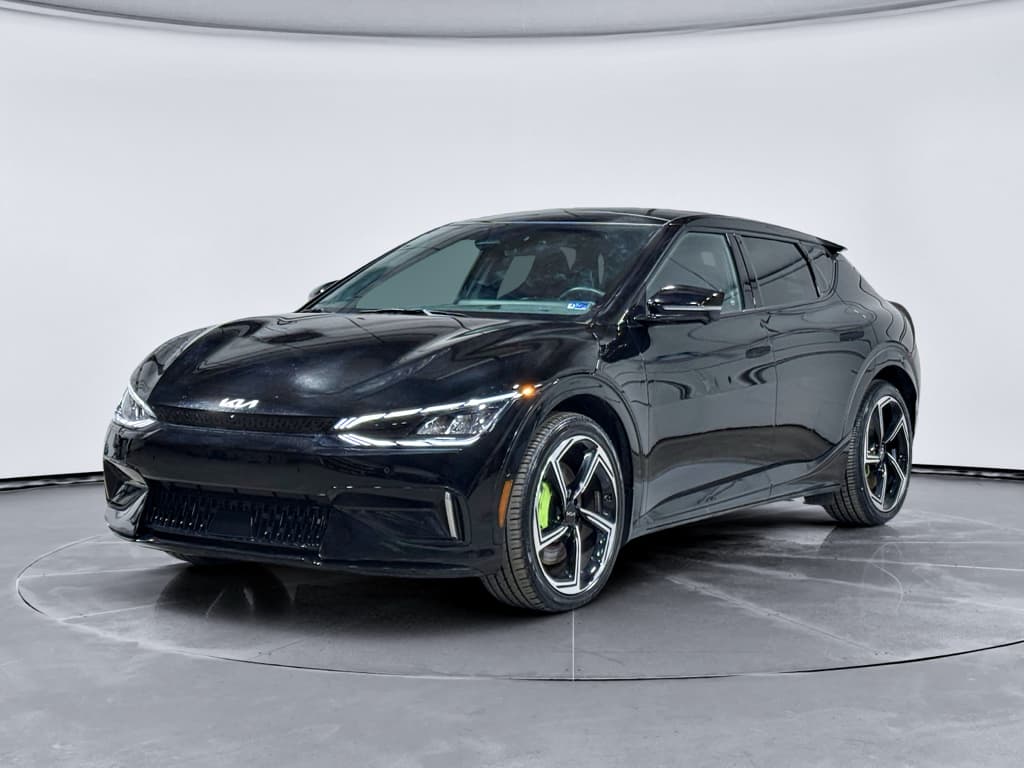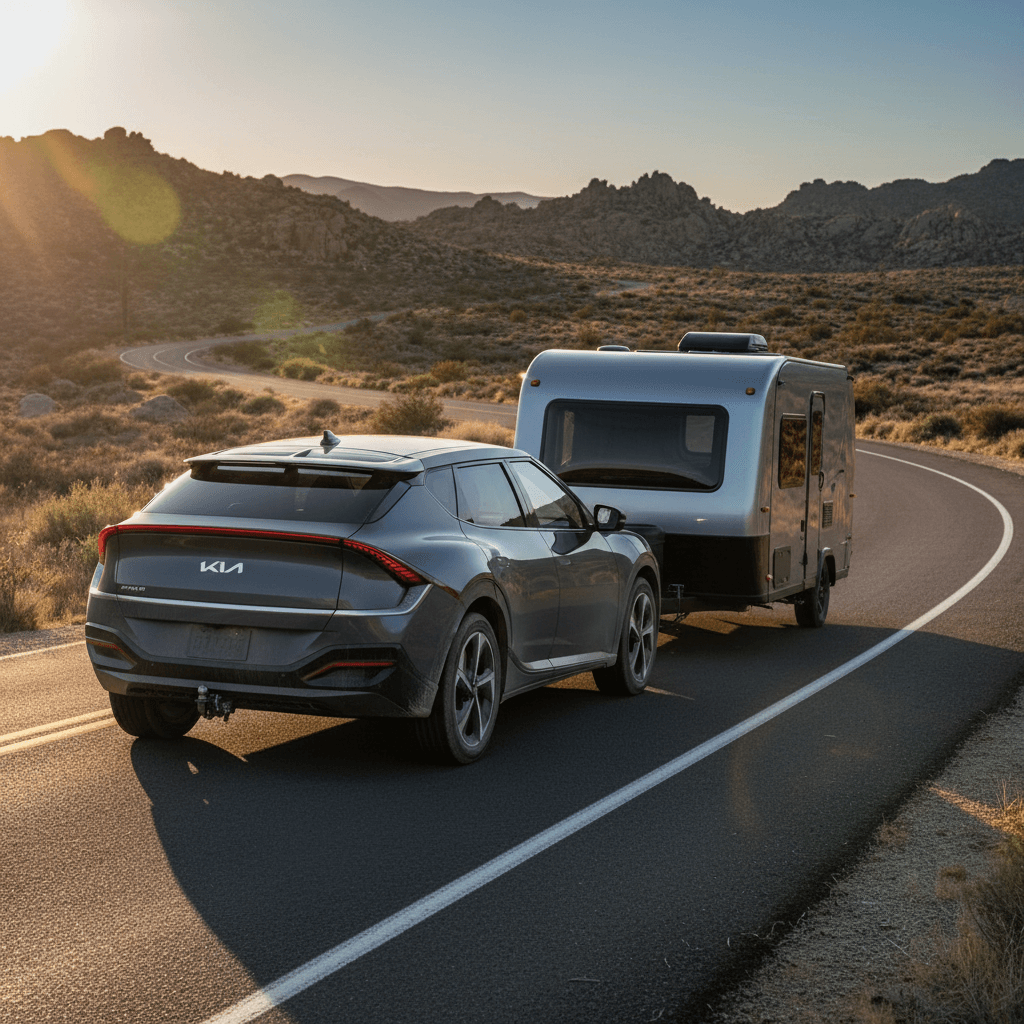
Yes, a Kia EV6 can tow a trailer, but only if it’s equipped and specced correctly, and only within some pretty specific limits. If you’re eyeing a small camper, utility trailer, or bikes for a road trip, understanding those limits is critical before you hitch anything to the back of your EV6.
Short answer
Can a Kia EV6 tow a trailer? Quick answer
From the factory, the Kia EV6 is engineered to tow in many markets, but not every EV6 on a U.S. lot will be equipped with a hitch or rated for towing. Where it is rated, most configurations are approved for light- to moderate-duty towing, not heavy campers or car haulers. Think teardrop trailer, small pop‑up, single PWC, or a low, enclosed cargo trailer, not a 7,000‑pound travel trailer.
- Most EV6 trims support light towing when properly equipped
- You must respect Kia’s maximum trailer weight and tongue-weight limits
- Towing can cut your real-world range roughly in half, depending on trailer and speed
- You’ll need a quality hitch, wiring, and trailer brakes for heavier loads
Warranty reminder
Kia EV6 towing capacity by trim and configuration
Exact tow ratings vary slightly by market and model year, but the patterns are consistent. Dual‑motor, all‑wheel‑drive EV6 models typically have the highest tow ratings, while rear‑wheel‑drive versions are rated lower or, in some cases, not rated to tow at all in the U.S.
Typical Kia EV6 towing ratings (reference guide)
Always verify your exact vehicle’s tow rating in the owner’s manual and door‑jamb label. Figures below are rounded and for orientation only, not a substitute for Kia documentation.
| Configuration | Drive | Indicative Max Braked Trailer* | Indicative Max Unbraked Trailer* | Approx. Tongue Weight* |
|---|---|---|---|---|
| EV6 Standard/Long Range | RWD | Not rated or light towing only in some markets | Not recommended unless explicitly rated | , |
| EV6 Long Range | AWD | ≈ 2,300–2,300+ lb (≈ 1,000 kg) | ≈ 1,650 lb (≈ 750 kg) | Typically 10–15% of trailer weight |
| EV6 GT-Line AWD | AWD | ≈ 2,300–2,300+ lb (≈ 1,000 kg) | ≈ 1,650 lb (≈ 750 kg) | Typically 10–15% of trailer weight |
| EV6 GT (performance) | AWD | Often lower or not rated to tow, check manual | , | , |
Towing and tongue-weight numbers are approximate and may differ by market/model year.
Braked vs. unbraked
If you’re shopping used, remember: a hitch on the back of an EV6 does not automatically mean it’s legally rated to tow the weights you have in mind. Always verify tow capacity for that exact VIN and model year, and confirm with your insurance company if you’ll be towing regularly.
What kind of trailer can a Kia EV6 actually tow?
With a roughly 2,300‑pound braked towing ceiling on most AWD models, the Kia EV6 is best suited to relatively small, aerodynamic trailers. The more frontal area and weight you add, the more your range and performance suffer.
Trailer types that usually work well with an EV6
Stay small, light and as aerodynamic as possible
Light campers
- Small teardrop trailers
- Compact pop‑up campers
- Very small single‑axle travel trailers
Aim for under ~1,800–2,000 lb loaded to preserve range.
Utility & cargo
- 4x8 or 5x8 utility trailers
- Small enclosed cargo trailers
- Lawn equipment, mulch, bikes
Be honest about real loaded weight, not just trailer curb weight.
Toys & gear
- Single PWC or small boat
- Pair of dirt bikes
- Snowmobile or ATV
Check ramp angles and clearances at boat ramps and trailheads.
What’s usually too much
Hitches, wiring and hardware you need on an EV6
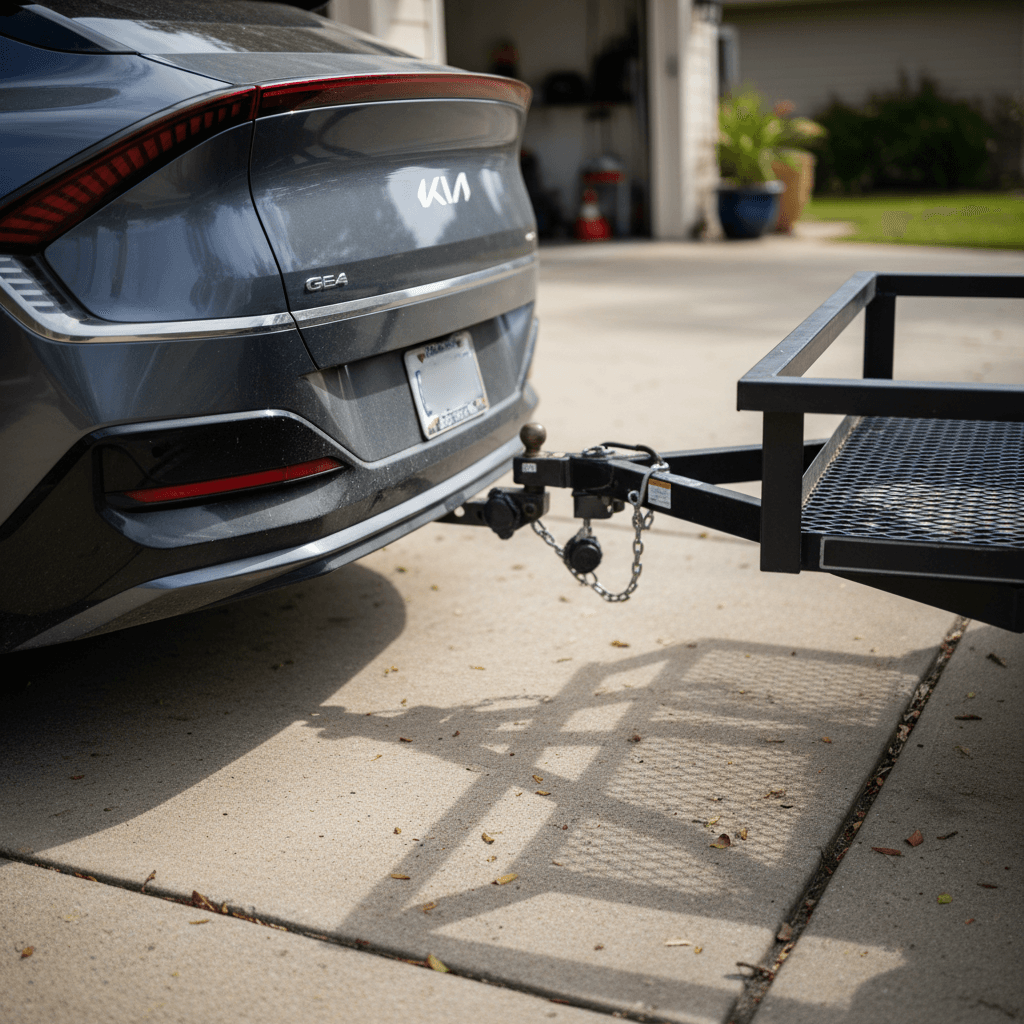
If your Kia EV6 didn’t leave the factory with the towing package, you’ll need a properly engineered hitch and wiring setup. Because EVs package batteries and crash structures differently than gas vehicles, it’s not the place to cut corners.
Essential towing hardware for a Kia EV6
1. Quality class II or III receiver hitch
Use a hitch designed and tested specifically for the EV6, ideally from Kia or a reputable aftermarket supplier. Avoid universal hitches that require cutting or compromise ground clearance unnecessarily.
2. Correct ball mount and hitch ball
Match ball size (1‑7/8", 2", etc.) and drop/rise to your trailer. The goal is a <strong>level trailer</strong> when loaded. An improperly sized ball or very nose‑high/low trailer is a safety risk.
3. 4-pin or 7-pin wiring harness
Most small trailers use a 4‑pin connector for lights; braked trailers often use 7‑pin. Use an EV6‑specific wiring kit that doesn’t overload or hack into high‑voltage systems.
4. Brake controller for heavier loads
If your trailer has electric brakes, you’ll need a compatible brake controller and wiring. This lets the trailer help slow the vehicle, reducing stress on your EV6’s friction brakes.
5. Proper hardware and torque
Hitch mounting bolts should be torqued to the manufacturer’s spec and re‑checked periodically. If you’re not comfortable doing this yourself, use a trusted shop familiar with EVs.
Pro install is often worth it
How towing a trailer affects Kia EV6 range
The big trade‑off with towing an EV is range. Even small trailers add weight and aerodynamic drag, forcing the battery to work harder. On a Kia EV6, that typically means 30–50% less real‑world range at highway speeds, and sometimes more with tall or boxy trailers.
Typical real-world range impact when towing with an EV6
That doesn’t make EV6 towing impractical, but it does change how you plan trips. You’ll stop more often, need reliable access to DC fast charging, and should build in extra time, especially in cold weather or hilly terrain.
Factors that reduce towing range
- Speed: Above ~60 mph, aerodynamic drag from a trailer climbs quickly.
- Trailer frontal area: Tall, square trailers hurt more than low, rounded ones.
- Weight and hills: Climbing grades with heavy loads burns energy fast.
- Cold temps: Batteries and occupants both need extra energy in winter.
Ways to stretch your range
- Keep speeds in the right lane and use cruise control where safe.
- Pack light and distribute weight carefully in the trailer.
- Pre‑condition your battery and cabin while plugged in before departure.
- Plan routes along robust fast‑charging corridors.
Don’t plan on the EPA number
Weight limits, tongue weight and safety basics
Knowing that your EV6 is rated to tow is only the first step. You also need to understand how much weight is pressing down on the hitch (tongue weight) and what that means for stability, braking, and component wear.
Key weight terms every Kia EV6 owner should know
You’ll find official numbers for your EV6 on the door‑jamb label and in the owner’s manual.
| Term | What it means | Why it matters |
|---|---|---|
| GVWR | Maximum total weight of the EV6 itself when loaded (people + cargo + tongue weight) | Exceeding this can overstress suspension, brakes and structure. |
| GCWR | Maximum combined weight of EV6 plus trailer | This is the hard ceiling for vehicle + trailer together. |
| Trailer weight | Actual loaded trailer weight, not just empty spec | Gear, water and propane can add hundreds of pounds. |
| Tongue weight | Weight pushing down on the hitch, typically 10–15% of trailer weight | Too little can cause sway; too much can overload rear axle. |
Never exceed any of these ratings when towing with your EV6.
Weigh it, don’t guess
- Keep tongue weight within Kia’s recommendation (often around 10–15% of trailer weight).
- Use a properly adjusted weight‑distribution hitch only if Kia approves it for the EV6.
- Distribute cargo so heavier items are low and slightly forward of the trailer axle.
- Make wide, gentle steering inputs and leave extra following distance.
Kia EV6 towing compared with other popular EVs
The EV6 is a capable light‑duty tow vehicle, but it’s not a full‑size truck. Its ratings sit in the middle of the EV pack, higher than some compact EVs, but below truck‑based models that are purpose‑built for heavy towing.
Approximate tow ratings: Kia EV6 vs. other EVs
For quick context only, always check official specs for exact numbers and model‑year changes.
| Model | Approx. Max Tow Rating (braked) | Towing role |
|---|---|---|
| Kia EV6 (AWD) | ≈ 2,300+ lb | Good for light campers and utility trailers |
| Hyundai Ioniq 5 (AWD) | ≈ 2,300+ lb | Very similar capability to EV6 |
| Tesla Model Y (Long Range/Perf) | ≈ 3,500 lb | Stronger for small family campers |
| Volkswagen ID.4 (with tow pkg) | ≈ 2,200 lb | Comparable to EV6 for light towing |
| Ford F‑150 Lightning | Up to 10,000 lb (properly equipped) | Full‑size truck for heavy towing |
Tow ratings are approximate and can vary widely by trim and equipment.
So if you’re dreaming of towing a modest teardrop or utility trailer, the EV6 is right in its element. If you’re planning to pull a large travel trailer or multi‑axle toy hauler, you’ll want to look at an electric pickup or stick with a conventional tow rig.
Buying a used Kia EV6 for towing
If you’re shopping the used market, the Kia EV6 can be a smart way to get into EV towing, provided you choose the right example and understand how previous towing use may have affected the vehicle.
What to check on a used Kia EV6 if you plan to tow
A little homework upfront can save headaches later
1. Factory rating & trim
Confirm that the specific EV6 trim and market is rated to tow, and at what weight. Ask the seller for the owner’s manual and verify the tow rating, then match that against the door‑jamb label.
2. Hitch condition & install quality
Look for rust, bent hardware or improvised welding. A clean, bolt‑on hitch using factory mounting points, supported by invoices from a reputable installer, is what you want to see.
3. Battery health and history
Towing adds load cycles and heat. A battery health report gives you an objective view of remaining capacity, critical if you’ll be towing often.
4. Service and usage records
Frequent heavy towing without proper maintenance can accelerate wear on brakes, tires and suspension. Service records and tire/brake condition tell you a lot about prior use.
How Recharged can help
Ready to find your next EV?
Browse VehiclesYou can also factor in Recharged’s financing, trade‑in, and nationwide delivery if you find the right EV6 in another market but still want expert, EV‑focused support from start to finish.
Pre-trip towing checklist for Kia EV6 owners
Once you’ve got the right hardware and trailer, a quick pre‑trip routine will go a long way toward safe, low‑stress towing with your EV6.
EV6 towing pre‑trip checklist
1. Confirm weights and loading
Verify that your loaded trailer and tongue weight are below Kia’s limits for your EV6 trim. Stow heavy items low and forward of the trailer axle and avoid overloading the rear of the cabin or cargo area.
2. Inspect hitch and coupler
Make sure the hitch pin is secured, coupler is fully latched on the ball, and safety chains are crossed and properly attached. Check that the breakaway cable (for braked trailers) is correctly clipped.
3. Test lights and brakes
With a helper, check all trailer lights: running, brake, turn and hazard. If equipped, verify trailer brakes engage smoothly with the brake controller and that gain is set appropriately for the load.
4. Check tires and torque
Set both EV6 and trailer tires to the recommended pressures. If the wheels were recently removed, confirm lug nuts are torqued to spec. Inspect tires for cracks, bulges or uneven wear.
5. Plan your charging stops
Use your favorite routing app or the car’s navigation to map fast‑charging stops every 80–120 miles at first. Favor stations with multiple DC fast chargers and easy trailer access.
6. Adjust driving mode and mirrors
Select a calm drive mode, adjust regenerative braking to your preference when towing, and ensure mirrors give a clear view down both sides of the trailer.
If something feels wrong, stop
Kia EV6 towing FAQ
Frequently asked questions about towing with a Kia EV6
Key takeaways for towing with a Kia EV6
A properly equipped Kia EV6 can tow a trailer, as long as you stay within Kia’s limits and are realistic about range. It’s well‑suited to small campers, utility trailers, and weekend toys, not full‑size RVs or heavy equipment. If towing is an occasional part of your lifestyle rather than a daily requirement, the EV6 offers a compelling mix of efficiency, comfort and light‑duty capability.
If you’re shopping used, platforms like Recharged can help you zero in on EV6s with the right specs, verified battery health, and transparent history, then deliver the vehicle to your driveway. Do your homework on hitch setup, weight limits and route planning, and your EV6 can be a quiet, capable partner for your next trailer‑towing adventure.