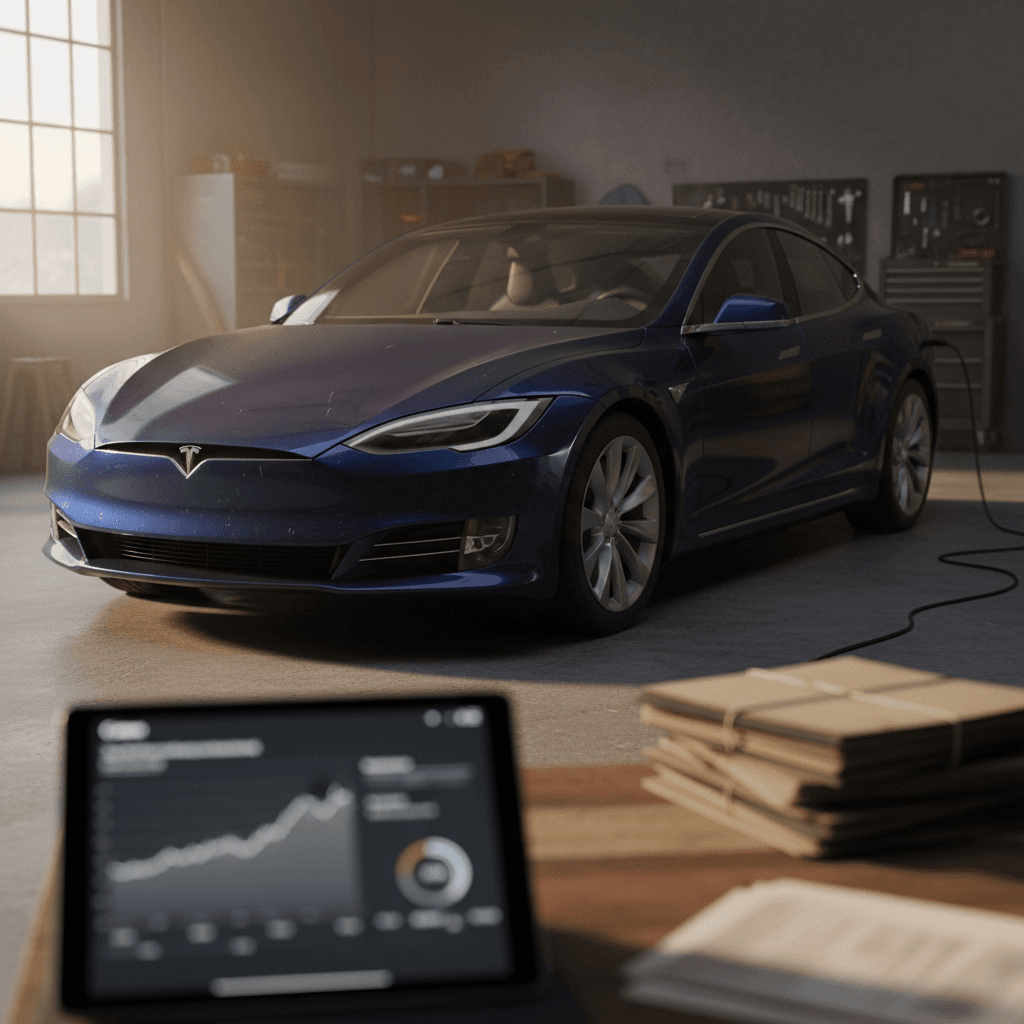
If you’re eyeing a 2024 Tesla Model S in 2026, you’re shopping right in the middle of a big transition. Tesla has confirmed that production of the Model S will end in 2026, and used values have been on a roller coaster as a result. That makes a simple question, “Is the 2024 Tesla Model S a good buy?”, more complicated than it looks on the surface.
Context: Model S is being discontinued
Quick answer: Is the 2024 Tesla Model S a good buy?
When the 2024 Model S is a good buy
- You want a long‑range, high‑performance luxury EV with access to Tesla’s Supercharger network.
- You’re buying used at a meaningful discount versus new and versus German luxury EVs.
- You’re comfortable with evolving driver‑assist tech and frequent over‑the‑air updates.
- You plan to keep the car long enough that near‑term depreciation hurts less.
When it’s not your best move
- You’re highly sensitive to resale value and want slow depreciation.
- You prefer physical controls and a more traditional luxury interior.
- Top‑tier crash‑test ratings and advanced driver‑monitoring are your top priorities.
- You’d rather have a newer‑design EV like a refreshed Model 3, Model Y or rival luxury sedan.
Our short verdict
What you actually get with a 2024 Model S today
By 2024, the Model S had already received its major refresh (originally launched for 2021), so what you’re seeing in today’s used listings is that facelifted car with minor running tweaks. Most 2024s in the U.S. are either the Dual Motor All‑Wheel Drive (often badged Long Range) or the Plaid performance model.
2024 Tesla Model S key specs (typical U.S. configuration)
Most 2024s also carry Tesla’s HW4 driver‑assistance hardware, a newer camera‑based system that underpins Autopilot and the optional Full Self‑Driving package. Software has been evolving quickly, so a 2024 car today may drive noticeably differently than it did when new, strictly because of over‑the‑air updates.
Pricing and depreciation: where the 2024 Model S sits now
The 2024 Model S launched as a premium, relatively low‑volume flagship. New pricing for a 2024 Dual Motor hovered around the mid‑$70,000s, with Plaid models closer to $90,000 or more depending on options. Today, depreciation has done a lot of the heavy lifting for used shoppers.
Value snapshot for 2024 Model S in 2026
Why depreciation is a double‑edged sword
An important wrinkle: after Tesla announced it would discontinue the Model S, some late‑2024 and early‑2025 used prices actually ticked up as supply expectations changed. But overall, the five‑year data still paints the Model S as a heavy depreciator. For most buyers, that’s a reason to buy used, not new, and a reason to negotiate hard on any 2024 that’s still priced like new inventory.
Strengths of the 2024 Tesla Model S
Where the 2024 Model S still shines
These are the reasons shoppers keep coming back to the S, even as newer EVs arrive.
Supercar‑level performance
Long‑distance range
Supercharger access
More advantages for the right buyer
What owners tend to appreciate day‑to‑day.
Clean, software‑first cabin
Space and practicality
Strong safety fundamentals
Where it beats a Model 3 or Model Y
Drawbacks and risks to know before you buy
You’re not buying a generic EV appliance here, you’re buying an aging, discontinued flagship with bleeding‑edge software. That comes with real trade‑offs. Here are the biggest ones shoppers should be honest about before signing anything.
- Steep depreciation and value volatility. Market data shows the Model S as one of the fastest‑depreciating luxury vehicles over five years. Recent discontinuation news has added short‑term price swings that are hard to predict.
- Uncertain software future vs. newer Teslas. Tesla’s focus is shifting to newer platform vehicles and robotics. Over time, you may see fewer feature‑rich updates for the S compared with volume models like the 3 and Y.
- Driver‑assist controversy. Autopilot and Full Self‑Driving continue to evolve, but they’ve also attracted regulatory scrutiny and mixed owner experiences. Treat them as advanced driver‑assistance, not autonomy, and assume you’ll be fully engaged behind the wheel.
- Interior is not classic luxury. If you’re coming from a BMW, Mercedes or Audi flagship, the Model S cabin can feel sparse, with more hard plastics and less sound insulation than you might expect at this price when new.
- Ride and noise. The air suspension helps, but some owners report road noise and a firmer ride than traditional luxury sedans, especially on larger wheels.
Discontinuation risk isn’t just emotional
Ownership costs: insurance, maintenance and charging
Total cost of ownership is where the 2024 Model S can either pleasantly surprise you, or break your budget, depending on how and where you drive.
2024 Tesla Model S ownership cost considerations
How the Model S typically behaves over five years compared with other luxury cars.
| Cost area | What to expect | How it compares |
|---|---|---|
| Insurance | High premiums due to performance, repair costs and claim history. | Often more expensive than a Model 3/Y or a comparable gas sedan. |
| Maintenance | No oil changes; fewer moving parts. Tires, brakes, suspension and software fixes dominate. | Lower routine maintenance than ICE luxury sedans, but tire costs can be high. |
| Repairs | Out‑of‑warranty battery or drive‑unit work is expensive; body repairs can be slow and costly. | Big‑ticket events are pricier than mainstream brands; extended coverage can help. |
| Energy | Electricity typically cheaper per mile than premium gas, especially if you charge at home off‑peak. | Meaningful fuel savings versus V6/V8 luxury sedans, especially for high‑mileage drivers. |
| Depreciation | Front‑loaded; big drops in the first 3–5 years. | Worse than many gas rivals, but good news if you’re buying used today. |
Actual costs will vary based on mileage, location, driving style and repair history.
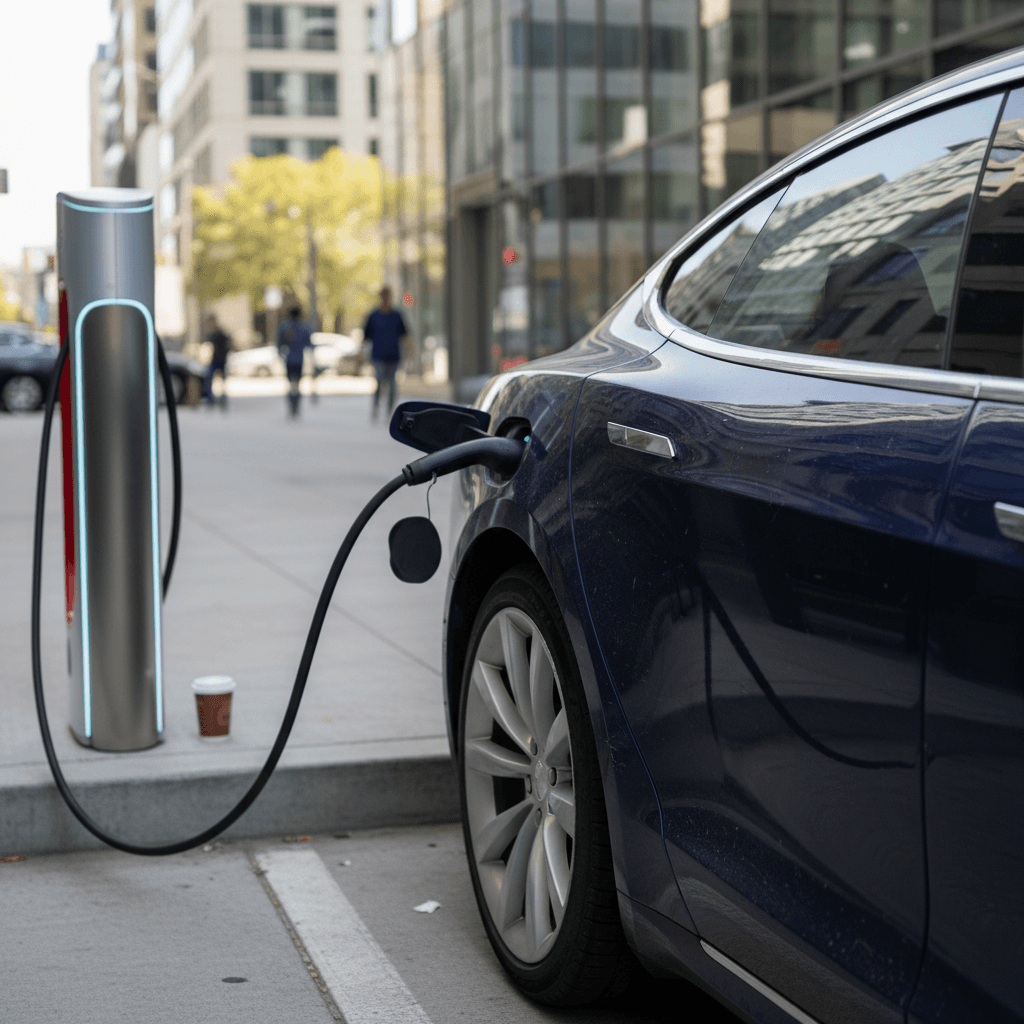
Home charging changes the math
If you’re buying used through a marketplace like Recharged, look for vehicles with a documented service history and a battery‑health report. Recharged’s Recharged Score includes pack diagnostics, so you can see whether fast‑charging use, mileage and age are having an impact on usable range before you buy.
How the 2024 Model S compares to alternatives
2024 Model S vs popular alternatives
A high‑level look at what you might cross‑shop.
Vs. refreshed Tesla Model 3
Vs. Tesla Model Y
Vs. other luxury EV sedans
Think in terms of "value per mile"
Who should buy a 2024 Model S, and who should skip
Great fit if…
- You drive long distances, road‑trip often or have a long commute and want maximum range.
- You value performance and enjoy cars; Plaid owners in particular tend to buy for the thrill.
- You’re planning to keep the car 5+ years and aren’t hyper‑focused on resale.
- You’re comfortable with a software‑driven, minimalist interior and learning Tesla’s UI.
- You appreciate access to a mature, widely deployed fast‑charging network.
Probably not for you if…
- You want the slowest‑depreciating option in the garage.
- You prefer a plush, quiet, traditional luxury cabin above all else.
- You’re uneasy about owning a discontinued flagship model.
- You plan to use driver‑assist casually and expect it to “drive itself.”
- You mainly do short city trips where a smaller, cheaper EV would work just as well.
Checklist: How to shop a 2024 Tesla Model S used
Smart‑buyer checklist for a 2024 Model S
1. Verify hardware and build details
Confirm the car’s build date, Autopilot hardware level (most 2024s should be HW4), drive configuration (Dual Motor vs Plaid) and wheel size. These affect performance, range and future software support.
2. Get a battery‑health report
Ask for a recent battery‑health scan that shows state of health and estimated usable capacity. A platform like Recharged includes this in the <strong>Recharged Score</strong>, so you’re not guessing about range loss.
3. Review charging history
If possible, look at how the car was charged. Heavy DC fast‑charging isn’t an automatic deal‑breaker, but a car that lived on Superchargers may have more battery wear than one charged mostly at home.
4. Inspect tires, brakes and suspension
The Model S is heavy and powerful, so it can go through tires and suspension components quickly. Uneven tire wear, clunks or excessive vibration on the test drive are red flags.
5. Check software status and options
Make sure the car is on recent software and verify which features are active: basic Autopilot is standard, but Enhanced Autopilot or Full Self‑Driving capability cost extra and sometimes transfer value on the used market.
6. Confirm warranty and service options
Look up remaining factory coverage for the basic vehicle and battery/drive unit. If the car is out of basic warranty, consider extended coverage or a service plan, especially if you’re buying from a third‑party seller.
7. Compare against similar listings
Cross‑shop mileage, options and condition against other 2024s nationwide. Recharged’s digital marketplace lets you compare battery health, price and Recharged Score side by side so you can spot overpriced cars quickly.
Don’t skip a pre‑purchase inspection
Frequently asked questions about the 2024 Tesla Model S
2024 Tesla Model S: key questions answered
Bottom line: Is the 2024 Tesla Model S a good buy?
In 2026, the 2024 Tesla Model S is no longer the default aspirational EV; it’s a powerful, slightly risky value play. You’re buying a discontinued flagship with world‑class range and performance, solid charging access and a software‑first experience, but also above‑average depreciation, evolving driver‑assist tech and long‑term support questions as Tesla pivots to other projects.
If that trade‑off sounds acceptable, and you buy carefully, with verified battery health, documented history and a realistic view of ownership costs, a 2024 Model S can be a terrific buy that delivers a uniquely fast, long‑legged EV experience for far less than its original sticker. If you want maximum resale stability and traditional luxury, you may be happier in a newer‑design EV sedan or SUV instead.
Either way, treat this as a homework assignment, not an impulse buy. A marketplace like Recharged can help by pairing transparent pricing, Recharged Score battery diagnostics and EV‑savvy advisors who’ve seen how Model S values and reliability play out in the real world. Do that, and you’ll be in a much better position to decide whether a 2024 Tesla Model S is the right move for your driveway.