If you’re wondering how much it costs to own a Rivian R1T per year, you’re asking the right question. The R1T is one of the most capable electric trucks on the road, but it’s also a heavy, high‑performance luxury vehicle. That means charging is cheap compared with gas, but insurance, tires, and depreciation can surprise first‑time EV truck owners.
Short Answer
Overview: What a Rivian R1T Really Costs Per Year
When people ask how much it costs to own a Rivian R1T per year, they’re usually thinking about fuel savings versus a gas truck. That’s important, but it’s only one piece of the total cost of ownership (TCO). To get a realistic picture, you need to look at:
- Electricity to drive the miles you expect
- Insurance (often higher than a mainstream pickup)
- Maintenance and repairs, especially tires and brakes
- Registration, property taxes and miscellaneous fees
- Depreciation (how much value the truck loses each year)
- Financing interest, if you’re using a loan
Third‑party ownership cost tools and early R1T owner data suggest that, over five years at around 15,000 miles per year, the truck’s non‑fuel ownership costs look more like a luxury SUV than a work pickup. That’s not a reason to avoid it, but you should go in with your eyes open, especially if you’re cross‑shopping used EVs on a budget.
Key Assumptions: Mileage, Energy Use and Electricity Rates
Any honest answer to “how much does it cost to own a Rivian R1T per year?” has to start by stating its assumptions. For this guide, we’ll keep things transparent and U.S.‑centric:
Baseline assumptions for Rivian R1T annual cost estimates
You can adjust these up or down based on your own driving and local rates.
| Factor | Baseline Assumption | Notes |
|---|---|---|
| Annual mileage | 12,000 and 15,000 miles | We’ll show both, since many truck owners drive more than the U.S. average. |
| Energy efficiency | 2.0–2.3 mi/kWh | Real‑world mixed driving on all‑terrain tires; efficiency drops with big wheels and heavy loads. |
| Home electricity rate | $0.17 per kWh | Roughly in line with recent U.S. residential averages. |
| Public DC fast charging | $0.40 per kWh | Typical for non‑members on major U.S. DC fast‑charge networks. |
| Driving mix | 80% home / 20% DC fast charge | Heavier road‑trip users will spend more; mostly‑home chargers will spend less. |
| Ownership horizon | 5+ years | Shorter ownership amplifies depreciation per year. |
Baseline inputs we’ll use to calculate annual ownership costs for the R1T.
Your Numbers Will Vary
Electricity Cost: How Much to Charge a Rivian R1T Per Year
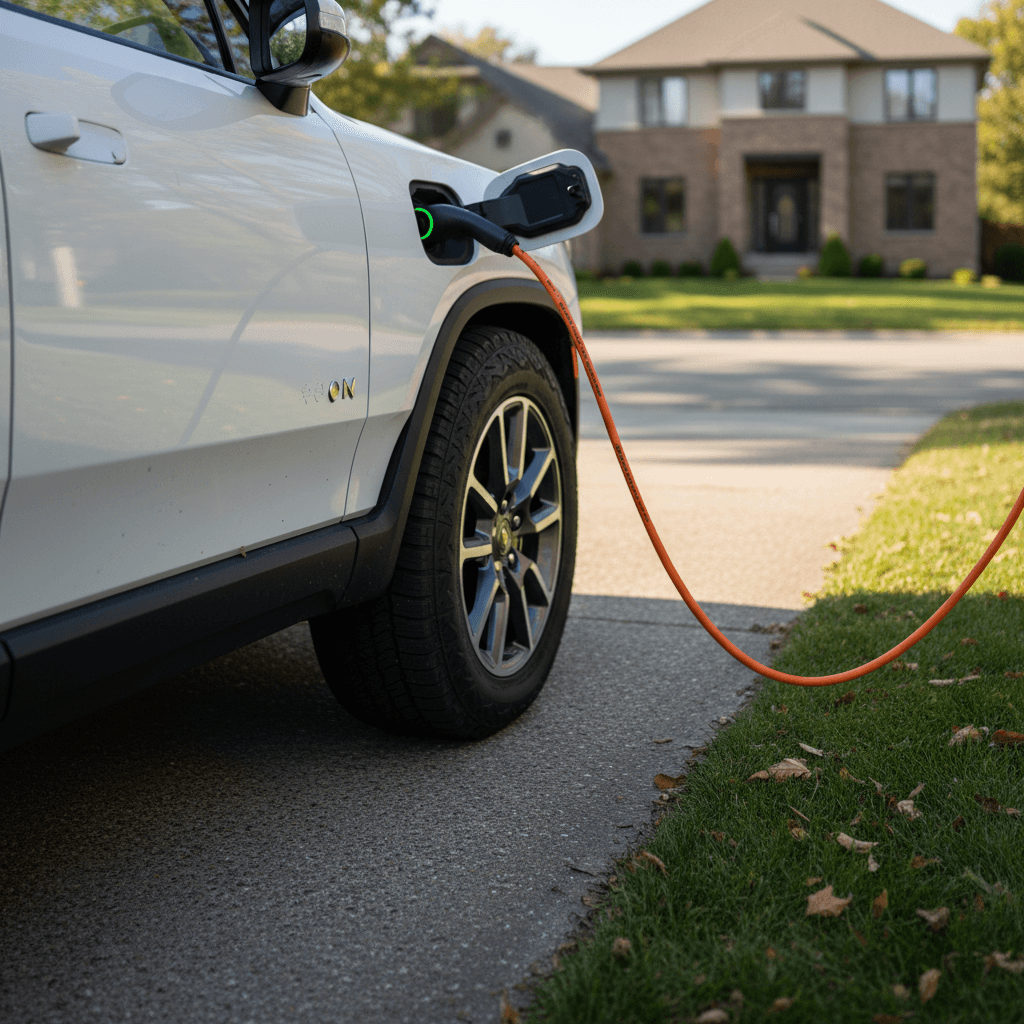
Let’s start with the easiest line item to quantify: electricity. Unlike gas, your cost per mile in an EV is fairly predictable once you know your efficiency and power rates.
Rivian R1T annual electricity cost – ballpark figures
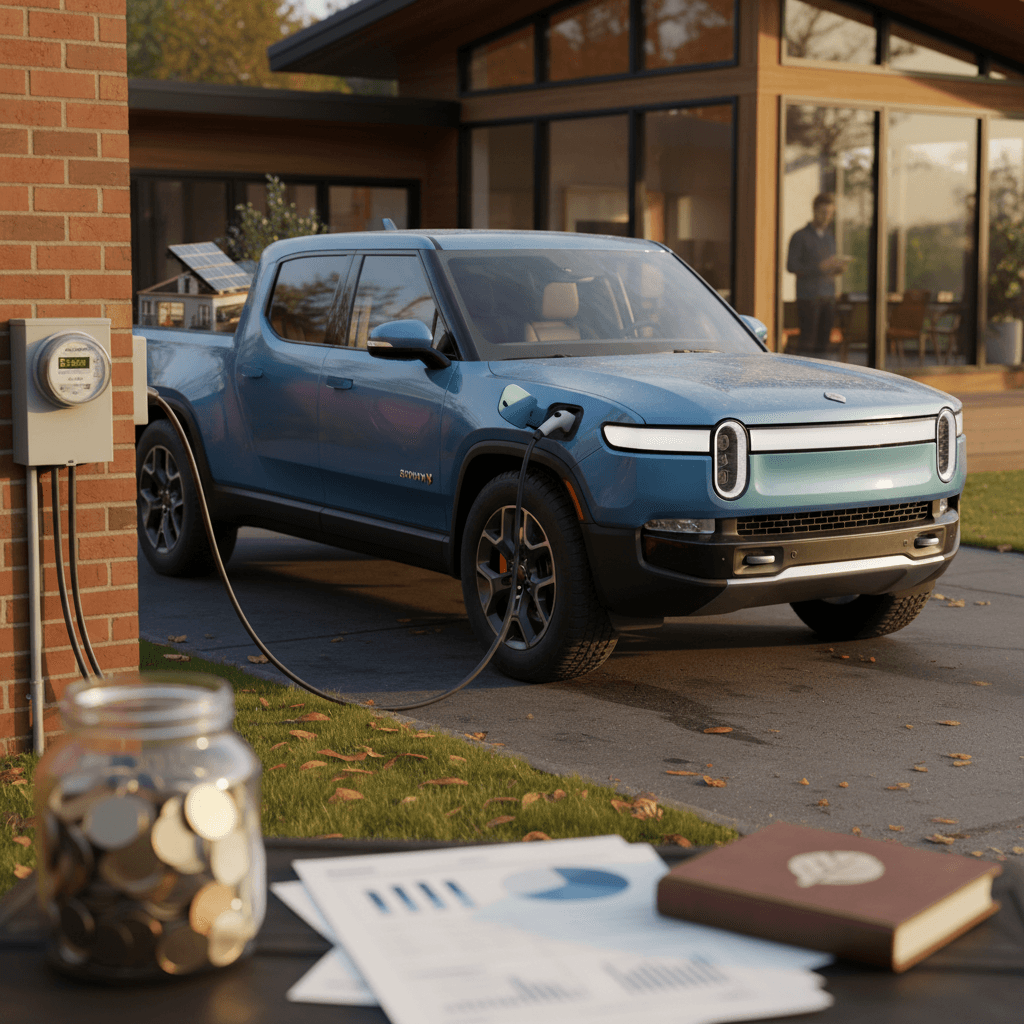
Assuming roughly 2.1 miles per kWh in real‑world use and an 80/20 split between home charging at $0.17/kWh and DC fast charging at $0.40/kWh, your blended rate comes out around $0.21–$0.23 per kWh. Using that, rough annual electricity costs look like:
- 12,000 miles/year: roughly $850–$1,000 in electricity
- 15,000 miles/year: roughly $1,050–$1,250 in electricity
Home Charging = Big Savings
Insurance: Why the R1T Isn’t a Cheap Truck to Insure
The category that most new Rivian owners underestimate is insurance. The R1T is expensive to repair, uses aluminum body panels, and packs a lot of performance and technology, exactly the combination that makes underwriters nervous.
Across U.S. owner reports and insurer quotes, full‑coverage premiums for a Rivian R1T often fall into this range for a clean‑record driver in their 30s–50s:
Typical annual full‑coverage insurance ranges for a Rivian R1T
Actual premiums vary widely by state, credit profile, driving history, and how many vehicles you insure.
| Situation | Approx. Annual Premium | What to Expect |
|---|---|---|
| Favorable state, multi‑car bundle | $1,600–$2,200 | Some owners report ~$130–$180/month when bundled with another vehicle. |
| Average scenario | $2,200–$3,000 | Closer to national averages for high‑value EVs. |
| High‑cost state or young driver | $3,000–$4,500+ | Not unusual in parts of CA, FL, NY or for under‑25 drivers. |
Think of these as ballparks, not guarantees, shop around for your own quote.
Don’t Assume Your Old Rate
Maintenance and Tires: Where Most Non‑Fuel Costs Live
Routine maintenance on the R1T is light, there’s no engine oil, spark plugs, or transmission service, but the truck’s weight and performance show up in tire wear and brake work. Independent cost‑of‑ownership tools and early fleet data suggest that at around 15,000 miles per year:
Maintenance vs. tires on a Rivian R1T
Where your non‑fuel running costs actually go
Scheduled maintenance
Rivian’s official maintenance schedule is relatively light compared with gas trucks. Expect:
- Cabin air filter and brake fluid service every few years
- Coolant checks and occasional software‑related visits
- Minimal “tune‑up” style work
Across five years at typical mileage, many owners will spend around $300–$400 per year on average for routine items and the occasional out‑of‑warranty repair.
Tires and wear items
The R1T is heavy and quick, and many trucks run aggressive all‑terrain rubber:
- Expect tire life as low as 25,000–35,000 miles
- Quality replacement sets often cost $1,800–$2,400+ installed
- Alignment and suspension wear can add costs if you off‑road or tow frequently
Spread over time, it’s realistic to budget $500–$800 per year for tires alone at common mileages.
Cold Weather and Heavy Use
Taxes, Fees and Registration
Beyond the obvious running costs, you’ll face the usual mix of registration fees, inspections, and local vehicle taxes. These vary enormously by state, but for many R1T owners you can think in terms of:
- Registration and plate fees: often $150–$300 per year for a newer, high‑value truck; some states are higher.
- EV‑specific road‑use fees: several states add $100–$250 per year to compensate for lost gas‑tax revenue.
- Personal property or excise tax: in states that levy it, this can range from a few hundred dollars to over $1,000 a year on a new R1T, dropping as the truck depreciates.
For national‑average style planning, many owners will land somewhere around $400–$900 per year across these combined government line items, with outliers higher in a handful of coastal markets.
Depreciation and Financing: The Invisible Annual Cost
Depreciation, the amount your truck loses in value each year, is usually the single biggest cost of owning a new Rivian R1T. You never see a bill for it, but it shows up when you go to sell or trade the truck.
Depreciation on a new R1T
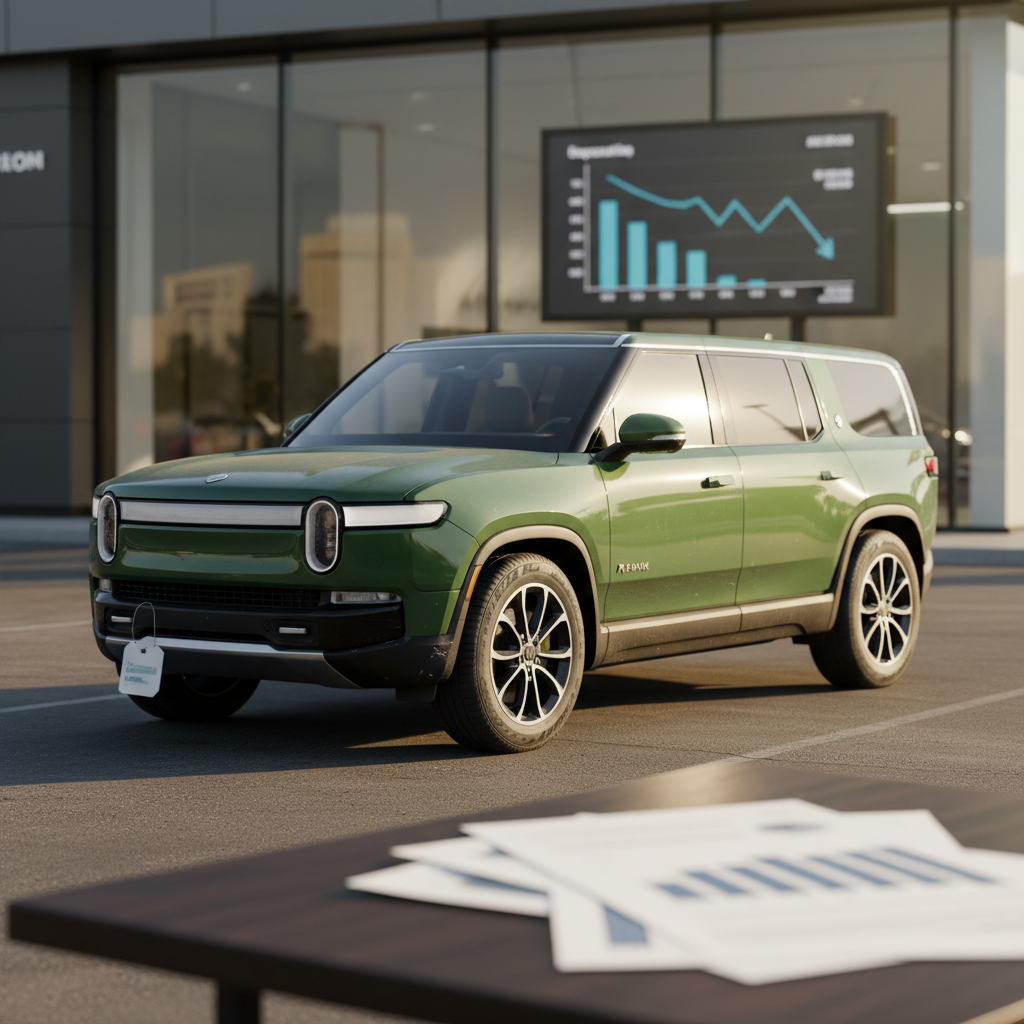
Like most luxury EVs, early Rivians saw steep initial depreciation as used inventory and incentives piled up. Today’s market has stabilized somewhat, but a new R1T can still easily lose 10–15% of its value in the first year, then 7–10% annually after that.
On a $90,000 truck, that first‑year hit alone can be $9,000–$13,500 on paper, roughly $750–$1,125 per month in lost value.
Why used R1Ts look so compelling
Because much of that initial drop has already happened, a 2–3‑year‑old R1T often carries far lower annual depreciation, sometimes closer to $4,000–$6,000 per year, depending on price and mileage.
For a budget‑conscious buyer who still wants Rivian capability, this is where the math starts to favor a well‑vetted used truck over a factory‑fresh order.
Financing Adds a Smaller, But Real, Cost
Putting It Together: Annual Cost Scenarios for the Rivian R1T
Now let’s combine these pieces into clear, scenario‑based answers to “how much does it cost to own a Rivian R1T per year?” These examples assume full‑coverage insurance, a typical U.S. electricity mix, and average driving habits.
Illustrative annual Rivian R1T ownership cost scenarios
All figures are approximate and meant for planning, not as quotes. Depreciation assumes current market conditions for new vs. used R1Ts.
| Scenario | Miles/Year | Truck Type | Running Costs (electricity, maintenance, tires, fees) | Insurance | Depreciation + Interest | Total Annual Cost |
|---|---|---|---|---|---|---|
| Light‑use owner | 10,000 | 3‑year‑old used R1T | ~$2,000 | ~$2,000 | ~$4,500 | ≈ $8,500 |
| Typical owner | 12,000 | 3‑year‑old used R1T | ~$2,500 | ~$2,200 | ~$5,000 | ≈ $9,700 |
| High‑mileage commuter | 15,000 | 3‑year‑old used R1T | ~$3,000 | ~$2,400 | ~$5,000 | ≈ $10,400 |
| New‑truck buyer | 12,000 | Brand‑new R1T | ~$2,500 | ~$2,500 | ~$8,000–$10,000 | ≈ $13,000–$15,000 |
| New‑truck, heavy use | 15,000 | Brand‑new R1T | ~$3,000+ | ~$2,700 | ~$8,000–$10,000 | ≈ $13,700–$15,700+ |
Use this as a framework, then plug in your own quotes and local rates.
How This Compares to a Gas Truck
How to Lower Your Rivian R1T Ownership Costs
If those totals sound higher than you expected, there are levers you can pull. The good news: electricity is already cheap. The biggest opportunities to bring your Rivian R1T’s annual ownership cost down are in purchase price, depreciation, and insurance.
Practical ways to reduce your R1T annual cost
1. Buy used after the big depreciation hit
A 2–4‑year‑old R1T often costs tens of thousands less than new, but delivers almost all of the capability. That lower starting price can shave <strong>$3,000–$5,000 per year off your effective depreciation</strong> compared with ordering a new build.
2. Prioritize home and off‑peak charging
If you’re in a time‑of‑use market, schedule charging for off‑peak hours and minimize expensive DC fast charging. That alone can save several hundred dollars a year for higher‑mileage drivers.
3. Shop insurance across multiple carriers
Rivian’s in‑house insurance isn’t always the cheapest. Get quotes from at least three mainstream carriers, check multi‑car bundles, and revisit your policy annually, especially as your truck ages.
4. Choose wheels and tires strategically
Big, aggressive all‑terrains look great but they’re costly. If most of your use is on‑road, consider more efficiency‑oriented tires when it’s time to replace; they often last longer and improve range.
5. Keep your driving record clean
With a high‑value EV truck, a few violations can spike premiums. Defensive driving, telematics discounts, and higher deductibles (if you can comfortably afford them) can all keep insurance in check.
6. Consider total cost, not just payment
It’s easy to fixate on a monthly payment. Instead, look at the <strong>all‑in annual cost</strong>, including depreciation and interest, so you’re not surprised a few years down the line when it’s time to sell or trade.
Should You Buy a Used Rivian R1T to Save?
For many shoppers trying to balance capability and cost, a used Rivian R1T is the sweet spot. You let the first owner absorb the steepest depreciation, but still get a modern battery pack, fast‑charging capability, and over‑the‑air software support.
This is exactly where a marketplace like Recharged is designed to help. Every used EV on Recharged comes with a Recharged Score Report that includes verified battery health, fair‑market pricing, and a clear view into how that vehicle’s condition will play into your long‑term cost of ownership.
How Recharged Helps With R1T Ownership Costs
Ready to find your next EV?
Browse VehiclesFAQ: Rivian R1T Ownership Costs
Frequently Asked Questions About Rivian R1T Annual Costs
The Rivian R1T is one of the most compelling electric trucks on sale today, but it’s not a cheap vehicle to own. Once you tally electricity, insurance, maintenance, tires, taxes, depreciation, and financing, it behaves more like a luxury SUV than a work‑spec half‑ton. The key to making the numbers work is being honest about your miles, shopping insurance aggressively, and, very often, letting someone else pay for the steepest part of depreciation by buying used. With the right truck and a clear understanding of your annual costs, an R1T can deliver serious capability and everyday EV smoothness without wrecking your long‑term budget.