If you’re eyeing a used performance EV, it’s natural to ask: is a 2023 Porsche Taycan a good buy in 2026? On paper it’s one of the most engaging electric cars ever built. In the real world, you have to weigh depreciation, battery health, reliability history, and charging practicality against that appeal.
Context: What’s changed since 2023
Quick answer: Is a 2023 Taycan a good buy?
When it is a good buy
- You want a driver’s car first, EV second, handling and braking matter more than maximal range.
- You have reliable home Level 2 charging and don’t rely on road trips every weekend.
- You understand the higher insurance and maintenance costs of a six-figure German performance car.
- You’re buying at a steep discount versus new, typically 40–50% off original MSRP depending on trim and miles.
When it’s not a good buy
- You prioritize maximum range and charging convenience over driving feel.
- You’re stretched on budget and hoping an older luxury EV will be “cheap to own.”
- You live far from a Porsche service center or reliable DC fast charging.
- You’re unfamiliar with EV-specific issues like battery degradation and OTA software updates.
Overall verdict
2023 Taycan highlights: specs and driving experience
The 2023 Taycan carried over the core formula that made Porsche’s first EV such a benchmark: a low, rigid skateboard battery, rear‑ or all‑wheel drive, and a unique two‑speed rear axle gearbox that delivers brutal launches but efficient highway cruising. Across trims, you’re looking at 0–60 mph from about 5.1 seconds in the base model to well under 3 seconds in higher‑performance variants.
Key 2023 Taycan variants you’ll see used
Exact specs vary, but this gives you a shopping map
Taycan (RWD)
- Single rear motor, ~320–400 hp depending on overboost.
- Performance Battery (79 kWh) standard; Plus optional.
- Best efficiency and often best value on the used market.
Taycan 4S / GTS
- Dual‑motor AWD, significantly quicker.
- Typically equipped with Performance Battery Plus (~93 kWh).
- Sweet spot between performance and comfort for many buyers.
Taycan Turbo / Turbo S
- Serious performance (600+ hp, sub‑3‑second 0–60).
- Larger brakes, adaptive air, more complex options.
- Used prices fall hard, but running costs are highest.
Driving feel vs. spec sheet
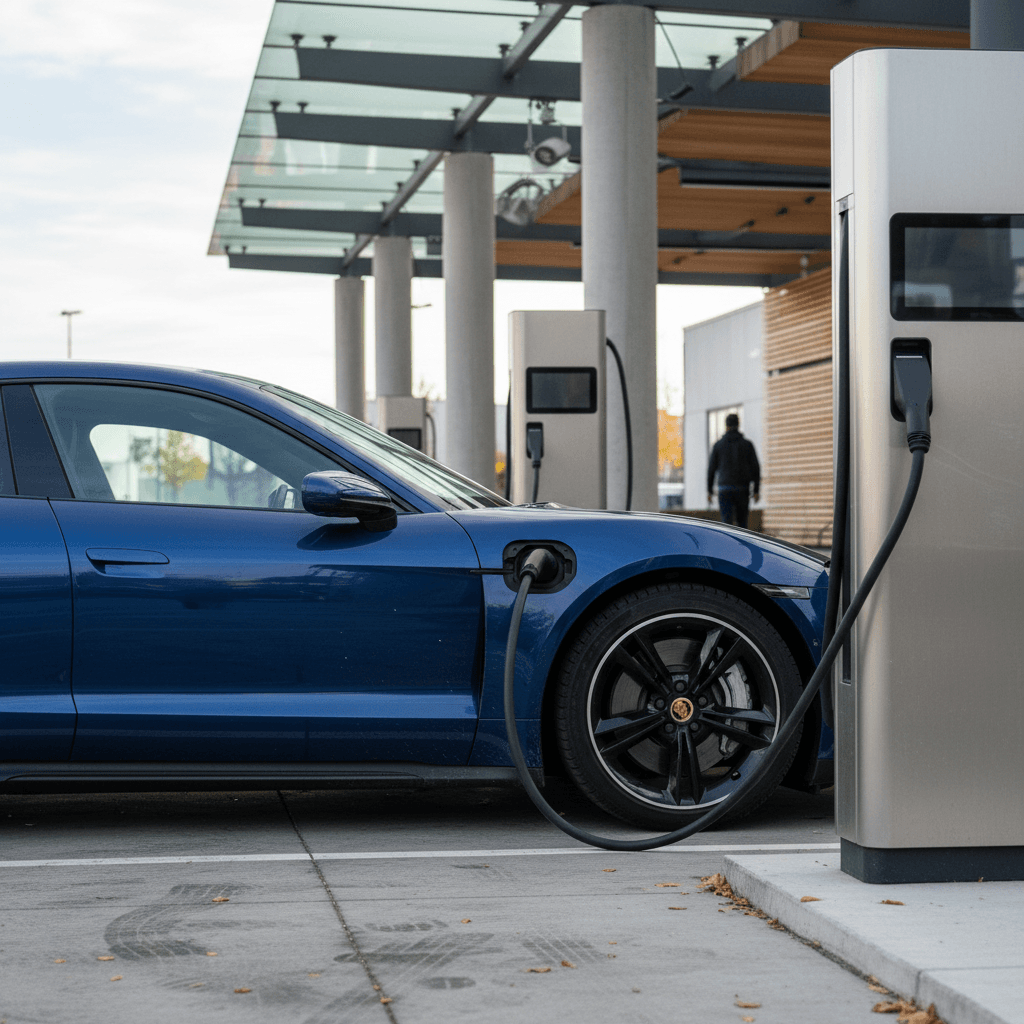
Used 2023 Taycan pricing and depreciation in 2026
Like most luxury EVs, the Taycan has depreciated faster than comparable gas Porsches. That’s bad news for first owners and very good news if you’re shopping in 2026. Market data on newer Taycans shows steep early‑year depreciation, often around 30% within the first three years and continuing to fall as newer, more efficient models arrive.
What depreciation looks like on a Taycan
Typical 2023 Taycan asking prices in 2026 (rough bands)
Actual prices vary by mileage, options, and local demand. This table is meant as directional guidance, not a quote.
| Trim | Original MSRP (approx) | Typical 2026 asking range |
|---|---|---|
| Taycan (RWD) | $90,000–$100,000 | $50,000–$65,000 |
| Taycan 4S | $110,000–$125,000 | $65,000–$80,000 |
| Taycan GTS | $135,000–$150,000 | $80,000–$95,000 |
| Taycan Turbo | $160,000–$180,000 | $90,000–$110,000 |
| Taycan Turbo S | $190,000+ | $105,000–$130,000 |
Assumes clean title, no major accidents, and 20k–40k miles.
Watch the options trap
The broader EV market has also softened. Many high‑end EVs, including the Taycan, have seen additional price pressure as new competitors arrive and incentives shift. That’s exactly why a 2023 Taycan can be rational as a used buy now, as long as you build those residual‑value realities into your expectations.
Battery health, range, and charging reality
The Taycan was one of the first widely available 800‑volt EVs, designed for rapid DC fast charging and repeated hard use. For 2023, Porsche also rolled out software updates that improved range and charging behavior on earlier cars, so many 2023s on the used market will already have these updates applied.
What kind of range can you realistically expect?
EPA ratings vary by wheel size and battery; real‑world numbers trend lower at highway speeds.
Base Taycan (RWD)
- EPA‑rated range roughly in the 200–250 mile band depending on battery and wheels.
- Most efficient in the lineup; great if you do mixed city driving.
4S / GTS
- Performance Battery Plus models often land in the 220–270 mile EPA range window.
- Expect closer to 180–220 miles at 75–80 mph in cold weather.
Turbo / Turbo S
- More power, wider tires, and aggressive driving cut into range.
- Think of these as ~200‑mile real‑world highway cars with spirited use.
Battery degradation so far
- Porsche’s large battery buffer and conservative usable‑capacity window help slow visible range loss.
- Software updates can add modest range over time, which can partially offset early degradation.
- A 2023 car with 30,000 miles that was mostly home‑charged on Level 2 is more attractive than a low‑mile car that lived on DC fast chargers.
Charging: the Taycan’s superpower, if infrastructure cooperates
Battery & charging checks before you buy
1. Review battery health data
Ask the seller for a recent <strong>battery health report</strong> or scan. Recharged includes a Recharged Score battery‑health diagnostic on every Taycan we list, so you can see usable capacity and DC‑fast‑charge history, not just guess from the range meter.
2. Look at charging history
Ask where the car was charged most often. A mix of home Level 2 and occasional DC fast charging is ideal. A car used heavily on high‑power DC fast charging deserves a closer look at battery health.
3. Verify software is up to date
Porsche has issued range and charging updates over time. Confirm the car has the latest campaigns and updates applied so you’re not leaving easy improvements on the table.
4. Test real‑world consumption
On a thorough test drive, note consumption at your normal speeds. A quick 20–30 minute highway run at 70–75 mph tells you more than the EPA label.
Reliability, problems, and recalls to know about
The Taycan is both a Porsche and a first‑generation high‑tech EV platform. That combination means excellent fundamentals, chassis, brakes, powertrain, and a more mixed record on software and electronics. By 2023, Porsche had already addressed many early‑production issues seen on 2020–2021 cars, but some themes still matter if you’re shopping used.
Common Taycan problem areas (2021–2023 cars)
Not every car will see these issues, but they’re patterns worth screening for.
Software & electronic glitches
- Infotainment freezes or reboots.
- Driver‑assist warnings or sensor errors.
- Occasional charging‑session handshake failures.
Most are resolved with software updates, module replacements, or updated control units under warranty.
Hardware & wear items
- Air‑suspension components on heavily optioned cars can be expensive out of warranty.
- Premature 12‑volt battery failures have been reported on some early cars.
- High‑performance brakes and tires wear quickly if the car is driven hard.
Recalls and warranty: don’t skip this step
Overall, the 2023 model year benefits from being later in the production cycle: more issues are known, and many cars will already have had recalls and TSBs addressed under warranty. That said, this is still a complex luxury EV. You’re not buying Corolla‑grade simplicity; you’re buying a deeply engineered, densely optioned Porsche that rewards proactive care.
Insurance, maintenance, and running costs
Total cost of ownership is where many shoppers underestimate the Taycan. Depreciation softens the purchase price, but insurance, tires, brakes, and service still reflect the car’s six‑figure origins.
What to budget for as a 2023 Taycan owner
These aren’t quotes, just the realities to plan around.
Insurance
Expect premiums more in line with a 911 or Panamera than a mainstream EV. High repair costs, performance potential, and expensive sensors all factor in. Shop quotes on the specific VIN before you commit.
Maintenance & repairs
No oil changes, but still a lot of Porsche: brake fluid, coolant for the battery/thermal system, and the usual suspension and alignment work. Out‑of‑warranty electrical or suspension repairs can be pricey.
Tires & brakes
High‑performance EVs are heavy and fast. Expect to replace performance tires every 15k–25k miles depending on driving, and understand that factory brake parts are not economy‑car cheap.
Leaning on CPO and independent EV specialists
Who is the 2023 Taycan a good buy for?
You’re a strong fit for a 2023 Taycan if…
You have stable home charging
You can install or already have a <strong>240‑volt Level 2 charger</strong> at home and won’t depend on public fast charging for daily use.
You value driving experience over spec‑sheet range
You care more about steering feel, braking, and high‑speed stability than squeezing out 350+ miles on a charge.
You can afford luxury‑car running costs
The purchase price may feel like a bargain, but you’ve budgeted for Porsche‑level insurance, tires, and service, not Hyundai Ioniq‑level costs.
You plan to keep it for a while
You’re comfortable owning the car through the bulk of its depreciation curve and aren’t counting on strong resale after just a year or two.
Who should skip the 2023 Taycan?
Daily‑driver pragmatists
If you see a car primarily as an appliance, get in, go far, charge anywhere with minimal thought, a Taycan is overkill. Many newer mainstream EVs deliver more range, simpler tech, and lower running costs for less money.
First‑time EV buyers on a tight budget
If the 2023 Taycan is a stretch just to buy, it’s likely the wrong car. A surprise suspension repair or out‑of‑warranty electronics issue can undo years of fuel savings. In that case, a simpler used EV, or a Taycan with a rock‑solid warranty and verified battery health via a Recharged Score report, may be safer.
Range‑first road‑trippers
How to shop smart for a used 2023 Taycan
Because the 2023 Taycan is both desirable and complex, the difference between a great buy and a nightmare often comes down to process. Here’s how to stack the odds in your favor.
Step‑by‑step: de‑risking a used 2023 Taycan purchase
1. Start with the right trim
Decide honestly what you need. A well‑optioned <strong>RWD or 4S</strong> is more than fast enough for most people and usually easier on tires and insurance than a Turbo or Turbo S.
2. Demand transparency on history
Pull a full history report, verify <strong>servicing at Porsche or reputable specialists</strong>, and check for repeated visits related to electronics or charging. Avoid cars with unresolved accidents around the battery pack area.
3. Get objective battery and charging data
Don’t guess from the dash. A proper <strong>battery‑health scan and charging‑history review</strong> are essential. On Recharged, every Taycan includes a Recharged Score report with verified battery state‑of‑health so you can compare cars apples‑to‑apples.
4. Inspect wheels, tires, and brakes
Staggered 20" or 21" wheel setups are common and expensive to replace. Look for uneven tire wear, curb rash, and brake condition that might hint at hard track use or alignment issues.
5. Test drive like you’ll actually use it
Drive it cold and warm. Test highway passing, regenerative braking feel, and a full suite of driver‑assist features. Try at least one <strong>AC and one DC charging session</strong> if possible to flush out handshake issues.
6. Plan financing and trade‑in holistically
Because the Taycan is a specialty EV, pairing it with the right <strong>EV‑savvy financing</strong> and a fair trade‑in for your current car matters. Recharged can help you line up financing, instant offers, or consignment, and ship a vetted Taycan nationwide.
FAQ: buying a 2023 Porsche Taycan used
Frequently asked questions about the 2023 Taycan
Bottom line: Is the 2023 Taycan worth it?
If your core question is “is 2023 Porsche Taycan a good buy in 2026?”, the honest answer is: it can be an exceptional buy for the right driver, and a painful one for the wrong driver. As a used EV, it turns steep early depreciation and Porsche’s engineering into a relative bargain, but only if you go in clear‑eyed about range, running costs, and the realities of first‑generation EV tech.
If you have stable home charging, value driving dynamics over maximum range, and are comfortable with luxury‑car ownership costs, a well‑vetted 2023 Taycan is absolutely worth a look. Focus on battery health, software status, options you’ll actually use, and transparent history rather than just color and wheels. And if you’d rather not decode those variables alone, shopping through a platform like Recharged, with Recharged Score battery diagnostics, EV‑aware pricing, financing, trade‑in options, and expert guidance, can turn a complex decision into a confident one.