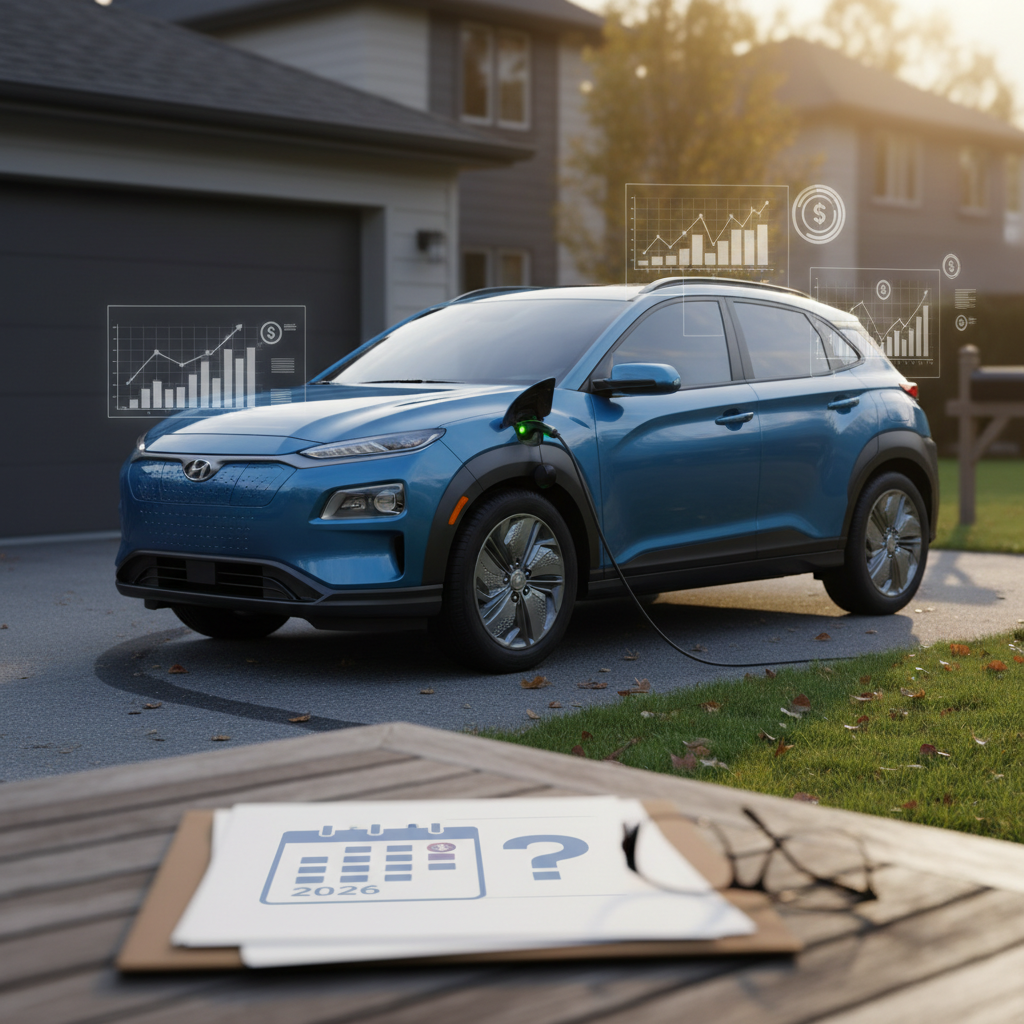
If you’re selling an electric vehicle, the one question serious buyers will keep circling back to is: **What’s the battery health?** Knowing how to prove battery health when selling an EV is the difference between lowball offers and confident, full‑value buyers who are ready to move quickly.
Battery health = resale value
Why battery health proof matters when you sell
With gas cars, buyers obsess over engine noise, oil leaks, and transmission shifts. With EVs, most of that disappears, and all the anxiety moves to the battery pack. A replacement pack can cost **many thousands of dollars**, so buyers treat battery health like the EV equivalent of engine compression numbers.
What’s going through a used EV buyer’s mind
The unspoken questions your proof needs to answer
“How far will it really go?”
“Is a big bill coming?”
“Is the price fair for the health?”
Good news for sellers
What buyers actually want to see as proof
Different buyers have different comfort levels, but the same patterns keep coming up. Put yourself in their shoes: if you were wiring thousands of dollars for a used EV, what proof would make you relax?
- A clear **battery health metric** (often called State of Health or SOH) expressed as a percentage
- Confirmation of any **remaining battery warranty** and whether it transfers to the next owner
- Evidence of **normal, consistent range** in daily use
- Basic **maintenance and charging history** that shows the pack hasn’t been abused
- Ideally, a **third‑party or marketplace report** rather than just the seller’s word
Think like an inspection report
Step 1: Gather factory battery health and warranty info
Start with what’s already built into the car and its paperwork. Many manufacturers quietly provide more battery information than most owners realize. Collect these basics before you do anything else.
OEM battery info every seller should pull
Find the original capacity and range
Look up your EV’s original **battery size (kWh)** and **rated range** from the window sticker, owner’s manual, or manufacturer website. You’ll use this as the baseline when you present any current readings.
Check for an in‑car SOH or battery screen
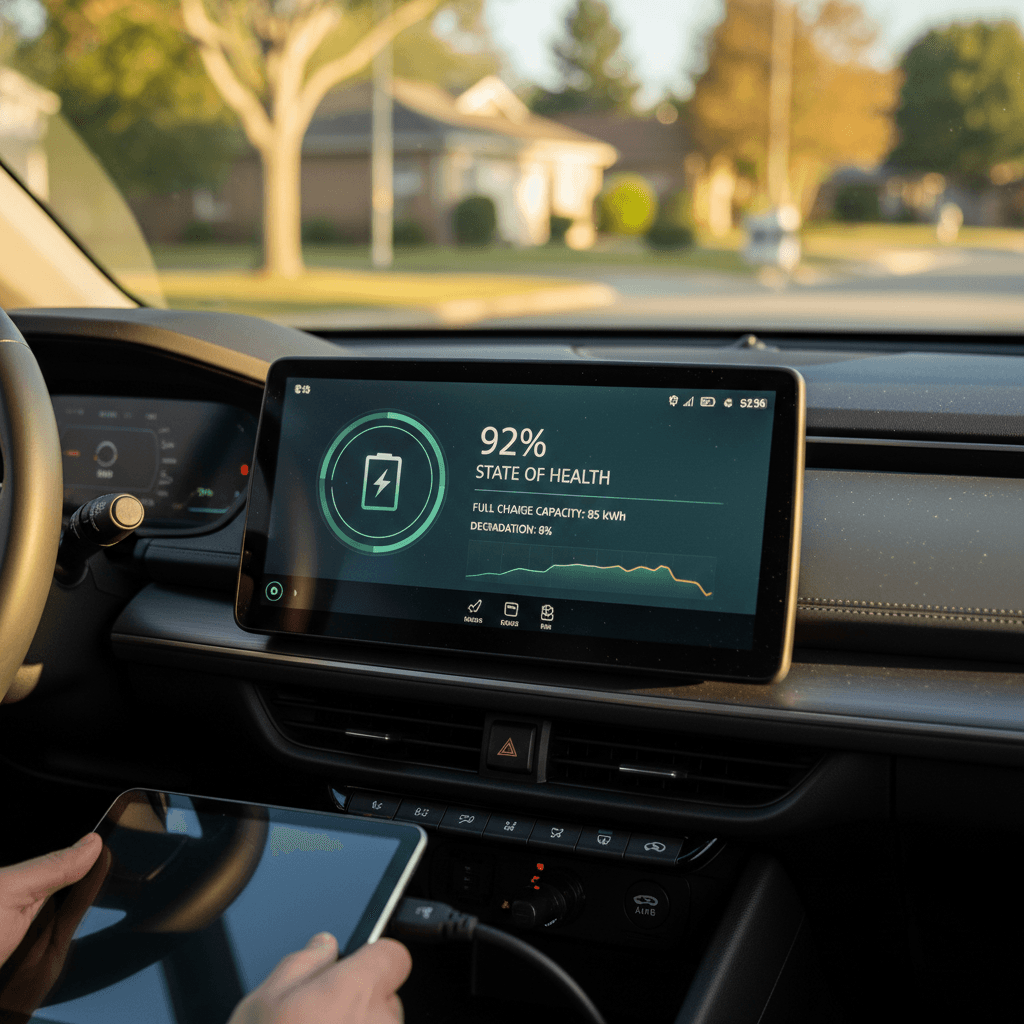
Some brands (including Tesla, Hyundai/Kia, and others) expose **battery health or degradation info** in the dash or app. If your car shows this, grab **clear screenshots or photos** at a high state of charge.
Confirm remaining battery warranty
Most EV batteries are covered by an **8-year (or similar) warranty** with a minimum capacity threshold. Log into your OEM account or call a dealer to confirm the in‑service date, mileage, and whether the warranty **transfers to the next owner**.
Print or save any OEM battery reports
Some dealers can run a **battery health test** or print a capacity report during scheduled service. If you’ve had this done, include it in your sale folder and call it out directly in your listing.
Be careful with screenshots
Step 2: Get an independent battery health report
Factory information is a good start, but the strongest way to prove battery health when selling an EV is to add a **third‑party or marketplace report** that aggregates real‑world data. Think of these as Carfax‑style reports designed specifically for EV batteries.
Why independent battery reports help EVs sell
1. Marketplace or platform reports
If you sell through a specialist EV marketplace like Recharged, battery proof is often built in. Every used EV listed with Recharged includes a Recharged Score battery health report that uses pack data, real‑world performance, and pricing benchmarks to show buyers exactly what they’re getting.
That means you don’t have to coordinate tests yourself, and buyers can compare your car’s battery health directly against similar EVs.
2. Stand‑alone battery health services
If you’re selling privately, you can book a **mobile or data‑driven battery test** through third‑party providers in many markets. Typically you’ll:
- Connect a small dongle, app, or test module to your car
- Drive or charge the vehicle under specific conditions
- Receive a PDF report that shows State of Health (SOH), estimated real‑world range, and battery flags
Expect to pay roughly the same as a pre‑purchase inspection on a gas car, and plan to share the full report with any serious buyer.
Offer the report up front
Step 3: Use real-world range and charging data
Battery health isn’t just about one SOH number. Buyers care about what the car actually does on the road. If you can show consistent, believable range and explain how the car is used, it helps your SOH report feel real, not theoretical.
Simple data points that make your case stronger
You don’t have to be a data scientist, just organized
Typical trips and range
Usual charging habits
Recent long‑trip example
Explain weather and conditions
Step 4: Compile service records and recalls
Battery chemistry is only half the story. How the car has been maintained, and whether any battery‑related recalls or software updates were completed, also shapes buyer confidence.
Documentation that quietly proves you’ve cared for the battery
Routine service invoices
Gather invoices from tire rotations, brake fluid changes, cabin filters, and any EV‑specific checks. Even though EVs need less maintenance, **organized paperwork** signals that you’re a careful owner.
Battery or high‑voltage system service
If the pack has ever been inspected, balanced, or repaired, include the documentation and be prepared to explain why. Buyers don’t necessarily mind past repairs if they’re **well‑documented and warrantied**.
Recall and campaign history
Log into your OEM portal or call a dealer to confirm any **battery‑related recalls or software updates** are complete. Print the summary or take screenshots, this reassures buyers they’re not inheriting an open issue.
Charging equipment condition
Photograph the **home or portable EVSE** you’re including in the sale. A clean, undamaged charger and cable help convey that the car hasn’t been abused or left in harsh conditions.
Step 5: Present your battery evidence in your listing
Once you’ve gathered your proof, the way you present it is just as important as the data itself. A cluttered ad with scattered screenshots doesn’t inspire trust. A clean, structured summary does.
How to package battery proof in your ad
Use this structure in your listing description or as a separate "Battery & Range" section.
| Item | What to include | Where it comes from |
|---|---|---|
| Battery State of Health | SOH percentage, test date, testing method | Third‑party report or marketplace report |
| Real-world range | Typical commute, highway example, recent long drive | Your own driving history |
| Battery warranty | Coverage years/miles, expiry date, transfer note | OEM warranty booklet or dealer |
| Service & recalls | Summary of completed services and any battery recalls | Service invoices, OEM portal |
| Charging habits | Home vs DC fast charging mix, storage habits | Your ownership history |
Copy‑and‑paste friendly battery section outline for private sellers.
Sample wording you can adapt
DIY vs professional battery tests: what’s good enough?
Not every seller needs a lab‑grade test, but a 2‑minute photo of your dashboard isn’t enough either. The right level of proof depends on your buyer, your car’s age, and how much money is at stake.
DIY options that can help (with caveats)
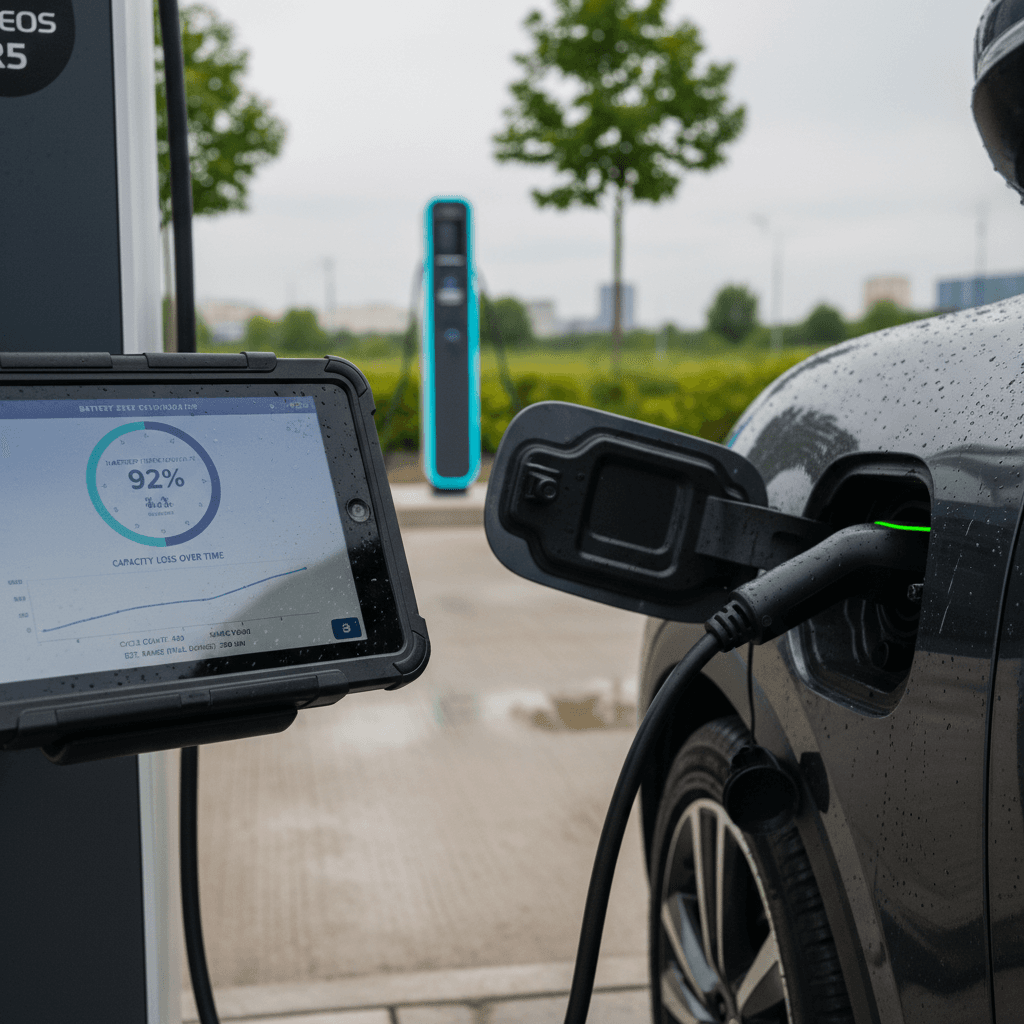
- In‑car energy or SOH screens: Useful as supporting evidence, especially if they show rated range at 100% alongside original specs.
- OBD + app tools: Some communities (Nissan Leaf, VW e‑Golf, etc.) use apps that read pack data. If you go this route, be ready to explain what the numbers mean and share the method.
- Range tests: A documented full‑to‑low drive under controlled conditions can back up other data, but it’s time‑consuming and affected by weather and driving style.
DIY tools are better than nothing, but they’re also easy to misunderstand or misconfigure, something savvy buyers know.
When a professional or marketplace test is worth it
- Your EV is **out of basic warranty** but still worth a significant amount.
- You’re selling a model with a lot of online chatter about degradation, and buyers will be extra cautious.
- You want to price at the top of the market for its year and mileage.
- You don’t want to spend weekends explaining what each DIY number means to every new shopper.
In these cases, a recognizable third‑party report or a Recharged Score can easily pay for itself in sale price, speed, or both.
Don’t over‑claim or cherry‑pick data
How Recharged handles battery proof for you
If all of this feels like a lot of work, that’s exactly why purpose‑built used EV platforms exist. At Recharged, battery transparency is built into every step of the process so you don’t have to become a battery engineer to sell your car responsibly.
Selling through Recharged: what changes for battery proof
Battery health isn’t an afterthought, it’s the headline
Recharged Score report
EV‑specialist support
Flexible ways to sell
Ready to find your next EV?
Browse VehiclesKeep it digital from end to end
Common mistakes that undermine trust
You don’t have to be perfect to sell your EV, batteries naturally degrade over time. What spooks buyers isn’t honest wear; it’s **uncertainty and mixed signals**. Avoid these common missteps.
- Only sharing a single optimistic range screenshot and calling it “battery proof”
- Refusing a reasonable independent test request from a serious, qualified buyer
- Ignoring obvious issues like a big range drop after a recent software update
- Hiding that the car sat at 100% charge for months or lived in extremely hot conditions
- Pricing the car as if it has a brand‑new pack when your own data suggests below‑average health
Silence is a red flag
FAQ: EV battery health when selling
Frequently asked questions about proving EV battery health
Bottom line: treat battery proof like an inspection report
Proving battery health when selling an EV isn’t about chasing a perfect number. It’s about giving buyers a clear, honest picture of what they’re actually buying so they can say “yes” with confidence. If you combine credible SOH data, real‑world range examples, warranty details, and clean documentation, you’ll stand out in a crowded used EV market, and you’ll have a much easier time defending your price.
You can do this yourself with the right tools and discipline, or you can let a specialist platform like Recharged package it all for you with a Recharged Score, financing options, trade‑in support, and nationwide delivery. Either way, treating battery transparency as non‑negotiable is the single best favor you can do for yourself, and for the next owner of your EV.