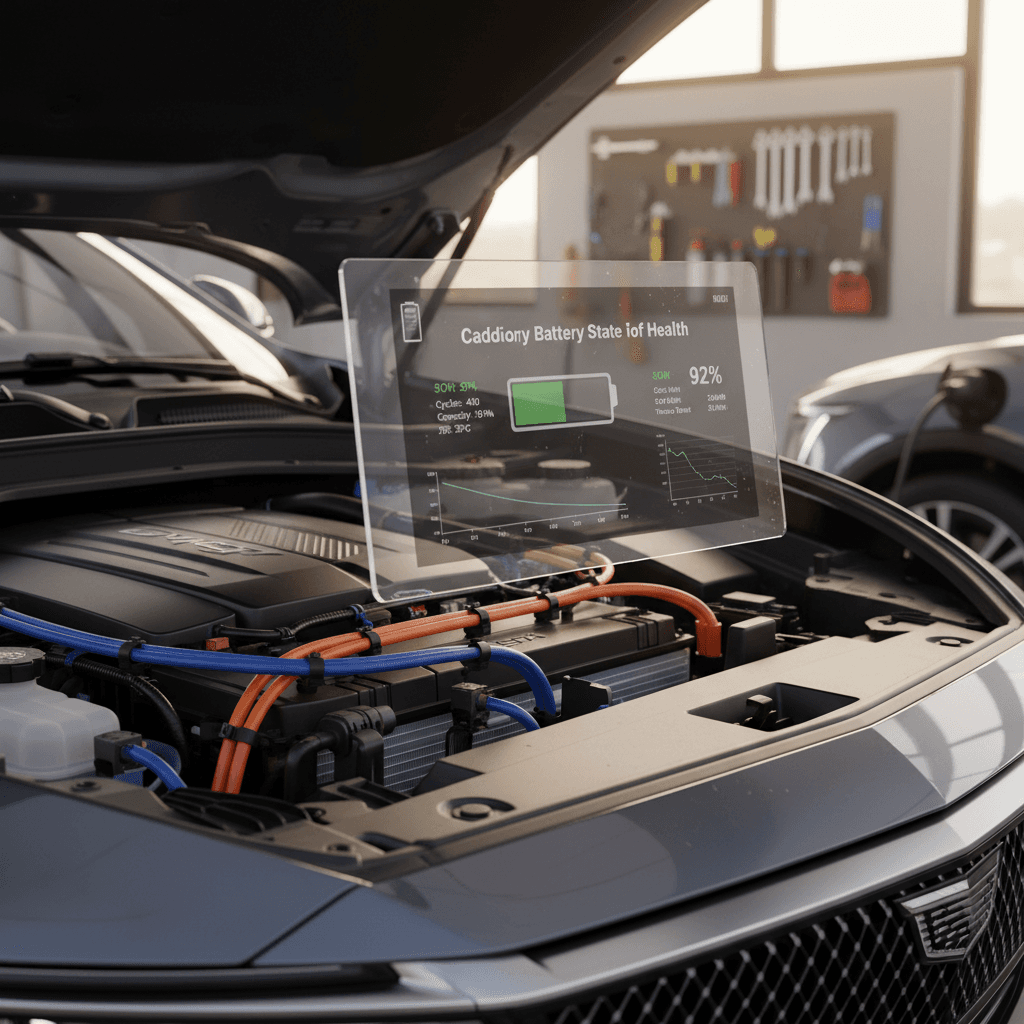
The most useful EV battery check measures the pack directly instead of guessing from age, mileage or the dashboard’s range estimate. Look for state of health, meaning tested remaining capacity compared with the battery’s original capacity, along with estimated range and cell-voltage balance. A seller should be willing to share the report and explain how the test was performed. For more context on battery aging, see how long EV batteries last.
The four ways to check battery health
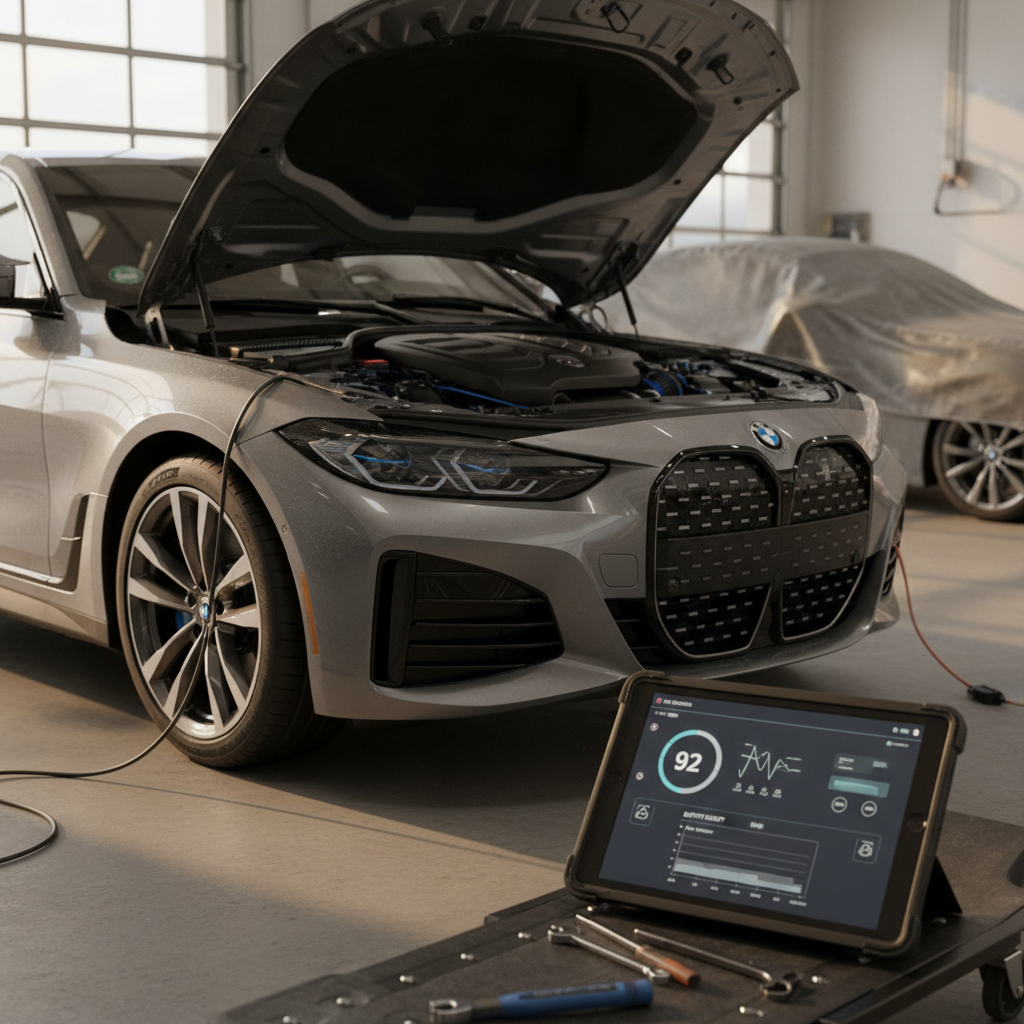
A direct diagnostic report is the strongest option because it can show remaining capacity and pack-level data rather than an estimate alone. Manufacturer tools may also provide a useful result, but availability and procedures vary by vehicle. Dashboard range is best treated as an initial clue, not proof of battery condition.
EV battery-checking methods compared
Choose the most direct test available for the vehicle you’re evaluating.
| Method | Best for | What it shows | Main constraint |
|---|---|---|---|
| Recharged Score | Used-EV shopping | Capacity, range, cell balance | Recharged vehicles |
| Tesla in-car test | Tesla owners | Battery-health result | Up to 19 hours |
| Diagnostic scan | Pre-purchase inspection | SOH and cell voltages | Model-specific access |
| Dashboard range check | Early screening | Estimated range trend | Not capacity proof |
A diagnostic report provides more decision-ready information than dashboard range alone.
Ask for the complete report
Which battery-health numbers matter?
The key measurements are state of health, tested range and cell-voltage balance. State of health indicates how much capacity remains relative to the pack’s original capacity, while tested range translates the battery result into a practical driving estimate. Cell-voltage readings help identify whether the pack is balanced or whether part of it may be underperforming. Charging-history information adds context, but it shouldn’t replace direct capacity and cell measurements.
What a useful battery report should include
Tested remaining capacity
A state-of-health percentage tied to the specific vehicle and test date.
Estimated real-world range
A tested estimate you can compare with your normal driving needs.
Cell-voltage balance
Pack readings that help identify an unusually weak or imbalanced section.
Vehicle identification
The correct model, battery configuration and mileage for the car being tested.
Diagnostic conditions
An explanation of the tool and process used to collect the battery data.
What Recharged battery data shows
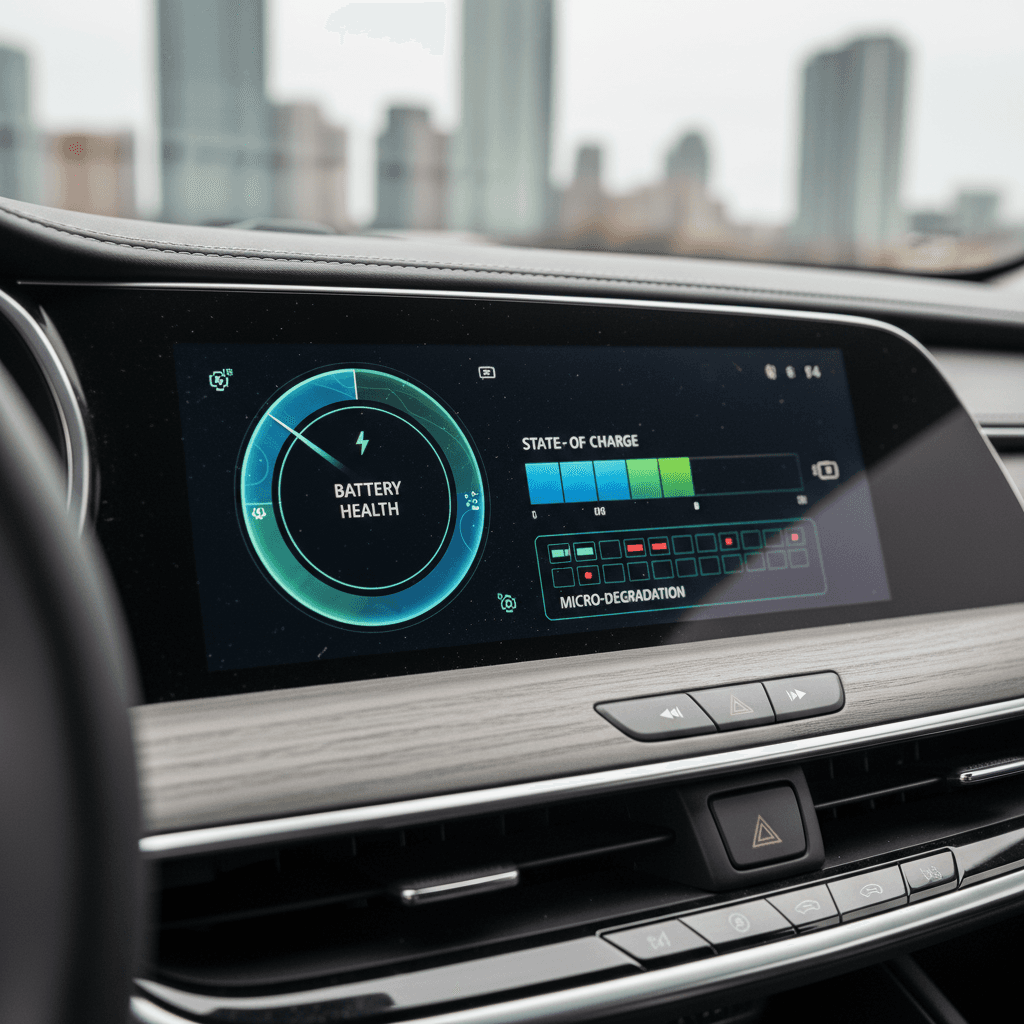
Recharged’s own inspection data shows why vehicle-specific diagnostics are more useful than assumptions about used EVs as a category. Across 2,242 Recharged Score battery inspections, tested remaining capacity averaged 93.9% of original capacity, with a median of 94.9%. Tested real-world range averaged 266 miles, but that fleet-wide figure covers different vehicles and battery configurations, so it isn’t a target for every EV. The takeaway is straightforward: many inspected packs retain substantial capacity, but you still need the result for the exact vehicle you’re considering.
Battery state of health is the headline number, but cell-voltage balance helps show whether part of the pack is underperforming. We look at the readings together, not in isolation.
Recharged data
Used EV battery health
94%
avg remaining capacity
From Recharged battery inspections, not manufacturer estimates.
- Lowest
- 63%
- Median
- 95%
- Highest
- 100%
- Est. range
- 266 mi avg
- Cell balance pass
- 100%
- Quick charges
- 18 avg
- Slow charges
- 65 avg
Average cell imbalance: 7.3 mV
Based on vehicles Recharged tested
Recharged data
Recent EV sold prices
$27,297
median sold price
What buyers actually paid through Recharged, not list price.
- Lowest
- $500
- Average
- $29,901
- Highest
- $129,998
Monthly median sold price
Based on Recharged sales in the last 12 months
Every EV is battery-tested with a Recharged Score. Nationwide delivery.
How to check the battery before buying
Before buying, verify the report, match it to the vehicle and judge the result against how you’ll use the car. A strong percentage can’t compensate for a range estimate that won’t cover your commute, while a lower result may still be practical at the right price. Include the battery assessment in a broader used-EV inspection rather than treating it as the only condition check.
- Request a current diagnostic report. Confirm that it belongs to the exact vehicle and shows when the test was completed.
- Find the state-of-health result. Read it as tested remaining capacity compared with the pack’s original capacity.
- Review estimated range. Compare it with your daily driving, charging access and expected seasonal needs.
- Check cell-voltage readings. Ask for an explanation if the report identifies imbalance or an underperforming part of the pack.
- Review alerts and charging behavior. Confirm that no battery or thermal warning is active, and make sure the vehicle charges normally.
- Verify warranty terms. Check the manufacturer’s current coverage using the vehicle’s in-service date, mileage and identification number.
Dashboard range isn’t a capacity test
How Tesla’s built-in battery test works
Tesla’s supported in-car workflow can run a battery-health test at home, but it requires planning and can take up to 19 hours. In the process demonstrated by Recharged, the vehicle had to be parked, connected to the internet and plugged into an AC charging station with its battery below 20%. The test discharged the battery below 10% and then recharged it to 100%; no battery or thermal alert could be active, and no software update could be scheduled. Menu availability and requirements can depend on the vehicle and software, so follow the checklist shown in your car.
If you run Tesla’s built-in test, plan around the car: it must remain parked, plugged into AC power and online for a long session.
How to interpret the results
A lower state-of-health percentage doesn’t automatically mean that the battery is failing. In one Recharged diagnostic demonstration, a 2021 Tesla Model 3 showed 85% state of health, an estimated 268 miles of range and only five millivolts of cell imbalance; the pack was assessed as well balanced and healthy. Another demonstrated vehicle, a 2023 Kia EV6 with almost 9,000 miles, showed 100% state of health and an estimated 274 miles. These examples show why you should interpret capacity, usable range and cell balance together instead of turning one percentage into a pass-or-fail rule.
Your decision should also reflect price, warranty coverage and the range buffer you need. If a report shows less capacity than expected, ask whether the price accounts for that difference and whether the remaining range still works for you. If the result is unclear or conflicts with a warning light, pause the purchase and arrange an EV-specific inspection. You can also review EV battery replacement costs before accepting an unresolved battery concern.
Instant offer, trade-in, or consignment. Pickup available.
EV battery-health FAQ
The bottom line
The best way to check an EV battery is with a direct, vehicle-specific diagnostic that reports remaining capacity, estimated range and cell balance. Treat dashboard range as a screening tool and charging history as supporting context, not as substitutes for tested battery data. Recharged includes verified battery diagnostics in the Recharged Score Report so you can evaluate the pack alongside condition and fair market pricing. When comparing vehicles, choose the battery result and usable range that fit your driving rather than chasing a perfect percentage.