When you first drive an electric vehicle, one of the strangest sensations is how the car slows down the moment you lift off the accelerator. That’s regenerative braking at work, your EV turning momentum back into electricity instead of wasting it as heat. Understanding how regenerative braking works helps you drive more efficiently and know what to look for when you’re shopping for a new or used EV.
Big picture
What is regenerative braking?
In a conventional gas car, pressing the brake pedal squeezes pads against metal discs or drums. The result is friction, heat, and lost energy. Once that energy becomes heat, you can’t get it back.
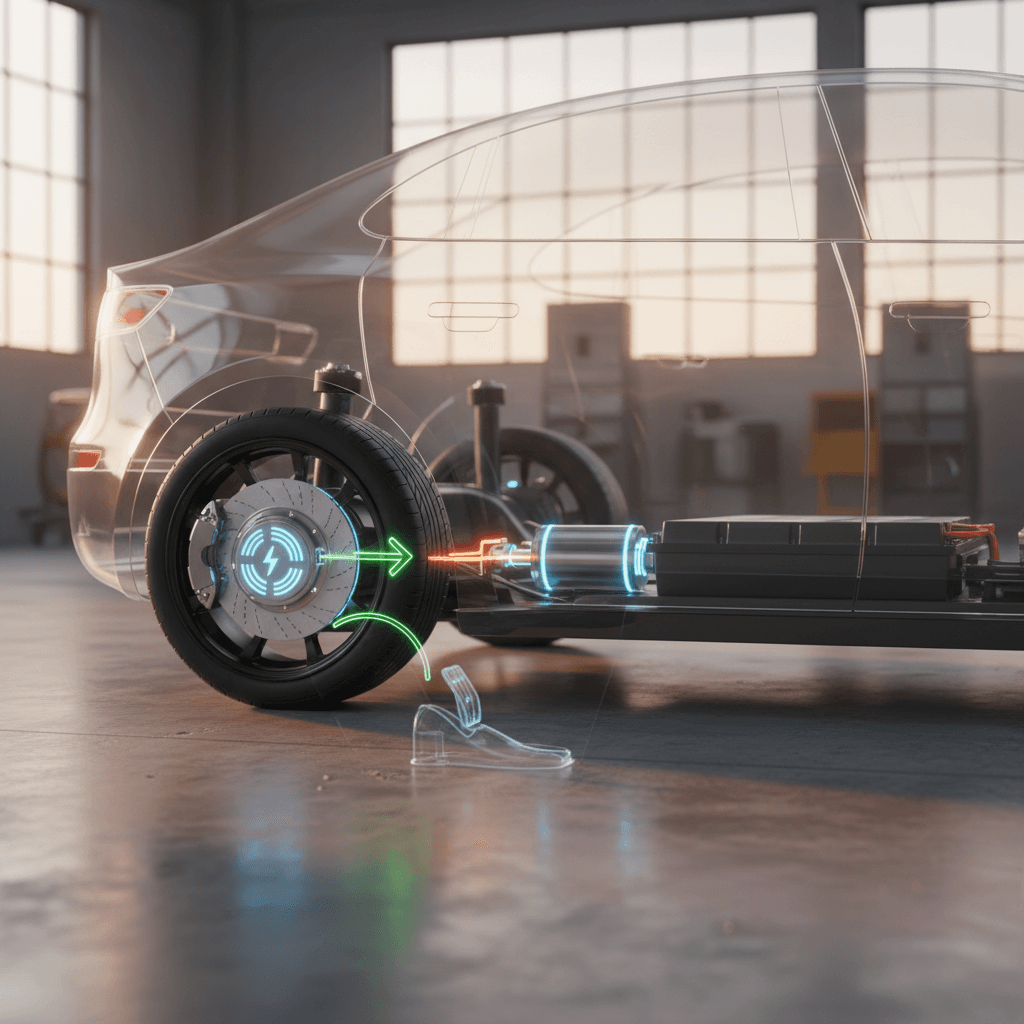
In an EV or hybrid, regenerative braking (often shortened to “regen”) uses the electric drive motor to slow the car while it acts like a generator. As the wheels turn the motor, it sends electrical energy back into the battery pack. You still have conventional friction brakes for hard stops and emergencies, but a lot of everyday slowing, off‑ramps, traffic lights, stop‑and‑go, can be handled by regen.
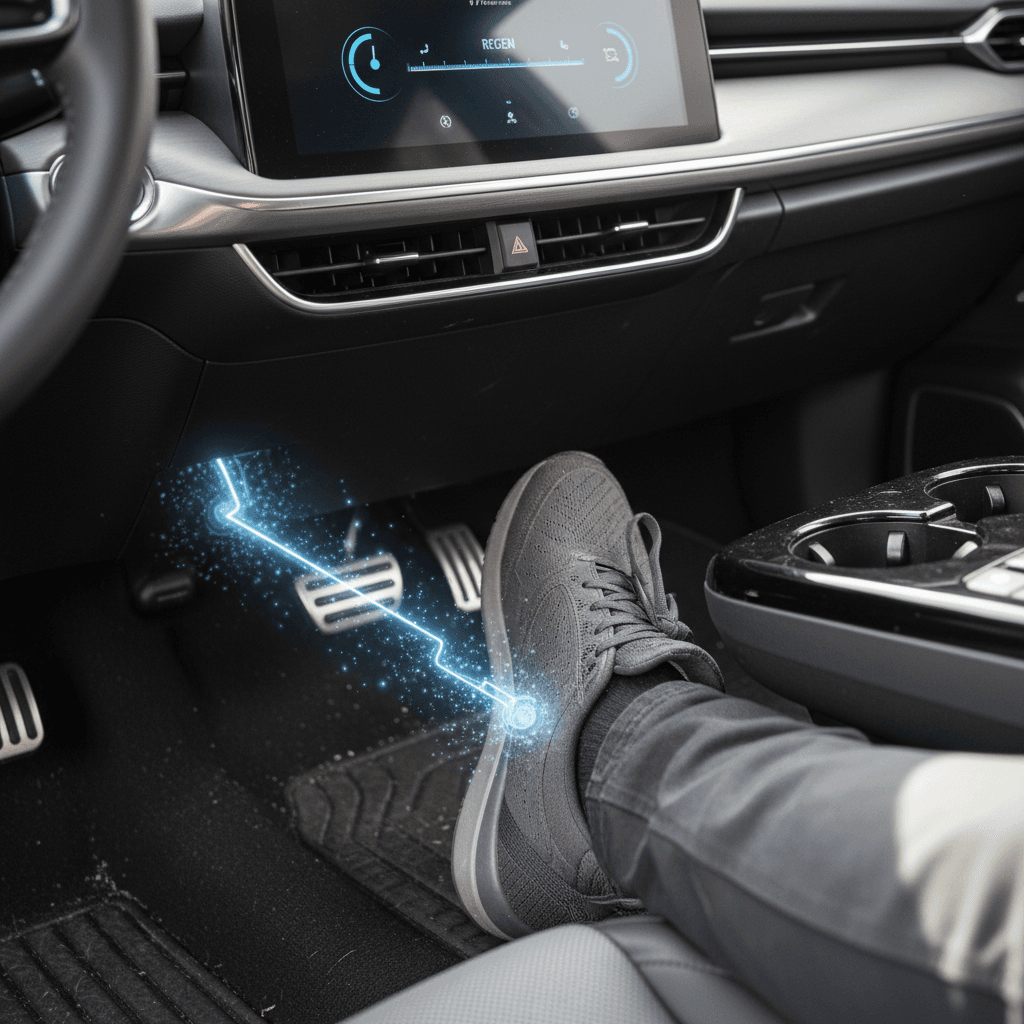
How regenerative braking works, step by step
From motion back to battery: the regen sequence
Under the skin, your EV is constantly swapping between motor and generator modes.
1. You lift off the accelerator
2. Motor becomes a generator
3. Energy flows into the battery
The resistance you feel, like a gentle or sometimes firm tug backward, is the motor working against the rotation of the wheels. The stronger the regen setting, the more aggressively the car slows when you come off the accelerator.
Tip: watch the power gauge
Regenerative braking vs. regular friction brakes
Regenerative braking
- Primary role: Recover energy and slow the car during light to moderate deceleration.
- How it works: Electric motor runs as a generator and sends power back to the battery.
- Best at: Routine slowing, coming off the highway, creeping in traffic, rolling up to a stop sign.
- Bonus: Dramatically reduces wear on brake pads and rotors, lowering maintenance costs over time.
Friction braking
- Primary role: Provide strong, predictable stops in all conditions.
- How it works: Brake pads clamp onto brake discs, turning motion into heat.
- Best at: Emergency stops, low‑speed creeping, or when the battery can’t accept more charge.
- Reality check: EVs and hybrids always keep conventional brakes; regen is a complement, not a replacement.
Don’t rely only on regen
How much energy does regenerative braking really recover?
Two words matter here: efficiency and effectiveness. They sound similar but describe different things.
What the numbers look like in the real world
Think of efficiency as how good the hardware is at converting motion into electricity and back into motion. Effectiveness is how much that matters over an entire trip. You might see very high regen power on a steep downhill, but if your daily commute is flat highway, the overall range gain will be modest.
Where regenerative braking helps the most
Effectiveness depends heavily on your routes and speeds.
| Driving scenario | How often you brake | Typical regen benefit | What it feels like |
|---|---|---|---|
| City / suburban stop‑and‑go | Frequent | High – biggest range gain | Lift‑off immediately slows the car; one‑pedal driving feels natural |
| Hilly or mountain roads | Frequent on descents | High – especially on long downhills | Car holds speed downhill while charging the battery |
| Mixed commuting | Moderate | Medium | Noticeable savings over a full week of commuting |
| Steady highway cruising | Infrequent | Low | Regen only matters when exiting or in traffic waves |
Use this as a rough guideline, exact numbers vary by model and driving style.
Important nuance
Driving modes and one‑pedal driving
Many modern EVs let you choose how strong regenerative braking feels. Automakers label these modes differently, “Low/Standard/High,” “B‑mode,” or branded names like e‑Pedal, but they all adjust how aggressively the car slows when you lift off the accelerator.
Common regenerative braking modes
Exact names vary by brand, but the behavior is similar.
Low / Normal
High / B‑mode
One‑pedal / e‑Pedal
Try this on a test drive
Limits and drawbacks of regenerative braking
- Battery limits: When the high‑voltage battery is near 100% state of charge or very cold, the car will restrict regen to protect the pack.
- Low‑speed behavior: At walking speeds, regen alone can’t reliably hold the car. Friction brakes finish the stop and keep the car from creeping.
- Tire grip: On slippery roads, the car may reduce regen to prevent wheel lockup or skids. Stability control always has the final say.
- Pedal feel complexity: Because the car blends regen and friction braking, some early EVs had slightly inconsistent brake feel. Newer software has largely smoothed this out.
- Traffic flow impacts: Strong regen can make an EV slow earlier than drivers behind expect, which is why brake lights usually illuminate when regen deceleration is high.
Safety note
Does regenerative braking hurt or help battery health?
At first glance, it might seem like frequent bursts of charging during braking would wear out a battery faster. In practice, research has shown the opposite when the system is well‑designed: higher levels of regenerative braking can actually reduce long‑term battery aging in typical EV use.
Here’s why. Regen usually adds small amounts of energy many times a day rather than long, deep charging sessions. That lowers the average depth of discharge, the swing between empty and full, that the battery sees. Studies on lithium‑ion packs used in EVs have found that shallower cycles tend to slow capacity loss over high mileage, especially when temperatures and charge rates are kept within a healthy window.
Good news for used‑EV buyers
What to look for in regen when buying a used EV
If you’re evaluating a used electric vehicle, regenerative braking is part of the test‑drive story. It affects how the car feels day‑to‑day and how efficiently you can drive it.
Used EV shopping: regen checklist
1. Test all regen modes
Cycle through low, normal, and high/one‑pedal modes (if available). Make sure the car decelerates smoothly and predictably, without jerks or strange noises.
2. Listen for grinding or pulsing
Regen itself should be nearly silent. Any grinding, pulsation, or vibration under light braking likely points to conventional brake hardware that needs attention, not the regen system.
3. Watch the power/charge gauge
On the test drive, lift off the accelerator on a downhill or when approaching a light. You should see the power gauge swing into the charge or negative zone, indicating regen is active.
4. Check range over a mixed route
A short loop with city streets and a bit of highway will show you how the car behaves in realistic use. Aggressive regen should make it easier to keep energy consumption low in traffic.
5. Ask for a battery health report
At Recharged, every vehicle includes a <strong>Recharged Score Report</strong> with verified battery health. That context lets you interpret what you feel on the test drive with hard data on how the pack has aged.
6. Confirm software is up to date
Automakers continuously refine regen behavior via software updates. Make sure the car has current firmware so you benefit from the latest tuning and safety improvements.
How Recharged can help
Practical tips to get the most from regen
- Look far ahead so you can lift off the accelerator early instead of waiting and braking hard at the last second.
- Use a stronger regen or one‑pedal mode in city driving and on hilly routes to maximize energy recovery.
- On long highway trips, focus on smooth driving; regen matters mainly when exiting or hitting traffic waves.
- In cold weather, expect limited regen until the battery warms up. Many cars show a dashed line or icon to indicate reduced regen.
- Avoid driving at 100% charge right before a long downhill stretch; leave some room in the battery so it can accept energy.
- Remember that coasting, letting the car roll freely, can sometimes be more efficient than heavy regen followed by re‑acceleration. Aim for a smooth mix of both.
Drive it like a freight train, not a yo‑yo
Regenerative braking FAQ
Frequently asked questions about how regenerative braking works
Key takeaways
Regenerative braking is one of the reasons EVs feel so different, and so efficient, on the road. By turning deceleration into usable electricity, your car can claw back a meaningful chunk of energy that a gas vehicle would simply throw away as heat.
For you as a driver or shopper, the main points are straightforward: learn how your EV’s regen modes work, expect stronger benefits in city and hilly driving, and don’t worry that normal regen use will harm the battery. If you’re comparing used EVs, paying attention to how each car slows and how its battery has been cared for will tell you a lot about how it will live with you day‑to‑day.
Recharged was built to simplify that decision. Every used EV we sell includes a Recharged Score Report with verified battery health, transparent pricing, and EV‑specialist support, so when you feel that regenerative tug on your test drive, you know exactly what’s going on under the floor and how much life the pack still has left.