If you own, or are eyeing, a 2025 BMW i4, you’ve probably heard about software fixes, battery concerns, and even a brief stop‑sale. This guide pulls together the most important 2025 BMW i4 recalls list information in one place, in plain English, so you know what’s serious, what’s already fixable with a software update, and how to protect yourself if you’re buying used.
First things first
Overview: Why 2025 BMW i4 recalls matter
The 2025 BMW i4 is part of the same G26 generation that launched in 2022, and it shares hardware and software with earlier model years. That’s good for parts availability and updates, but it also means that multi‑year recalls can include the 2025 cars, especially for software and shared drive components.
BMW i4 recall picture in one glance
Not a VIN-specific list
Quick 2025 BMW i4 recalls list
Major recalls that can involve 2025 BMW i4 models (U.S.)
These are the headline campaigns most likely to show up when you check a 2025 BMW i4’s VIN. Exact eligibility depends on build date, trim, and where the car was sold.
| NHTSA campaign | Issue | Risk while driving | Typical fix | Can affect 2025 i4? |
|---|---|---|---|---|
| 25V395 | Electric drive unit software can falsely detect a fault and shut down high‑voltage system | Temporary loss of drive power for ~15–20 seconds, steering and brakes remain | Over‑the‑air or dealer software update | Yes – 2025 i4 eDrive35 and eDrive40, plus earlier years |
| 25V470 | High‑voltage battery cell modules may have been assembled under stress | Module frame failure could cause loss of drive and, in rare cases, thermal event | Battery module inspection and replacement if needed | Possibly – recall population is tiny; mainly earlier years but check your VIN |
| 24V611 | Rear side member body structure may not meet spec on some G26 i4s | Crash‑protection structure may not perform as intended | Inspection and structural repair or replacement | Yes – early‑2025 builds if produced in the affected window |
| Older campaigns | Sound generator, coolant valve, other small component issues from prior years | Usually warning lights or reduced function | Hardware swap or software update | Sometimes – only if your 2025 car shares affected parts and dates |
Always verify active recalls with an official VIN lookup before you buy or drive.
30‑second VIN check
Electric drive motor software recall (25V395)
The big headline for 2025 is a software recall tied to the i4’s electric drive unit. On some cars, the inverter software can mistakenly think there’s a high‑voltage isolation fault. To protect the system, it orders a shutdown, even though nothing is actually wrong.
- Campaign: commonly referenced as 25V395 in NHTSA filings
- Models: BMW i4 (2022–2025), iX (2022–2025), i7 (2023–2024), i5 (2024)
- 2025 coverage: explicitly includes 2025 i4 eDrive35 and eDrive40
- Symptom: sudden loss of propulsion for roughly 15–20 seconds, then power returns
- Steering and brakes remain active, but acceleration is unavailable during the event
Why this matters
How BMW fixes the 25V395 recall
The good news is that this one is about as painless as recalls get. BMW’s remedy is a software update for the electric drive unit that removes the bad logic path. Many affected cars can receive it over‑the‑air; others can be updated at a dealer in roughly an hour.
If your 2025 i4 is in the software recall group
1. Check for an OTA update
If your i4 supports Remote Software Upgrade, look for a pending update in the infotainment system or the BMW app. Apply it when you can park for at least 30–45 minutes.
2. Call your BMW dealer
Ask if your VIN is in the 25V395 campaign and whether the fix is already installed. Dealers can see this in BMW’s internal system even before letters arrive.
3. Schedule a visit if needed
If over‑the‑air isn’t available or you prefer human supervision, book a service slot. Make it clear you’re coming in specifically for the recall, which must be free.
4. Keep documentation
After service, hang onto the repair order showing the campaign number and that the software update was completed. It’s handy evidence when you sell the car later.
Upside for used‑car shoppers
High-voltage battery module recall (25V470, very limited)
A separate campaign targets a very small number of BMW EVs whose high‑voltage battery modules may have been assembled under excess mechanical stress. That stress can crack the module frame, potentially shutting down the high‑voltage system or, in rare cases, increasing fire risk.
In U.S. filings, BMW notes that only a handful of i4s are involved compared with the iX and i7. For the i4, the affected production window is relatively narrow, and early reporting suggested as few as two cars in the U.S. population. Even so, a 2025‑model i4 can be implicated if it was built during the risk window and received a suspect pack.
- Campaign: commonly cited as 25V470
- Models: mainly 2022–2025 iX, 2023–2024 i7, and a very small number of 2022–2023 i4s
- Risk: high‑voltage shutdown or, in rare circumstances, a thermal event in the pack
- Owner guidance: BMW has not issued a blanket “park outside” warning specifically for this i4 subset, but treats it as a safety‑critical recall
What happens if your 2025 i4 is tagged for 25V470?
If your VIN is in this campaign, BMW will inspect the battery and, where indicated, replace affected modules or the entire pack. Because the population is so small, most 2025 i4 owners will never see this recall, but if you do, it’s one you take seriously and schedule promptly.
Battery recalls & resale value
Body structure: rear side member recall (24V611)
Not every recall is about software or batteries. On some G26 i4s, including cars that show up as 2025 model‑year, BMW discovered that the rear side member structure might not have been produced to specification. This part sits within the crash‑energy‑management zone of the body shell.
Internal BMW bulletins point to cars built in a narrow window in March and April 2024, which overlaps with early‑run 2025 i4s. If the structure isn’t up to spec, crash performance may be compromised in certain impact scenarios.
- Campaign: 24V611 (internal bulletins sometimes label it as a rear side member recall)
- Models: G26 i4 across specific March–April 2024 build dates
- Symptoms: none in normal driving; this is about crash performance, not drivability
- Fix: dealer inspection of body components and structural repair or replacement where required
Invisible but important
Older i4 recalls that can still touch a 2025 car
Because the 2025 i4 rides on the same basic platform as the 2022–2024 cars, some earlier campaigns can show up on a 2025 VIN, especially if the car was built late in a recalled production run or shares carry‑over parts.
Examples of earlier BMW i4 campaigns
Not every 2025 i4 is affected, but these sometimes appear on VIN checks.
Acoustic warning / sound generator
Coolant changeover valve or plumbing
Miscellaneous software patches
How to read a Carfax or service printout
How to check if your 2025 BMW i4 has a recall
You don’t need a law degree or a BMW factory login to see your status. In the U.S., recalls are legally tracked against your VIN and made public. Here’s how to pull your own record in a few minutes.
Three ways to check recall status on a 2025 i4
1. Use NHTSA’s online VIN lookup
Go to the NHTSA recall lookup site, enter your full 17‑character VIN, and review any open safety recalls. If it shows “0 unrepaired recalls,” you’re clear as of that moment.
2. Check BMW’s own recall portal
BMW’s U.S. website also lets you enter a VIN for recall information, sometimes with more BMW‑specific context. This is a good double‑check if you’re looking at a fresh‑build 2025 i4.
3. Call a BMW service department
Give them your VIN and ask for a list of <strong>open and completed campaigns</strong>. A good service advisor can tell you which campaigns applied, when they were done, and whether anything is still outstanding.
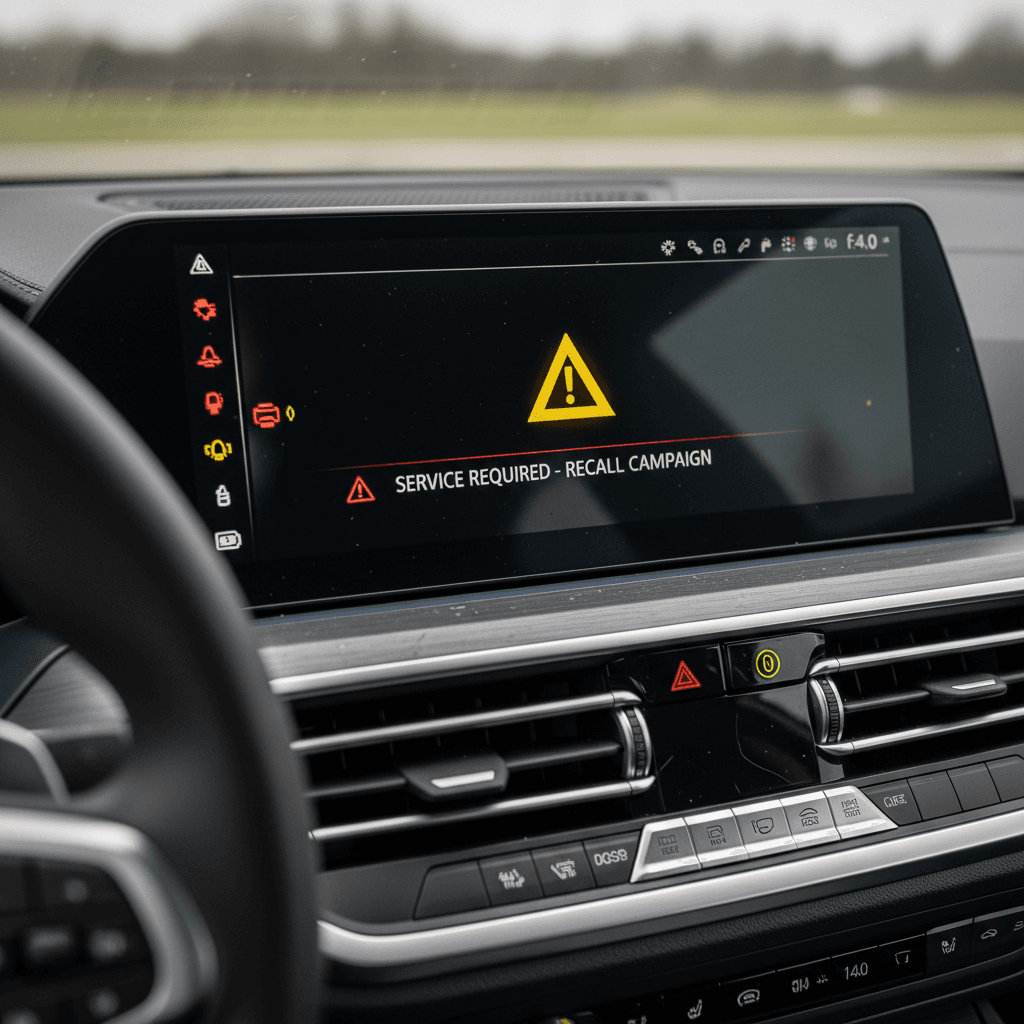
Don’t ignore the BMW app
Living with these recalls: risk level and driving advice
Not all recalls are created equal. Some are nuisances you can schedule around your life; others are strong hints to park the car until it’s fixed. For the 2025 BMW i4, most known campaigns fall into the “drive cautiously, fix soon” category rather than “stop driving now,” but there are nuances.
Recalls you should handle ASAP
- Electric drive motor software (25V395): Because it can cut propulsion for 15–20 seconds, you want this fix installed before regular highway use.
- Battery module recall (25V470): If your VIN is tagged, treat this as a priority. While incidents are rare, high‑voltage battery failures are not something you roll the dice on.
- Structural rear side member (24V611): Crash‑performance recalls are invisible until the moment you need them. Don’t delay the inspection.
Recalls you can schedule in normal course
- Minor hardware or sound‑system campaigns: Typically low risk in daily driving, though still important to close.
- Non‑safety software updates: These may improve charging, driver‑assist behavior, or bug fixes but aren’t always logged as formal recalls.
- Completed historic campaigns: If records show they’ve already been done, you don’t need to worry, just keep the paperwork.
If you feel a power cut while driving
Shopping used: what recalls mean for a 2025 i4 buyer
If you’re browsing CarGurus or Facebook Marketplace for a 2025 BMW i4, a recall headline can look terrifying. In reality, recalls are part of the EV‑ownership landscape, and a well‑documented fix can be a green flag rather than a deal‑breaker.
How to use recall data when buying a 2025 i4
Think like a pro inspector, not a doomscroller.
Look for completed campaigns
Treat open recalls as leverage
Watch for missing paperwork
How Recharged handles BMW i4 recalls
2025 BMW i4 recalls FAQ
Frequently asked questions about 2025 BMW i4 recalls
Bottom line on the 2025 BMW i4 recalls
The 2025 BMW i4 sits at the intersection of two realities: it’s a sophisticated, deeply impressive electric gran coupé, and it’s also one node in BMW’s growing, software‑heavy EV fleet. Recalls like the 25V395 drive‑motor update and smaller structural or battery campaigns are growing pains, not moral failings, but they are your business as an owner or buyer.
Handle them like you handle any other part of car maintenance: know what applies to your VIN, get the work done quickly, and keep the paperwork. If you’re shopping used, favor the i4 that’s already had its campaigns completed and documented over the one with unanswered questions. And if you’d rather not navigate all of that alone, a marketplace like Recharged can help you find a 2025 i4 with verified battery health, fair pricing, and a clear recall story from day one.