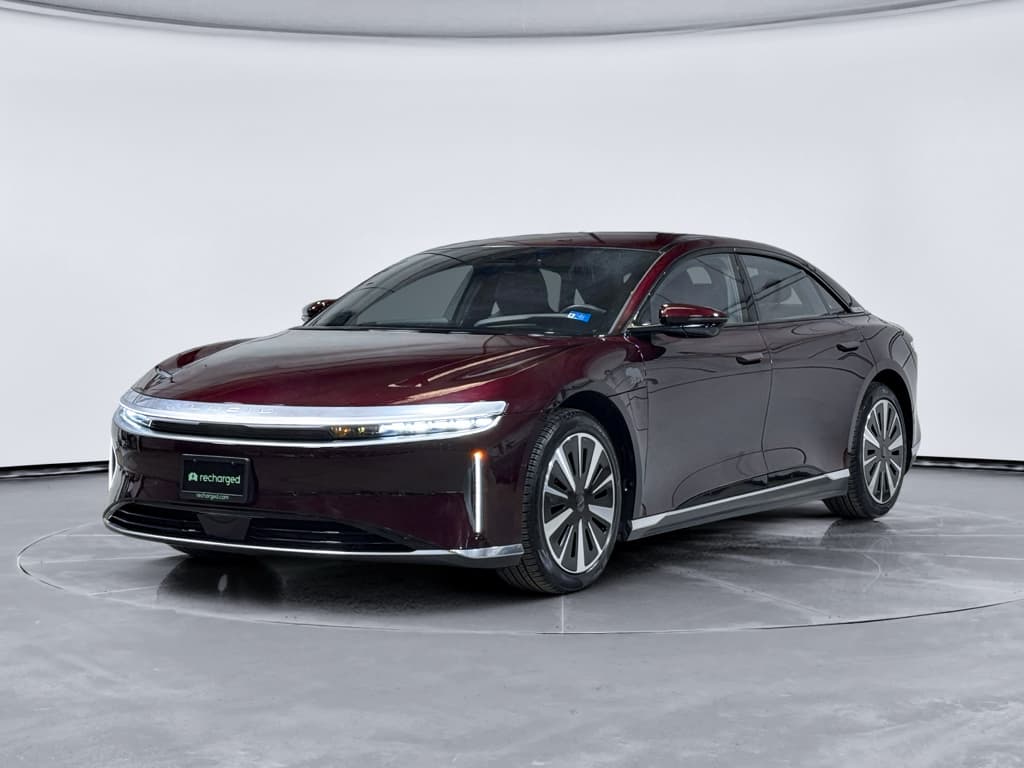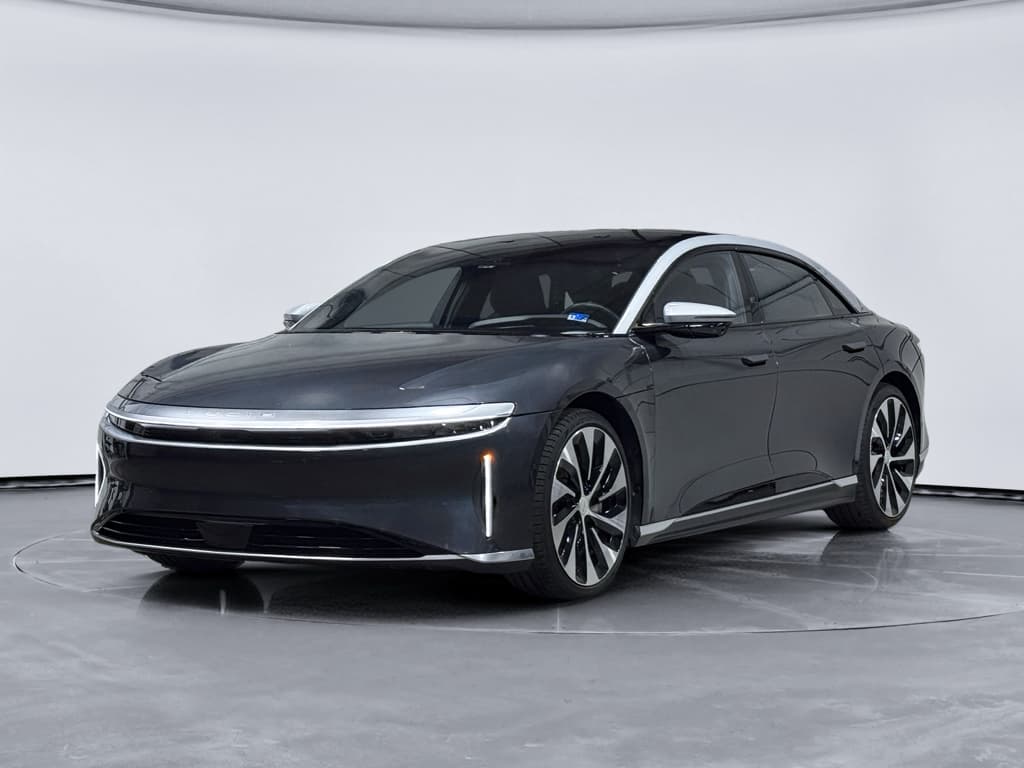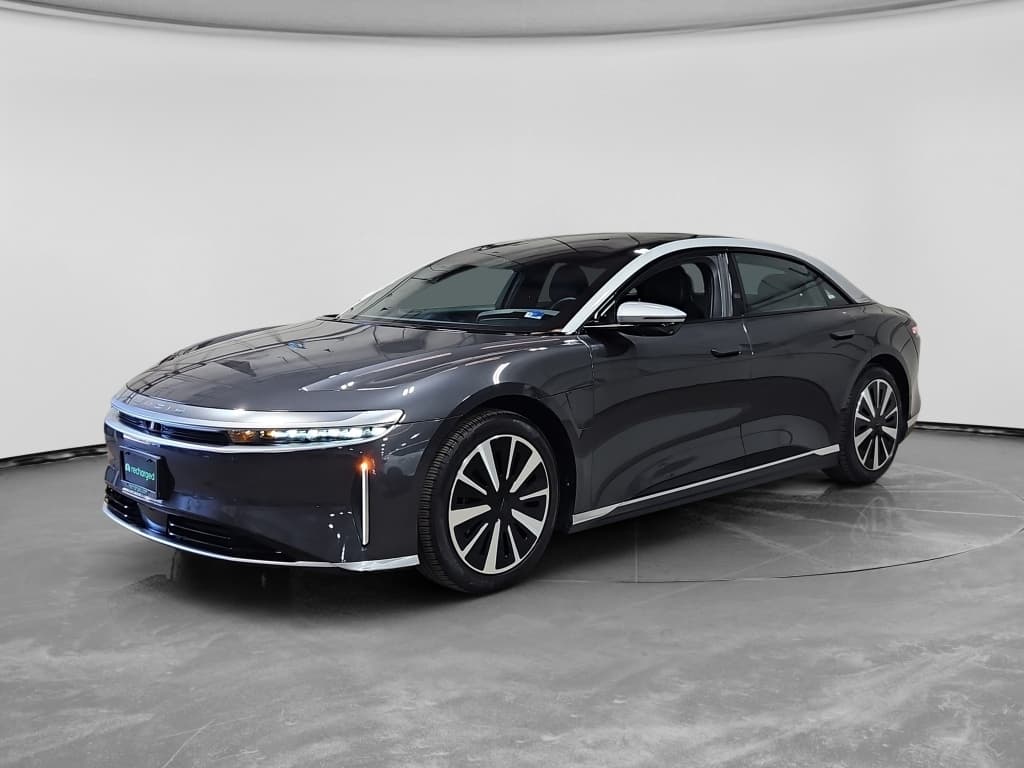
If you’re eyeing a Lucid Air, you already know it’s not a budget EV. But the sticker price is only part of the story. You also need to know how much insurance is on a Lucid Air and how that compares to the typical car in 2026, especially if you’re cross‑shopping a used Lucid against a Tesla or a gas luxury sedan.
Quick context
Lucid Air insurance at a glance
Lucid Air insurance vs. national averages (2026 snapshot)
Not a quote
So how much is insurance on a Lucid Air?
For a driver in the U.S. with a clean record, good credit, and typical full‑coverage limits, Lucid Air insurance in 2026 often lands around $250–$320 per month, or roughly $3,000–$3,800 per year, for a new car. That’s meaningfully higher than the national full‑coverage average, but right in line with other six‑figure luxury EVs.
Owner anecdotes line up with this range. Many Lucid drivers with strong profiles report paying around $250–$300 per month for an Air Touring or Grand Touring. Some see quotes closer to $150–$200 per month when they bundle policies and accept higher deductibles, while younger drivers in expensive metro areas can be quoted well over $400 per month.
- New Lucid Air (Pure/Touring) with good driver profile: roughly $3,000–$3,800/year
- Higher‑spec trims (Grand Touring, Sapphire) or high‑risk drivers: can easily exceed $4,000/year
- Older or used Lucid Air, clean record, competitive market: often $1,800–$2,600/year with smart shopping
Treat ranges as guardrails
Why Lucid Air insurance is higher than average
Insurers don’t care about brand hype; they care about expected loss cost, how much they’re likely to pay out if something goes wrong. Several traits of the Lucid Air push that expected cost above the national norm.
Key reasons Lucid Air insurance runs high
Luxury hardware, complex tech, and repair realities all show up in your premium.
High vehicle value
Complex EV components
Limited repair network
Luxury‑class liability expectations
The EV repair learning curve
Major factors that change your Lucid Air rate
Once you understand the baseline, the real question becomes: what makes your Lucid Air insurance quote higher or lower than someone else’s? The same basic factors that affect any car apply here, but their impact is amplified on a high‑value EV.
What insurers look at when you insure a Lucid Air
1. Your state and ZIP code
Insurance is highly local. Live in a dense metro with high accident and theft rates, litigation‑friendly laws, or expensive medical care, and your Lucid premium can jump thousands of dollars per year compared with a similar driver in a low‑cost state.
2. Driving record and experience
A 40‑year‑old with a clean record pays dramatically less than a 22‑year‑old with two at‑fault accidents. Because the Lucid Air is expensive to fix, any hint of risk (tickets, claims, DUIs) is magnified in your quote.
3. Annual mileage and usage
Low‑mileage personal use looks safer than high‑mileage commuting or rideshare work. If your Lucid is a weekend car driven 5,000 miles a year, your rate can be meaningfully lower than if it’s your 20,000‑mile‑per‑year daily driver.
4. Credit and insurance history
In most states, insurers use credit‑based insurance scores and past insurance behavior (lapses, prior claims) as proxies for risk. Strong credit and a long, clean insurance history can shave hundreds off a Lucid Air quote.
5. Coverage limits and deductibles
Choosing $250 deductibles and very high liability limits provides more protection but costs more every month. On a Lucid, even raising deductibles from $500 to $1,000 can noticeably lower your bill, if that trade‑off fits your finances.
6. Safety and telematics programs
Many insurers offer EV‑friendly discounts for advanced safety tech or usage‑based programs. If you opt in to a telematics app and your driving behavior scores "safe," your Lucid’s insurance cost can drop with each renewal.
Watch out for coverage gaps
Lucid Air vs. Tesla and other luxury EVs
If you’re comparing a Lucid Air to a Tesla Model S, Mercedes EQE, BMW i5, or a gas‑powered S‑Class, it helps to remember that insurers mostly see a cluster of similar risks: large, powerful, tech‑heavy luxury sedans with pricey parts.
Lucid Air vs. Tesla Model S
- Premiums: Many owners moving from a Model S to a Lucid Air report similar or slightly lower premiums, especially when they switch carriers or bundle policies.
- Repair ecosystem: Tesla has more scale but is notorious for parts delays. Lucid has fewer cars but is building out its service network. Both realities show up in how different insurers price each brand.
- Driver profiles: Performance‑trim Teslas (Plaid, etc.) are often associated with more aggressive driving and higher claim frequency, which some underwriters quietly price in.
Lucid Air vs. German luxury sedans
- Base risk: A Lucid Air sits in the same risk neighborhood as an S‑Class or 7‑Series: expensive sheet metal, advanced electronics, complex safety systems.
- EV factor: Battery packs and high‑voltage components can make some Lucid repairs more expensive than gas rivals, but EVs also avoid engine‑related failures and fluid leaks that generate claims.
- Underwriting maturity: Insurers have decades of data on German luxury sedans. Lucid, by contrast, is still building a track record, so some carriers add a small uncertainty premium.
Good news for cross‑shoppers
7 ways to lower Lucid Air insurance costs
You can’t change the basic fact that a Lucid Air is a high‑value EV, but you have more control over your premium than you might think. Focus on the levers that matter most.
Practical strategies to cut your Lucid Air premium
1. Shop multiple EV‑friendly insurers
Not every carrier is comfortable with low‑volume EVs. Get quotes from at least three companies known to write a lot of electric vehicles, and don’t be afraid to walk away from any that price your Lucid like an exotic supercar.
2. Bundle home, renters, or umbrella
Multi‑policy discounts can be substantial. Bundling your Lucid with a home or renters policy, or adding an umbrella liability policy, often shaves 10–25% off the auto line.
3. Right‑size your deductibles
If you can comfortably cover a $1,000 out‑of‑pocket repair, raising your collision and comprehensive deductibles from $500 to $1,000 can lower your premium without gutting your protection. Just make sure the savings justify the extra risk.
4. Use telematics or "safe driver" programs
Usage‑based insurance programs that monitor braking, speeding, and time of day can reward smooth driving, something Lucid’s effortless torque actually makes easier. Good scores often translate into meaningful discounts at renewal.
5. Keep mileage realistic
Don’t casually overstate your annual mileage on quote forms. If the Lucid is your second car, accurately listing it as "pleasure" use with lower mileage can reduce rating factors that assume heavy commuting.
6. Protect your credit and insurance history
Avoid lapses in coverage, pay on time, and keep your credit profile healthy. Over a few years, those behaviors can be worth hundreds of dollars per year on a high‑value EV policy.
7. Re‑shop your policy after the first year
Insurers update their models as they gather real‑world Lucid data. If your first‑year premium felt steep, it’s worth requoting at renewal, especially if your driving record is clean and claims‑free.
Pair insurance shopping with the purchase process
Used Lucid Air insurance: what changes?
One of the quiet advantages of buying a used Lucid Air is that you often sidestep the worst of the new‑car insurance curve. As the car’s value drops from its original MSRP, the cost to fully replace it after a total loss falls too, and insurers notice.
- On a 2–3‑year‑old Lucid Air, many clean‑record, good‑credit drivers see full‑coverage quotes closer to $1,800–$2,600 per year.
- If you’re stepping up from a mainstream ICE sedan into a used Lucid Air, expect a jump, but often less than if you bought brand‑new.
- Battery health and accident history matter. A clean history report and verified EV health can make insurers more comfortable with the risk profile.
How Recharged helps on used Lucid insurance
Where insurance fits in your total cost of ownership
Insurance is usually the second‑ or third‑largest ongoing cost of owning a Lucid Air, behind only depreciation and, in some markets, financing. The good news is that an EV’s very low "fuel" and maintenance costs give you some room to absorb a higher premium without blowing up your monthly budget.
How Lucid Air insurance compares to other ownership costs
Illustrative annual costs for a U.S. driver with a clean record and average usage. Numbers are directional, not quotes.
| Cost category | New Lucid Air (example) | Used Lucid Air (example) | Main variables |
|---|---|---|---|
| Insurance (full coverage) | $3,200/year | $2,200/year | Driver profile, state, coverage limits, mileage |
| Electricity / charging | $500–$800/year | $500–$800/year | Local kWh price, charging habits, road‑trip fast charging |
| Maintenance & repairs | $400–$700/year | $500–$900/year | Tires, alignment, occasional service visits |
| Loan or lease payments | Highly variable | Often lower | Down payment, term length, interest rate, used vs. new price |
| Registration & fees | $300–$800/year | $250–$700/year | State fees, EV incentives, vehicle age |
Use this as a framework, then plug in your own quotes (loan, electricity rates, and insurance) for a more precise picture.
Use total cost, not just the premium
FAQ: Lucid Air insurance
Frequently asked questions about Lucid Air insurance
Bottom line: budgeting for Lucid Air insurance
Owning a Lucid Air means stepping into the deep end of the EV pool, in performance, in technology, and in insurance. For most clean‑record U.S. drivers in 2026, full‑coverage Lucid Air insurance clusters around $3,000–$3,800 per year when new, with lower premiums available on used cars and for very strong profiles.
The key is to treat insurance as part of the car, not an afterthought. Shop multiple EV‑savvy insurers, bundle when it makes sense, right‑size your deductibles, and be realistic about your mileage and risk tolerance. If you’re considering a Lucid Air, especially a used one, Recharged can help you evaluate total cost of ownership, from battery health and charging costs to the insurance line item that shows up in your budget every month.