If you’ve been tracking global EV news, you’ve probably seen BYD everywhere, especially in Europe and Latin America, and wondered about the BYD in America release date. Right now, there is no official launch date for BYD passenger cars or pickups in the U.S., and the road to an eventual debut is more political than technical. Here’s what that means for you as a U.S. shopper and how to make smart decisions while BYD waits at the border.
Quick answer
Does BYD have a U.S. release date?
Let’s start with the core question: no, BYD does not currently have a confirmed U.S. release date for consumer passenger vehicles like sedans, SUVs, or the Shark pickup truck. The company has said its new pickup, the Shark plug-in hybrid, will be distributed globally and has already launched it in markets such as Mexico, Brazil and Australia, but **U.S. sales are explicitly not part of the plan yet**.
BYD does operate in the United States today, but only in a narrow slice of the market. It sells commercial electric vehicles, including the BYD 8TT Class 8 electric truck, through fleet and industrial channels. That’s very different from setting up a nationwide dealer or agency network to sell passenger cars to individual U.S. drivers.
So when you see headlines about BYD “coming to North America,” read carefully. In most cases, they’re talking about Mexico, Brazil, or Canada, not a confirmed retail launch in the United States. For shoppers in the U.S., BYD is still a future possibility, not a 2026 reality.
Why BYD isn’t selling passenger EVs in America yet
Three big reasons BYD has no U.S. release date yet
It’s not about the cars, it’s about politics, protection, and timing.
1. Trade barriers
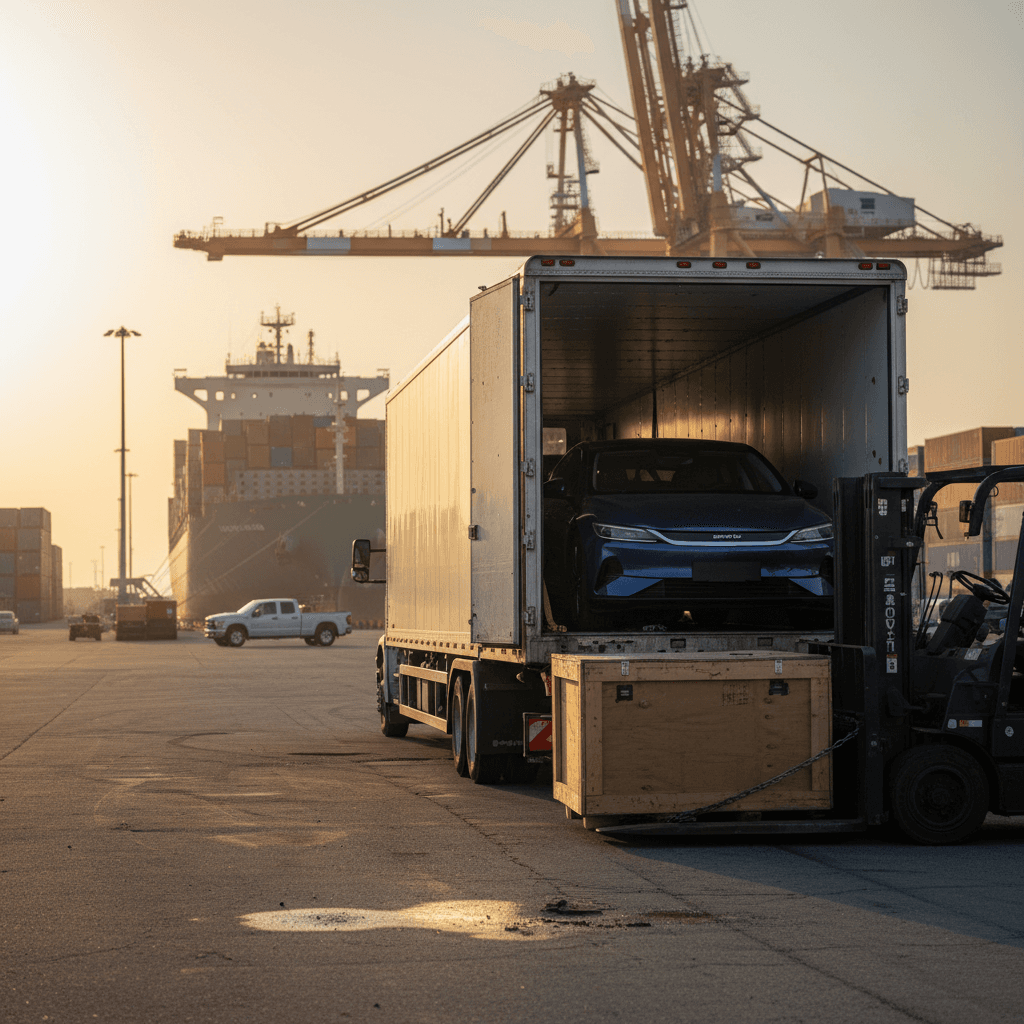
The U.S. has imposed very high tariffs on Chinese-built EVs, making it uneconomical for BYD to ship cars directly from China and sell them at competitive prices.
2. Political risk
Chinese EVs have become a political flashpoint. Any move into the U.S. risks backlash, additional restrictions, or consumer boycotts, hardly ideal conditions for a launch.
3. Local production puzzle
To sidestep tariffs, BYD would likely need a North American factory. Plans for a plant in Mexico have faced delays and fresh scrutiny from both Beijing and Washington.
On paper, BYD is ready. It builds capable EVs at aggressive prices and has shown it can scale quickly in Europe, where its registrations have recently surged to the point that it’s outpacing Tesla in some months. Technically, bringing those cars to U.S. roads is the easy part: crash tests, emissions certification for hybrids, and software localization are all manageable.
The real roadblocks are economic and geopolitical. U.S. tariffs on Chinese-made EVs, plus talk of further import restrictions, dramatically increase BYD’s costs if it exports directly from China. Meanwhile, China’s own regulators have slowed approvals for some of BYD’s overseas manufacturing plans, including an earlier proposal for a new plant in Mexico, partly over concerns that sensitive technology could leak to U.S. rivals.
Don’t confuse global with U.S.
BYD in Mexico and Latin America: A step toward the U.S.?
If there’s a springboard for “BYD in America,” it’s not California, it’s Mexico. BYD has built a growing footprint in Mexico and across Latin America, where Chinese brands already account for a large share of EV sales and pickups remain hugely popular.
BYD’s growing presence outside the U.S.
The BYD Shark, the company’s plug-in hybrid pickup, launched first in Mexico and later in Brazil and Australia. BYD has described it as a global model but has repeatedly signaled that the U.S. is not on the near-term distribution list, despite being the world’s biggest pickup market.
At the same time, BYD has explored, and rethought, factory plans in Mexico more than once. Earlier proposals for a greenfield Mexican plant to build up to hundreds of thousands of vehicles annually ran into trouble as China’s commerce ministry delayed approvals and Mexican officials came under pressure from Washington over Chinese auto investment. More recently, reporting indicates BYD is exploring the purchase of an existing Nissan–Mercedes plant in Aguascalientes to accelerate North American production without starting from scratch.
Why Mexico matters for a future U.S. launch

Tariffs and politics: The biggest obstacle to a BYD US release
Tariffs make BYD pricing tough
Bringing a budget-friendly Chinese EV to America sounds simple until you factor in triple-digit tariffs on Chinese-built electric vehicles. Between longstanding import duties and newer measures aimed squarely at Chinese autos, a $30,000 EV from China can land in the U.S. priced closer to a $45,000 competitor.
BYD’s edge overseas is that it can undercut rivals on price while offering competitive range and features. In the U.S., tariffs erase much of that advantage unless the company builds vehicles in North America.
Politics, security, and public perception
Chinese automakers are under intense scrutiny in Washington, with concerns ranging from data security (connected-car telemetry and mapping) to industrial policy and national competitiveness. That means any BYD move into the U.S. could trigger new investigations, hearings, or even bans on government fleets using Chinese-built vehicles.
Even if regulators allow imports, some U.S. buyers and dealers may hesitate to embrace a brand that’s at the center of a geopolitical tug-of-war.
Why there’s no simple “flip the switch” moment
What models would BYD likely bring to America?
There’s no official U.S. launch lineup, but you can make some reasonable guesses based on BYD’s global portfolio and where U.S. demand is strongest.
BYD models that make sense for a future U.S. launch
Not confirmed, but these are the ones analysts watch most closely.
Compact & midsize crossovers
Vehicles roughly in the size class of the BYD Atto and similar crossovers could slot into America’s hottest segment: practical, relatively affordable EV SUVs.
Shark plug-in pickup
The BYD Shark PHEV pickup is the obvious candidate for U.S. truck buyers, if BYD can solve the tariff and factory questions. Today it’s limited to markets like Mexico, Brazil, and Australia.
Value-focused sedans & hatchbacks
BYD’s lower-cost EVs have grabbed headlines for undercutting Western brands in China and abroad. In the U.S., similar models could tempt cost-conscious buyers if they can be priced aggressively after tariffs and shipping.
You’ll also see headlines about high-end BYD brands like Yangwang, which sells ultra-luxury EVs with massive battery packs and cutting-edge chassis tech. Those models prove BYD’s engineering depth, but they’re niche products even in China. A U.S. entry would almost certainly start with mass-market crossovers and the Shark pickup, not halo cars.
Realistic timeline: When could BYD enter the U.S. market?
Because there’s no official BYD in America release date, any specific year you see online is an educated guess at best. Analysts generally talk about the **latter half of this decade** as the earliest realistic window, with a lot of “ifs” attached.
How a possible BYD U.S. entry could unfold
This is a scenario-based view, not a prediction or confirmed schedule.
| Phase | Possible window | What might happen | Key dependencies |
|---|---|---|---|
| 1. Solidify North American production | 2026–2028 | BYD secures or builds a plant in Mexico or another USMCA country and ramps production for local and export markets. | Regulatory approvals in China and Mexico; trade rules under USMCA review. |
| 2. Limited fleet / commercial trials | Late 2020s | Expansion beyond current electric trucks into pilot fleets (rentals, corporate, or municipal) using BYD passenger vehicles in controlled programs. | Regulatory clarity on data security; willingness from major fleet buyers. |
| 3. Soft launch in select U.S. states | Late 2020s–early 2030s | Retail sales begin in EV-friendly states through a limited network of dealers or factory-backed stores. | Tariff relief or local production; state-level franchise laws; dealer partnerships. |
| 4. Broader nationwide rollout | Early 2030s+ | BYD becomes a mainstream option in the U.S. EV market, with multiple nameplates and established resale values. | Stable trade policy, strong warranty and service network, consumer trust. |
Think in terms of phases rather than a single calendar date.
How to interpret timelines
What BYD’s delayed U.S. entry means for shoppers today
If you were hoping to buy a BYD Shark or a low-cost BYD hatchback at a local dealer in 2026 or 2027, you should reset your expectations. Even in an optimistic scenario, BYD is several steps away from mainstream U.S. retail sales.
- You won’t see BYD on U.S. new-car lots in the near term, outside of heavy-duty commercial trucks and specialized fleet deals.
- Used BYDs are effectively off the table in the U.S. for now, since there’s no flow of retail new vehicles to seed a future used market.
- Resale values and long-term service support are unknowns for any hypothetical gray-market imports, making them extremely risky for individual buyers.
In other words, if you live in the U.S. and need a vehicle in the next few years, waiting around specifically for BYD probably isn’t practical. The better move is to compare the EVs you can actually buy, new or used, against what you like about BYD on paper (price, range, body style) and find the closest match.
How used EVs fill the gap while BYD waits on the sidelines
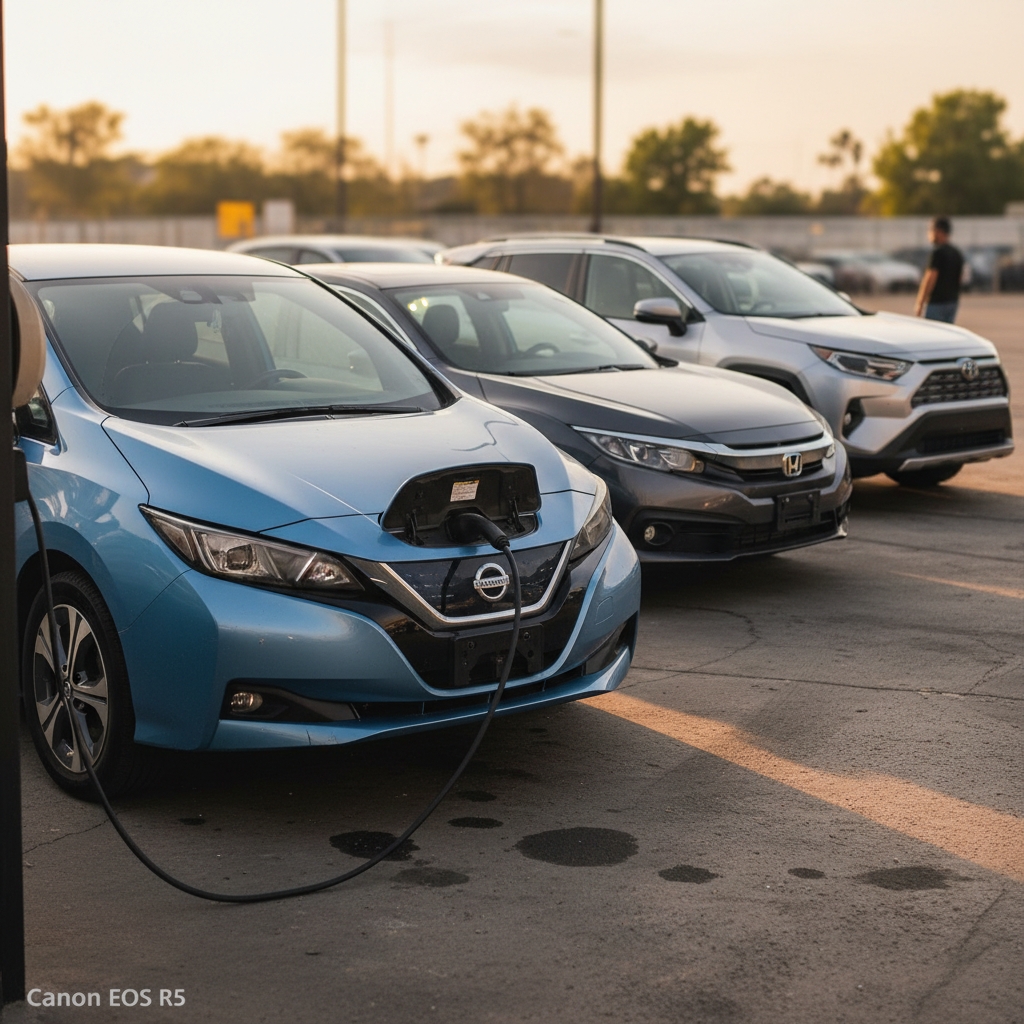
BYD’s absence doesn’t mean you’re out of options. In fact, the U.S. used EV market has matured quickly over the past few years. As more Tesla, Hyundai, Kia, Ford, GM, and Volkswagen EVs reach their second and third owners, prices have dropped into the range many shoppers originally hoped BYD would occupy.
Shopping for a BYD alternative? Here’s where used EVs shine
You can get many of BYD’s perceived benefits without waiting for its U.S. launch.
Lower upfront cost
Lightly used EVs often cost thousands less than comparable new models, especially after the first owner absorbs initial depreciation. That’s similar to what attracts people to BYD’s pricing overseas.
Proven battery health
With tools like the Recharged Score battery health report, you can see how a used EV’s pack is actually performing instead of guessing about degradation.
Real-world range & features
Models like the Tesla Model 3/Y, Hyundai Ioniq 5, Kia EV6, and others offer range and performance that match or beat many BYD products, plus a growing fast-charging ecosystem.
That’s where a marketplace like Recharged comes in. Every used EV listed includes a Recharged Score Report with verified battery health data, transparent pricing, and support from EV specialists who live and breathe this segment. If you came looking for BYD-level value, a carefully vetted used EV can get you much of the way there, with a real title, warranty options, and nationwide delivery.
Turn “waiting for BYD” into “owning an EV now”
Checklist: How to plan if you’re waiting for BYD
Smart steps for U.S. shoppers intrigued by BYD
1. Separate hype from reality
Make a list of what you actually like about BYD, price, pickup body style, range, interior tech, versus what’s just media buzz. That helps you search for real alternatives.
2. Watch trade and factory news, not just car reviews
Follow developments on U.S. tariffs for Chinese EVs and BYD’s efforts to secure or build a factory in Mexico or elsewhere in North America. Those will move the needle more than any single vehicle review.
3. Benchmark today’s used EV prices
Check pricing on used EVs that match BYD’s target segments: compact crossovers, midsize SUVs, and efficient sedans. You may find that BYD’s theoretical price edge isn’t as big once you factor in used-market deals.
4. Prioritize battery health and warranty
If you decide to buy now, focus on vehicles with verifiable battery condition, remaining factory warranty, and solid service coverage in your area. A great deal on paper isn’t worth much if the pack is tired.
5. Consider ownership horizon
If you plan to keep an EV for 5–8 years, buying a strong used model now doesn’t prevent you from trying BYD in the 2030s. If you swap cars every 2–3 years, you’ll cycle into whatever new brands arrive naturally.
6. Use expert help
Work with EV-focused retailers like Recharged that understand charging, incentives, depreciation and battery diagnostics rather than treating electric cars like just another trim line.
FAQ: BYD in America release date and availability
Frequently asked questions about BYD in the U.S.
Bottom line on BYD’s U.S. release date
BYD is already a heavyweight in China and an increasingly serious player in Europe, Mexico, and Brazil. But for U.S. drivers wondering about the BYD in America release date, the honest answer is that there isn’t one, yet. Until tariffs, politics, and factory plans line up, BYD is more of a distant headline than a local showroom option.
That doesn’t mean you have to sit on the sidelines. The U.S. used EV market is rich with choices that deliver many of the same benefits that make BYD so compelling overseas: strong range, modern tech, and increasingly accessible pricing. With Recharged, you can see verified battery health data, compare fair-market prices, trade in your current car, and have a vetted used EV delivered to your driveway, no speculation required.
If and when BYD does finally cross the border, you’ll be in a better position to judge its offerings if you’ve already lived with an EV, learned how charging works in your routine, and experienced real-world range and costs. For now, the most practical move is to shop the EVs that actually exist in the U.S. market today and treat a future BYD launch as upside, not a prerequisite.