If you’re eyeing a Ford Mustang Mach‑E, you’re probably asking a very practical question: how much is insurance on a Ford Mustang Mach‑E, and is it higher than a regular Mustang or a typical gas SUV? With EV insurance headlines all over the place, it can be hard to know what’s normal, and what you should budget for over the life of the vehicle.
Key takeaway
Mustang Mach‑E insurance at a glance
Typical Ford Mustang Mach‑E insurance numbers in 2026
Your number may look nothing like the average
So how much is insurance on a Ford Mustang Mach‑E?
Let’s ground this in the best data available, then layer in real‑world experience from Mach‑E owners and insurers.
Estimated Ford Mustang Mach‑E insurance costs in 2026
Approximate full‑coverage premiums for a typical U.S. driver with a clean record. These are directional, not quotes.
| Scenario | Estimated annual premium | Estimated monthly premium | Notes |
|---|---|---|---|
| National “average” full coverage | $2,400 | $200 | Reasonable working estimate based on multiple insurer data points for 2023–2025 Mach‑E models. |
| Favorable profile (40s, suburbs, clean record) | $1,800 | $150 | Good credit, modest commute, higher deductibles. |
| Higher‑risk profile (20s, urban, prior tickets) | $3,000+ | $250+ | Younger drivers in dense metros commonly land here or higher. |
| Minimum coverage only | $1,000–$1,400 | $85–$120 | Liability only; not recommended on a financed Mach‑E. |
Actual pricing will depend on your age, ZIP code, mileage, credit tier (where allowed), and coverage limits.
Individual analyses put the Mach‑E’s average full‑coverage cost around the low‑$200s per month, lining up well with that $2,400 annual ballpark. At the low end, some telematics or usage‑based policies quote $80–$120 per month for low‑mileage, low‑risk drivers. At the high end, owners in high‑cost states report Mach‑E premiums rivaling performance cars, especially on GT Performance trims.
Why EVs, and the Mach‑E, can cost more or less to insure
Insurers aren’t punishing you for going electric. They’re reacting to claims data and repair bills. Today, several studies show EVs as a group still cost noticeably more to insure than comparable internal‑combustion models because collision repairs and parts are expensive, and not every body shop is EV‑ready yet.
Why EV insurance is often higher, and where the Mach‑E bucks the trend
Think in terms of risk and repair complexity, not fuel type.
Higher repair and parts costs
Modern EVs pack dense electronics and large battery packs. When there’s a serious crash, insurers may be staring at:
- Battery diagnostics or replacement
- Specialized calibration for sensors and ADAS
- Longer repair times in shops that rarely see EVs
But strong safety and loss history
The Mustang Mach‑E’s safety record and real‑world claims history look better than many people expect from a "Mustang." Several analyses show:
- Lower property damage liability losses than gas Mustangs
- Fewer at‑fault accidents than stereotypical muscle‑car drivers
EVs overall
Across the U.S. market, full‑coverage insurance for EVs has recently run 10–25% higher than for comparable gas vehicles. That’s driven more by Teslas and luxury EVs with high repair bills than by mainstream models.
Where the Mach‑E fits
The Mach‑E often lands in the middle of the EV insurance pack, significantly below the priciest Teslas, and, in many cases, surprisingly close to a similarly priced gas crossover or even a Mustang coupe.
Why your Mach‑E might be cheaper than your last car
Mach‑E insurance vs gas Mustang and other EVs
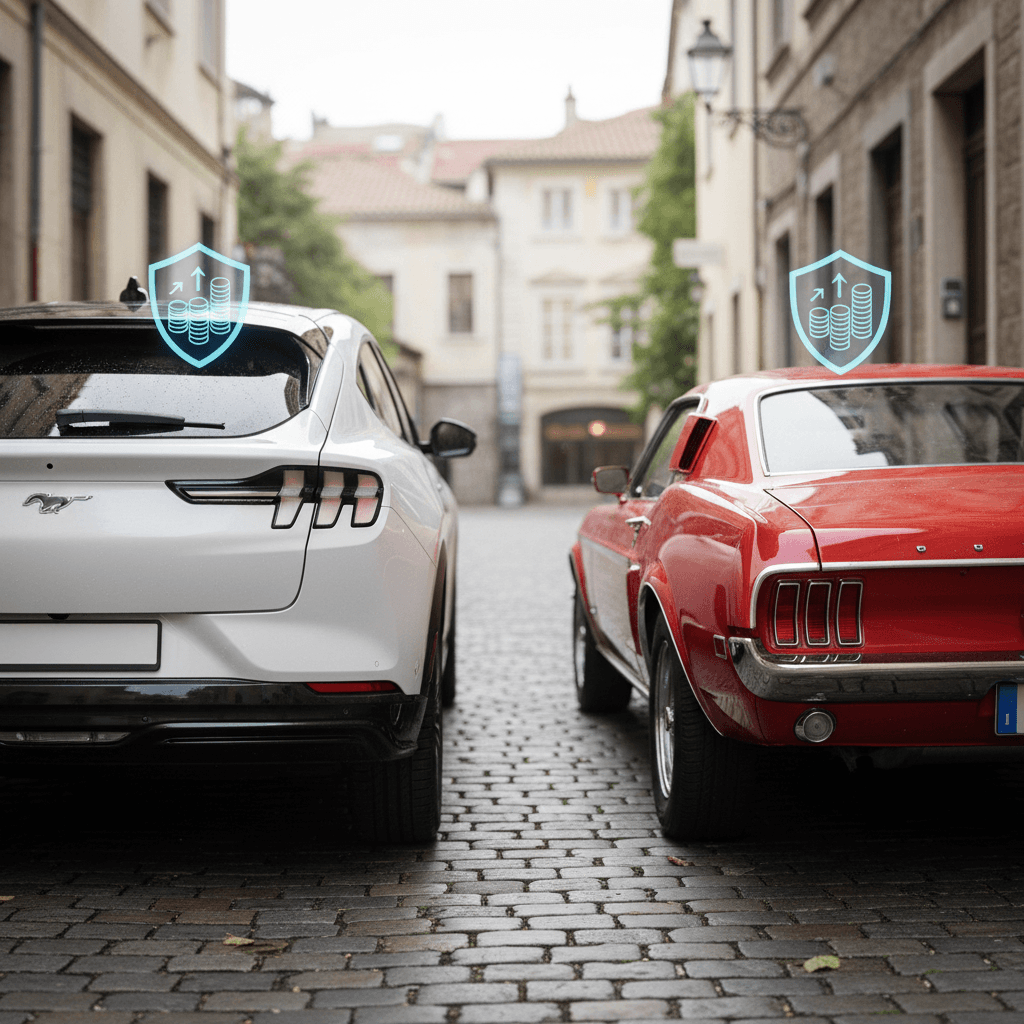
If you’re cross‑shopping a Mach‑E against a V8 Mustang or another EV, insurance can be a useful tie‑breaker. Here’s how the Mach‑E typically stacks up conceptually.
Conceptual comparison: insurance costs by vehicle type
Not quotes, just directional comparisons of how insurers often price these vehicles relative to each other for a similar driver profile.
| Vehicle | Relative insurance cost | What usually drives it |
|---|---|---|
| Ford Mustang Mach‑E (Select/Premium) | Baseline (0%) | Mainstream EV crossover with good safety scores and moderate performance. |
| Ford Mustang Mach‑E GT | +10–20% vs. base Mach‑E | More power, higher purchase price, and a performance badge raise perceived risk. |
| Gas Ford Mustang GT | Similar or slightly higher than Mach‑E GT | Performance coupe, higher speed potential, and loss history can spike premiums. |
| Tesla Model Y | Often +10–30% vs. Mach‑E | Higher repair costs and different claims history keep many Tesla premiums elevated. |
| Mainstream gas crossover (Escape, CR‑V, RAV4) | –10–25% vs. Mach‑E | Lower purchase price, cheaper repairs, and a more conservative risk profile. |
Use this as a guide when you’re deciding what belongs in your shopping list, not as a replacement for real quotes.
Don’t over‑weight the "Mustang" badge
What actually affects your own Mach‑E insurance quote
Insurers all use their own algorithms, but almost all of them weigh the same core inputs. Understanding these levers helps you read any Mach‑E quote with a more critical eye.
Biggest factors behind your Mach‑E premium
1. Your ZIP code and garaging address
Urban congestion, theft rates, weather, and medical costs all feed into local pricing. A Mach‑E garaged in rural Colorado can cost far less to insure than the same car parked street‑side in South Florida or New York City.
2. Driving record and experience
Recent at‑fault crashes, speeding tickets, DUIs, and years licensed are some of the most powerful pricing inputs. A clean 40‑year‑old in a Mach‑E usually pays far less than a 24‑year‑old with a fresh accident, regardless of trim.
3. Trim, battery, and options
A Mach‑E GT Performance Edition with a larger battery and pricey wheels simply costs more to repair or total than a lower‑trim Select. Insurers reflect that. More vehicle value at risk = higher comprehensive and collision premiums.
4. Annual mileage and usage
If you tell your carrier the Mach‑E is a commuter doing 18,000 miles a year, they’ll price more risk than if it’s a low‑mileage second car or weekend EV. Some usage‑based programs can directly reward fewer miles or gentler driving.
5. Coverage limits and deductibles
Choosing state‑minimum liability and a $1,000 deductible will almost always be cheaper than high liability limits and a $250 deductible, though often not cheaper in the long run if you ever need that coverage.
6. Credit‑based insurance score (where allowed)
In most states, credit history still influences auto premiums. Stronger credit can lower your Mach‑E rate; weaker credit can raise it, even when everything else is identical.
Don’t skimp on liability for an expensive EV
7 ways to lower Mustang Mach‑E insurance costs
You can’t control your date of birth or your ZIP code overnight, but you have more influence over your Mach‑E premium than most drivers realize. Focus on the levers that move real dollars.
- Shop multiple carriers before you sign. Different insurers rate EVs, especially non‑Tesla EVs, very differently. Getting at least three quotes is the easiest way to avoid overpaying.
- Use telematics or usage‑based programs if you’re a gentle driver. Many carriers now offer smartphone‑based tracking that can shave 10–30% off if you avoid hard braking, late‑night trips, and long commutes.
- Right‑size your coverage, don’t gut it. Consider raising comprehensive and collision deductibles to $500–$1,000 if you can comfortably handle that out‑of‑pocket, instead of slashing liability limits.
- Bundle policies where it truly saves. Home/auto or renters/auto bundles can meaningfully lower Mach‑E premiums, but only if the combined rate beats stand‑alone quotes elsewhere.
- Ask about EV or safety discounts. Some insurers quietly reward advanced driver‑assist systems, anti‑theft tech, or EV ownership. It never hurts to ask what’s on the discount menu.
- Keep your record clean for 3+ years. Time heals a lot in underwriting. Older tickets and minor claims eventually matter less, which can pull a Mach‑E’s rate down at renewal.
- Re‑shop each renewal, especially after a life change. New address, job, mileage pattern, or even a teen driver leaving the policy can all justify another round of quotes. Don’t assume your current carrier is still the best fit.
Where a used Mach‑E can help your budget
Insuring a used Mustang Mach‑E
The insurance conversation looks a little different when you’re buying a used Mach‑E, and that’s where platforms like Recharged come into play.
Why used Mach‑Es can be cheaper to insure
- Lower vehicle value. A three‑year‑old Mach‑E that’s already taken its depreciation hit usually costs less to repair or total than a brand‑new one.
- More data, fewer surprises. By 2026, insurers have several model years of Mach‑E loss data to work with, which tends to smooth out early "unknown" pricing.
- Room to adjust coverage. You may decide you’re comfortable with a slightly higher deductible as the car ages.
How Recharged can help
When you shop a used Mach‑E through Recharged, every vehicle comes with a Recharged Score Report that details verified battery health and fair market pricing. That transparency helps you and your insurer understand the car’s true condition, which can support more confident decisions about coverage levels and deductibles.
Recharged also offers financing, trade‑in options, instant offers or consignment, and nationwide delivery, so you can plug an accurate insurance quote into a full ownership picture before you commit.
Get an insurance quote before you sign any paperwork
Is the Mach‑E worth it once you factor in insurance?
Insurance is only one line in the total cost‑of‑ownership spreadsheet. For many drivers, the Ford Mustang Mach‑E’s slightly higher (or occasionally comparable) premiums are offset elsewhere.
Putting Mach‑E insurance in the bigger ownership picture
Look at what you spend per mile, not just per month.
Fuel vs. electricity
In many parts of the U.S., charging a Mach‑E at home still costs far less per mile than filling up a gas Mustang or similar SUV, especially if you can use overnight off‑peak rates.
Maintenance and repairs
No oil changes, fewer moving parts, and strong regenerative braking can lower routine service costs versus a comparable gas model, even if collision repairs remain pricier.
Used pricing trends
Used EV prices, including Mach‑Es, have cooled from their 2021 peaks. That’s good news if you’re buying now: you’re not insuring a wildly inflated asset.
If you budget around $150–$225 per month for full‑coverage insurance on a Ford Mustang Mach‑E, and get firm quotes before you buy, you’ll avoid most surprises. From there, it’s a matter of finding the right car, at the right price, with clear battery health and transparent history. That’s exactly the gap the used‑EV marketplace at Recharged is designed to fill.