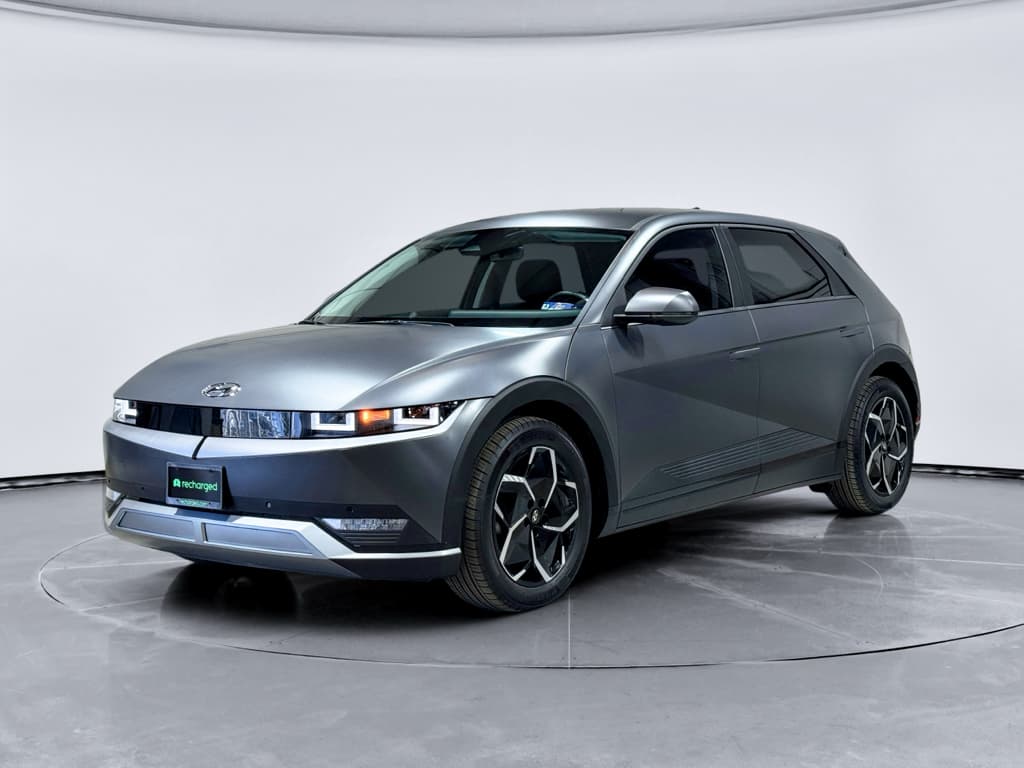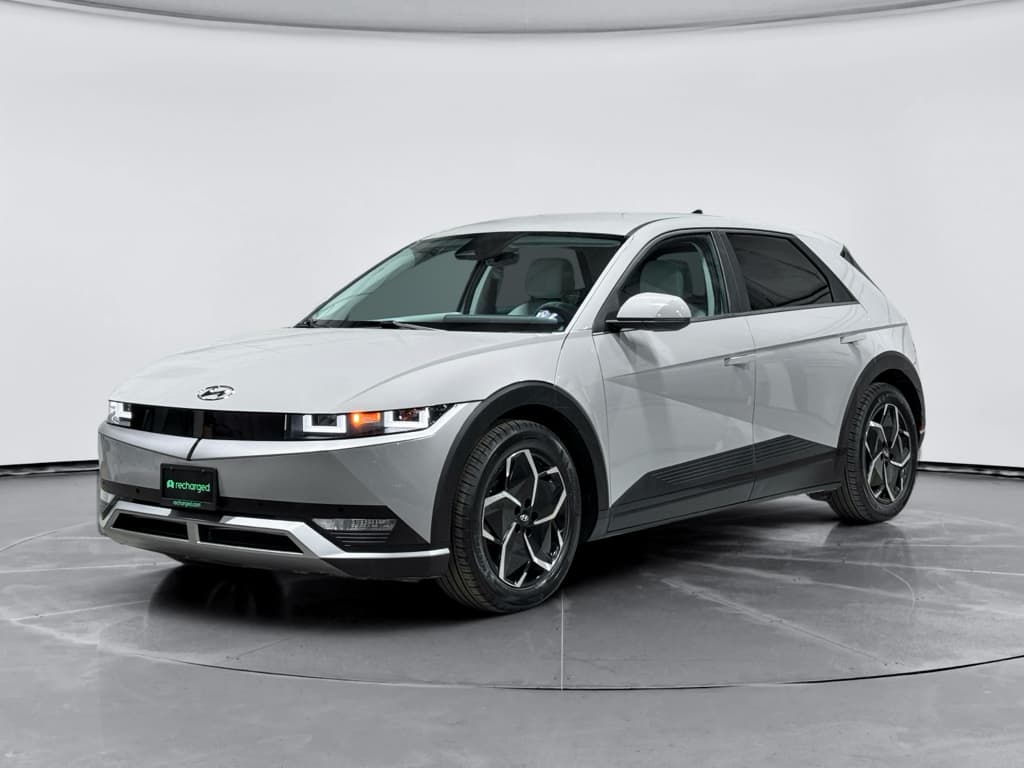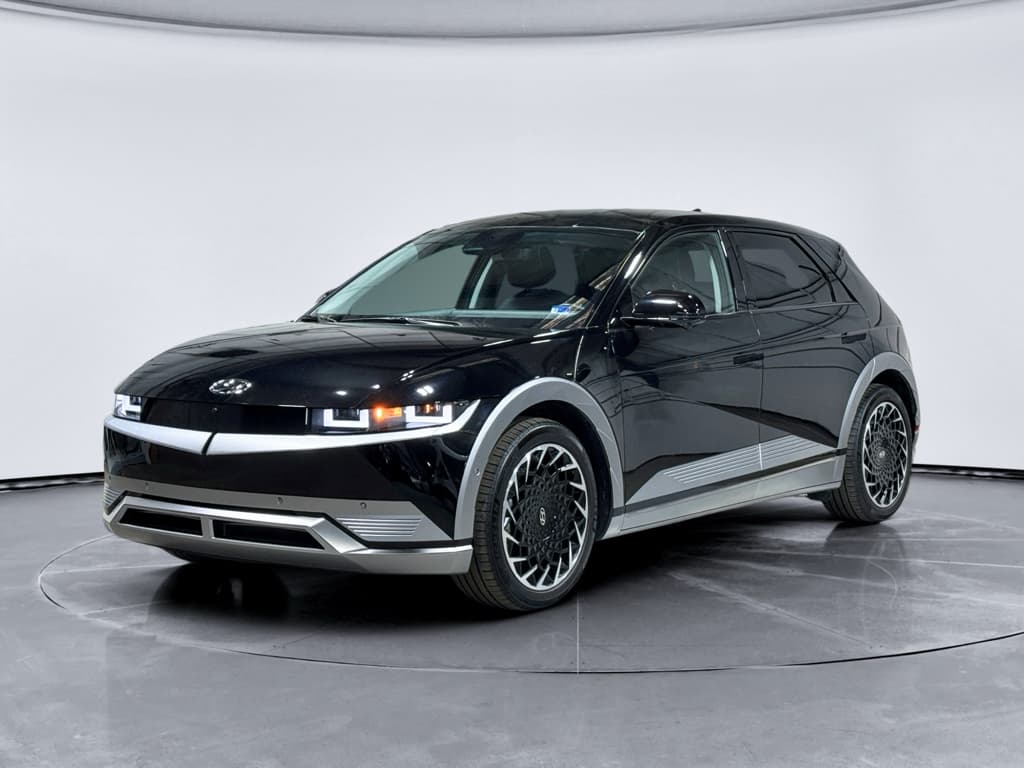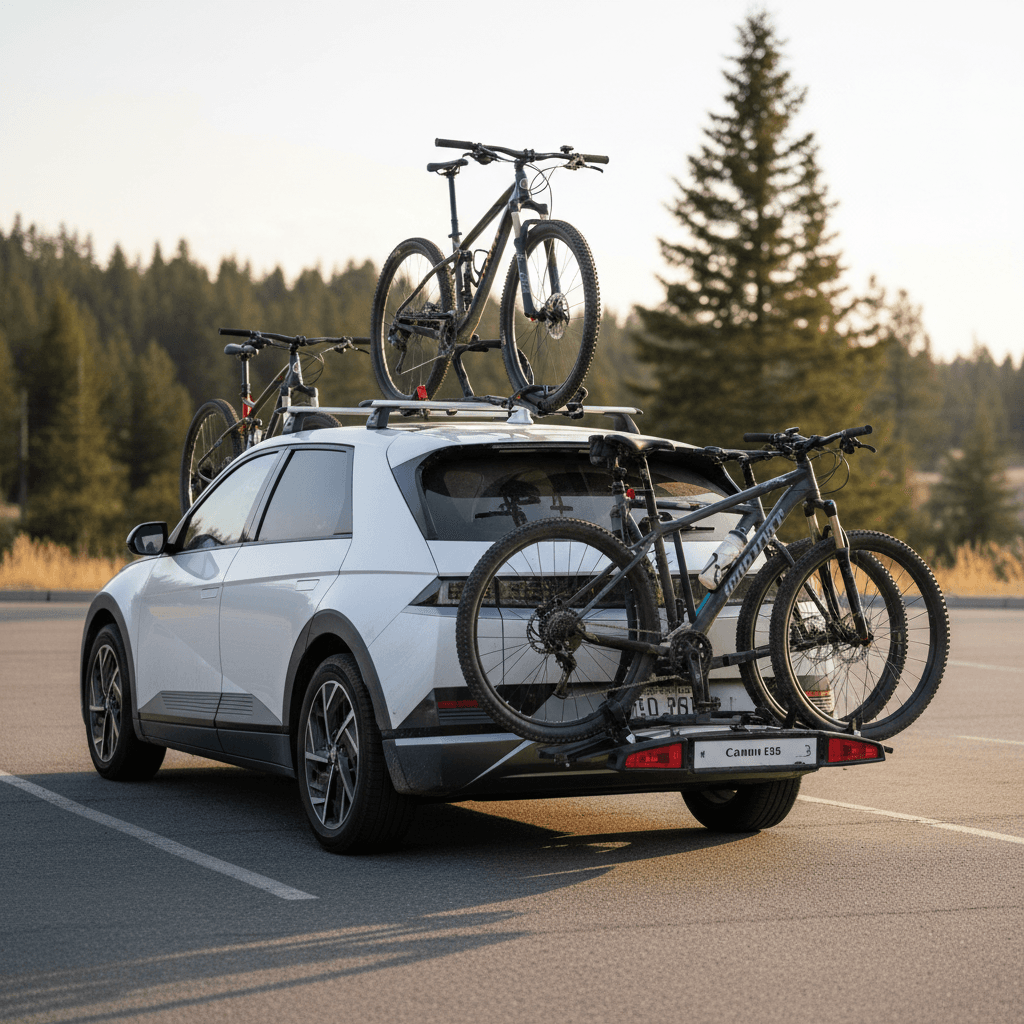
If you own a Hyundai Ioniq 5 and also own a bike, you’ve probably discovered that the hardest part isn’t the ride itself, it’s figuring out how to haul the bike. The good news is that you have several solid Hyundai Ioniq 5 bike rack options, from stealth hitches to low‑profile roof systems. The catch is that EVs add a few wrinkles around weight, aerodynamics, and charging access that gas‑SUV guides tend to gloss over.
Quick answer
Why bike rack choice matters on an EV like the Ioniq 5
- Payload is finite. The Ioniq 5 typically has a payload just over ~1,000 lbs, including passengers, cargo, and any tongue weight from a hitch rack.
- Aero drag hits range. Bikes on the roof create more wind resistance than bikes tucked in the slipstream behind the car, which shows up as lost range on the highway.
- Charging access matters. You’ll be backing into fast chargers often; a bulky rack can block the charge port area or force awkward parking angles.
- Rear sensors and cameras. Radar and parking sensors live in the bumper; some racks constantly trigger alerts or block the rear camera when folded.
Always check your labels
Hyundai Ioniq 5 hitch basics and weight limits
Most U.S. long‑range Ioniq 5 trims are rated to tow around 2,000 lbs with trailer brakes and roughly 1,650 lbs without, with short‑range RWD models often marked as “towing not recommended.” That towing rating is separate from what most owners actually do with their hitches, carry a bike rack or small cargo tray, but the logic around tongue weight still applies.
IONIQ 5 towing and tongue-weight basics (typical U.S. long‑range trims)
Aftermarket hitches for the Ioniq 5 are usually Class II or light Class III. Many are rated somewhere between 250–400 lbs of tongue weight, plenty for a 40–60 lb platform rack and two 30–50 lb bikes. The lower of the two numbers always wins: if your vehicle’s tongue rating is lower than the hitch’s, obey the vehicle; if your hitch is the limiting factor, obey the hitch.
Don’t confuse tow rating with rack capacity
Hitch-mounted bike racks: best overall for ioniq 5
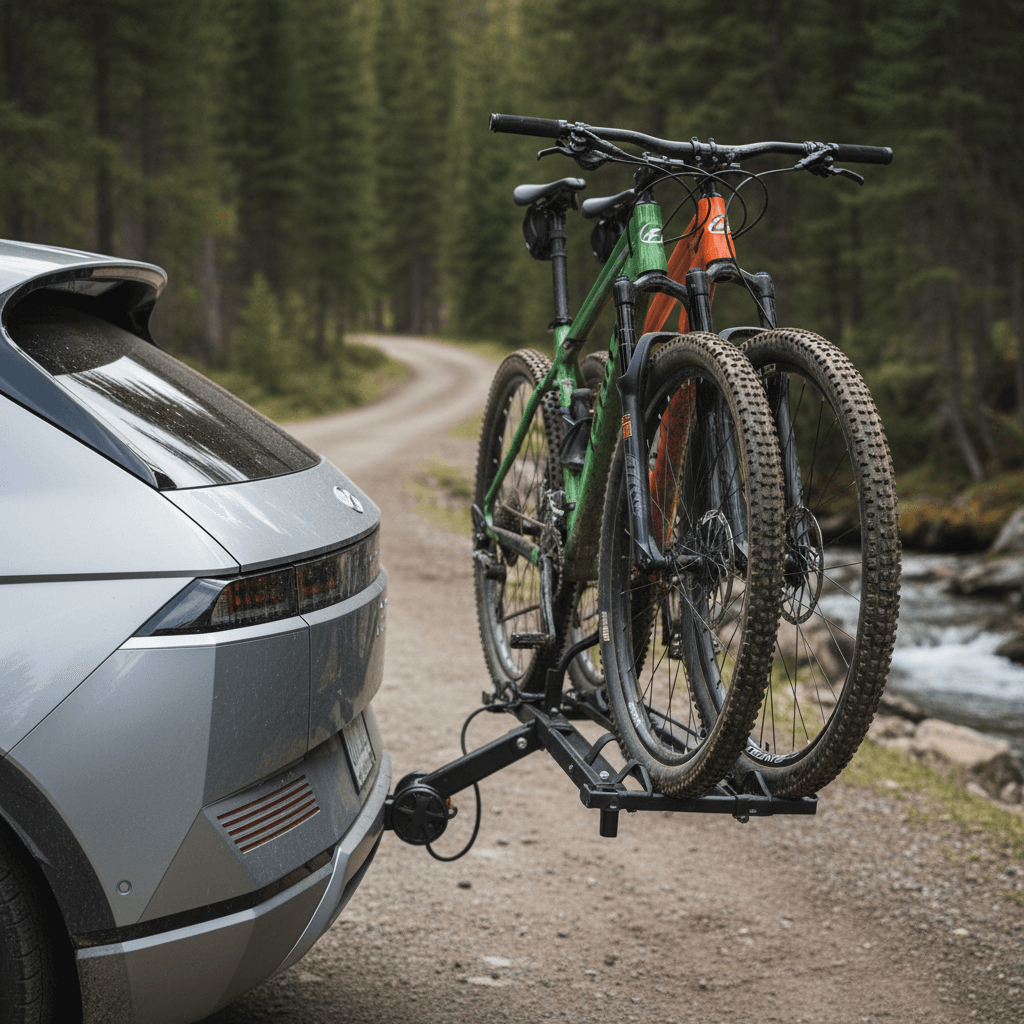
Ask Ioniq 5 owners what they prefer and you’ll hear the same chorus: “Hitch or bust.” A 2‑inch receiver with a quality platform rack is generally the most EV‑friendly solution, especially if you’re carrying heavier e‑bikes.
Hitch bike racks on the Ioniq 5: pros and cons
Why most owners end up here, and where the tradeoffs are
Hitch rack advantages
- Easier loading – you’re lifting bikes to hip height, not overhead.
- Better for e‑bikes – many hitch trays are rated for 60–80 lb per bike.
- Less aero drag – bikes sit mostly in the slipstream, preserving highway range vs. roof mounts.
- No roof clearance drama – fewer chances to forget a bike and meet your garage door.
- Flexible cargo – you can swap between bike racks and cargo trays.
Hitch rack drawbacks
- Upfront cost – hitch + rack + install can easily pass $1,000 if you use premium parts and a shop.
- Install complexity – many hitches require trimming lower bumper plastics and partial disassembly.
- Parking sensors – some cars will complain if the rack lives on full time.
- Departure angle – long racks can scrape on steep driveways when heavily loaded.
Common hitch options Ioniq 5 owners use
Because the Ioniq 5 didn’t launch with a North American factory hitch on every trim, the aftermarket stepped up quickly. Popular choices you’ll see in owner forums include:
- EcoHitch / Torklift‑style hidden hitches – mount behind the bumper with only the receiver visible; often rated around 3,000 lbs tow / 400 lbs tongue, but you still obey the vehicle’s lower limits.
- Stealth Hitch systems – more expensive, with a detachable receiver that keeps the rear of the car looking stock when you’re not carrying bikes.
- Conventional Class III receivers from brands like Draw‑Tite, Curt, or Husky, typically with 2" receivers and 250–300 lb tongue ratings.
Match rack to receiver size
Platform vs hanging-style hitch racks
Platform (tray) racks
- Bikes sit in individual trays with wheel straps and a central arm.
- Best stability, easiest loading, and limited frame contact.
- Great for e‑bikes, carbon frames, and mixed bike sizes.
- Heavier and more expensive, but the right answer for most Ioniq 5 owners.
Hanging (mast) racks
- Bikes hang from top tubes or frame adapters.
- Lighter and cheaper, but can swing and scuff frames.
- Not ideal for step‑through e‑bikes or full‑suspension mountain bikes.
- Better only if your bikes are relatively light and similar in shape.
EV-friendly hitch rack features
Roof bike racks for the Ioniq 5
If you can’t or don’t want to cut into the rear bumper for a hitch, a roof system is your next‑best option. The Ioniq 5’s relatively low roof compared with taller SUVs makes overhead loading a bit more manageable, especially for lighter gravel or road bikes.
How roof bike racks work on the Ioniq 5
From crossbars to individual trays
Factory or aftermarket crossbars
Fork‑mount and frame‑mount trays
Mind the weight limit
Range penalty from roof‑mounted bikes
- Best for: lighter analog bikes, occasional use, and owners who can’t or won’t add a hitch.
- Less ideal for: heavy e‑bikes, tall riders with shoulder issues, or anyone who parks in a low garage regularly.
Trunk and hatch-mounted bike racks: pros and cons
Strap‑on trunk racks are the default answer for many compact cars, but they’re a tougher fit on modern EV crossovers like the Ioniq 5. You’ve got a large rear spoiler, complex tailgate shape, and a lot of painted surface that doesn’t love having metal hooks and straps rubbing against it.
Should you use a trunk rack on an Ioniq 5?
Understand the tradeoffs first
Why they’re tempting
- No hitch or roof rails required.
- Lower upfront cost than hitch + rack.
- Easy to move between cars in a household.
Why they’re risky
- Straps and feet can scratch paint and deform spoilers.
- Weight rests directly on the tailgate sheet metal.
- High chance of blocking the rear camera and taillights.
- Many generic racks are not explicitly approved for the Ioniq 5 body style.
Use trunk racks only as a last resort
Popular hitch and bike rack setups Ioniq 5 owners use
Spend a few minutes on Ioniq 5 owner forums and you see a pattern: people who ride often usually invest in a hidden or stealth hitch and a mid‑ to high‑end tray rack. It’s not the cheapest solution, but it solves the most problems with the fewest compromises.
Example Ioniq 5 bike rack setups owners report
Representative configurations based on common forum and community reports. Always verify specs for your exact parts.
| Use case | Hitch style | Rack type | Typical capacity | Best for |
|---|---|---|---|---|
| Daily riders with 2 e‑bikes | Hidden 2" (EcoHitch / Stealth) | 2‑bike platform, 60–80 lb per bike | 2 heavy e‑bikes | Year‑round riding, minimal range penalty vs. roof |
| Family with 2–3 analog bikes | Standard Class III 2" | 2–3 bike platform or 3‑bike hanging rack | 3 lighter bikes | Weekend trips, mixed kids’ and adult bikes |
| Apartment dweller, no hitch | Factory or aftermarket crossbars | 1–2 roof trays | 1–2 road or gravel bikes | Occasional rides, no bumper cutting |
| Budget‑conscious, rare bike trips | Small class II 1¼" | 2‑bike hanging rack | 2 analog bikes | Infrequent use, light bikes only |
These combos balance weight, cost, and ease of use for 1–3 bikes.
The best Ioniq 5 bike rack setup is the one that respects your EV’s weight limits, preserves as much range as possible, and doesn’t make you dread loading and unloading every time you ride.
How bike racks affect range and charging
Any external rack will cost you some efficiency, but how and where you mount the bikes determines how big that hit is and how annoying it feels day to day.
- Hitch racks usually have the smallest aero penalty, especially if the bikes sit close to the rear of the car and don’t stick far above the roofline.
- Roof racks tend to have the largest impact on highway range, particularly with chunky mountain bikes or wide handlebars catching the wind.
- City vs. highway: around town at 25–45 mph, the energy impact is modest; at 70–80 mph, aero drag dominates.
- Charging access: on the Ioniq 5, the charge door is rear‑right. A hitch rack rarely blocks it, but a very long rack or swing‑away arm can make backing into some fast chargers tricky.
Use your trip computer as a lab
Hyundai Ioniq 5 bike rack buying checklist
Step-by-step: choosing the right bike rack for your Ioniq 5
1. Confirm your vehicle’s payload and towing guidance
Check the label on the driver’s door jamb and the towing/weight section of your owner’s manual. Note your payload rating and whether Hyundai recommends or restricts towing for your specific trim.
2. Decide how many bikes and what kind
Two 70‑lb e‑bikes are a very different problem than three 25‑lb road bikes. List each bike’s approximate weight and frame style (step‑through, carbon, full‑suspension, etc.).
3. Choose hitch vs. roof vs. trunk
If you’re hauling e‑bikes or ride frequently, a <strong>2‑inch hitch + tray rack</strong> is usually worth the investment. If you only move one light bike occasionally and can’t modify the car, a roof tray might be simpler.
4. Match rack capacity to real weight
Add up rack + bikes + any accessories and make sure the total stays under your hitch’s tongue limit, the rack’s per‑bike and total weight limits, and your vehicle’s own guidance.
5. Check fitment details carefully
Confirm that the hitch you’re considering is listed for your model year, and that any roof or trunk rack includes the Ioniq 5 in its approved fit guide. Mid‑cycle updates can change attachment points.
6. Plan for installation and service
Decide whether you’ll install the hitch yourself, use a local shop, or have a Hyundai dealer manage it, especially if your Ioniq 5 is under warranty or on a lease. Keep all documentation for future resale or end‑of‑lease inspection.
Hyundai Ioniq 5 bike rack FAQ
Frequently asked questions about Hyundai Ioniq 5 bike racks
Should you add a hitch to a used Ioniq 5?
If you’re shopping used, and especially if you’re looking at a low‑miles Ioniq 5 without a hitch yet, this is the perfect time to think about how bikes fit into your EV life. A properly installed hitch doesn’t just unlock bike racks; it also opens up cargo trays and light towing on trims that are rated for it.
Reasons to add a hitch
- You ride regularly and want low‑effort loading for 1–2 bikes.
- You’re planning camping or road‑trips where a cargo tray or small trailer helps.
- You want to avoid roof racks for range and clearance reasons.
Reasons to skip it (for now)
- You only move bikes a few times a year and they’re fairly light.
- You park in tight urban garages where any extra length is a pain.
- You’re on a strict budget and can live with a single roof‑tray for one bike.
How Recharged can help
Key takeaways: the best Hyundai Ioniq 5 bike rack options
Choosing the right Hyundai Ioniq 5 bike rack option is less about brand names and more about matching the rack to your bikes, your driving, and your EV’s limits. For frequent riders or anyone hauling e‑bikes, a proper 2‑inch hitch and tray‑style rack is the gold standard. Roof racks are a solid Plan B when a hitch isn’t feasible, and trunk racks should be treated as an occasional workaround, not a permanent solution.
Take the time to confirm your payload and tongue‑weight numbers, be honest about how often you’ll ride, and invest in a setup you won’t dread using. Done right, your Ioniq 5 can carry your bikes comfortably, keep its range predictable, and still slide into a public charger without drama, exactly what you want from a modern EV adventure rig.