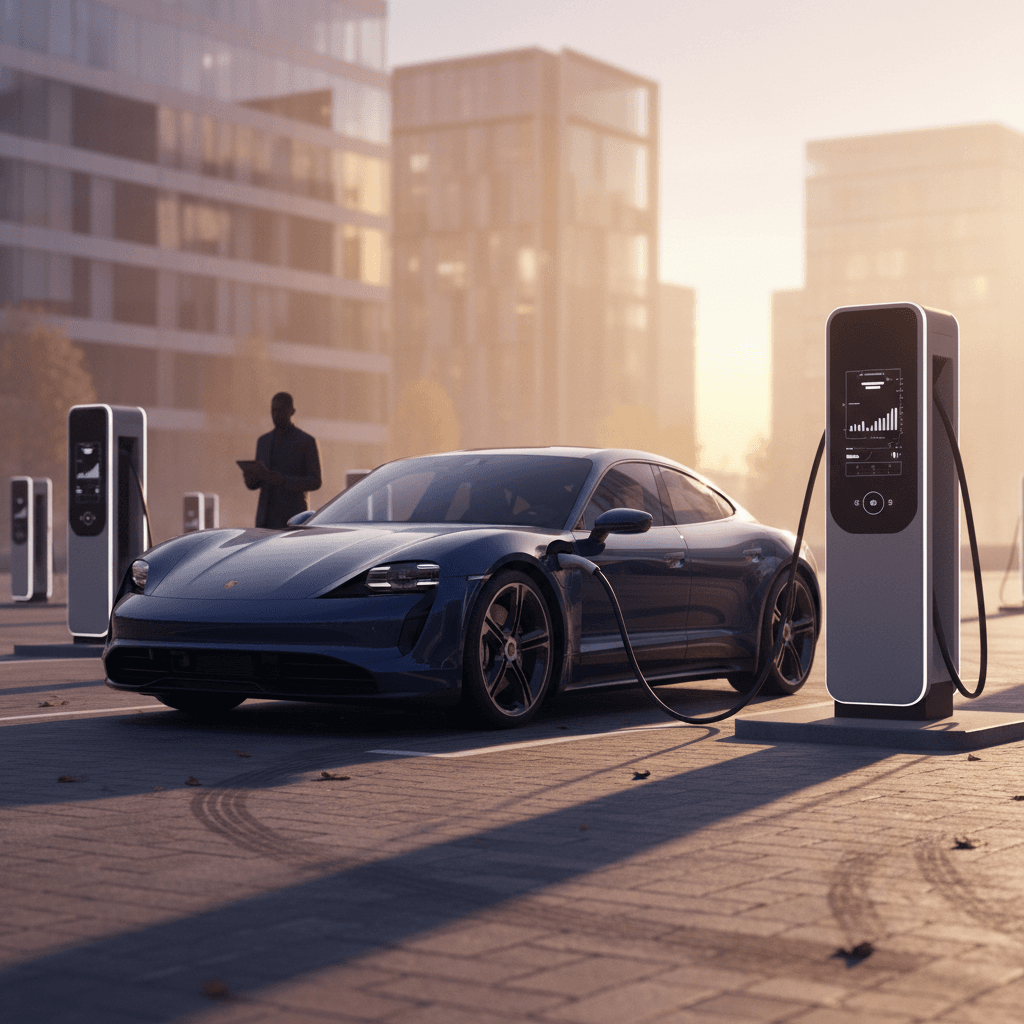
If you’re shopping for a Porsche Taycan, or already own one, the first practical question is simple: how long does it take to charge a Porsche Taycan? The answer depends heavily on which Taycan you have, where you’re plugged in, and how full the battery is when you start. This guide walks you through real‑world charging times at DC fast chargers and at home so you can plan your day (and your road trips) with confidence.
Quick answer
Porsche Taycan charging time at a glance
Typical Porsche Taycan charging times (ballpark)
Those numbers are broad averages, not promises. To understand how long it will take to charge your Taycan, you need to know two things: your battery size/generation and what kind of charger you’re using.
Taycan battery and charging basics
Across model years, the Taycan has been offered with two main battery packs: the smaller Performance Battery (around 79 kWh gross) and the larger Performance Battery Plus (around 93–97 kWh gross, depending on generation). Newer 2025‑onward cars add slightly more usable capacity and a revised charging curve, which is why their DC times have improved.
- All Taycans use an 800‑volt architecture, which enables very high DC fast‑charge speeds.
- Earlier cars peak around 270 kW DC under ideal conditions; updated models can reach up to about 320 kW.
- AC charging is limited by the onboard charger, typically 9.6–11 kW in the U.S., with optional 19.2 kW and, in some markets, 22 kW hardware.
Think in “miles per minute,” not just kW
DC fast charging: how long from 10–80%?
Most Taycan owners care about one number on road trips: how long it takes to get from roughly 10% to 80% state of charge (SoC) on a DC fast charger. That’s the sweet spot where you gain a lot of range without wasting time in the slow end of the charging curve.
Approximate Taycan DC fast‑charging times (10–80%)
Ballpark figures based on Porsche data and real‑world testing. Actual times vary with temperature, charger quality, SoC, and software version.
| Taycan generation | Battery option | Peak DC power (up to) | Typical 10–80% time* | Notes |
|---|---|---|---|---|
| 2025+ updated Taycan | Performance Battery / Plus | ~320 kW | ~18 minutes | Best‑case 800V, warm battery, strong charger |
| 2020–2024 Taycan (with hi‑power DC option) | Performance Battery / Plus | ~270 kW | ~22–30 minutes | Earlier official figure: ~22.5 min; 25–30 min is common in the real world |
| 2020–2024 Taycan (without hi‑power option) | Performance Battery / Plus | ~50–150 kW | ~30–45 minutes | Lower‑spec DC hardware or 400V sites slow things down |
| Any Taycan on a modest DC charger | Any | 50–100 kW | ~45–75 minutes | Think of this like a fast Level 2 with road‑trip pricing |
Use these numbers as planning guides, not guarantees.
Don’t chase the peak kW number
If you’re planning a highway trip, a good rule of thumb is this: budget around 20–30 minutes for a 10–80% stop on a strong 800‑volt charger for any Taycan, and closer to 18–22 minutes if you’re in the latest model and precondition the battery before you arrive.
Home charging: how long on Level 1 and Level 2?
Day to day, home charging matters more than DC fast charging. Here’s how long it takes to charge a Porsche Taycan on different types of home power in the U.S.
Typical Taycan home charging times
Approximate from low to ~100% (or overnight top‑offs)
Level 1 – 120V outlet
Power: ~1–1.4 kW
- 2–4 miles of range per hour
- 40+ hours from low to full on a Taycan
- Best used only in a pinch
Standard Level 2 – 240V, 40A circuit
Power: ~7.2–9.6 kW (depends on charger and car)
- 20–30+ miles of range per hour
- Roughly 7–10 hours from very low to full
- Perfect for overnight charging
High‑power Level 2 – 240V, 48–80A
Power: ~11–19 kW (with upgraded onboard charger)
- 30–45+ miles of range per hour
- Roughly 4–6 hours from low to full
- Useful if you regularly arrive home with a low battery
Estimated Taycan AC charging times
Very rough estimates from ~10% to ~100% SoC. Real times depend on usable battery size, AC limit, and how far you actually charge.
| Setup | Onboard AC limit | Approx. time 10–100% | Typical use case |
|---|---|---|---|
| 120V Level 1 | ~1.4 kW | 40–50+ hours | Occasional emergency charging |
| 240V Level 2, 32A | ~7.2 kW | 12–14 hours | Shared circuits, slower wallbox |
| 240V Level 2, 40–48A (most home installs) | ~9.6–11 kW | 8–11 hours | Standard overnight charging |
| 240V Level 2 with 19.2 kW upgrade | ~19.2 kW | 4–6 hours | Heavy‑use drivers, frequent deep discharges |
Most owners don’t charge from empty; overnight top‑offs are typically much shorter.
The overnight reality
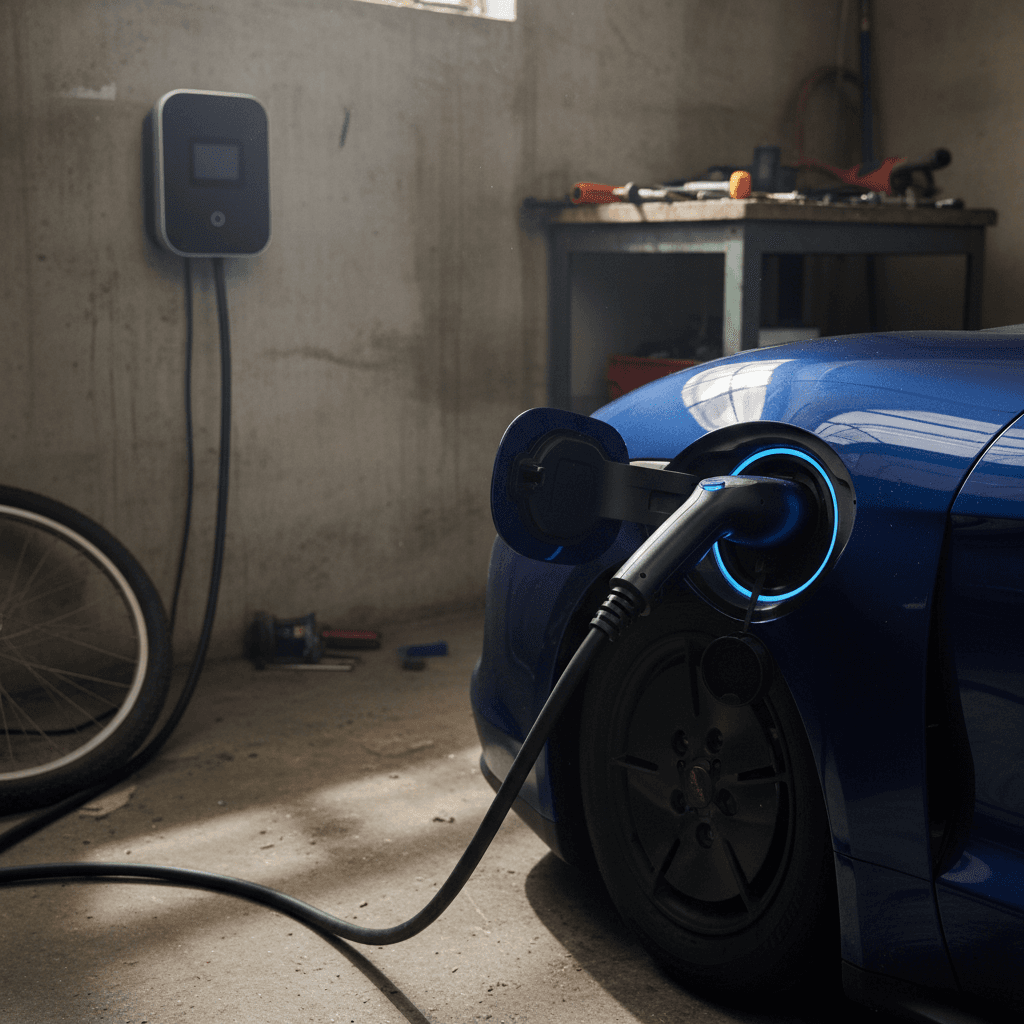
How long should you plan on a road trip?
On the road, you rarely charge from close to empty to full. Instead, you’ll usually cycle your Taycan between roughly 10–20% and 60–80% SoC. That’s where the car charges fastest and where you spend the least time parked.
Rule of thumb for a Taycan road trip
- Drive 140–200 miles (depending on model, year, and conditions).
- Arrive at a strong DC fast charger around 10–20% SoC.
- Charge to ~60–80%, often 15–25 minutes on a good 800V station.
- Repeat as needed.
With the updated Taycan’s faster charging curve, a short coffee break can add as much usable range as a much longer stop in many other EVs.
Planning buffer time
- Add 5–10 extra minutes if the weather is cold or the battery isn’t preconditioned.
- Expect slower sessions if you’re stuck on a 400V or shared DC cabinet.
- Plan longer breaks if you want to charge above 80%, where the curve slows sharply.
When mapping out a route, it’s safer to plan for 25–30 minutes per DC stop on older Taycans and 20–25 minutes on the latest models, then be pleasantly surprised when conditions are perfect.
Use the car to plan, not just apps
Why your Taycan might charge slower than the spec sheet
You’ll see impressive numbers in Porsche’s marketing, 270 kW, 320 kW, 18 minutes from 10–80%. In the real world, many owners see slower sessions. That doesn’t necessarily mean anything is wrong; it’s how fast‑charging works.
- Battery temperature: If the pack is too cold or too hot, the car protects itself by limiting power.
- State of charge: The closer you get to 100%, the more the charging curve tapers. The last 20% can take as long as the first 60%.
- Charger limitations: Not all stations actually deliver their advertised power, and some 800V stations are capped by site wiring or load‑sharing.
- Hardware differences: Early Taycans without the high‑power DC option or higher‑rate AC charger will simply charge slower.
- Software and BMS: Updates, ambient temperature, and how often you DC fast charge all influence the strategy your Taycan’s battery‑management system uses.
Cold weather is the biggest speed killer
Tips to charge your Taycan faster and smarter
Simple ways to optimize Taycan charging time
1. Aim for 10–60% or 10–80% on trips
You get the best combination of speed and range when you stay out of the very low (0–5%) and very high (80–100%) ends of the battery.
2. Use DC fast charging strategically
Save high‑power DC for road trips. For daily use, rely on AC home charging to reduce costs and keep battery temps and stress lower.
3. Precondition the battery before a fast charge
Set the DC fast charger as your destination in the car’s nav so it can warm or cool the pack on the way and hit the fastest part of the curve sooner.
4. Install a solid Level 2 home setup
A properly wired 40–60A 240V circuit with a reputable wallbox or the Taycan’s mobile charger at full power will cover almost any overnight need.
5. Schedule charging for off‑peak hours
Use the Taycan’s charging profiles or your EVSE’s scheduling to start charging when power is cheapest and finish just before you depart.
6. Limit daily charging to ~80–90%
For long‑term battery health, treat 80–90% as your daily target and save 100% charges for road trips or occasional long days.
Thinking about a used Taycan?
Used Taycan buyers: what to ask about charging
If you’re shopping the used market, understanding a Taycan’s charging history is just as important as knowing how long it takes to charge. Charging behavior leaves fingerprints in the battery’s health over time.
Key charging questions for a used Taycan
These help you understand real‑world charge times and battery health.
Daily charging habits
- “Did you mostly charge at home or rely on DC fast charging?”
- “What daily charge limit did you use, 80%, 90%, or 100%?”
- “Roughly how many miles per week were you driving?”
Hardware and options
- “Does this car have the higher‑power DC option?”
- “Which onboard AC charger is installed (standard vs 19.2 kW, etc.)?”
- “Any history of charging faults or warranty work?”
Real‑world DC experience
- “How long do your typical 10–80% DC sessions take?”
- “Do you see big differences in winter vs summer?”
- “Are there stations you avoid due to slow speeds?”
Battery health documentation
- “Have you had a recent battery health check?”
- “Can you share typical range at 100% vs when the car was new?”
- “Any reports from Porsche service visits?”
How Recharged helps on used Taycan charging
FAQ: how long to charge a Porsche Taycan
Frequently asked questions about Taycan charging time
Bottom line on Taycan charging time
So, how long does it take to charge a Porsche Taycan? On a modern 800‑volt DC fast charger, plan on roughly 20 minutes for a 10–80% stop in the newest models and a bit longer in earlier cars. At home with Level 2, overnight is more than enough for almost any daily pattern; even from a low state of charge, you’re typically back to 80–100% sometime between midnight and breakfast.
If you’re considering a Taycan, especially a used one, the key is matching your charging setup to your driving. A solid Level 2 installation turns the car into a “full tank every morning” experience, and understanding how DC fast charging really works makes road‑trip stops predictable instead of stressful. And if you’d rather not guess about battery health or real‑world charging performance, buying through Recharged means you get a verified battery report and EV‑savvy support to walk you through exactly what those numbers mean before you sign anything.