If you own a Mercedes EQS, or you’re thinking about buying one used, you’ve probably typed “Mercedes EQS KBB value” into a search bar more than once. With six‑figure MSRPs when new and some of the steepest depreciation in the luxury EV segment, understanding what Kelley Blue Book thinks your EQS is worth is the difference between overpaying and landing a quietly excellent deal.
Quick takeaway
Why Mercedes EQS KBB value matters in 2025
KBB’s values are a common reference point for lenders, dealers, and private sellers. When you see a trade‑in number, a certified pre‑owned offer, or a bank talking about loan‑to‑value on a Mercedes EQS, there’s a good chance KBB is in the background. For a model like the EQS, which launched with high MSRPs, generous leases, and a rapidly shifting EV market, those numbers move faster than many luxury buyers expect.
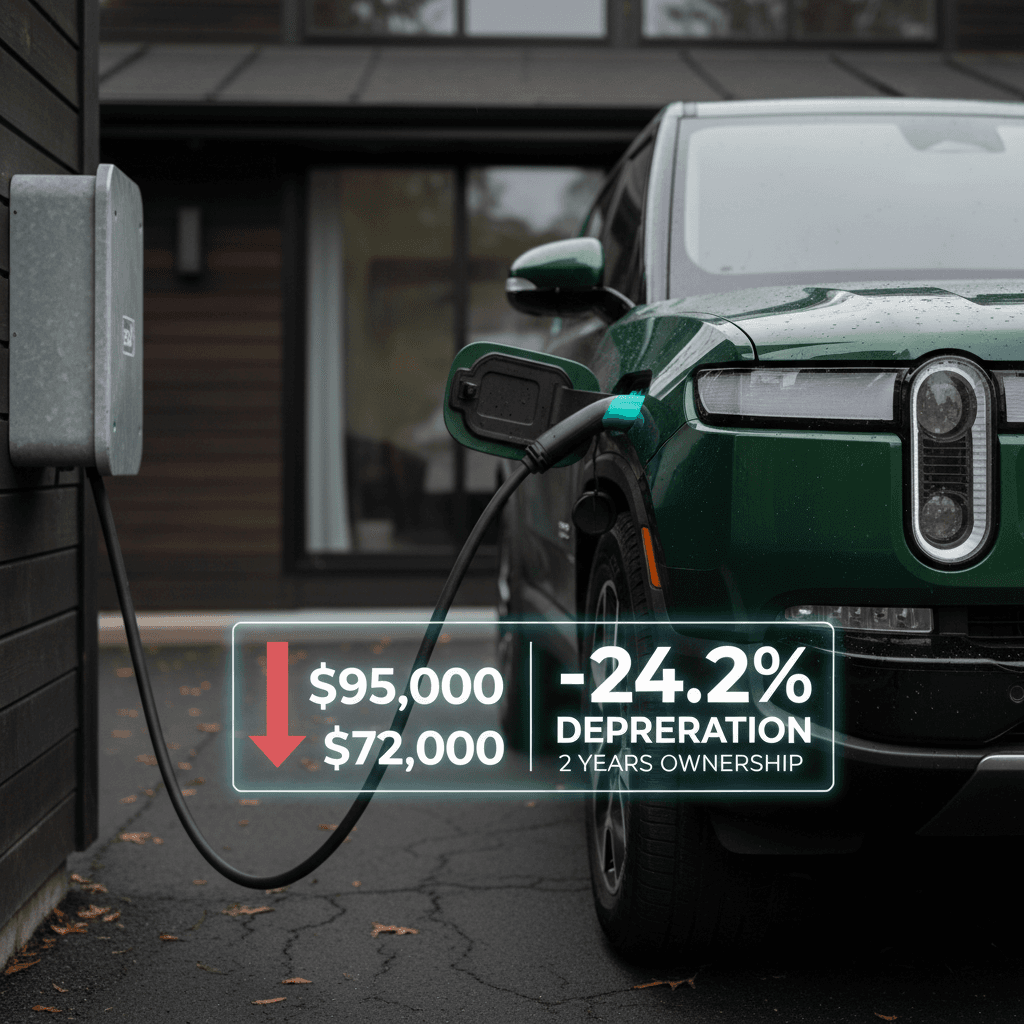
In 2024, a study based on iSeeCars data found the Mercedes‑Benz EQS lost roughly 48–49% of its value after just one year, with an average dollar drop north of $65,000. That puts it at or near the top of the industry for first‑year depreciation among all vehicles, not just EVs. For shoppers looking at 1‑ to 3‑year‑old EQS sedans or SUVs in 2025, that means used asking prices and KBB values can sit tens of thousands of dollars below original MSRP.
Don’t confuse MSRP cuts with your car’s value
How KBB calculates Mercedes EQS values
When you plug a Mercedes EQS into Kelley Blue Book’s valuation tool, it isn’t guessing. KBB blends several data streams to estimate trade‑in value, private‑party value, and a fair purchase price for your ZIP code:
- Recent retail and wholesale transactions for the same year, trim, and equipment
- Auction results from major lanes where late‑model EVs are moving
- Regional supply and demand signals, how many EQS sedans and SUVs are listed near you, and how long they sit
- Mileage, options, and condition tiers (Excellent / Very Good / Good / Fair)
- Macro factors like incentive programs, interest rates, and broader EV pricing trends
For example, KBB’s depreciation view for a 2024 Mercedes‑Benz EQS 450+ sedan shows an original new value around the $105,000 mark and a current resale value in the low‑$50,000s after roughly two years on the road, implying about a 50–51% drop from MSRP in a short window. That kind of swing is what has put the EQS under the microscope for value‑minded buyers.
Use the right condition setting
Current KBB-style values for popular Mercedes EQS trims
Exact KBB numbers change daily and depend on VIN‑level details, but recent pricing and KBB‑style data paint a consistent picture across the EQS lineup. Here’s a simplified snapshot of where common trims tend to land as of early 2025, assuming average miles and “Good” condition in a typical U.S. market:
Illustrative Mercedes EQS KBB-style values (early 2025)
Approximate value ranges based on recent KBB depreciation views and used‑market data. Always verify live numbers on KBB for your specific vehicle.
| Model year & trim | Original MSRP (approx.) | Typical current KBB-style resale | Typical current KBB-style trade‑in | Value comment |
|---|---|---|---|---|
| 2024 EQS 450+ Sedan | $104,000–$106,000 | ~$50,000–$55,000 | ~$49,000–$52,000 | Roughly 50% off MSRP in about two years |
| 2023 EQS 450+ Sedan | $102,000–$104,000 | Mid‑$40,000s–low‑$50,000s | Low‑$40,000s–high‑$40,000s | Two‑year‑old examples often 50–55% below MSRP |
| 2024 EQS 580 4MATIC Sedan | $125,000+ | High‑$60,000s–low‑$70,000s | Mid‑$60,000s | Higher trims keep a bit more dollar value but similar percentage drop |
| 2024 EQS 450+ SUV | $105,000–$110,000 | Mid‑$50,000s–low‑$60,000s | Low‑$50,000s | SUV body style softens the hit slightly in some markets |
| 2022 EQS 450+ Sedan | ~$102,000 | Low‑$40,000s | High‑$30,000s–low‑$40,000s | Early build years show the steepest declines |
Sedan values often sit slightly lower than equivalent SUVs, but both suffer steep early depreciation.
These are directional, not promises
Depreciation: how fast does a Mercedes EQS lose value?
Mercedes EQS depreciation snapshots
Why such aggressive depreciation? The EQS sits at the crossroads of several tough trends: it’s a flagship luxury EV with a high starting price, a fast‑moving technology stack, and a market that has cooled from the 2021–2022 frenzy. Early adopters often leased heavily subsidized new cars; those leases are now returning in volume, pushing down auction prices and, by extension, KBB values.
For 2022 EQS sedans, some independent analyses project five‑year depreciation in the low‑70% range, leaving residuals under $30,000 by year five. That’s eye‑popping if you bought new but compelling if you’re a used shopper looking for S‑Class‑level comfort with EV running costs.
Why this is good news for used buyers
Factors that move your personal EQS KBB value up or down
What really moves a Mercedes EQS KBB value
Beyond year and mileage, these six levers make the biggest difference.
Mileage vs. age
Service history
Accident and title history
Climate & region
Options & tech packages
Battery health & charging habits
Pro move: gather your paperwork first
Using Mercedes EQS KBB value when you’re buying used
When you’re the buyer, KBB is less about precision and more about guardrails. You want to know whether the asking price on that 2023 EQS 450+ is in line with the market, unreasonably high, or suspiciously low. Here’s a simple framework:
How to use KBB when shopping for a used Mercedes EQS
1. Start with a generic KBB check
Before you fall in love with a specific car, pull the KBB private‑party and trade‑in values for the right year/trim in your ZIP code. That gives you a ballpark for “normal” money.
2. Compare to live listings
Cross‑check those KBB figures against active listings on used‑car sites. If most clean‑title EQS 450+ sedans are priced within 5–10% of KBB, you’re in a healthy market band.
3. Investigate outliers
If a car is priced far below KBB, ask why. Accident history, missing options, lemon‑buyback history, or unusual wear can explain the discount. If it’s far above KBB, look for rare options, ultra‑low miles, or CPO coverage.
4. Layer in battery health
KBB doesn’t see real‑time battery diagnostic data. Before you pay top‑of‑market money, get a third‑party battery health report, or buy from a marketplace like Recharged, where every EQS includes a <strong>Recharged Score</strong> with verified pack health.
5. Think total cost, not just price
Use KBB’s cost‑to‑own tools, plus your own insurance and charging costs, to see the real monthly burden. A slightly higher purchase price on a better‑cared‑for EQS can pencil out cheaper over 3–5 years.
Be careful with “deal of the century” EQS listings
Using KBB value when trading in or selling your EQS
On the seller side, Mercedes EQS KBB value is your sanity check and negotiating floor, not your dream number. Dealers will start from trade‑in value; private buyers will look at KBB private‑party value and ask for a discount. Your job is to connect the dots.
Trading your EQS into a dealer
- Expect offers near or slightly below the KBB trade‑in number, with deductions for reconditioning and risk.
- You may get more if you’re buying another vehicle from the same dealer and they can move money around in the deal.
- Have printouts or screenshots of KBB trade‑in and instant cash‑offer estimates to anchor the conversation.
Selling your EQS privately or via marketplace
- Pricing near the midpoint between KBB trade‑in and private‑party values is often realistic in a soft luxury‑EV market.
- Be ready to justify your price with service history, battery health documentation, and high‑quality photos.
- Marketplaces that specialize in EVs, like Recharged, can expose your EQS to more targeted buyers than a generic classifieds site.
Know your walk‑away number
How Recharged uses KBB-style data for EQS pricing
Recharged doesn’t simply copy‑paste the Mercedes EQS KBB value and call it a day. Our pricing engine blends KBB‑style guide data with real‑time marketplace information, EV‑specific battery diagnostics, and third‑party auction feeds to build a Recharged Score Report for every EQS we list.
What sets a Recharged EQS price apart
Guidebooks are the starting point, not the finish line.
Battery‑first valuation
Market‑verified pricing
Transparent support
Ready to find your next EV?
Browse VehiclesIf you already own an EQS and are thinking about selling, you can also bring it to Recharged for an instant offer or consignment. We’ll still use familiar guide values like KBB as a reference, but your final number is tailored to your actual car, not an average.
FAQ: Mercedes EQS KBB value & used pricing
Frequently asked questions about Mercedes EQS KBB value
Bottom line: is the Mercedes EQS a good used buy?
If you judge the Mercedes EQS purely by its KBB depreciation charts, it looks brutal. Original owners have watched six‑figure cars shed value faster than almost anything else in the showroom. But that same curve is exactly what makes the EQS one of the more intriguing plays in the used luxury EV space in 2025.
Use Mercedes EQS KBB value as your compass, not your autopilot. Let it set expectations, then dig deeper: battery health, software history, options, and how the car was actually used. Whether you’re buying or selling, pairing KBB data with EV‑specific insight, and, ideally, a Recharged Score Report on the car in question, turns a volatile, confusing segment into something you can navigate with confidence.
If you’re ready to move, you can shop used EQS listings on Recharged, get an instant offer on your current EV, or talk with an EV specialist about how your car’s condition and battery health compare with what KBB says on screen. In a market this fluid, having both perspectives is the real advantage.